

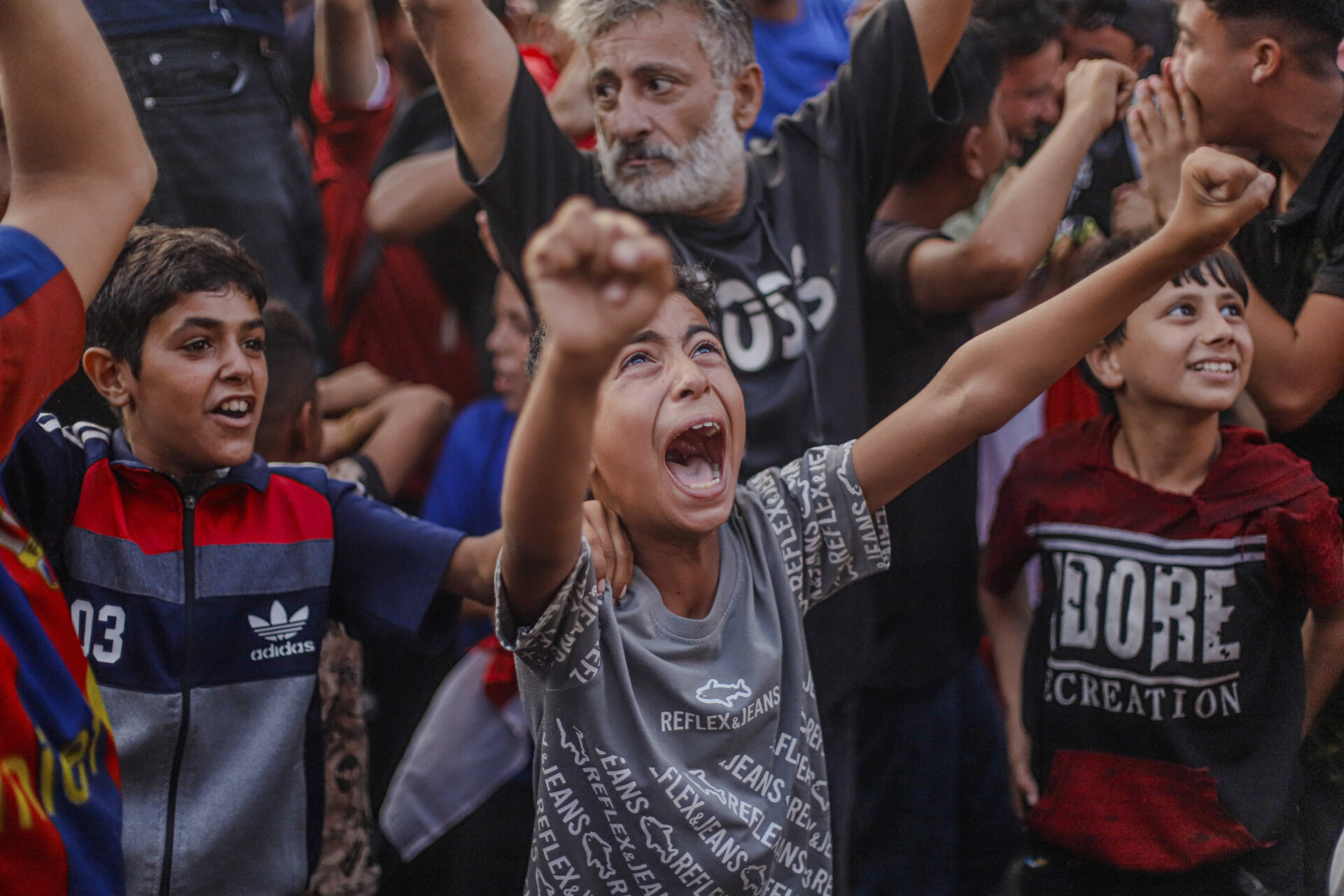
Beneath a small TV, sitting above a refrigerator stocked with sodas and fruit juices, a group of children gathered in a cramped neighborhood minimarket to watch a soccer match, their eyes sparkling from the glare of the tiny display. Within walking distance, people sat in front of a large screen projecting the game in the middle of the street, while an old man held a small radio close to his ear, trying to catch the commentator’s voice while sitting in his tent.
For the past month, in seemingly every corner of Gaza, cheers, loud applause and whistling filled the air — small moments that reminded us that life is still possible and that we are still alive. I had never expected this feeling to come from such an unlikely source, but this year’s World Cup offered a joyful break from the noise and struggles of daily life here, a short respite from the unstoppable reality we are trapped in.
As the tournament went on, each match became more than just a passing 90 minutes. The matches became part of our daily lives. We started waiting for them with excitement. I would open my window and hear the fans cheering from the nearby cafe. Every time a team scored, the place would fill with applause, drums and laughter. What made these gatherings feel different was not just the quality of the sport on display, but the happiness that came with them. They reminded us of something from the past, something we once loved and cherished. They brought back a part of ourselves that had been buried under everything we had gone through.
Of all the World Cup matches I watched, one left a deeper impact on me than the rest: the match between Egypt and Argentina. It was the most emotional and unforgettable night for me. I prepared popcorn as if I was getting ready for a celebration. When the match started, I began singing the Egyptian national anthem with the team: “Bilady, bilady, laki hubbi wa fuadi” (“My homeland, my homeland, you have my love and my heart”). At that moment, I was thinking about my own homeland, Gaza. It did not feel like a song that belonged to another country. Instead, it awakened a wider feeling inside me, a feeling that we were still part of a bigger Arab story.
When Egypt scored its first goal, I felt a small piece of hope returning. For a moment, I believed that something different could happen in our lives, that we could step away from the feeling of defeat and disappointment that had stayed with us for so long.
During halftime, I stood by the window watching the sunset. Taking in the scene from our small, fourth-floor studio apartment, I felt a soft breeze and a little lightness — ordinary things that once gave life meaning and are now all too rare.
Then came the second goal. I felt certain that something special was happening. The replay appeared on the screen, the commentator’s voice became louder and the cheers from the streets reached me. I took in the scene and marveled at how, after so much suffering, we still had a thirst for joy.
There were just over 15 minutes left until the end of the match when the electricity went out and, with it, our internet connection. This is something we had grown accustomed to long before this war started. I convinced myself that I had already seen the most important moments of the match and that the ending had to be a happy one.
I went to sleep believing that Egypt had won.
In the morning, I found out that it had not. But I also realized that what stayed with me from the previous night was not the result. It was the feeling of getting back something I had missed for a very long time.
There is a mysterious secret hidden within World Cup matches, something that goes beyond the boundaries of the soccer field. It is their extraordinary ability to make this noisy and divided planet beat to one rhythm, turning strangers into companions with shared emotions. This sporting ritual brings together people who may have never met, allowing them to celebrate together when a goal is scored or mourn together when a team loses. In the end, the tournament reminds us that we are alike in our need for joy, in our fear of losing and in our endless search for a hero who can take our minds off our broken dreams.
Regardless of the criticisms surrounding the tournament and the disappointments that accompanied it, these matches gave people a genuine reason to gather, to laugh and to feel something beyond survival. In the middle of this shared human experience, the nights when the Egyptian or Moroccan national teams won became special nights. Although they did not qualify for the final rounds, they gave us short moments when we felt that defeat was not our permanent destiny, that we did not have to accept brokenness as a normal part of life and that hope, even when temporary, was still the only strength we had left, pushing us toward a world where dreams can become reality.
I know that the World Cup will not change reality. It will not stop a war. But during those weeks, it gave us something we had been missing for a long time: cafes filled with life, conversations filled with game analysis and laughter, and gatherings of family and friends. We believed that the weight of life could become lighter, and that there was still space in this world for something beyond loss and grief. We believed that, despite all this destruction, we might one day still be able to write another story, one far away from tragedy — like the bedtime tales we tell children so they can close their eyes and fall asleep peacefully.