

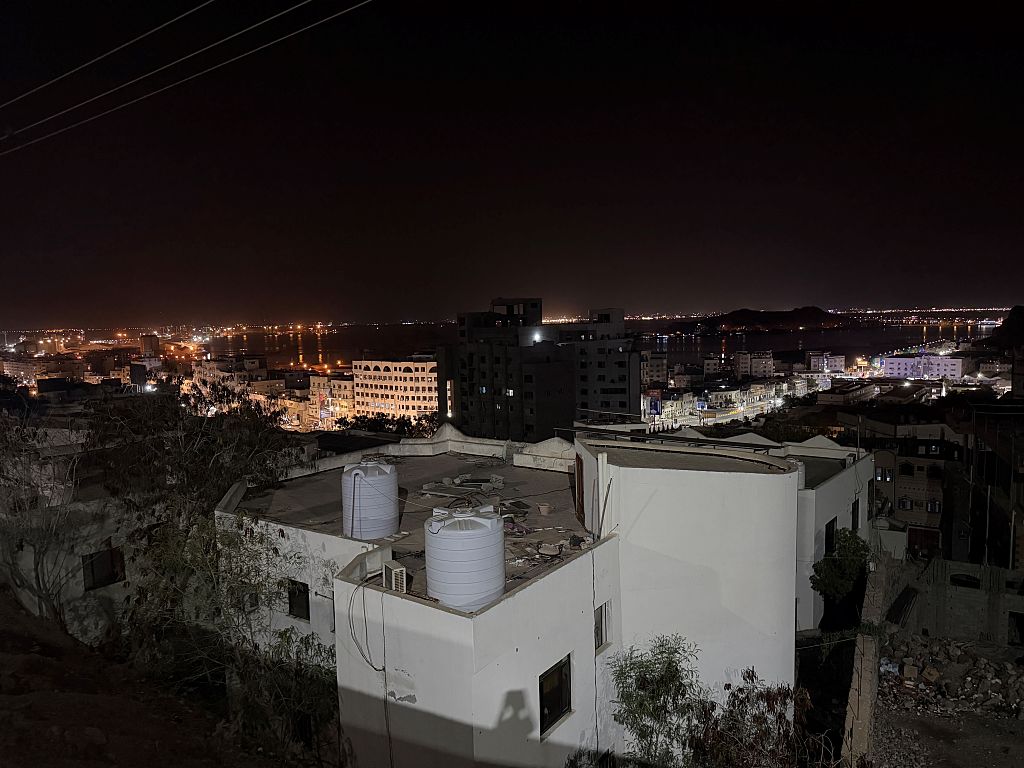
Even though it was dismantled and its leader exiled in January, Yemen’s separatist Southern Transitional Council (STC) has continued to organize protests in the port city of Aden. The movement, backed by the United Arab Emirates, has used posts on X and Facebook to call on supporters to mobilize, drawing thousands to the streets.
Over the course of two months, Yemen’s southern provinces saw a series of mass rallies and weeks-long sit-ins in front of STC offices that had been shut down by the Saudi Arabia-backed Presidential Leadership Council (PLC), Yemen’s executive body, which replaced the late president Abed Rabbu Mansour Hadi. The protests gradually eased, and a relative calm seemed to prevail in Aden during April and May, especially as STC offices were reopened.
This month, however, heightened tensions have returned to Aden, following a shooting incident near a house belonging to the city’s governor. The attack killed two guards and a Syrian couple, who came to the port city shortly after the fall of Assad’s regime to work as medical doctors. Several other residents were injured.
On June 12, the smoky, khat-filled lounges on Sahil Abyan — a coastal strip to the east of Aden, where the city’s most frequented recreational spots are located — saw regulars and World Cup soccer fans overwhelmed by the news, and unsure how to react to it.
In addition to matches scheduled that Friday, social media networks were abuzz with reports of the Aden shooting the night before, along with the tragic death of a Yemeni hiker, known as “the Spider Man of Yemen,” earlier in the day in al-Dhale. (The mountainous province in the southern part of the country is also home to Aidarous al-Zubaidi, the STC’s exiled leader.)
The 30-year-old hiker, who had recently begun making a living full-time by posting videos of his adventures online, fell into a 120-meter volcanic crater while scaling its steep cliffs. But it was the shooting that stirred the most conversation, with the death of the Syrian couple adding a strange dimension to the story.
Spin doctors and social media influencers apparently belonging to the STC were quick to exploit the death of the Syrian doctors, accusing Saudi-backed security personnel affiliated with Islah — the Muslim Brotherhood-aligned movement and the UAE’s nemesis in Yemen — of killing them.
While the Syrian couple, according to online fact-checkers, had evidently worked as doctors at military medical facilities of the Assad regime, it was not clear whether they were complicit in any of the government’s crimes. Meanwhile, their killing appeared to be an accident: They happened to be walking, on their way home, near the governor’s house when the shooting took place.
What’s clear is that the incident sparked panic among residents, not least because it stoked lingering tension within the anti-Houthi coalition — a patchwork of local factions backed by both the Saudis and the Emiratis. Last December, Riyadh kicked both the UAE and the Abu Dhabi-backed STC out of the coalition, making itself and its allies in the PLC the sole supporters of Yemen’s unity government.
On June 13, just two days after the shooting incident, the PLC ordered its security forces to shut down the STC offices in Aden. In response, the STC threatened a return to mass rallies, posting a call for protest on social media. The offices were reopened within 24 hours. Then, three days later, the PLC issued an order to freeze all the STC’s financial assets, a move that has put the separatist movement’s supporters on edge and sparked a social media war, with each side accusing the other of corruption. Mass STC protests across Yemen’s southern provinces followed on June 20 and 21.
In Aden, a protest was held in the city’s Parade Square. The site had been designated as the only place for the separatist movement to hold rallies, a restriction that followed a deadly protest in front of the PLC headquarters in late February. On Saturday morning, government security forces fired shots into the air to disperse protestors and removed a banner they had displayed. After the situation calmed, protestors raised another banner, reading: “Countering the foreign occupation — No to the Saudi sponsorship.”
On Sunday, most of the regulars and World Cup soccer fans along the Sahil Abyan cheered for Spain, as it delivered a 4-0 drubbing of Saudi Arabia’s national team. Videos circulating on social media showed people in Radfan, a district of the neighboring Lahj province, celebrating with fireworks.
While they did so to spite Riyadh, which they say backs the PLC at the expense of their southern independence cause, residents continue to cite the persistent state of insecurity — and, with it, the lack of basic public services — as their highest concern.
It may not have been the only sign that Yemen remains unstable, but for many here, a Syrian couple’s death in Aden was yet another wake-up call that their country remains on edge.