


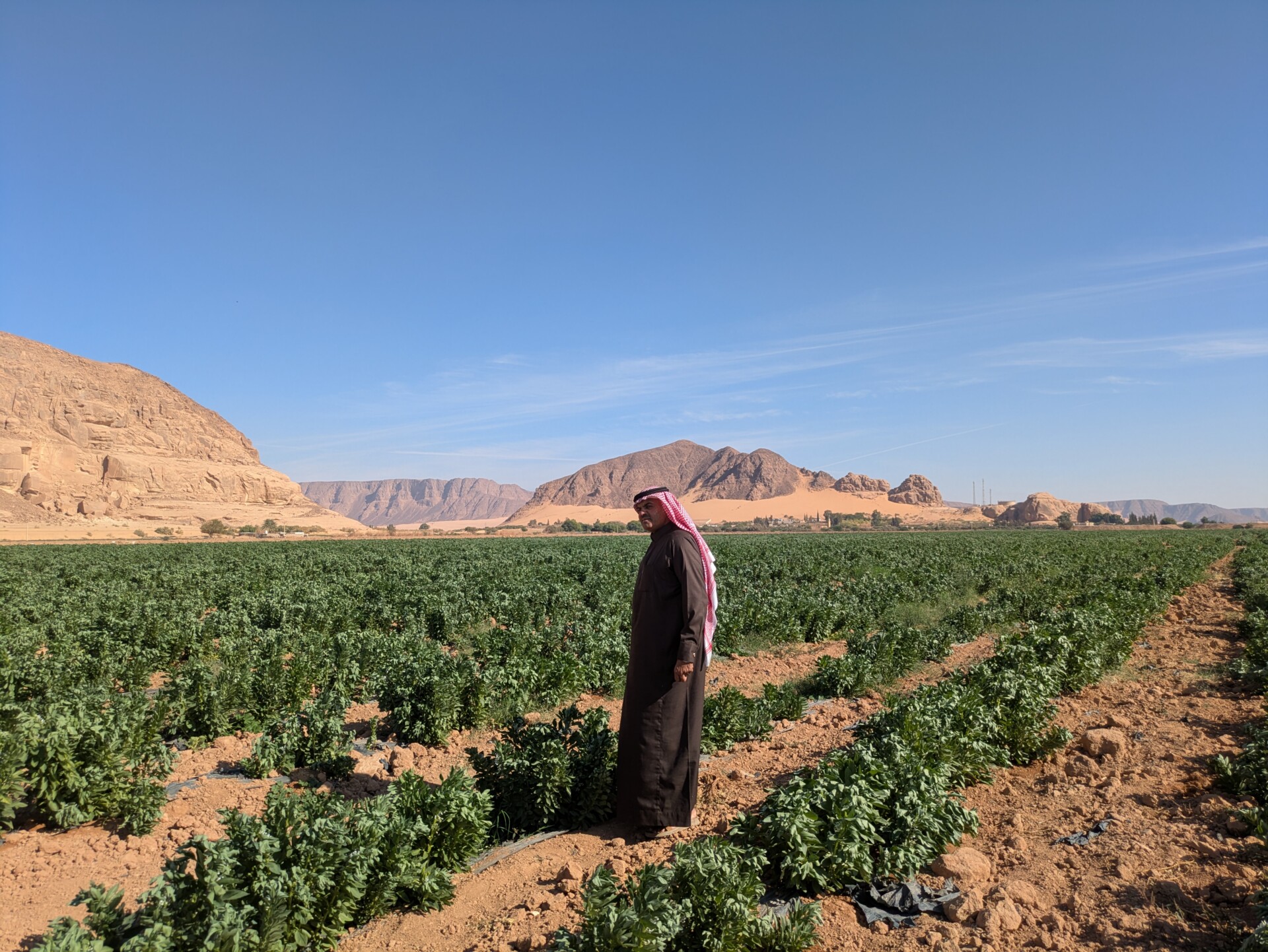
In Jordan, people remember retreating shorelines. From the oasis in Azraq to the Dead Sea in the Jordan Valley, bodies of water have been shrinking, leaving behind cratered land and shriveled shrubs in their wake. When asked about the former glory of their country’s wetland areas, residents are gripped by a powerful wistfulness.
In the town of Azraq, 67 miles from the capital city of Amman, everyone who was born before the 1990s has a story to tell about the oasis that once was. Naif Alafeer used to wrangle large fish with his friends, Fadi Esaid used to cup his hands in the water and drink from them after hours of playing in the sun, and Shaira Alafeer used to dig with her fingers just beneath the surface to access the water that lurked there. Azraq — which means blue in Arabic — was the perfect moniker for the freshwater pools and springs that lapped at one’s feet. In the early 20th century, when residents initially settled in the area, they bought arable land because the brimming streams promised them perpetually irrigated farms and bountiful harvests.
But I saw a vast, unending landscape before me. The ground cracked underfoot, a reminder of why Jordan ranks among the world’s most water-poor nations.
Azraq’s story is a microcosm of the larger tragedy unfolding in the Hashemite Kingdom of Jordan. Annual precipitation in the kingdom varies regionally between roughly 2 and 7.5 inches. Each person in Jordan is projected to have access to only 16,000 gallons of potable water annually. By comparison, 2024 data suggests that New York City’s 8.4 million residents had a per capita consumption of 118.19 gallons per person daily, which puts their annual consumption at roughly 43,139 gallons.
Jordan relies on a public water system that supplies allotments of water once or twice a week to individual households. As a result, rooftop water tanks have become a permanent fixture of Jordan’s cityscapes.
“A single distribution zone gets around 36 hours of water supply per week, but in the north, there are only six hours of water supply per week,” said Christian Klassert, a research associate who consults with Stanford University’s Jordan Water Project. While the country requires 1.4 billion cubic meters of water annually, it was already running a deficit of about 500 million cubic meters as of 2023.
Jordan’s population ballooned during the conflicts in Iraq, Syria and elsewhere in the region, as refugees fled neighboring countries, further stressing the country’s already scarce resources and overburdening its water infrastructure.
In Azraq, though, the disaster is human-made and has been exacerbated by climate change.
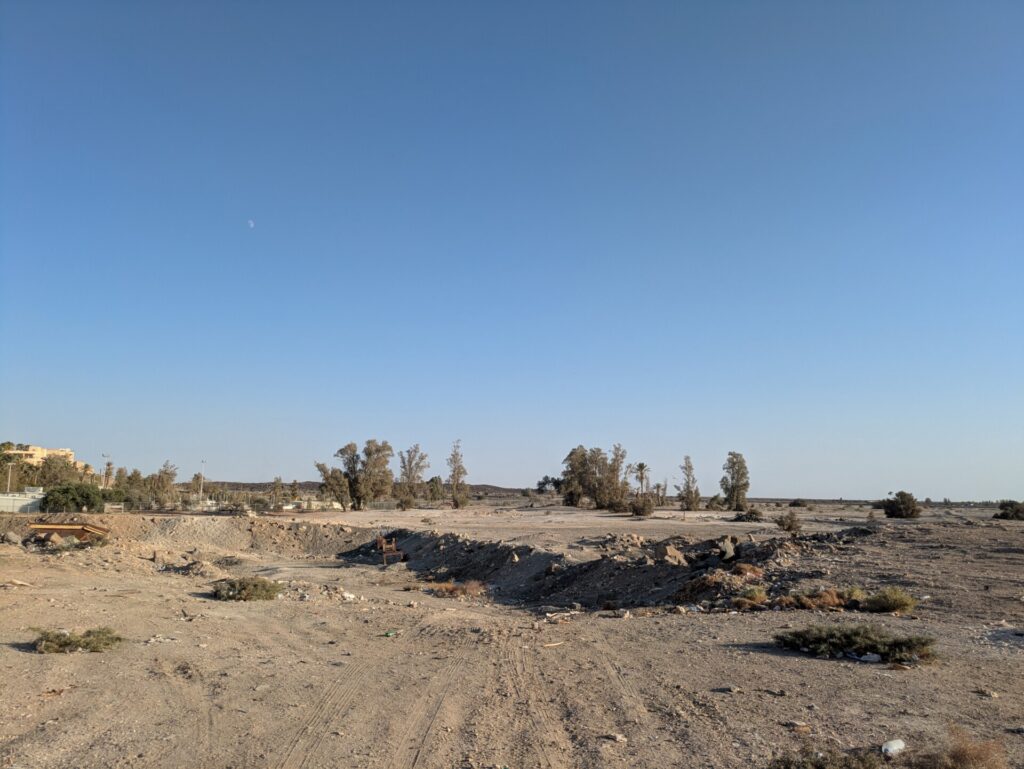
By the mid-20th century, the Jordanian government set its sights on Azraq’s accessible water resources, which are close to the surface due to the location’s shallow groundwater table. “We would dig for 5 meters and find water,” said Dawoud Isied, a former Azraq resident who is now an independent environmental consultant.
The government began diverting water from the basin to cities, such as Irbid, in 1963, and then to Amman in 1980. In 1983, 21.47 million cubic meters of water was pumped out. This number tripled in 2003.
By 2011, Azraq was supplying 17 million cubic meters to Amman and its 1.5 million residents alone, causing the wetland to shrink to 10% of its original size. At the time, Azraq housed 9,887 residents, and before their eyes, the four natural springs that discharged fresh water to the basin were completely depleted. Isied’s cousin, born in 1991, does not remember the basin at all.
Over the last few decades, conflict and wars in neighboring countries brought millions of refugees to Jordan’s borders. Amman’s population mushroomed, growing from 2.8 million to 4.2 million between 2010 and 2017. After the Syrian civil war began in 2011, the country received 1.3 million refugees virtually overnight, 400,000 of whom went to Amman. This put immense pressure on both the government and the scarce water resources to meet basic requirements.
The pumping and extraction of groundwater via government- and farmer-dug wells exceeded the estimated safe yield, drying up the water-bearing aquifers. The aquifer in Azraq had the capacity to yield 24 million cubic meters of water annually, but more than twice that capacity has been withdrawn through the 580 wells, according to a 2015 report by the U.S. Agency for International Development. Isied said that while the region would receive almost 30 million cubic meters of rainfall, the extraction was twice that. Scant and unreliable rainfall patterns have made aquifer recharge a challenge.
The gap between rainfall and extraction caused the water tables to plummet significantly, dropping by more than 80 feet in the last three decades. Now, even when wells are dug deep, to 230 feet, the farmers are coming up empty, Isied said. Meanwhile, the diverted water has managed to serve everyone except the residents of Azraq.
Isied and other experts believe the country’s lack of a native body of water adds to this problem. Jordan shares its borders with Syria, Israel, Iraq and Saudi Arabia. The country is almost completely landlocked, except for a sliver of coastline in the southwest, where it borders the Red Sea. This geography has exacerbated the country’s reliance on groundwater. And because Jordan’s rivers are located on the country’s borders, drawing their water has required entering into water-sharing treaties with Israel and Syria. This has proven to be inequitable to Jordan, with both neighboring countries exerting their influence to disproportionately withdraw from the upstream Yarmouk River, thereby affecting the downstream quantity of water for the kingdom. Another major aquifer that sits on the border of Saudi Arabia and Jordan is being heavily pumped by both parties.
Transporting this water inland is a formidable challenge. This energy-intensive and increasingly expensive process — which relies on decades-old water infrastructure — has also resulted in heavy water losses due to leaky pipes. “We pump water over such long distances, between 150 and 350 kilometers,” said former Water Minister Hazim Al-Naser. The water losses are understandable, he added.
This prompted the government to look for water sources within reach, and Azraq’s 1,350 square miles of wetland ecosystem were an obvious choice.
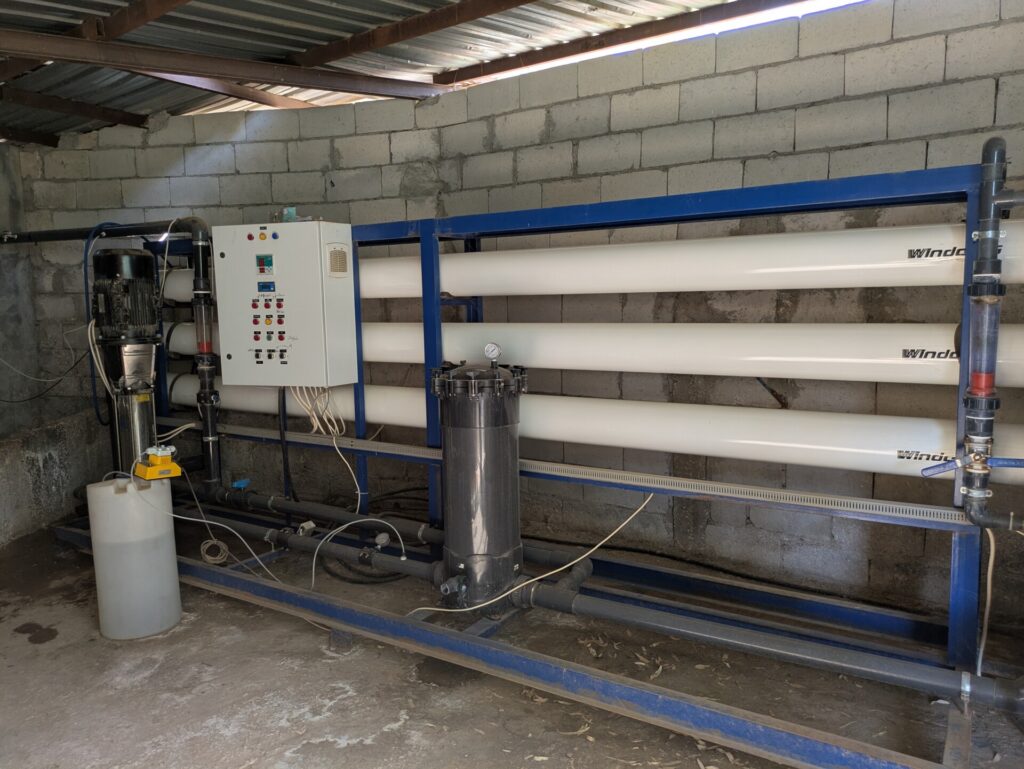
More than half of Jordan’s water reserves are used for agriculture. While the government depleted one of the most significant basins in the country, agriculture in Azraq burgeoned from 2,200 acres of cultivated area in the early 1980s to nearly 25,000 acres by 2010. The region has traditionally farmed olives, grapes and pomegranates. When Naif Alafeer, 72, bought farmland in the 1980s, he enjoyed unfettered access to groundwater. Back then, every farm had a well, and nobody needed a license. But in the early 2000s, the Ministry of Water and Irrigation introduced stringent regulations for farmers drawing out groundwater.
A legal well is one that was licensed and then lawfully drilled on land covered by an official title deed. In 2005, the ministry banned drilling of all new wells, and by 2014, ordered that all unlicensed and unregistered wells in use (including ones drilled illegally after 2005, for which the owners had not sought licenses) must be closed or filled up by the owners. These regulations also came with an order for farmers to install a metering device on their licensed wells, after which they would be taxed depending on their extraction “quota,” or rate. Those rules have subsequently undergone several amendments since.
Isied, who was working with the Ministry of Water and Irrigation at the time, remembered this unfolding differently. “All of a sudden, one morning, the ministry deems that some are illegal wells,” he said. Between 2007 and 2020, the ministry reportedly closed down over 1,500 illegal wells.
“When I was the minister, I oversaw the demolition of over 1,000 wells,” said Al-Naser, who, between 2003 and 2004, held two key portfolios in the Jordanian government: agriculture and water. He also dragged the well owners to court for digging wells after the practice was banned. “This current government has decided to license over 1,700 illegal wells,” he said, claiming that this will be disastrous for the water supply.
To quantify the legal and illegal extraction of groundwater, Klassert and his colleague Samer Talouzi, an associate professor at the Jordan University of Science and Technology, studied the inflow and the outflow. They found that more water was being pumped out of the water system than being pumped in. Talouzi recalls Klassert telling him that there is more wastewater than there is water. “I told him that it can’t be possible; usually, wastewater is 90% of the consumed water.” That’s how they found that nonrevenue water — water that is stolen, billed and unpaid, or lost through leakage — accounted for half of the water in the system.
For those who pay, the water bill has become a major contention among farmers in Azraq; they are furious that the state, which depleted their once freely available groundwater, is now slapping them with a hefty bill. Alafeer, who has divided his land between his sons, says that if not for the wells on their land, they would not be able to afford the water to farm. But the government’s metering system is costing him 7,000 Jordanian dinars ($9,877) annually, or more than 2 dinars ($2.80) for every cubic meter.
Three of the seven farmers I spoke to have filed lawsuits against the government for these astronomical water bills. The government also stands accused of accepting bribes to selectively grant permits and drill new wells.
Alafeer mentioned Syria’s damming of the Yarmouk River, one of Jordan’s largest tributaries, which reduced the share of water that flows to Jordan. The previous Syrian government violated the 1957 water-sharing agreement by constructing 49 dams on the river, 23 more than it was allowed. The annual flow of the river fell from 23.73 million cubic meters in 2023 to nearly half that last year.
While many of the native Azraq residents can trace their ancestry to Lebanon and Syria, they harbor some latent resentment toward the refugees coming into the country and “taking over resources.” A farmer who did not wish to be named said refugees also enjoy agricultural subsidies. They receive free housing, water and electricity. “I think of selling my land and applying for refugee status,” he joked.
Drip irrigation remains one of the common ways to irrigate their lands. While some use their wells, connected to a pipe system that runs through their farms, others rely on the water station near the town that stores pumped water. It has a main pipe that farmers connect their pipes to.
But another challenge lurks beneath the surface. After decades of overextraction, Jordan’s groundwater has turned salty.
Near the town center was an 8-acre farm with a few olive trees, their dark purple and green bulbs ripe for picking. An array of pipes revealed a vast drip irrigation network. Its owner is Bassam Abu Rashid, 40.
I made my way to a small office that he’d built on the farm. He furrowed his brow as he pointed to the water coming out of his 230-foot well, which is now extremely saline. It’s the result of depleted groundwater increasing the concentration of dissolved salts — as noted in a 2025 research paper by Talouzi. Repeatedly irrigating crops with water containing even 500 to 600 parts per million of soluble salts can affect crops, unless immediate rainfall flushes the salt away.
Abu Rashid and the other farmers cannot rely on the scant and unpredictable rainfall to do this.
He has been farming since he bought this land in 1990. He grows olive trees, date palms and grapes. “All these crops are equally affected,” he said. After a good harvest season, Abu Rashid’s annual olive yield would approach 22 tons. Now, it’s 16.5 tons at best, and he’s lucky if it reaches 11. If this continues, he said, farms such as his will have to close down.
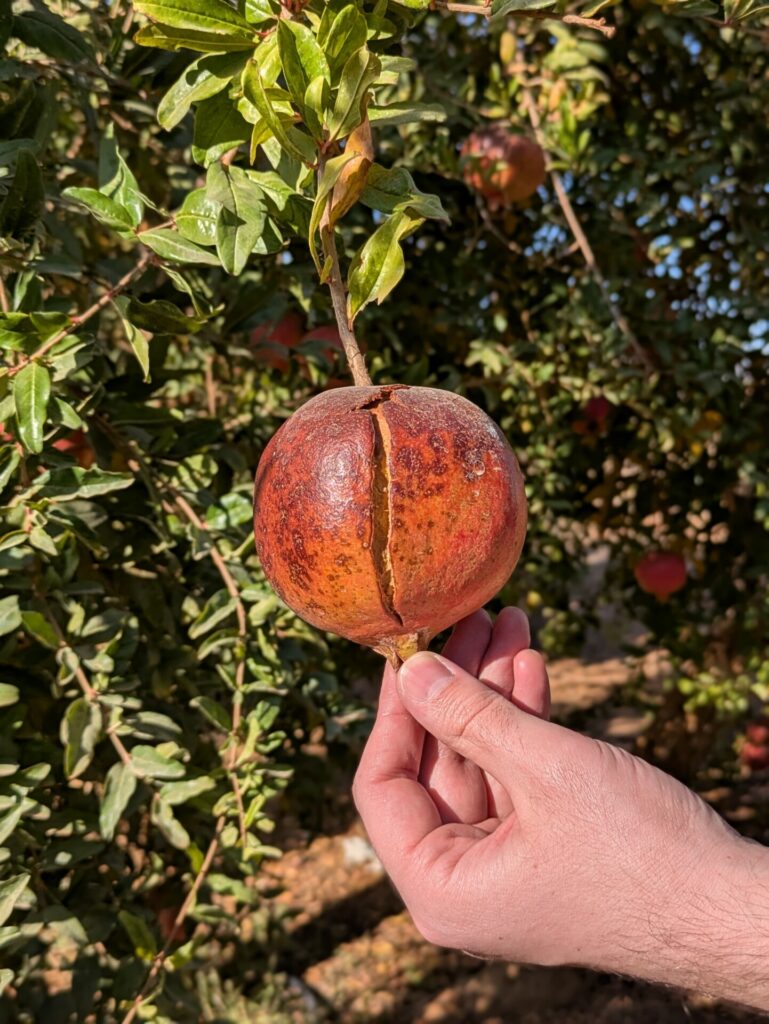
Abu Rashid was forced to install a desalination unit. The machine takes up a whole room that has been built on the farm. Abu Rashid’s newer, three-part filtration system feeds the filtered water into the drip irrigation network. He bought the machine in 2024 for 45,000 dinars ($63,470).
Before installing the machine, his leafy greens and other smaller crops did not yield any harvest. Now, he produces 22 to 33 tons of olives annually and 5.5 to 11 tons of grapes. He sells two pounds of olives for half a dinar to the central market in Amman, but the producers there sell it in turn for nearly twice that. He spends a minimum of 1,500 dinars ($2,100) on fertilizers annually. “Farming is not profitable,” he said. “I will happily move on to something else if I can.”
His monthly electricity costs have climbed to 500 dinars per month. The capital-intensive desalination unit has a shelf life of five years and requires annual maintenance. He currently has a loan of 800 dinars from the Ministry of Agriculture. Talouzi’s paper affirms that desalination machinery, while the most common method to tackle salinity, is capital- and energy-intensive, which makes it a financial burden for farmers like Abu Rashid.
The main costs associated with agricultural production come from the energy for pumping water, which accounts for up to 50% and which farmers have no choice but to pay. For smallholder farmers like Abu Rashid, this number is probably around 75%. But his problems do not end there, as the increasing unpredictability of the weather is a constant threat to his yield.
As the November sun shone overhead, Abu Rashid lit a cigarette. He explained that the rain had been delayed by two months. This exerts tremendous pressure on the wells. The crops, once fed by rain, now rely on irrigation, increasing groundwater extraction and costs for farmers. The changing climate has made rainfall even more scant and unpredictable.
Between 1995 and 2013, 13 of the 19 years exhibited below-average rainfall. The farmers said that the knowledge that used to help them predict the rains and plant accordingly doesn’t hold anymore.
A few miles away, Sami Alqadi’s farm is bustling at 4 p.m. Alqadi, 68, toting a weathered hat, holds freshly plucked dates. As a grower of pomegranates, olives, grapes and leafy greens, he says hot days keep his pipes constantly shuttling water to 4,600 of his trees. Alqadi plans to remove nearly 5 acres’ worth of grapevines because they are using too much water.
The pomegranates planted in January are harvested in October. When I visited the farm in November, clumps of the red fruit were still clinging to the tree. Upon closer inspection, some of them had a rusty sheen rather than being bright vermilion, and were cracked through the middle. “It’s because of the heat,” Alqadi said. The cracked ones still go on to be sold in the local market, but do not make it past the town’s borders to the capital, where the bright red, uncracked selection eventually ends up.
Like heat waves, frost kills fruits and trees alike. Alqadi spoke of a winter, nearly 20 years ago, so cold that the freezing temperatures destroyed some of his trees. A two-week frost in 2008 is said to have killed over 460,000 square miles of fruit and vegetable crops, costing the government nearly $14.2 million in compensation aid.
Every projection from scientists is more bleak than the previous one. Precipitation models estimate a decrease in annual mean precipitation that farmers are already clocking. By 2030, rainfall in Jordan is expected to decrease by between 0.08 and 0.78 inches, and by between 0.51 and 1.02 inches by 2080. More than 90% of the country has rainfall that is less than 8 inches per year. This will also make the country hotter, with temperatures rising by between 2.5 and 4.5 degrees Fahrenheit by 2030, and by between 3 and 8 degrees by 2080.
With an increasing population and a more export-oriented agriculture sector, Jordan’s water demands are growing faster than the country’s ability to sustain them.
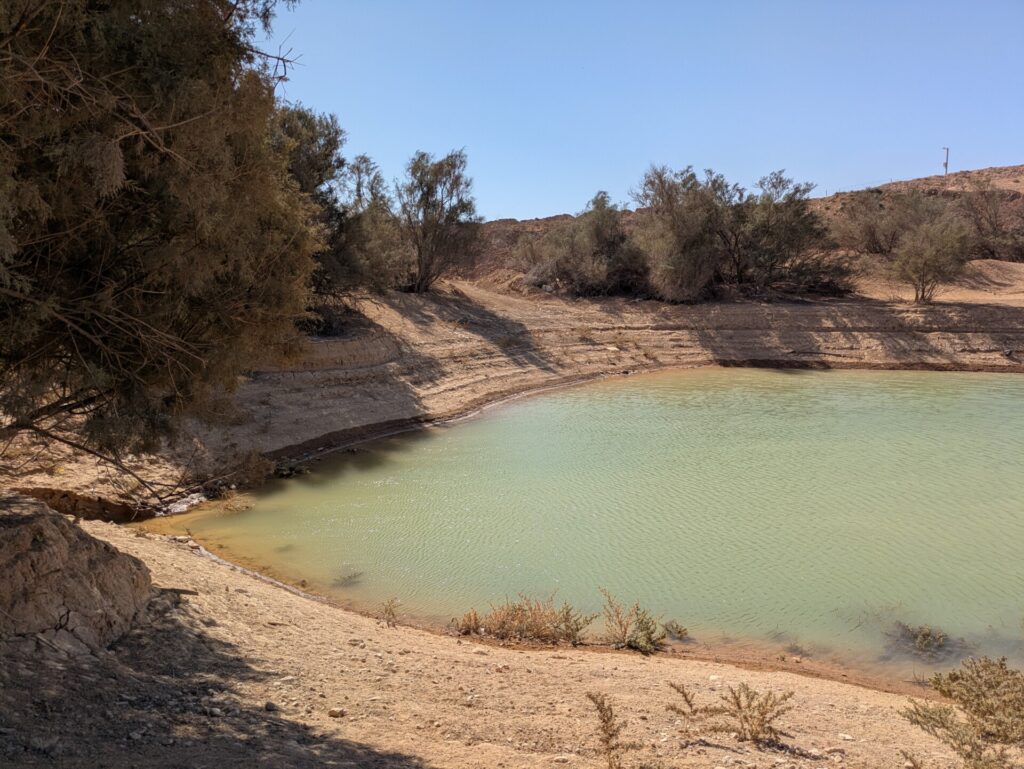
“At the stage we are currently at, we need to develop additional and sustainable water resources,” Talouzi said. By this, he means turning to rainwater harvesting and reusing wastewater. The country’s potential for rainwater harvesting is estimated at 23.74 million cubic meters per year. The government aims to reuse 91% of its treated wastewater in agriculture. Yet researchers claim that it is not yet easy for local communities to use the method.
Al-Naser, the former minister, asserted that over the last 20 years, the government has spent anywhere between $5 billion and $10 billion to implement several water treatment systems, including wastewater reuse and desalination infrastructure. The construction and development of the Aqaba-Amman Water Desalination and Conveyance Project alone is costing $250 million. The project aims to provide 300 million cubic meters of drinking water per year to the residents of Amman and Aqaba.
Given the scarcity of water, Jordan has had to be strategic about its use and reuse. Reusing “gray water” — wastewater that does not include human waste — is becoming increasingly popular, but so are the concerns with potential transmission of waterborne diseases, especially if this water is used to irrigate crops. “If the wastewater is not treated properly, it can contaminate crops, potentially spread diseases to people who consume them, and lead to unsafe sources of potable water,” Talouzi’s 2025 research paper notes.
While such solutions exist, some of them are out of reach for some people. For instance, Methods for Irrigation and Agriculture, a nonprofit dedicated to solving the country’s issues with water, has been distributing desalination machinery, but it has not reached farmers like Abu Rashid.
The Inter-Islamic Network on Water Resources Development and Management (Inwrdam) is working more closely with farmers. With a mantra of reuse, recharge and retain, the organization is using nature-based solutions to build within the natural landscape to conserve water. One of its projects, overseen by Fadi Isied, attempts to ensure farmers in Azraq and neighboring towns can access the gains.
Isied notes the large-scale investments being undertaken in Jordan to treat water. “Treated water often has limited uses, especially in agriculture. Because of this, we started to focus more on rainwater as a natural and underutilized resource that can help reduce pressure on our limited water supplies,” he said.
Inwrdam, with support from the Netherlands-based Acadia and IHE Delft Institute for Water Education, is building rainwater harvesting pits to boost aquifer recharge in the northern regions of Azraq, Mafraq and the Jordan Valley. The project has harvested 21 million cubic meters of water through various check dams and ponds, which has benefited 176 farmers in the region.
While the nonprofits try to resolve this, mistrust is brewing between the government and the people. For instance, Isied mentioned how the government is essentially asking people to quit farming to avoid strain on groundwater resources, while it is approving mega farming projects in the same region.
Talouzi, who has been working in and studying the agriculture sector for almost three decades, sees the idea that all agriculture is equal as a common misconception. He contends that agriculture contributing to food security, like that which smallholder farmers like Abu Rashid practice, is to a large extent sustainable. “Then there is the large-scale agriculture that is destined for export to nearby rich countries.” What surprises Talouzi is that water is subsidized for both types of farming, along with energy and land.
Farmers like Abu Rashid, who are feeling the pinch of water and energy costs, are slowly being elbowed out of their profession. For him, the potential solutions are not enough to keep the gates of his farms open. He dreams of a day when he will not have to till his land or worry about water. In the meantime, every difficult day on the farm is a step closer to him taking up a job elsewhere.
Zaid Albalous contributed reporting.
Become a member today to receive access to all our paywalled essays and the best of New Lines delivered to your inbox through our newsletters.