


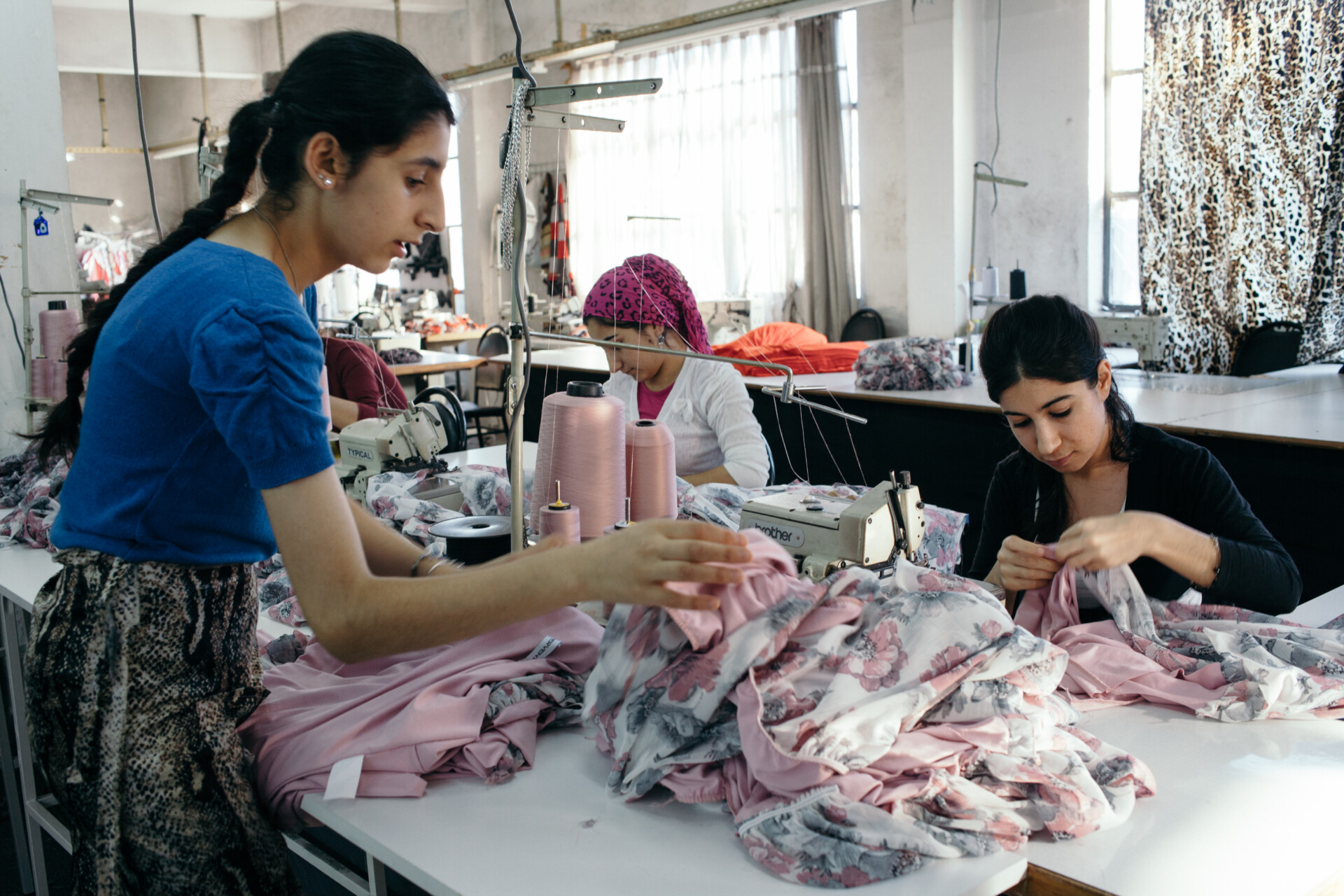
I met the women on a Sunday, their only day off. The temperature in Malatya, a city in eastern Turkey, was 122 degrees. They had dressed carefully — light makeup, fresh nail polish, their finest headscarves — and as soon as they arrived, they examined each other’s clothing. We sat in a park, and the women sent their children off to play. They were excited to learn that this article would run in an American magazine; the thought that it might reach the people who actually buy the denim clothing they make mattered to them.
Before we began, the women asked to use pseudonyms to protect their identities and livelihoods, the fear of retribution always on their minds. So I asked the women to choose names that they felt represented them, not necessarily a different first name from their own, but any noun or description that they felt captured their essence. They quickly caught on. “Green,” one of them said, because it’s her favorite color. “Nature,” said another, because she dreams of returning to her village and living close to nature in retirement. “Tired,” said the third woman. It captured her state most of the time.
“What does the factory remind you of?” I asked, posing the question to anyone who wanted to chime in.
“A dough machine,” Nature replied. “Like a machine that mixes flour, water and yeast to make dough. Working in the factory is very tiring. You enter as one person and come out as another.”
Nature has worked at Baykan Denim for eight years, producing jeans for world-famous brands like Calvin Klein and Tommy Hilfiger. Despite her seniority, she still earns minimum wage, taking home 22,104 Turkish lira (or $533) a month in 2025. Monthly rent in Malatya averaged around 15,000 lira for that year. The Confederation of Turkish Trade Unions, the largest trade union confederation in Turkey, estimated that a single worker needed 39,123 lira, or about $916 a month, to cover basic living costs. An hour of overtime at the legal rate adds only about $4. Nature said that there is little left after basic expenses. Even buying new clothes or going to the cinema can take months of planning.
But what hurts most, she said, is the harassment and insults she endures from her superiors at work.
“I tell them I don’t want to do overtime. Because of my age, I can’t stand for long periods. When I object, the foreman insults me. The managers say, ‘If you don’t work, we’ll go to Egypt; labor is cheaper there.’ At my age, I don’t want to be insulted by someone younger than me,” she said.
Her account echoes those of other factory workers, many of them women, illustrating something that factories in Turkey rarely acknowledge: Overtime here is not optional. It is mandatory.
“Because of my age, I have to stay silent,” Nature continued. “I’m 50. I’m always told that I won’t find work elsewhere at my age. That’s why I stay silent. I dedicated years of my life to this factory.”
New Lines sent media queries to Baykan Denim, inquiring about allegations of long shifts and threats that those who refuse overtime could lose their jobs. The company did not respond.
New Lines also sent media queries to PVH Corp., which purchases its products from the Turkish supplier, inquiring about those same allegations, but received no response.
Turkey has become the hidden engine behind one of fashion’s most visible staples. The apparel labels of Levi’s, Ralph Lauren, Coach, Tommy Hilfiger and Calvin Klein hang in storefront windows across the United States and Europe. Their supply chains trace back to Malatya, a city still scarred by earthquake damage, and Urfa, on the scorching plains of Mesopotamia — where, a New Lines exclusive investigation has found, the factories churning out these jeans, and sometimes luxury apparel, are rife with industry abuses and violations of both international standards and Turkish labor law. Women laborers especially bear the brunt.
The provinces where these factories operate — Gaziantep, Sanliurfa, Malatya — also have some of the country’s highest femicide rates, highlighting a lack of social services available for vulnerable women. According to the We Will Stop Femicide Platform, dozens of women in these provinces died from physical violence perpetrated by a male relative or associate in 2023 and 2024 alone.
A field research study titled “Working Conditions of Female Textile Workers in the Southeast,” published in 2025 by the Turkey-based independent, grassroots United Textile, Leather and Leather Goods Workers’ Union (known by its Turkish acronym BIRTEK-SEN), offers statistical context for what Nature, Tired and Green describe. The union’s broader research draws on interviews with 116 women across 35 factories; this article draws on a year-long subset of that fieldwork focused on five factories directly linked to American brands — Kubra Ozak Tekstil, Baykan Denim, Zevigas, Talu Tekstil and Santuk Tekstil — based on interviews conducted in Malatya between February and May of last year.
Based on the union’s findings, 60% of the women interviewed worked overtime, and among those who declined to do so, 41.2% faced pressure and ended up working overtime anyway. In all factories except Santuk, 39.2% of workers were threatened with dismissal for refusing overtime; 17.6% reported being insulted, with language such as, “Are you blind? Are you stupid?” Sometimes in apparent retaliation, they were assigned heavier workloads.
Baykan Denim, based in Malatya, is listed in the Istanbul Chamber of Industry’s “Turkey’s 500 Largest Industrial Enterprises.” It is a Tier 1 supplier — meaning a brand’s direct supplier, the part of a supply chain a brand is expected to oversee most closely — to PVH Corp., the global ready-to-wear giant that owns Calvin Klein and Tommy Hilfiger. Exporter association and sector reports classify Baykan Denim as one of Turkey’s “flagship” producers, citing its high-volume denim output, integrated facilities and ability to work directly with international brands.
On Feb. 6, 2023, when an earthquake struck southeastern Turkey, at least 10 towns, including Hatay, Malatya, Urfa and Adıyaman, were directly hit, with the official death toll standing at 53,537, in addition to millions of other people displaced from their homes.
Yet Baykan Denim gave workers who had lost their homes in the earthquake and had been forced to leave Malatya only five days to return to work. Those who could not return to work at such short notice were dismissed without severance pay.
At least 28 of the women who lost their jobs brought a complaint to BIRTEK-SEN and the Clean Clothes Campaign (CCC), a labor rights network that pressures global fashion brands over conditions in their supply chains. According to CCC, most of the brands involved in the complaint acknowledged that Baykan’s refusal to pay severance violated its own standards, but advised the workers to take the company to court. In December 2024, Baykan settled its case with most of the complainants.
After hearing from Nature, the woman who chose to be called “Tired” decided to share her experience.
“I have worked nonstop my entire life,” she said. “I don’t know how many factories I’ve worked in. The working environment is the same in all of them. I’ve never worked anywhere that I would describe as good. Now they say, ‘If you don’t work more, we’ll go to Egypt.’”
Tired works at Kubra Ozak Tekstil, one of the local suppliers to top U.S. and European brands, operating in Malatya and Urfa. Since the 2023 earthquake, she has been living in one of the prefabricated emergency housing units built to shelter the displaced in what locals call “container cities,” with living space no larger than 226 square feet, or the average residential one-car garage. Tens of thousands of people have been living in them for the past three years, facing aid cutbacks and uncertainty about where to go next.
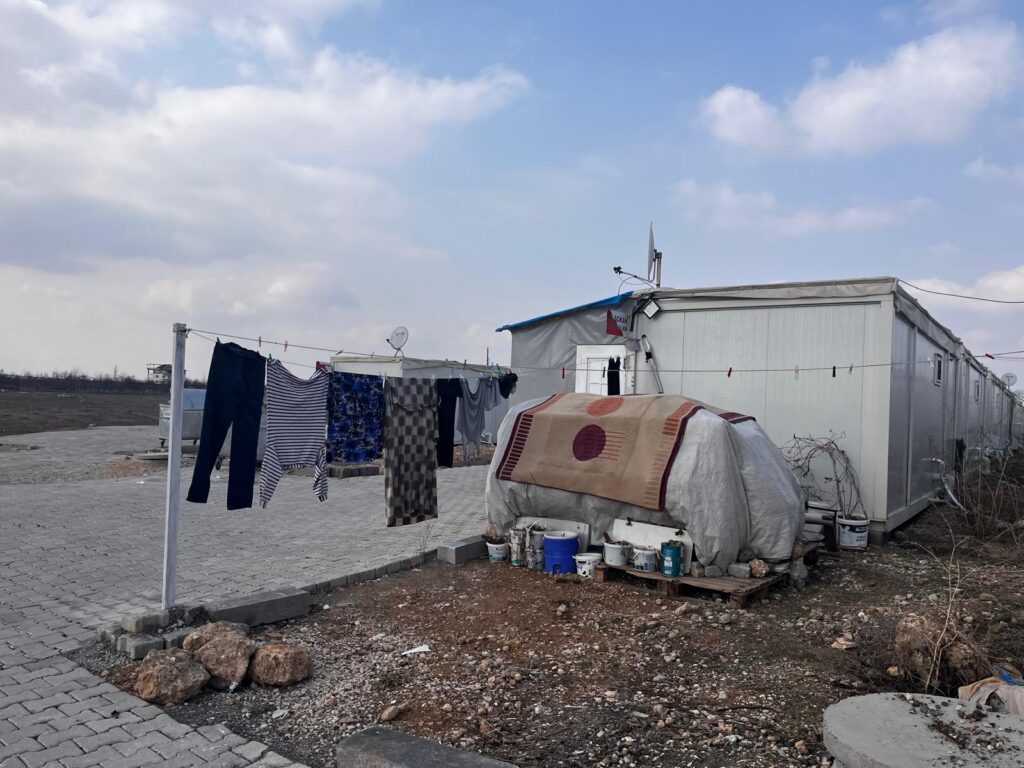
“I feel so overwhelmed, as if I’m stuck in this world. No matter what I do, my life doesn’t change,” she said. “Those who wear the jeans I produce will feel like royalty.”
Kubra Ozak Tekstil, part of Turkey’s leading denim export company Ozak Global, and a major denim supplier listed in the official supply chain disclosures of Levi’s, Ralph Lauren, Lacoste, Mango and Inditex, was founded in 1985 by the Akbalik family. As one of Levi’s main suppliers in Turkey, it produces 6.6 million units annually across facilities in Istanbul, Malatya and Urfa — nearly 20 acres of production space. According to data published by Open Supply Hub, a U.S.-based nonprofit that tracks supply chain data for the public, as of July 12, 2025, the Malatya facilities alone employed between 500 and 1,000 workers.
Kubra Ozak made headlines in 2023 over worker protests that began on Nov. 7 of that year, demanding better conditions and the right to unionize. Workers tried to bring their demands directly to Levi’s, Ozak’s main buyer, chanting the slogan: “Iconic brand, iconic failure.” Levi’s responded by publicly stating that it was monitoring developments in its supply chain and would review the relationship — but the announcements produced no concrete change. As the protests continued, a 2024 report by the U.S.-based Worker Rights Consortium (WRC) found that conditions at the factory conflicted with the International Labour Organization’s forced labor standards on at least four counts: workers pushed into overtime against the principle of voluntariness; insults, pressure and threats of dismissal for objecting; retaliation against union activity; and workers in economic distress pressured to waive their rights.
The WRC’s report states that Levi’s was informed of the violations by the end of 2023. Workers interviewed for this story say the company’s public language of “monitoring” and “remediation plans” never translated into changed conditions on the factory floor.
Bilge Seçkin Çetinkaya, a founder of CCC Turkey who has taken part in audits, including those of the Fair Wear Foundation, helped lead the campaign against Levi’s.
“The story Levi’s sold to the whole world was hollow,” she told New Lines. “Even though we informed them of these rights violations and they promised to stop production at this factory, they did not fulfill this promise. That was a complete ‘iconic failure.'”
New Lines reached out to both Kubra Ozak Tekstil and Levi’s for comment about these allegations. Neither has responded as of the publication date.
Çetinkaya, who has audited numerous factories, described the wider supply chain to New Lines this way: “In Turkey, Bangladesh and Vietnam, workers receive low wages and work under harsh conditions. Their labor is evident in the clothes sold in U.S. stores. Factories establish a subcontracting system that takes on more orders than they can handle, driving down prices. Big brands’ products reach the most mistreated women and child workers at the bottom of a chain extending to unregistered workshops. It’s unthinkable that they are unaware of this.”
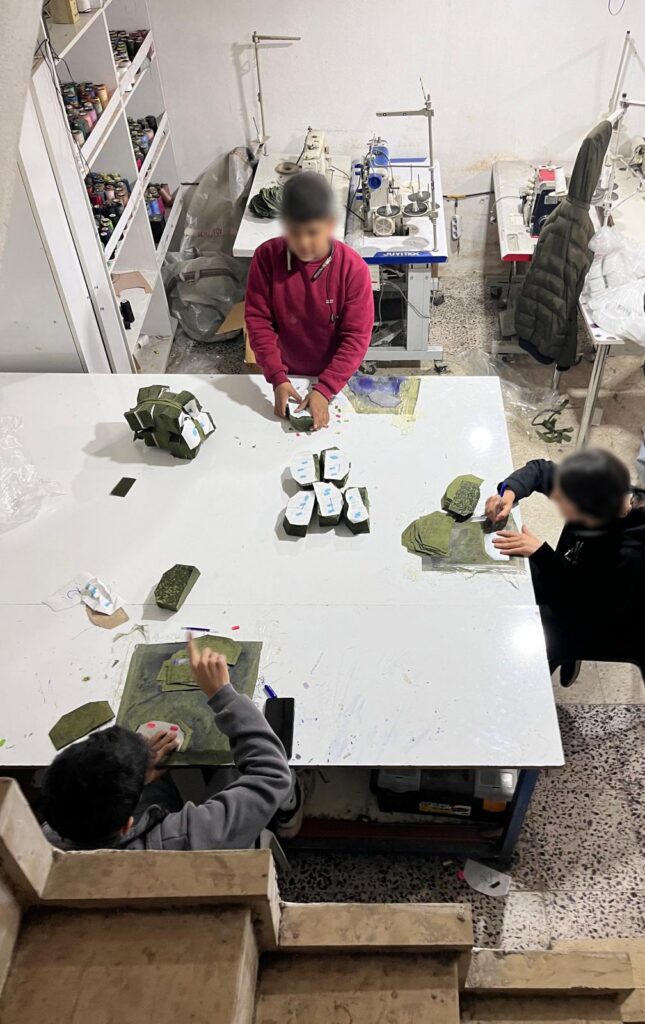
The Istanbul Apparel Exporters’ Association (IHKIB) is one of the key sectoral bodies lobbying the Turkish government on behalf of the industry to shape the country’s export policy. It works closely with the conglomerates (often CEOs of companies are also part of the association) and the state to monitor export performance. Recently, the association recognized another local supplier to top international brands like Coach — Santuk Tekstil — with an export award.
New Lines contacted IHKIB to ask whether it was aware of women workers’ allegations of forced overtime, verbal abuse, discrimination and other labor rights violations, and where it stood on these issues. IHKIB did not address the allegations directly. Instead, it claimed that Turkish manufacturers supplying global apparel brands are subject to strict inspections under national law and the brands’ own social compliance requirements. It said that “practices that violate legislation are absolutely not permitted” in areas including working conditions, wages and social rights, occupational health and safety, working hours and registered employment, and maintained that companies that fail to meet these standards cannot continue supplying global brands or exporting their products. IHKIB also claimed that Turkey’s place in the global apparel supply chain rests on a “registered, auditable production infrastructure compliant with international standards.”
The women interviewed for this investigation described a very different reality.
Santuk Tekstil is also the one factory in this investigation whose brand connection yielded a corporate response. Contacted for this report, Tapestry, the parent company of Coach, responded to this investigation by email. Logan Duran, manager of the company’s ESG and Sustainability Department, said suppliers undergo annual third-party audits and that employees have complaint mechanisms available, adding that only three formal complaints were received across Tapestry’s entire global supply chain in 2024. Tapestry said that Santuk Tekstil had been “mostly compliant with the rules” in its audits over the last three years, and that any issues identified had been resolved.
Interviewed workers told New Lines that the “complaint mechanisms” usually put them at risk of losing their jobs, because factory management is usually made aware of most complaints, with no protection offered to the workers making them. A low complaint count, argued the workers, often measures the fear that laborers feel of losing their jobs rather than labor law compliance by management.
In the course of this investigation, New Lines reached out to Levi’s, Ralph Lauren Corporation, PVH Corp. and the Fair Labor Association, with queries about allegations of overtime coercion, union suppression, audits and complaint access. None responded as of publication time. Kubra Ozak Tekstil, Baykan Denim and Zevigas Tekstil also did not respond to requests for comments about the allegations.
The woman who picked “Green” to represent her works in Zevigas — Malatya’s largest shirt manufacturer, which appears on the supplier lists of PVH and ranks among “Turkey’s most successful” firms in the shirt category. She explained to New Lines that her main issue pertains to her health: Her back and neck ache constantly from sewing in the same position, hour after hour, and she gets through the day on painkillers. She has asked, repeatedly, for permission to work seated, but said her request keeps getting refused.
New Lines asked Zevigas and PVH about workers’ accounts of being denied permission to sit while working and having chronic health complaints ignored. Neither responded.
At Talu Tekstil, women report an average of five days of overtime a week, with total weekly hours often exceeding 60. At Kubra Ozak, every interviewed worker described being systematically forced into overtime; during peak order periods, shifts reportedly stretch to 36 hours, with women sleeping on the machines or in the prayer room rather than going home.
One woman working at Baykan Denim described the toll: “Some evenings, I can only see my children when they are asleep. I can never make it to their bedtime. The foremen put so much pressure on us that I have panic attacks.”
Ayşe Arslan, an academic who won the British Society for Middle Eastern Studies Leigh Douglas Memorial Prize in 2020 for doctoral research that included months spent working inside textile workshops, described the compounding effect to New Lines. “The time and energy women allocate to productive and reproductive work leaves almost nothing for themselves,” Arslan said, referring to the fact that upon returning home, the female factory workers immediately pick up domestic chores. “When poverty and the other restrictive impositions of patriarchy are added to this, it is clear to see why women frequently experience feelings of burnout, anger, helplessness, injustice and unhappiness.”
Harassment compounds the exhaustion. Nearly 43% of women report being subjected to harassment or inappropriate behavior by a supervisor, manager or male co-worker — but only 2 out of 3 incidents get reported. Four-fifths of women say they don’t get adequate time to use the toilet during shifts, a restriction with direct health consequences, especially during menstruation.
None of the women interviewed has ever been able to speak candidly with an auditor, despite years of working on the floor. “Notice of audits comes a week in advance,” Nature told New Lines. “The factory is cleaned up nicely. Even overtime is eliminated so that workers don’t appear stressed. Workers chosen by the foreman participate in the audit. Papers are signed, and the factory returns to its old routine.”
Labor inspectors affiliated with Turkey’s Ministry of Labour and Social Security are formally responsible for oversight of the textile sector, but workers and unionists describe inspections that either don’t happen or are too limited to enforce anything — particularly in factories that benefit from state incentives and are held up as export success stories.
Sevda Karaca, a Gaziantep lawmaker since 2023, is known for her reporting — and direct action protesting — on rights violations in factories. In an interview with New Lines, she said the pattern goes beyond any single factory: “There are over 2 million workplaces in Turkey’s private sector, yet there are fewer than 1,000 inspectors to carry out inspections. Under these conditions, effective inspection is not possible. The majority of inspections carried out are done with advance notice, as a mere show.”
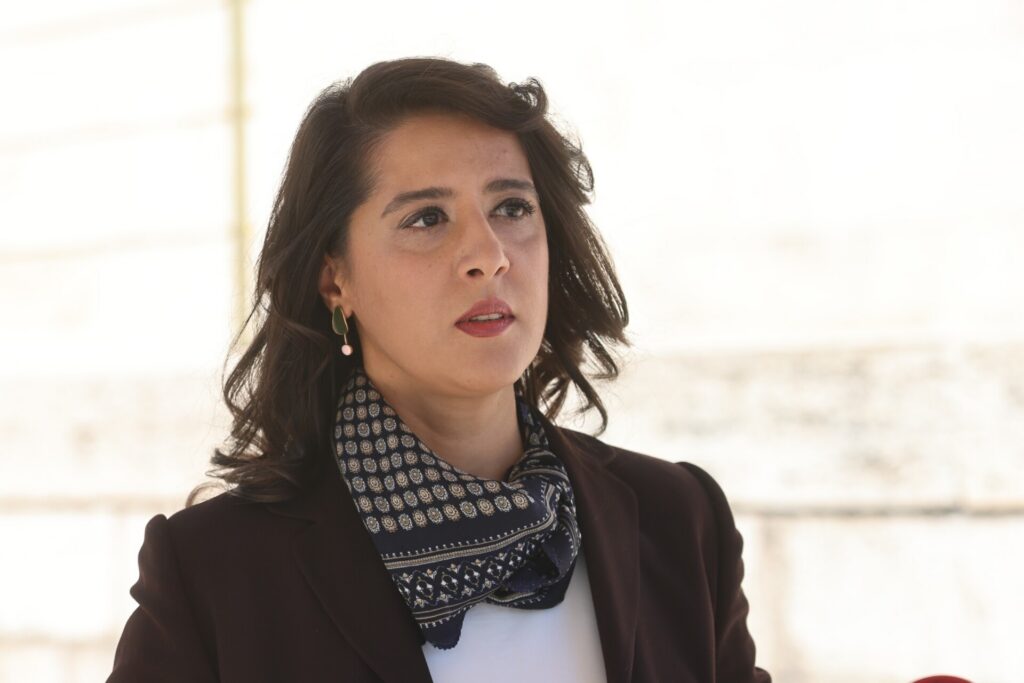
Karaca has submitted multiple parliamentary inquiries to the Ministry of Labour about textile factories in southeastern Anatolia; she said that responses have either not come or haven’t reflected conditions on the ground. “While female workers openly describe what they experience, it is impossible for the ministries to be unaware of it. Not inspecting, not recording and not taking measures is a choice,” she said.
She traces the incentive structure to specific economic policy: “Within the scope of the Medium-Term Programme and development plans developed by Economy Minister Mehmet Şimşek, the southeast was opened up to capital. With these incentives, owners were able to become factory owners without investing much of their own money.” She pointed to Ozak Tekstil, a main supplier to Levi’s, as “one of the concrete examples of this.”
The men running these factories sit close to state power. Mustafa Paşahan, founder of Zevigas, a Tier 1 supplier listed by PVH, which owns Calvin Klein and Tommy Hilfiger, is also vice president of IHKIB. Ahmet Akbalık, owner of Ozak Global Holding, whose textile business includes Levi’s supplier Ozak Tekstil, owner of Ozak Global Holding, has held senior positions in the Turkish Exporters Assembly and was floated at one point for a deputy minister post in the Ministry of Economy; a resort owned by the Akbalık Group hosted President Recep Tayyip Erdoğan and his wife, Emine Erdoğan, following the elections.
Back in the park, as the coffee ran out, I asked the women a different question: Would they like to write to the people who buy what they make?
Papers and pens came out. The idea took hold: What if these letters were printed as labels on the products themselves? Some imagined consumers reading them. Some imagined CEOs.
Nature was the most visibly disheartened. “My letter is addressed directly to the CEO,” she said, writing in Turkish. “Do you know about the abuse we suffer? I am being mobbed. Managers and foremen pressure us. I go home in tears every day. They hide everything from the customer. Remember our tears when you sell Calvin Klein. I am a human being.”
She drew her factory on a separate piece of paper and said she felt like an insect standing at the machine, day after day. “The machines wash people very well,” she said.
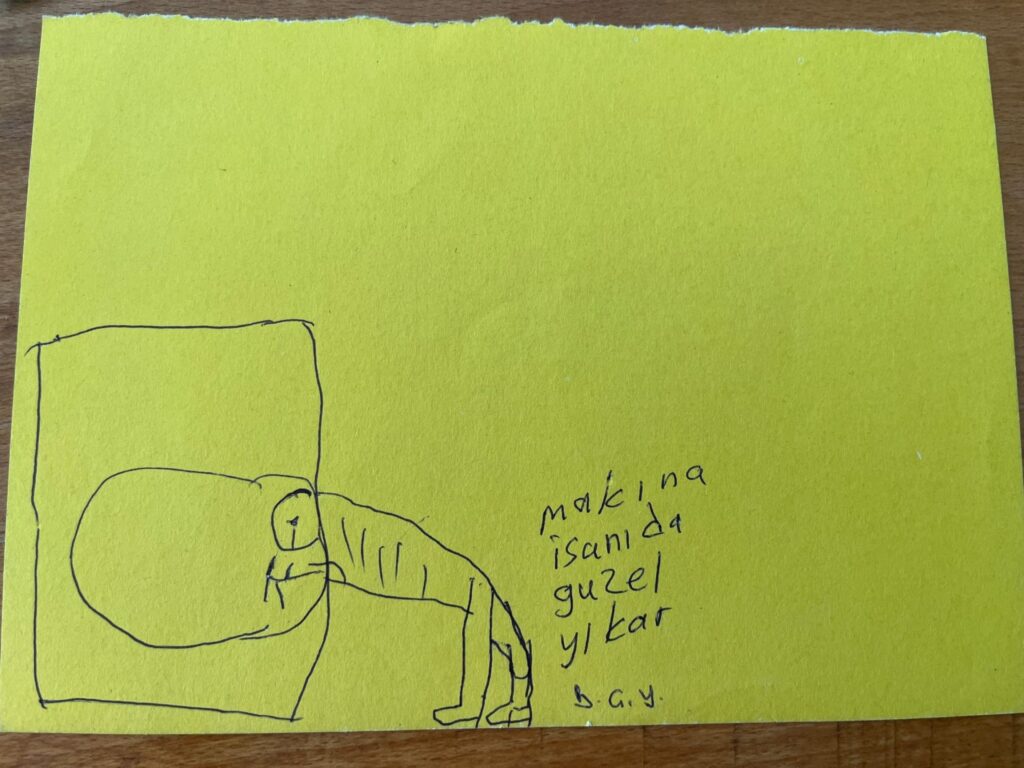
Tired lives alone now, but she still works overtime because she has little choice — like many other women working in Turkey’s textile industry. Tired worked the same long hours when she was married and raising her children. The marriage ended. The overtime did not. Tired wrote to Levi’s. “You produce perfect products, but I, who produce them, have to sacrifice my home, my children, my family for such a low wage. I am so exhausted, both mentally and physically, that sometimes I have no strength left to continue. Here, in Turkey, I am the cheapest worker Europe has created. There has been so much pressure and criticism on us for a long time that we are breaking down psychologically. Who am I? What did I want to do? Why am I here? I am here because I am a slave created by Europe. I cannot earn the money to look after my children or to reach a status worthy of human dignity.”
She lost her home in the earthquake; her husband and children left her, telling her she wasn’t a good mother because she was hardly around. “How can I be a good mother when I work so much?” she said. “I do so much overtime that I’ve always been a bad mother. In the end, my husband and I divorced. My children don’t want to see me.”
Green’s letter was shorter. “I would like them to see us as human beings. I would like our health problems to be taken into account. I would like them to talk to the workers.” She said that she wanted the brands to talk to the workers directly — not through a supervisor, not through an audit, but to them.
Become a member today to receive access to all our paywalled essays and the best of New Lines delivered to your inbox through our newsletters.