


It was late morning at the chemotherapy ward in Hotel-Dieu de France, one of Beirut’s top hospitals.
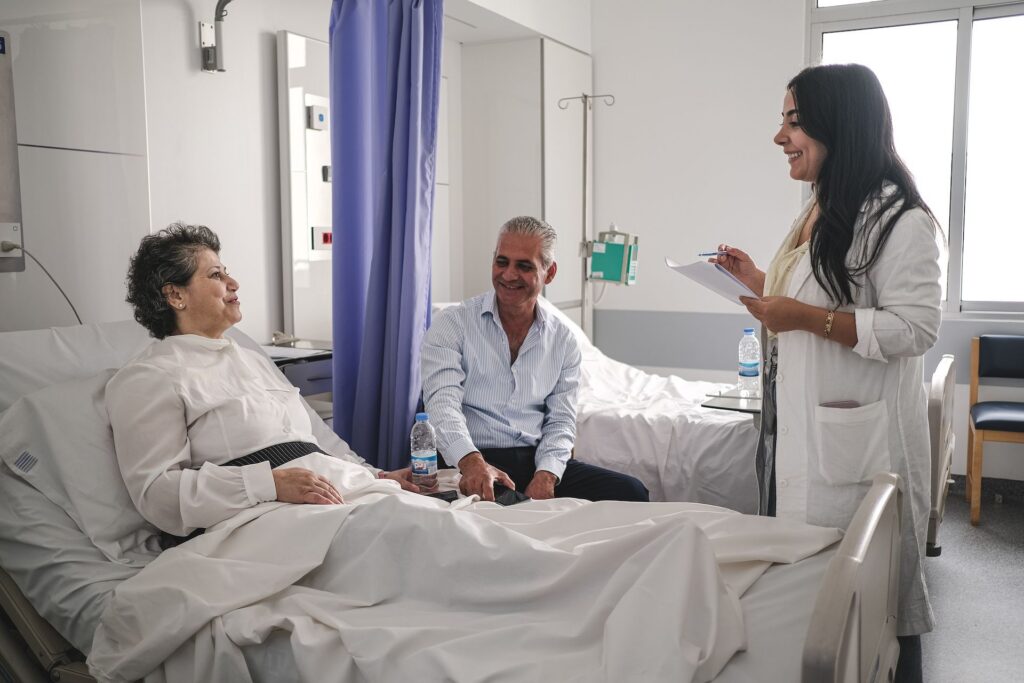
Each little room in the hallway, squirreled away somewhere in a hodgepodge of buildings, told a different story. Ziad Bejjani, a 62-year-old with lung cancer, whose wife Mireille dozed in the chair next to him. Abeer Abi Farraj, 48, a kindergarten teacher from the Chouf mountains with Stage 4 ovarian cancer and a stoma. Aida Haddad, 52, who wore a rented cooling cap to prevent hair loss due to treatment for her early-stage breast cancer.
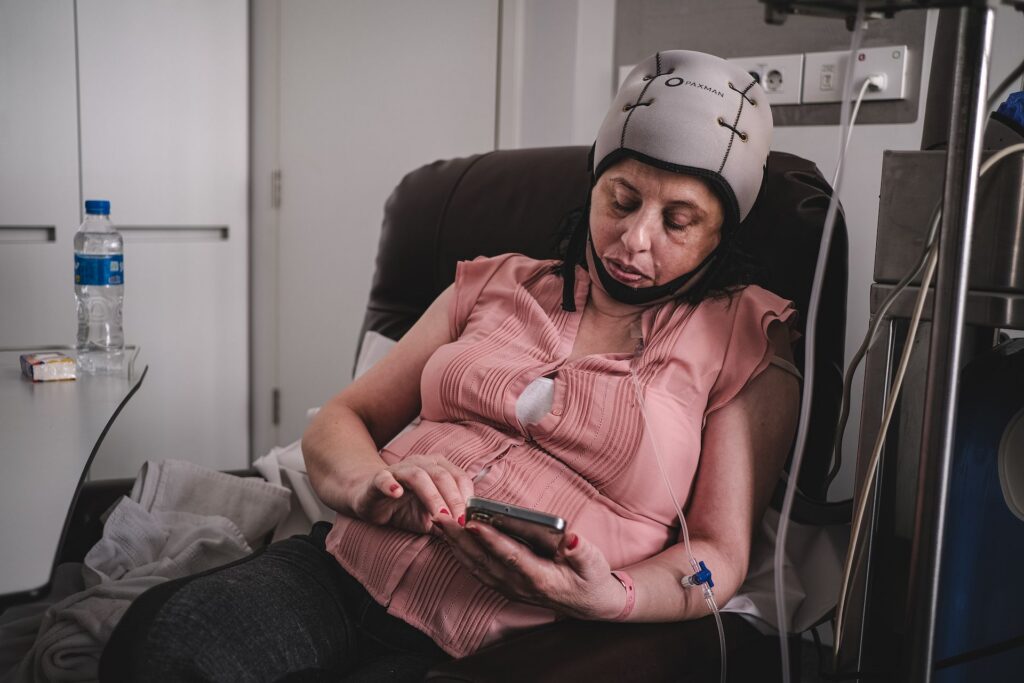
Others simply napped in their hospital beds, whiling away the several hours they would be attached to the IV bags of chemo and immunotherapy drugs.
Yet the patients here told me that they were the lucky ones. For the most part, their cancer was detected early, and they have a chance of successful treatment. Kareem Assi, a jovial 43-year-old, was already in remission; doctors caught and treated his testicular cancer in a matter of months, paid for by his insurance. He was simply getting chemo as a safety measure, he told me, as his wife Yolanda worked on a laptop next to his bed.
Outside this hospital ward, though, the prognosis for Lebanon isn’t quite so optimistic.
A country of 6 million people, Lebanon has the fastest-rising rates of both new cancer cases and cancer deaths in the world, according to a study published in October 2025 by the leading United Kingdom-based medical journal The Lancet. From 1990 to 2023, cancer cases rose by 162%. Cancer-related deaths increased by 80%.
Lebanon was once a beacon of healthcare in the Arab region. But the economy crashed in 2019 and hasn’t recovered since, sending doctors and nurses abroad for better jobs and making some medicines prohibitively expensive. Intense Israeli bombing campaigns on southern Lebanon and Beirut’s suburbs have also sent untold numbers of cancer patients fleeing for their lives, missing critical chemotherapy appointments, and at least one cancer ward suffered damage from the strikes, all of which can only worsen a worrying trend that was already in place even before the latest bloodshed.
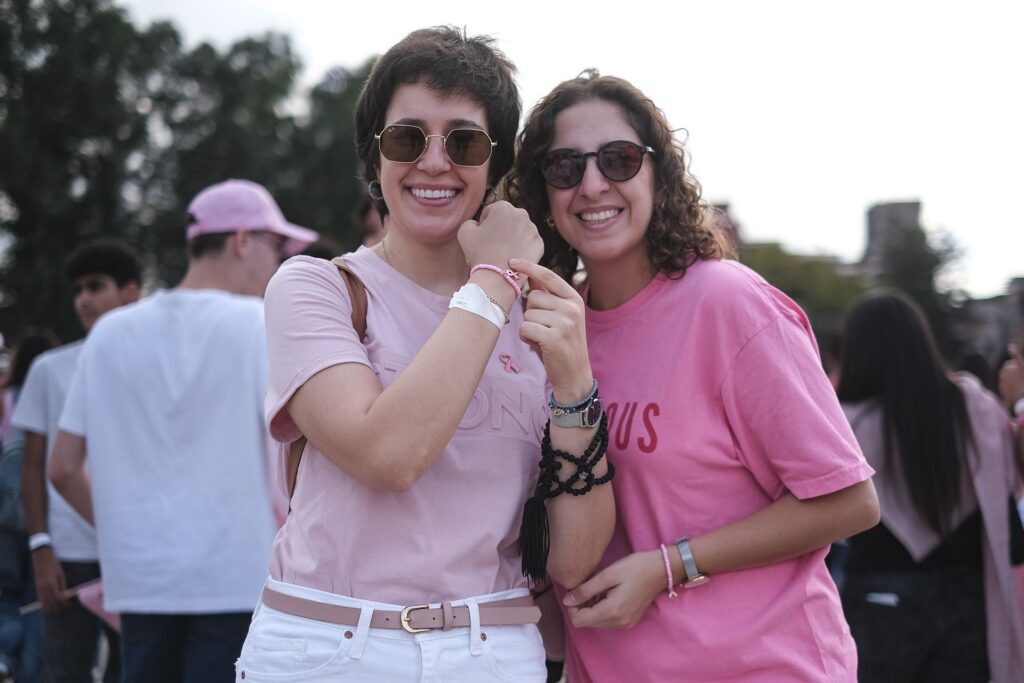
“Everyone abandoned me when I got cancer,” one young survivor, 32-year-old Layal Hachem, told me at a breast cancer rally in Beirut.
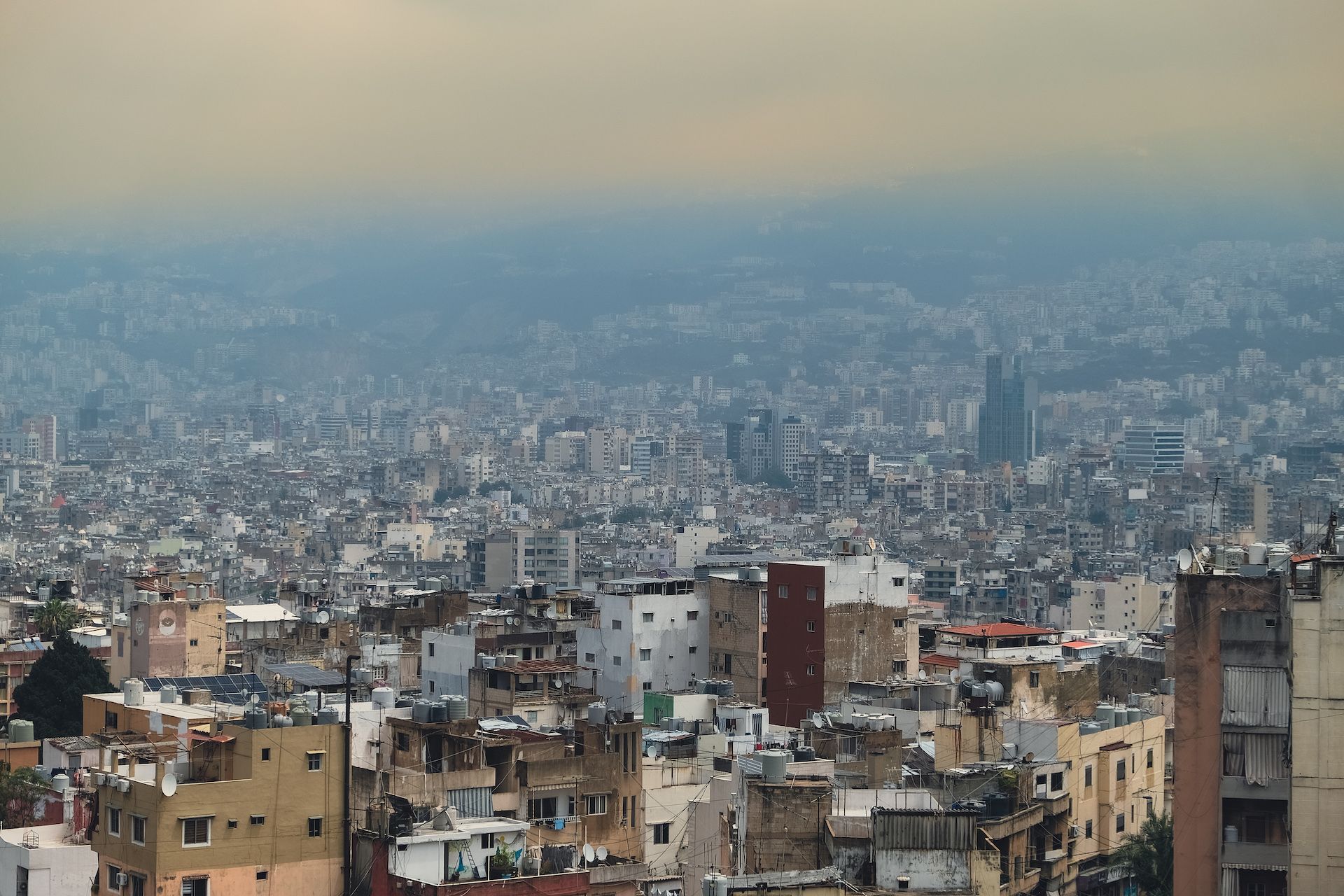
Most days, if I’m descending the road into Beirut from the village where I live, I see a thick brown smog choking the air above the city, sometimes snaking along the coastline, too. I long ago christened it the “brown layer,” an evil stew of car exhaust and fumes from the diesel that powers Beirut’s thousands of privately run electricity generators. You have to enter the brown layer if you want to visit the city. Or live there, or work there, or, indeed, see the doctor there.
When The Lancet’s cancer data came out, I heard a symphony of worried friends talking about the pollution. It must be the generators, or at least all the cars choking Beirut’s clogged streets, right? After all, the economic crisis since 2019 has meant fewer hours of state electricity and more reliance on private generators to step in.
There’s early evidence that they do play a role. Scientists at the American University of Beirut found in 2024 that carcinogens released into the air by generators have doubled since the last study in 2017, potentially raising the cancer risk by 50%.
Before the 2019 crash, “generators would work maybe six hours per day, and for every neighborhood there was one generator,” according to Dr. Fadi Karak, an oncologist at Hotel-Dieu. He’s part of a volunteer team of doctors publishing a backlog of cancer data from the past several years — years of economic downturn, war and pandemic in Lebanon. “After the crisis, every street has one generator that works 20 or 24 hours [a day]. This is an exposure issue,” he said.
But it’s still too soon to know if the increased pollution is behind Lebanon’s most recent new cancer cases and deaths. Its effects might show up in the future, after years of harmful exposure.
What we do know, doctors told me again and again, is the main reason so many people were getting cancer in the first place: smoking.
“Tobacco, tobacco and tobacco.” That’s what Dr. Ali Mokdad, a Lebanese-born researcher who helped author the recent Lancet study, told me when I asked for the top three causes of cancer in Lebanon. According to World Health Organization data, about a third of Lebanese people are smokers, putting Lebanon among the countries with the highest smoking rates in the world.
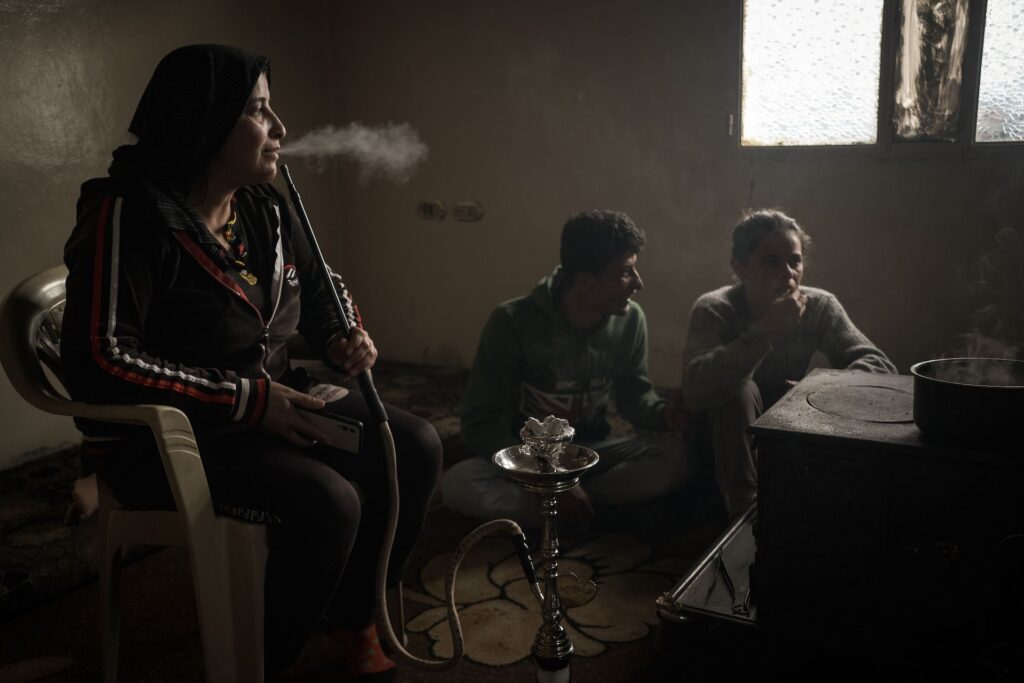
“I’m not doubting that pollution and chemical dumping is very important, but the Lebanese have to handle smoking first,” Mokdad said.
The Lebanese government itself makes money selling locally made cigarettes, he pointed out, while a 2011 law banning smoking in cafes and restaurants is rarely enforced.
“Shut up and stop smoking!” laughed Hani Nassar. A former high school philosophy teacher, he founded the Barbara Nassar Foundation back in 2014, after his wife died of cancer. I met him in the courtyard of the group’s newly opened cancer center in a quiet, leafy part of Beirut, not far from Hotel-Dieu. Inside, an instructor prepared a handful of middle-aged cancer survivors for a “laughter yoga” session. Donated wigs of human hair sat on display in what would soon become a free beauty salon for women who have undergone chemotherapy.
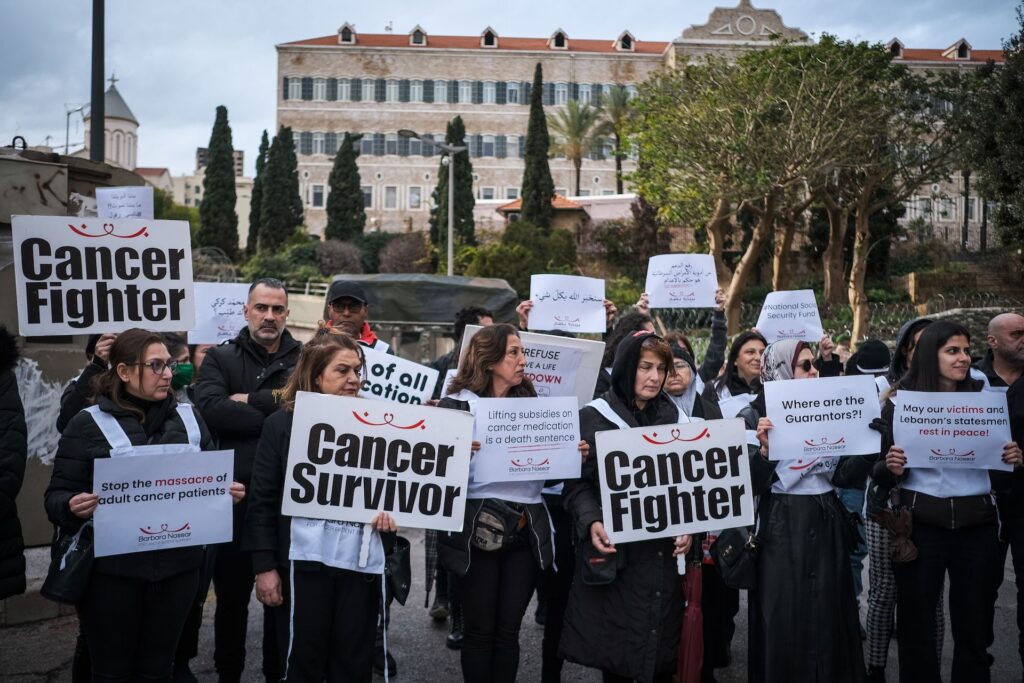
Nassar was among the dozens of activists — and cancer patients themselves — who staged protests in central Beirut over the past few years demanding affordable medicine.
Sometimes, they were simply demanding any available medicine at all.
That was during the deepest depths of the country’s financial crisis, when the Lebanese pound lost most of its value, liquidating thousands of people’s life savings in a matter of weeks. Some people resorted to robbing banks of the cash that remained to their names, in defiance of illegal controls put in place to stem the hemorrhage.
“For four and a half months, Lebanon didn’t import any cancer medications,” Nassar remembered.
In 2023, rumors swirled that the government would stop subsidizing lifesaving cancer medicines, which were among the last medications still subsidized by the government following a slew of cuts. At one protest that year, Nassar and others dubbed the potential measure “a massacre.”
The subsidy stayed in place, albeit amid accusations that people with government connections were stealing and smuggling vital cancer medications for sale on the black market. The result was “severe” shortages, according to Amnesty International.
Still, medicines remain costly in a country where the median household income was around $120 per month in 2022, before the series of wars that began in 2023. Early screenings, like colonoscopies, can also cost hundreds of dollars without insurance.
At Hotel-Dieu’s chemotherapy ward, the day’s attending doctor told me that some patients have had to stop their treatment in the past few years, skipping sessions. They simply couldn’t afford them. The doctor requested anonymity to protect his privacy.
Some treatments, including immunotherapy, can start at $8,000 per session, he said, with the number of total sessions varying depending on how far someone’s cancer has spread through their body. “Some of them ask just for the chemotherapy, since it’s a bit cheaper,” forgoing immunotherapy treatments that could help prolong their lives.
The doctor added that he had started seeing something eerie: larger tumors in first-time patients, as they were waiting longer and longer to take the plunge and begin the costly processes of diagnosis and treatment.
“This was the scariest thing that I saw as a physician, as a hospital administrator,” said Dr. Firass Abiad at his office at the other end of Beirut. Today he’s a practicing surgeon, but he is better known in Lebanon as having served as health minister during some of Lebanon’s darkest recent years, from 2021 to 2025. He led Lebanon’s largest public hospital before that, during the COVID-19 pandemic.
“After our financial crisis, where people had problems with access to hospitals, we were looking at the average size of tumors, of breast tumors specifically,” Abiad told me. “And we noticed that the size of the tumors was getting bigger.”
Abiad said that the phenomenon was caused by people waiting longer to get their initial diagnoses because they were broke.
Some groups have stepped in to help, but it’s piecemeal.
There’s Nassar’s group, which dispenses free medicines when they’re available. Rawad Sabra, founder of the medical aid nongovernmental organization Healing Hands, says his group is using donations to fully fund outpatient medicines for around 200 cancer patients, and partially fund in-hospital treatments like immunotherapy and dialysis for six people.
Abir Abi Farraj, the former kindergarten teacher I met at Hotel-Dieu, says she, too, covers part of her chemotherapy costs through an NGO that helps female cancer patients. She has had no medical insurance since leaving her teaching job a year ago. She loved working with the children — she showed me a photo album on her phone of the paper holiday decorations she made for the classroom — but her cancer diagnosis in 2022 left her feeling too ill. She stepped down after two years.
NGO assistance only started recently, in the past several months. “Before that, it was all out of my own pocket.”
Abir and her husband, a chauffeur, were paying $350-$400 at a time for chemo sessions that were back-to-back for three weeks, with two-week breaks in between. That’s on top of the $10 taxi ride they still pay both ways to the hospital from their mountain village.
Even so, three years after her cancer diagnosis, and two surgeries later, Abir said she’s staying optimistic.
“I’m a cancer survivor, too!” she smiled.
I need to pause here and admit: I reported and wrote the bulk of this story back in October 2025. At the time, Israel’s all-out bombing campaign on southern Lebanon (and sometimes Beirut’s southern suburbs and the Bekaa Valley) was in something of a remission — occasional deadly strikes notwithstanding.
That was no longer the case by February of this year, when I watched from afar as the United States struck Iran and, not long after, Lebanon came under Israeli fire again. I heard the distant, low thumps of bombs from my home overlooking Beirut; often, they were the waterborne echoes of Israeli warships striking the city.
The bombs seemed to replace the hazy brown layer I saw from my balcony. Instead, black smoke snaked from the sites of Israeli drone strikes. I knew the smoke meant death — quick, violent, thief-like, not the slow, carcinogenic chokehold of diesel smog.
It didn’t feel right to publish a comparatively quiet story about cancer.
Yet patients’ access to even the most basic treatment quickly deteriorated during that time, I’d later learn — potentially setting back Lebanon’s national cancer response even further. Israel is also accused of spraying potentially carcinogenic chemicals on swaths of southern Lebanese farmland, sparking worries for future cancer rates.
At one hospital, Sahel General Hospital in Beirut’s hard-hit southern suburbs, patients were forced back in March to disconnect from their IV tubes and flee in the middle of their chemotherapy session one afternoon, as the Israeli military issued a forced evacuation order for an area that included several medical facilities.
Dr. Nizar Bitar is in charge of oncology at Sahel. He also had a medical clinic in Nabatieh, one of the hardest-hit areas in southern Lebanon. Israeli bombings destroyed the clinic back in 2024.
Many patients in the south had to miss critical chemotherapy sessions, he told me, “and the quality of the care is not the same,” as displaced cancer patients seek out new doctors elsewhere in Lebanon who don’t know their medical history.
According to the Ministry of Public Health, 15% of Lebanese hospitals providing cancer treatment have been “rendered inoperable.”
At Jabal Amel Hospital in Tyre, which is still open and receiving cancer patients from even more dangerous parts of the south, an Israeli airstrike killed at least four people and wounded dozens of others, including medical staff. The cancer ward itself suffered some damage, according to Jabal Amel’s head of oncology, Dr. Haifa Dbouk. She works between Jabal Amel and the Nabih Berri Governmental Hospital in Nabatieh, which, with 38 beds, is southern Lebanon’s largest cancer treatment facility. That facility, too, has been hit hard, with Israeli bombs landing close by and only about 10% of the doctors staying behind during the worst of the onslaught, according to hospital director Dr. Hassan Wazni.
Dr. Wazni, who also remains at Nabih Berri Hospital, has worked there through several wars — in 2006, 2024 and 2026.
Of these, 2026 has been the worst, and the longest. “This time, everyone in the south had to move. I hope this is the last one.”
Back in March, Dbouk and others were scrambling to transfer patients from both Tyre and Nabatieh to safer areas, such as the city of Sidon a bit further north, figuring it was safer to seek cancer treatment there.
“We are the ones staying under the bombs,” Dbouk told Bitar and me by phone, in Bitar’s office near the concrete rubble.
I asked Bitar how many of his patients — who number in the hundreds — have missed chemotherapy appointments or were forced to flee their hometowns since the all-out assault on Lebanon reignited in March.
He simply shrugged. “You can’t count.”
Behind us, in Bitar’s waiting room, was one patient, a taxi driver from Beirut. He, too, had faced trouble reaching Bitar for appointments the past few months amid the bombing, the doctor told me.
Though the Ministry of Public Health stated that it helped “ensure the continuity of treatment” for more than 1,000 cancer patients, Bitar told me it was too little. “There wasn’t a back-and-forth dialogue.”
“There was no coordinating with us,” he told me, of the hardest-hit public hospitals in the country’s south and the southern Beirut suburbs. In some cases, patients who previously relied on free treatment at government hospitals in their hometowns were now stuck searching for expensive treatment elsewhere, with beds at other hospitals full.
As he spoke, his voice rose, upset. The war has taken an emotional toll on him, as the bombs continue to hit homes, the vicinity of medical facilities and other civilian areas.
“But I need to stay strong for my patients. Many of them are happy just to be able to see me.”
Despite the troubles of recent years, health officials are trying to catch up. The health ministry launched its National Cancer Registry in 2023, though it is still sorting through a mishmash of as-yet-unpublished data from 2016 to the present. It’s part of a five-year plan launched that same year, aimed at bringing down cancer deaths.
There are still lots of questions, though. For one, the registry doesn’t list cancer deaths — only new recorded instances of the disease, said Dr. Karak, the oncologist at Hotel-Dieu, who is helping to sift through the data. There is also no way to sort by region.
Karak worries about the high use of pesticides in Lebanon, and even remnants from the past two years of Israeli bombing on agricultural areas in the south, including substances designated as potential carcinogens by the World Health Organization. “But we will not get cancer the next day or the next year” from any toxic wartime chemicals, he warned. “It might be 10 years from now.”
Until then, much louder, bloodier crises were brewing outside the windows of the chemotherapy ward in Hotel-Dieu de France, during my visit back in October. We didn’t yet know of the massive wave of Israeli bombings, urbicide and forced displacement to come in just a few months’ time.
The doctor in charge of caring for the day’s patients walked me through the hall, introducing me to some of them, quietly sitting in their beds hooked up to IV tubes: a mother, an elderly couple, a few middle-aged women. As the doctor walked on, an Israeli spy drone buzzed constantly, loudly, in the sky. Some of the patients ate lunch from bedside trays. Others watched TV, or scrolled TikTok.
The drone sounded unusually close to the ground that day, bleeding into the noises of the hospital itself as it watched the city from above.
Become a member today to receive access to all our paywalled essays and the best of New Lines delivered to your inbox through our newsletters.