


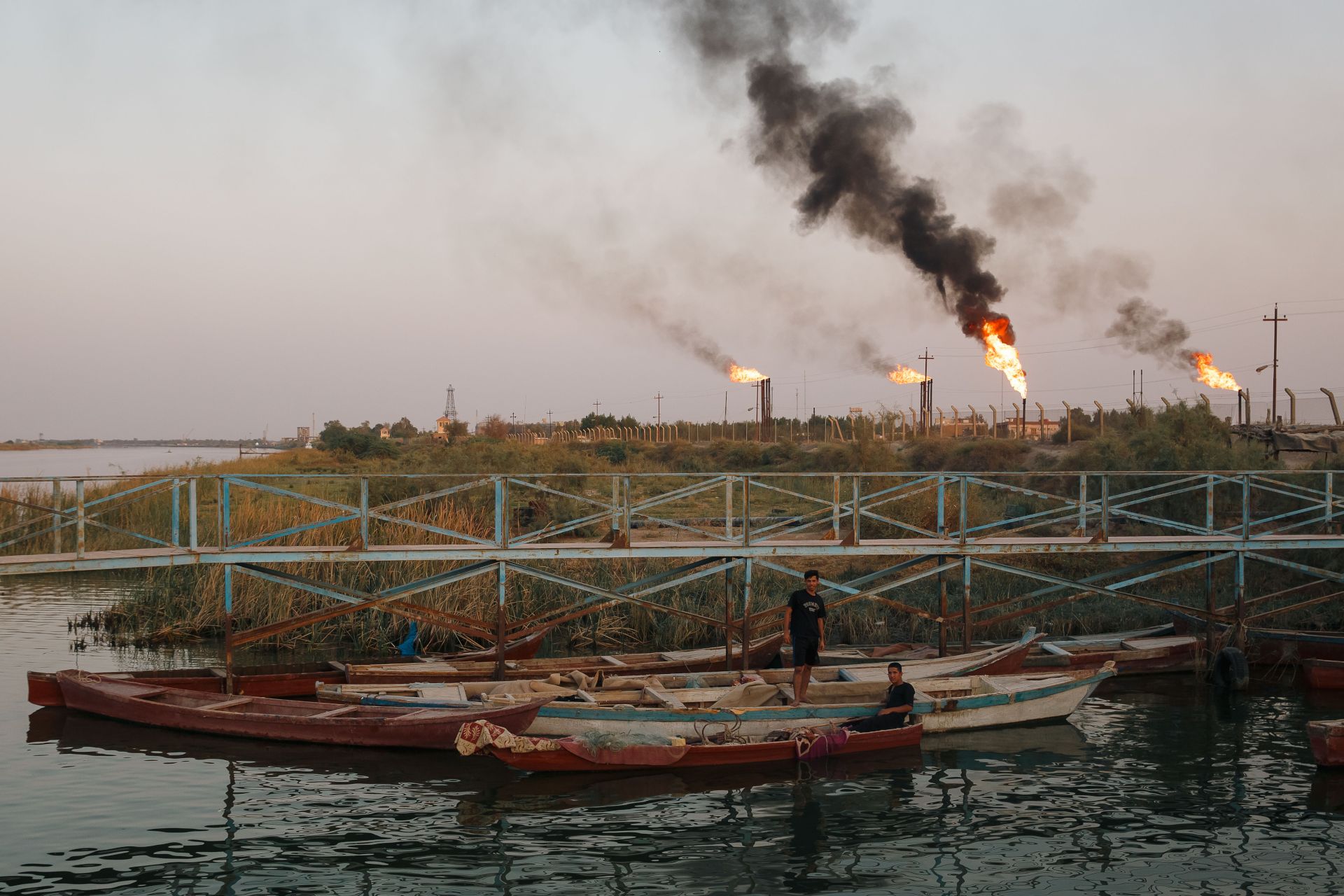
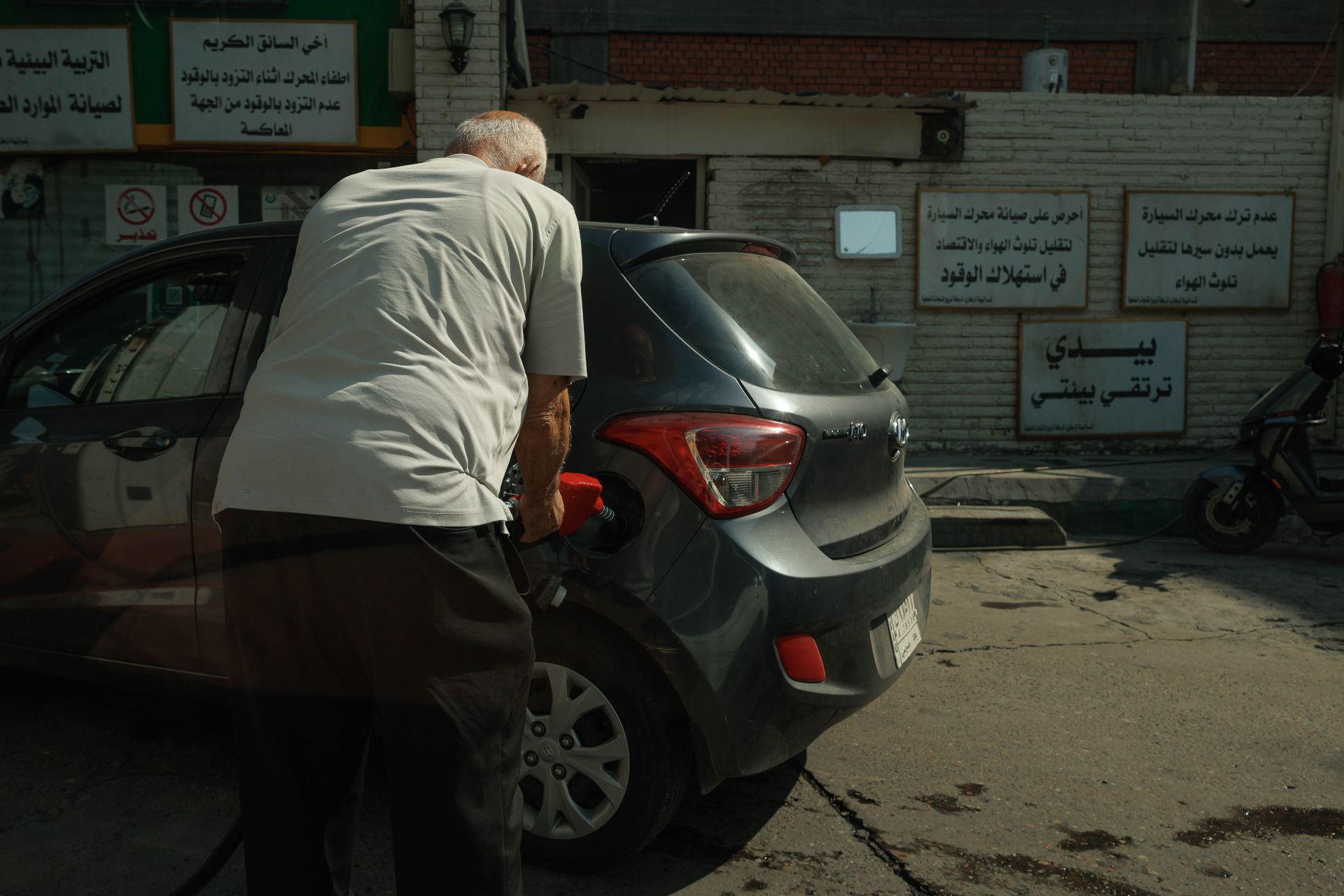
In early September, images of huge queues forming outside Iraqi gas stations spread across the country like wildfire. The scene was striking: Because of the regional crisis, OPEC’s third-largest producer had run short of fuel.
At the heart of Sadr City market, a vast and impoverished Shiite stronghold in northeastern Baghdad, Abderrazak Abou Hamza, 57, fumed: “Since the war between the United States and Iran began, shortages have come in waves, without us being able to anticipate them. Sometimes, as happened in early September, gas stations simply ran out of gasoline. I spent several nights queuing for a few drops of diesel.”
The obvious cause is the turmoil around the Strait of Hormuz, through which, before the war, around a fifth of the world’s traded oil and gas passed. But for Iraqis, there is more to it than that. “Our country is literally sitting on some of the largest oil reserves in the world, and despite that, we are stranded. We feel like we are suffering more than others,” Abderrazak continued.
Sadr City’s market, usually teeming with people, looked subdued. A few dozen yards away, Mohammed S., a 44-year-old tailor, agreed: “I was in Iran last week with my family. I can assure you that the Iranian population is far less affected than we are by the current crisis,” he said.
As proof, he pointed to “an economy and consumption at a standstill,” which in his case has meant his income being “cut in half” despite working longer hours. And even though his business has nothing to do with oil, he said his situation is intimately tied to that of the country. “When war threatens to resume on your doorstep, and the prices of basic necessities soar, what do you do? Well, you save, just in case. That’s what we’re all doing. … Iraqis are buying only the bare minimum now, and we are paying the price.”
It was a crisis for which the authorities were, quite clearly, poorly prepared, despite how crucial oil exports are to the country. Oil revenues account for around 90% of Iraq’s public revenues and are almost the sole factor determining the balance of the state budget.
So in Iraq, perhaps more than elsewhere, the closure of the Strait of Hormuz — a route through which more than 90% of the country’s 3.4 million barrels of daily crude exports used to pass — quickly created a major fiscal squeeze.
This was accompanied by periods of gasoline shortages, however paradoxical that may seem. Despite Iraq’s huge production, and because of often aging refineries — which also produce too much heavy fuel oil and naphtha, a byproduct used for plastics, paints and other materials — the country has, since the 2003 U.S. invasion, had to import part of the gasoline consumed domestically, with nearly a fifth of its 2025 consumption coming from imports.
Aware of this weakness, then-Prime Minister Mohammed Shia al-Sudani inaugurated a roughly $3 billion cracking unit in Basra in October 2025, designed to close that gap. On Nov. 4, a week before parliamentary elections, he triumphantly declared Iraq self-sufficient in fuel and ordered a halt to imports.
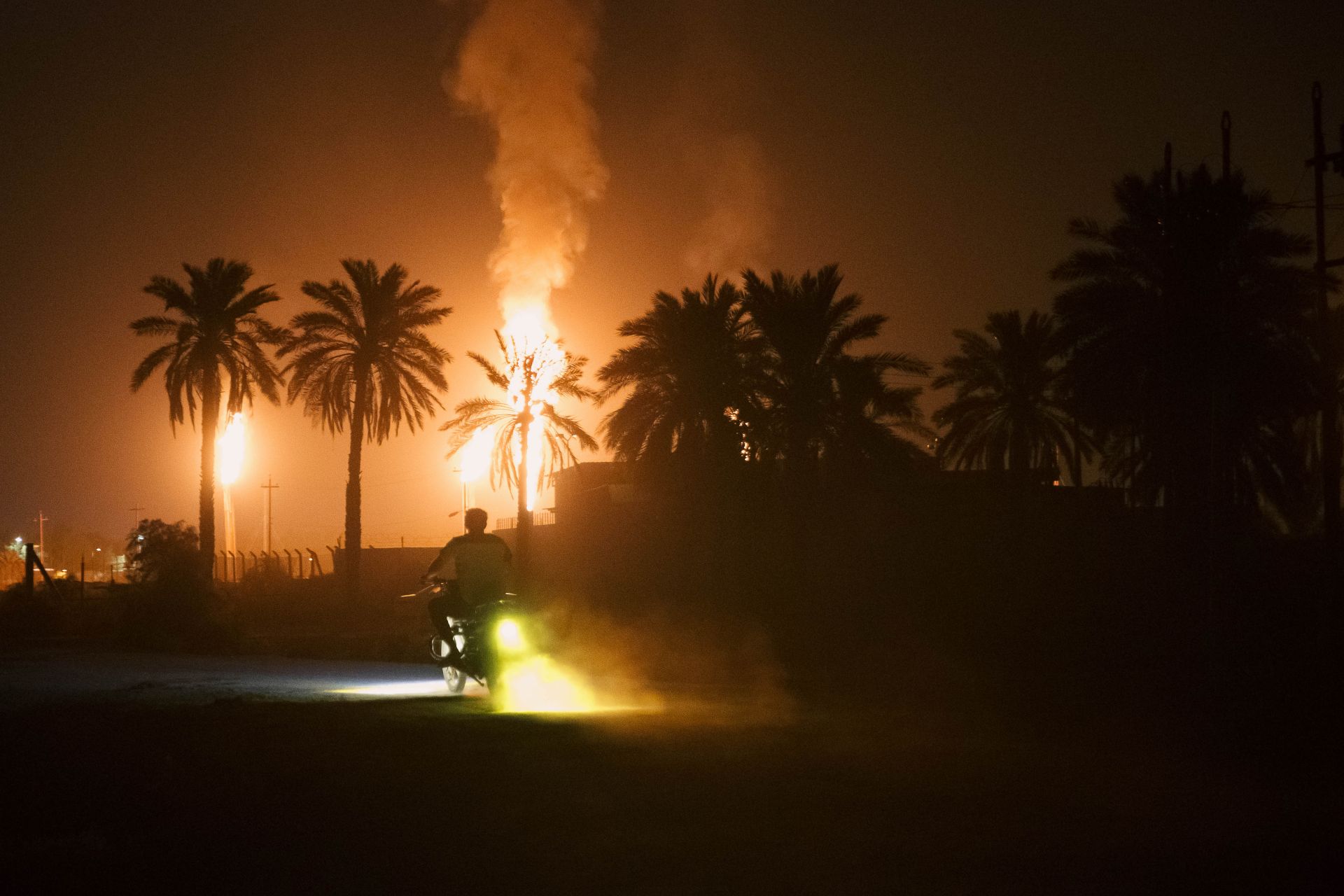
The reversal would be brutal: In June, during the Iran-U.S. war, the unit’s foreign contractor pulled out for security reasons. By July, Baghdad was preparing emergency diesel purchases, in circumstances that were anything but favorable.
For Yesar Al-Maleki, a Gulf analyst at the trade publication Middle East Economic Survey (MEES) and nonresident senior fellow at the Atlantic Council, Iraq’s list of problems is a long one: “Because Gulf exports fell, Iraq had to maximize refinery runs throughout the crisis to keep its oil fields producing. Meanwhile, gasoline imports were constrained and limited to suppliers inside the Gulf. Baghdad is also facing a liquidity crisis due to falling oil revenues, which limits how much gasoline and diesel it can import.”
Yet the Hormuz crisis appears to have aggravated Iraq’s structural problems rather than created them; reforms undertaken over recent decades have repeatedly been hindered by the upheavals the country has endured.
Thamir Ghadhban, a former oil minister and petroleum engineer who held senior positions in Iraq’s oil sector for several decades, sees a crisis that has been building over the long term, fueled by an accumulation of factors: aging and limited refining and export capacity, of course, but also “decades of political upheaval, wars, sanctions, terrorism and insecurity.”
Iraq’s vulnerability is not new. As early as the Iran-Iraq war (1980-1988), disruptions to exports and imports highlighted the country’s dependence on Gulf routes and the need to diversify its trade corridors. “One of its clearest strategic lessons was that Iraq needed at least three substantial export outlets through neighboring countries, supported by a transportation network linking northern and southern oil fields. When exports through the Persian Gulf are disrupted, Iraq risks losing not only most of its oil exports and revenue, but also much of its gas supply, because southern gas production is largely associated with crude oil production,” Ghadhban said.
The 1991 Gulf War, followed by 12 more years of sanctions, further deepened this fragility, with some infrastructure put out of service and, above all, restrictions on exports and imports depriving the oil sector of much-needed investment.
After the 2003 U.S. invasion, Iraq’s crisis took another turn, with large-scale sabotage and looting. “At the same time, two deeply damaging practices became entrenched: widespread corruption and the appointment of politically connected officials who lacked the necessary experience, qualifications or commitment,” Ghadhban said. “As security deteriorated, capable senior staff were killed, disappeared or left the country. Many others retired as the statutory retirement age was reduced. The cumulative result was a sustained brain drain and a deterioration in institutional management.”
The situation would soon deteriorate further with the territorial occupation by the Islamic State group, which, from 2014, heavily damaged refining infrastructure, particularly around Baiji in northern Iraq. Some facilities would remain unusable for 10 years.
Iraq has no shortage of strategies, however. Ghadhban recalled that a sweeping national strategy for 2012-2030 was drawn up with World Bank support and approved by the government. It was never properly implemented, he said, because of “resistance to change, weak political commitment, fragmented authority and the absence of sustained reform.”
At a time of regional uncertainty — with the Iran-U.S.-Israel war seemingly capable of resuming at any moment — the Iraqi government, led by new Prime Minister Ali al-Zaidi, is trying to limit the shock waves by every means possible.
Recent agreements between the semiautonomous Kurdistan Regional Government (KRG) and Baghdad over exports will, on paper at least, make that task easier: Crude exports to the Turkish port of Ceyhan, carried out by the KRG for years, have finally returned to federal control.
Exports to Turkey have nevertheless proved largely insufficient: According to government figures, they amount to barely 6% of Iraq’s usual crude exports. There are two reasons for this: Oil activity in Iraqi Kurdistan has been slowed by strikes carried out by Iran and its regional proxies; and, above all, the pipeline remains underfed, to the point that the Iraqi state has been forced to truck crude north from southern oil fields.
As for the agreement reached between Erbil, the seat of the KRG, and Baghdad, while it represents genuine progress, there is no guarantee it will last, according to Ahmed Tabaqchali, chief strategist at Asia Frontier Capital Iraq Fund and a specialist in Iraq’s political economy: “The KRG crisis is only resolving itself because there are no other options. On the one hand, the pipeline through Turkey closed in 2023, so the KRG could no longer export through Ceyhan; on the other, we have the current crisis, and Baghdad needs them. So we have a temporary solution. While these agreements make things happen, by definition they aren’t sustainable if you don’t address the root causes. And so far, we haven’t addressed the root causes.”
Several options are being considered to break the country’s dependence on Hormuz. Alongside strengthening the route to Ceyhan, there is, in theory, the possibility of opening an outlet to Baniyas in Syria, developing a route to Aqaba in Jordan and even, in the longer term, reaching Tripoli in Lebanon.
For al-Maleki, however, these alternatives run up against a far more prosaic reality: “their cost, and Baghdad’s ability to commit to such infrastructure over the long term.”
In the meantime, condemned to crisis management, Baghdad has tried to cushion the economic consequences by protecting purchasing power. For now, prices at the pump have not moved. Subsidies have been maintained for fuel used by private motorists and bakeries. Neighborhood generators, which have been a mainstay since the U.S. invasion and the degradation of the electricity grid, were granted the same reprieve in September.
Productive sectors, on the other hand, receive no subsidies. Since Sept. 1, the price of diesel for agricultural and construction machinery has more than doubled. Farmers have been among the first affected, staging protests in several provinces. Muhimmin al-Shabib, a farming entrepreneur near Baghdad, said his operating costs doubled over the summer. Unable to pass those increases on to wholesale market prices, he chose to suspend production for two months: “I had eight workers, but I had to lay off six of them until operations resume. I also suspended purchases of fertilizers and seeds from agricultural supply stores and halted all planting until October. I am waiting for the crisis to stabilize and for market prices to adjust naturally to reflect actual costs, allowing production to resume at full capacity.”
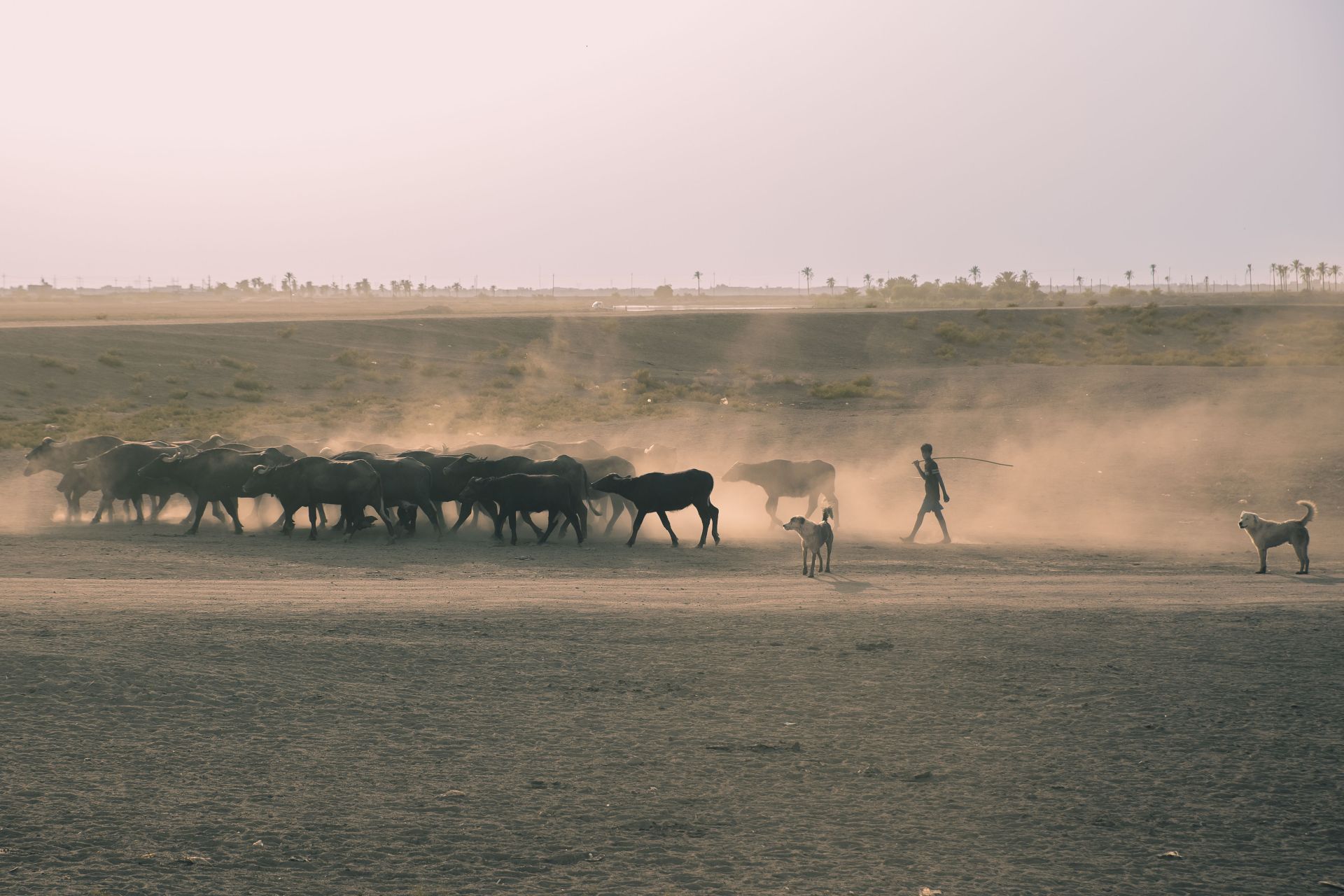
Another particularly affected sector is construction, which is directly dependent on heavy fuel oil. On average, brick and cement prices have risen by almost 60%. Here, too, anger is palpable. “My son works in construction; everything has stopped. If this continues, hundreds of factories will close across the country. The aid isn’t enough. Anyway, we don’t have a state, just authorities,” warned Abdelmahsen A., a 70-year-old Baghdad resident.
This oil dependence has put the Iraqi state in a perilous position. The crisis has already worsened fiscal pressures and pushed debt sharply higher — domestic debt rose by around 21% in seven months — while the first job losses are beginning to appear in the worst-affected sectors.
According to several sources within Iraq’s intelligence services, the government is concerned about a possible explosion of popular anger and the revival of the “Tishreen” protest movement that shook the country in the autumn of 2019. It was violently suppressed by security forces and armed groups close to the authorities, leaving an estimated 600 to 800 young protesters dead.
For now, anger is erupting here and there, sector by sector, without coalescing into a broader movement. Drones have also targeted infrastructure inside the country — in Kurdistan, where pro-Iranian armed groups have been blamed, as well as at Majnoon, one of the main oil fields in the south, in Basra province, where no one has claimed responsibility for the attacks.
And the threat extends far beyond Iraq’s borders, according to al-Maleki. “Iranian proxies in Iraq have attacked Saudi Arabia’s East-West Pipeline, vital infrastructure in Kuwait and the UAE’s Barakah nuclear plant. Baghdad’s ability to rein in the militias is questionable, so Iraq cannot be included in any emerging GCC security-of-supply framework,” he said, referring to the Gulf Cooperation Council.
Yet these attacks are only the tip of the iceberg. For Tabaqchali, the real obstacle remains the “muhasasa ta’ifia,” the sectarian power-sharing system inherited from 2003: “In a system where every component has to be represented and where any reform requires a very broad consensus, decisions end up being weakened and based on populist economic policies.”
The Hormuz crisis, which could soon enter a new phase, therefore confronts Iraq once again with its inability to turn the abundance of its resources into energy security. “The warning reinforced a lesson first demonstrated by earlier wars: Energy independence requires not only production capacity, but also diversified export outlets, resilient domestic infrastructure, competent institutions and the political will to implement reform,” Ghadhban said.
It remains to be seen whether, if regional tensions ease, the country will finally decide to see through reforms that have been postponed for far too long. For Tabaqchali, the danger is precisely that an improvement in circumstances will give the system enough breathing room to postpone fundamental change once again: “Even though I’m hardly optimistic, the only chance for real reform comes when they have no options to fall back on. And I think the current crisis is severe enough that it can be like that.”
Become a member today to receive access to all our paywalled essays and the best of New Lines delivered to your inbox through our newsletters.