

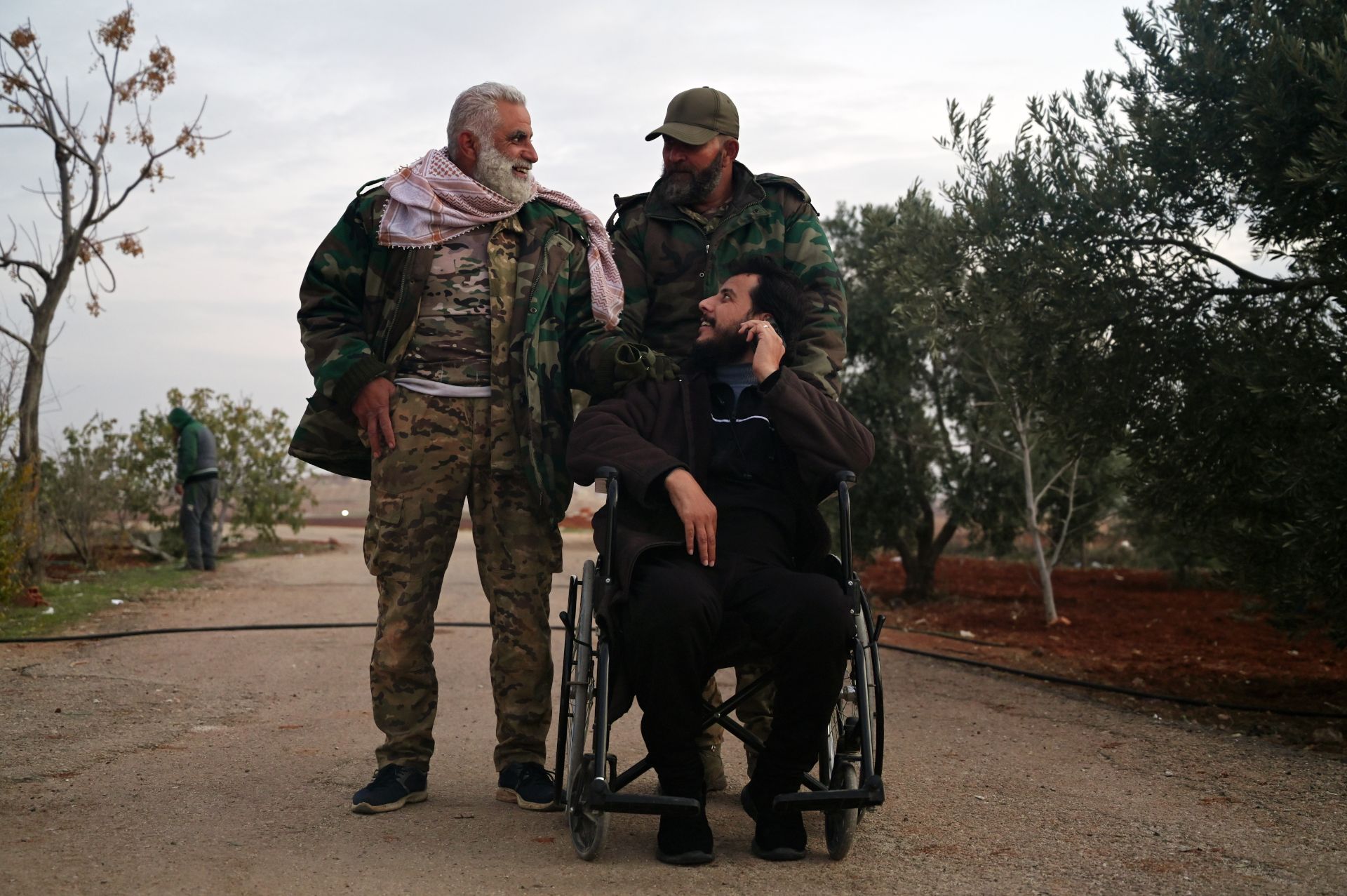
Mufleh Kanani reaches the doorway of his house, staggering as he steps outside, one hand gripping the doorframe, the other holding onto a walking aid. He nearly falls, saved only when two friends who had come to visit rush forward to help him. They place him in a wheelchair, then sit together drinking tea and exchanging conversation in the small courtyard of the house, surrounded by olive trees, chickens and geese, near the town of al-Yadouda in Daraa province, southern Syria.
Kanani, 41, is wearing black pajamas topped with a thick fleece jacket. He sits in a sunlit corner to warm his bones after weeks of bitter February cold in the village. When his phone rings, he pulls it from his pocket and holds it just a few inches from his eyes, then decides not to answer and puts it away. His eyesight is extremely limited. In addition to the frailty of his body, his tongue was paralyzed for a time, leaving him unable to speak, though he has regained his speech over time.
All of this befell the man as a result of a near-fatal poisoning attempt he survived by sheer chance. It was carried out in the office of Lt. Col. Mohammad al-Issa, head of security for the 4th Division commanded by Maher al-Assad, brother of the former Syrian regime leader Bashar al-Assad, in the city of Daraa in early May 2019.
Kanani was the first person in the province to be targeted in a poisoning attempt, inaugurating a series of assassinations and attempted assassinations by poison that affected at least 24 people, including 19 former commanders and fighters of the armed opposition and five civilians, among them two children, according to documentation by the author of this report. Four of those poisoned later died, while the others continue to suffer lasting complications; some have gradually recovered. Kanani’s condition, however, remains the most severe among all those who survived.
The attempt on his life occurred within the context of a complex and reciprocal wave of political assassinations involving the Assad regime’s security services, armed opposition factions, Hayat Tahrir al-Sham and the Islamic State group, following the fall of Daraa province. The regime’s takeover followed a military campaign backed by Russia in the summer of 2018 against the city that lit the spark of the Syrian uprising in March 2011.
Targeted killings in the province claimed 1,422 lives between 2018 and 2024, until the fall of the regime, according to documentation by the Horan Free League, a media organization covering southern Syria. These operations left a deep wound in the local social fabric. Most were carried out through shootings and the planting of explosive devices, but there was also a silent method: poison — the means used to target Mufleh Kanani.
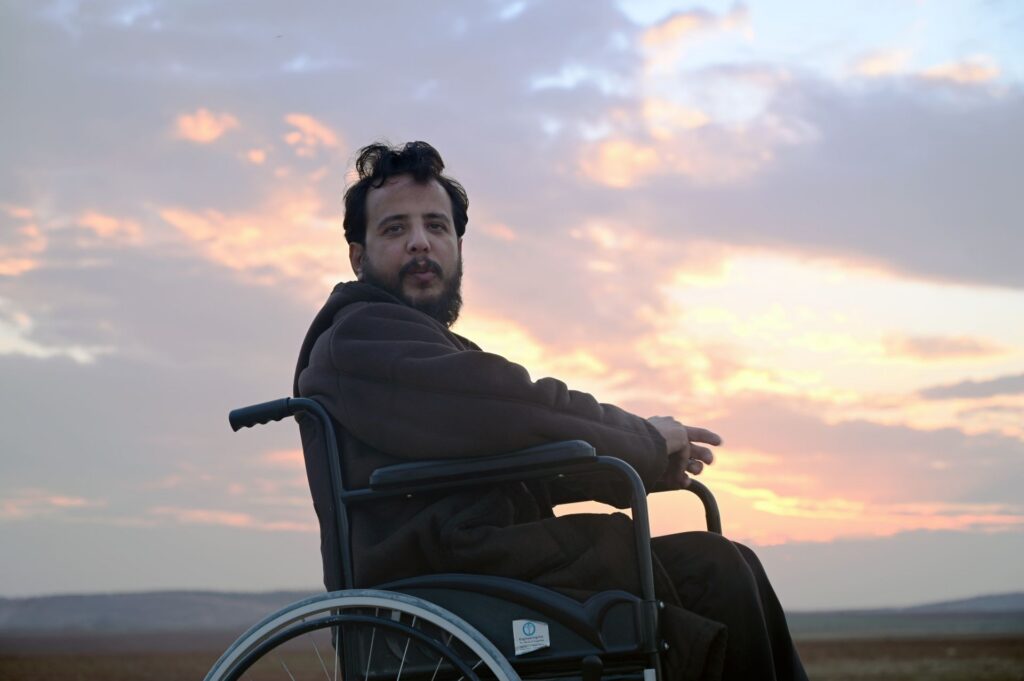
Kanani comes from a modest family originally from the Israeli-occupied Golan Heights. The family was displaced to Daraa province in 1969 and has worked in agriculture ever since. As a young man, Kanani left school and found work as a pharmaceutical sales representative, a job that made him well known to pharmacies across his region in Syria.
The marginalization practiced by the Assad regime against displaced residents of the Golan, combined with the corruption Kanani witnessed firsthand, shaped his opposition to the regime from an early age, eventually making him willing to take part in any action against it. When the Syrian uprising erupted in 2011, Kanani was among the first to participate in the peaceful protests. He gained prominence after smashing the head of a statue of Assad’s father and predecessor, Hafez al-Assad, in the city of Daraa.
Following the regime’s brutal crackdown on peaceful demonstrators, and as the uprising took on an armed dimension, Kanani emerged as a military commander within opposition factions. By 2018, he was leading around 600 fighters and had taken part in hundreds of operations and battles against regime forces. His military career continued until regime forces, with Russian backing, regained control of Daraa province after a large-scale campaign in the summer of 2018. As a result of his trajectory and role, Kanani became one of the early targets of the Assad regime’s intelligence services.
In a recent interview with New Lines, the former Syrian opposition commander spoke for the first time about the details of the attempt to kill him by poisoning and the consequences he continues to suffer to this day. Kanani is considered the first person in southern Syria whom the Assad regime attempted to eliminate using poison.
After the conclusion of the Russian–Syrian military campaign against Daraa province in 2018, what were known as “reconciliation agreements” or “settlements” were imposed. Kanani and his fighters had resisted until the very end in defense of their area. Under these arrangements, opposition fighters and commanders were required to “settle their status” with the Assad regime and either join its ranks or perform compulsory military service. Those who refused were forced onto evacuation buses heading to northwestern Syria.
Kanani and his men chose to remain, saying they were determined to protect their communities and civilians from abuses or reprisals by regime forces once the latter consolidated control.
“If we had left, the army would have returned to enslave the people, and they would have taken our sisters and our women,” he recalled.
Kanani’s survival borders on the miraculous. He was wounded eight times over the course of 14 years of war. The last injury, shortly before he was poisoned, occurred when a bulldozer ran him over as he was supervising the fortification of a front-line position in the city of Daraa. The incident shattered his bones and damaged his reproductive organs, forcing him to live with a urinary catheter.
Following the fall of Daraa to regime forces, Kanani says there were two main reasons why former regime officers sought to eliminate him. One, he recounts, was that he emptied his catheter bag onto a photograph of Bashar al-Assad in front of regime officers, telling them, “If you are fighting for Bashar, we are fighting for the country.”
The second reason, Kanani says, is that after the fall of the province, he became one of the main negotiators with the regime, and repeatedly focused on demanding the names of detainees in its prisons, uncovering the fate of the missing, and ensuring that employees could return to their previous workplaces. The regime rejected these conditions. “They decided to get rid of me because of my insistence on these demands and because of my influence in the region,” he said.
According to Kanani, what accelerated the assassination attempt was that the Assad regime discovered a plan by him to infiltrate the 4th Division with his men as operatives to gather intelligence and then target regime officers.
It was a Tuesday in early May 2019 when Kanani, along with four other local commanders, attended a meeting at the security office of the 4th Division in Daraa city. The meeting had been convened by al-Issa, the lieutenant colonel, who oversaw the 4th Division’s Security Studies Office and served under Bashar’s brother Maher. Al-Issa is now on the run and wanted by the new Syrian government for allegedly running cells tasked with targeting former opposition leaders, members and activists.
The meeting’s ostensible purpose was to reach a reconciliation with Kanani. Its hidden objective was to eliminate him using poison.
During the meeting, Kanani says he felt thirsty and was offered a glass bottle of juice by one of al-Issa’s men. “I noticed a strange taste and immediately vomited, then we left the office. I experienced fever, dizziness and blurred vision. The next day, I collapsed and was completely unable to walk.” Over time, his hair began to fall out and his tongue became paralyzed. He lost weight and memory, no longer recognized anyone and was unable to sleep.
“He began imagining things that weren’t there. One time he told me, ‘Take those people who are jumping on my chest’ — but there was no one,” said his brother, Yahya. “It was as if you opened a grave and were looking at a dead person. His eyes were bulging. Anyone who came to visit couldn’t bear to sit for even a few minutes seeing him in that state,” said Yahya, adding that his brother had lost a significant amount of weight.
At least five other people in Daraa, including two children, experienced exactly the same symptoms after being poisoned, according to firsthand accounts, interviews, medical reports and medications reviewed by New Lines.
Yamen al-Munjar carried a sickle and worked on a small plot of farmland near his modest home, about 2 miles from Kanani’s residence in the village of al-Yadouda, northwest of Daraa. He had just returned from a security shift at the Ministry of Interior under the new government.
Six years ago, al-Munjar was in a very different condition: bedridden, unable to move or see properly, and suffering from memory loss, following a poisoning attempt not unlike the one Kanani endured. He was arrested by the 4th Division in December 2019, while conducting surveillance on a regime military checkpoint.
A 35-year-old father of two, al-Munjar had previously been a fighter within armed opposition factions before Daraa province fell in 2018. After being arrested, he was taken to the headquarters of the 215th Storming Company under Military Intelligence in Damascus, where he was tortured. He recalled: “They wanted me to confess to killing two Russian soldiers,” an incident that took place in the town of Nawa, west of Daraa, in 2019, “but I had nothing to do with it.” Yet, he said, “When they strapped me to the electric chair and left me in the rain, I confessed to everything they wanted me to confess to, including the killing of the Russian soldiers.”
Colleagues of al-Munjar’s outside the country had kidnapped Assad regime officers from a military checkpoint to exchange them for al-Munjar, who, inside, was mentally shattered and awaiting his fate — unaware of the swap. He recalls that his treatment suddenly changed. After two weeks, at night, “they began treating me well and allowed me to shower — I was surprised. Then they told me I had been sentenced to death.”
The next day, at around 7 a.m., they took him to the local commanding officer.
“There was a glass of tea and a cup of coffee on the officer’s desk. He asked me what I wanted to drink. I said nothing, then, out of fear of being tortured again, I said, ‘I’ll drink whatever you want.’ I took the glass of tea — it was cold — and drank it. I also drank the cup of coffee. He said, ‘There, you’re a hero.’”
After that, the men were ordered to transfer him to Daraa. They placed him in a white Kia Forte and drove him to the office of Brig. Gen. Louay al-Ali, head of the Military Intelligence branch in Daraa.
Al-Ali was a senior officer, originally from the coastal city of Tartus. He managed military intelligence in Daraa and was subject to U.S., European and British sanctions for his role in suppressing protests in 2011, as well as for torturing detainees. In Daraa province, al-Ali is accused of orchestrating assassination operations that devastated the region after 2018 and continued even after the regime’s collapse, before fleeing to an unknown location in December 2024.
When al‑Munjar entered al‑Ali’s office — which has since been turned into a counterterrorism branch tasked with pursuing remnants of the Assad regime — he found two of his relatives waiting for him, along with a negotiation committee made up of local notables who had brokered the exchange deal. Al‑Ali said: “Raise your hands. Lower them. Sit. Stand.” He then told the committee: “You’ve seen him — there’s nothing wrong with him. You can take him.”
Al‑Munjar was stunned by the decision to release him. He still did not know about the exchange deal, nor about what had been put into the coffee and tea he had drunk in Damascus.
He made it home and reunited with friends and relatives. But the following day, he said: “I could no longer walk, and the hair on my entire body began to fall out. I started losing my memory, staring blankly at the wall. Many things from that period I don’t remember.” He began physical therapy, and after receiving treatment in Germany, his condition gradually improved.
“It was an extremely difficult period. I was on the verge of killing my wife and my brother because of the hallucinations,” he said. Even today, six years later, he continues to suffer from lingering effects, including nerve pain in his foot. “I can’t run or carry heavy weights like I used to. I have weak eyesight and astigmatism.”
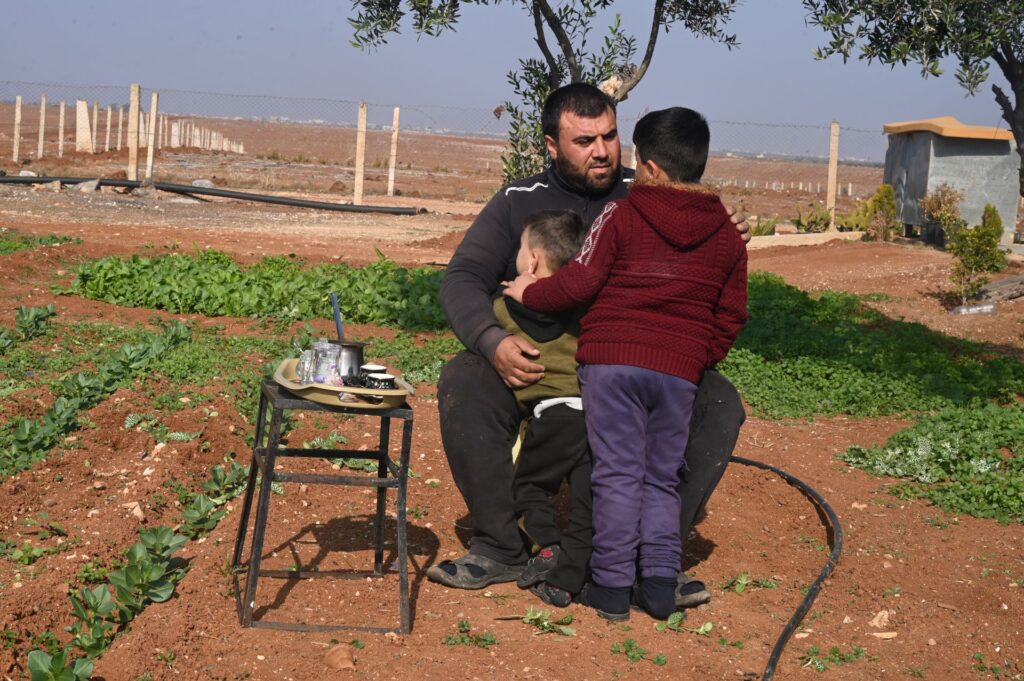
Five-year-old Amer sits in the family gathering room in one of the villages of Daraa province, playing with other children while his hand trembles. His cousin, now in the ninth grade, was in the same house. When she writes her homework, her hands shake, and sometimes she cannot finish. She also continues to suffer from bone pain, and cold weather triggers tremors, according to her mother, who asked to remain anonymous. Standing beside her daughter while the boy played on the floor, she said, “They [the children] almost died but survived.” Sometimes the girl forgets things she has memorized for exams.
Another poisoning operation, apparently orchestrated by al-Ali of Military Intelligence, targeted children. Al-Ali’s men arrested a person from the same area where the children lived and blackmailed his brother into placing poison intended for three senior opposition leaders who were hiding in the house where the children and their family lived. The arrested man’s brother agreed and pretended he would host the leaders for dinner, bringing food and drinks to the house. The three leaders were sitting in another room when the man brought in the dinner, along with 13 cans of apple juice.
He placed three cans on a tray for the three leaders — the cans that had been poisoned — and left 10 for the others present. The plan failed, however, when one of the attendees picked up the tray with 10 cans to serve the leaders. Two of the leaders refused to drink, while the third went to have dinner with the others and drank two of the poisoned cans, leaving one untouched. After everyone left, the girl entered the gathering room holding the child and saw a can of juice that was still sealed. She drank from it and fed some to the child as well, according to the family’s account.
About a week later, the girl, the child and the opposition leader all fell ill at the same time in different locations, exhibiting symptoms similar to those suffered by Kanani and al-Munjar. The leader’s father said: “At first, we thought it was the flu. After about two weeks, all his body hair began to fall out. He looked very disfigured. I went to see the girl’s condition, and she looked even worse.”
He continued: “One of the military intelligence affiliates at the time told me, ‘Go to your son; he has ingested poison.’ His mouth had swollen, he lost his sight and weight like a cancer patient, and he lost his memory. He began seeing the dead. I couldn’t bear to go in and see him.” Both his father and brother said they gave him multiple medications, including the German drug Radiogardase, used to treat certain types of poisoning, after which he gradually improved and began recovering. Nevertheless, he continued to suffer complications. “He would fall off his bike when trying to ride it,” they recalled.
The two children and the opposition leader were all given the German medicine along with other treatments, and their conditions eventually improved. However, they still suffer from lingering effects and continue to take vitamin injections.
On Aug. 15, 2022, the opposition leader was killed while accompanied by another person when they were shot near the city of Daraa. His father said he is waiting for the new state to consolidate its authority so that he can bring a case against the agents who poisoned and later killed his son: “I want my rights and the rights of my son.”
A former commander in the armed opposition from the same area where poison assassinations took place — who himself survived a poisoning attempt — told New Lines on condition of anonymity that the source of the poison was Russia, a longtime ally of the Assad regime. Russia is notorious for poisoning its opponents abroad to eliminate them; the most recent high‑profile case was the poisoning of the Russian military intelligence officer and British double agent Sergei Skripal and his daughter Yulia in Salisbury, England, in March 2018 — the same year in which assassinations by various methods began in Daraa province in southern Syria.
According to the commander, the Russians supplied certain intelligence branches of the Assad regime with materials to carry out covert assassinations, including poison and Russian‑made 9 mm pistols fitted with suppressors. One assassination using these silenced weapons was documented: the killing of Alaa al‑Zoubani, a mosque imam and former judge in opposition courts, in February 2019. Video recordings were later published showing the confession of the operative — who was subsequently killed — who carried out the assassination and said that Air Force Intelligence had ordered the attack.
After 2018, Russia played the role of guarantor in southern Syria, portraying the situation as stable in an effort to rehabilitate the Assad regime. However, continued local uprisings and armed resistance against the regime undermined the Russian narrative. As a result, the commander said: “The Russians allowed the regime to carry out these assassinations to control the security situation, on the condition that they be quiet. That’s why they supplied them with poison and silenced pistols.”
New Lines was unable to obtain a sample of the poison, determine its origin or independently verify the commander’s account.
The same opposition commander was subjected to multiple assassination attempts orchestrated by the Assad regime, including shootings, planted explosive devices outside his home, drone attacks and poisoning. He survived them all. Regarding the poison attempts, he said a double agent approached him and told him that al-Ali had ordered him to administer poison to the commander in exchange for money. The agent gave him two pills resembling anti-inflammatory tablets, containing the poison powder. The commander handed back the pills, and they staged a scenario in which one of his men was “poisoned.” The man was taken to a hospital, where, according to the commander, a nurse loyal to al-Ali tried to finish the job by injecting him with poison.
However, when the nurse arrived, tight security measures forced her out, and she was told that another nurse would be responsible for monitoring the patient and that she was not needed. The commander subsequently destroyed the poison.
As for the primary target, Kanani, he was secretly consulting doctors in Daraa and Damascus, reportedly assisted by a Chechen officer in the Russian army stationed in Syria. The doctors did not know what had happened to him, which he said contributed to the severity of his condition. One doctor initially diagnosed him with Mediterranean fever, while in Damascus he was misdiagnosed with Guillain–Barré syndrome. Kanani then left Syria for Erbil in Iraq, traveling via Lebanon, paralyzed in a wheelchair. Lacking the financial means for treatment in Erbil, he moved to Turkey and lived in Istanbul.
According to a report from a private medical center in Istanbul, Kanani “suffers from pain in the feet, joints, and muscles; vision loss; muscle weakness; unstable walking; and paralysis in both the upper and lower parts of the body.” The report notes that he “was poisoned with gas during the war,” and that he “requires long-term physical therapy and is unable to move independently.”
For other victims who gradually improved, such as al-Munjar and the children, recovery was largely due to the Radiogardase. At the time Kanani was poisoned, however, the drug was not available, and he did not initially receive it.
Radiogardase, which costs over $200 in European pharmacies, is typically used in rare and severe cases, such as thallium poisoning or internal exposure to radioactive substances like cesium. The drug contains a substance known as “Prussian blue,” which binds these elements in the intestines to prevent them from entering the bloodstream, thereby accelerating their elimination from the body, according to available online sources. This is corroborated by Fabian Pitter Steinmetz, chief toxicologist at Delphic HSE, who was interviewed by New Lines.
Kanani continued to suffer in Istanbul until he finally returned to his home in Syria, one week after the fall of the Assad regime on Dec. 8, 2024. He went to the city of Daraa, where he reflected on the early days of the revolution. Together with friends, Kanani founded an association to support individuals wounded by war. The motivation, in addition to his own condition, came when he was sitting in Daraa and a severely injured man crawled to speak with him. Kanani was shocked to learn that the man could not afford a wheelchair or a walker. This inspired him to establish the association and begin helping the wounded. According to Kanani, they have documented 1,800 cases of injuries, including blindness, amputations and quadriplegia.
With the war over and the Assad regime gone, Kanani wishes he could return to civilian life as he knew it before 2011, resuming a normal routine and his work distributing medicine. Yet the effects of his poisoning may prevent him from doing so indefinitely.
In December 2025, he traveled to Jordan for about two weeks to undergo new tests and examinations. The doctor, he said, was surprised that he was still alive.
“They told me I need ongoing physical therapy in order to be able to walk, but it is extremely expensive, and I cannot afford it.”
Become a member today to receive access to all our paywalled essays and the best of New Lines delivered to your inbox through our newsletters.