


László Szőnyi, 31, lives on a small piece of land in a rural area near Debrecen, Hungary’s second-largest city. He was born and raised there and is the youngest of three generations that share the small property, which holds three tiny houses, a chicken coop and apricot trees. Descendants of generations of agricultural workers, a few years ago the family began growing organic vegetables in their back garden to sell in Debrecen.
But the family’s dreams of sustainable farming quickly faded when a new neighbor moved into their area. In 2022, CATL (Contemporary Amperex Technology Co., Limited), a Chinese state-owned company, began construction of its largest European factory just a stone’s throw away. The factory occupies 546 acres of land, an area equivalent to 1,770 Olympic-size swimming pools.
CATL’s factory, which is scheduled to start battery production in the spring of 2026, is a cornerstone of China’s investment strategy in Europe. Hungary’s right-wing Fidesz government, led by Prime Minister Viktor Orbán, has developed an increasingly close relationship with Xi Jinping’s China, through diplomatic efforts and business deals, including large loans, tax subsidies and the sale of land to state-owned companies such as CATL. Hungary has become China’s gateway to the continent and the European Union.
On April 12, Orbán will stand in an election against Péter Magyar, a former ally and his most popular opponent ever. Magyar, who leads according to all independent polls, is facing an uphill battle: Orbán’s Fidesz party owns the majority of the media and advertising channels, and has redrawn electoral districts to its advantage. This election will test the resilience of Hungary’s democratic institutions and decide the future of factories like CATL’s in Debrecen.
Between 2014 and 2025, Hungary, a small country with a population of 9.5 million, became the world’s second-largest recipient of Chinese foreign direct investment in electric vehicle (EV) manufacturing, trailing only Indonesia. Altogether, in that 11-year period, it won $18 billion in investments — more than the combined total of China’s investment in North America and Australia during the same time span.
As the world has embarked on a green transition, the Hungarian government has been making the country into an EV powerhouse, with Chinese loans and a growing business footprint that some observers say sometimes sways Hungary, an EU and NATO member country, toward voting in China’s favor in Brussels. According to a Financial Times report published in February 2022, by 2030 the Chinese and Korean factories located in Debrecen, population just 200,000, will produce more EV batteries than any other EU country apart from Germany. But neither the factory owners nor the Hungarian government has considered the consequences for the people who will have to live in the vicinity of the factories, who say they have not been given any say in the matter.
CATL’s factory has not yet begun operating, but Laci Szőnyi already complains of a persistent cough. The bright lights from the construction of the factory frequently wake him up at night. The constant noise has had a detrimental effect on the family’s livestock, forcing it to slaughter its chickens. The family worries that the groundwater has become toxic, while a device installed in the nearest village shows seriously elevated air pollution: The monthly average of dangerous fine particles, which bypass the body’s defenses, entering deep lung areas and the bloodstream, is more than seven times above the World Health Organization’s guidelines. In January 2026, local air pollution readings were comparable to New Delhi’s notorious, life-threatening smog.
“Nothing will grow here anymore,” Szőnyi explained, looking over the family’s small, dilapidated garden plot, once its hope for a new source of income. In 2023, he filed a lawsuit challenging the factory’s environmental permit. But the case is currently stalled in court, and CATL might restart work before the judge reaches a decision.
China currently produces more than three-quarters of batteries sold globally, which will be indispensable to the international community’s goal of achieving net-zero emissions by 2050. Between 2014 and 2025, Chinese firms invested $143 billion in clean technology sectors around the world, with a focus on the EV value chain, according to a dataset compiled by the independent New York-based research firm Rhodium Group.
Europe has received the largest share of this investment, about $50 billion, concentrated almost entirely in the downstream and midstream segments of the value chain, such as electric vehicle assembly and battery manufacturing. The main exception is Serbia, where Chinese firms are involved in upstream activities, including the mining of raw materials critical to battery production.
The EU has become a crucial trading partner for China’s EV battery industry, offering a large, high-income market with ambitious climate targets but limited natural resources and relatively weak domestic competition. Chinese companies have established several European EV plants. Besides CATL’s factory in Debrecen and another in Arnstadt, Germany, which supplies BMW, Porsche and Volkswagen, it has also established several facilities in Spain and Portugal.
Countries outside the EU, especially the western Balkans, where China managed to attain a foothold after European banks pulled out in the aftermath of the 2008 financial crisis, have received loans for infrastructure or green energy projects.
But with these have come political, environmental and economic worries. Few of the Chinese projects have been finished without controversy.
At a solar power plant site in Stolac, in Bosnia and Herzegovina, the death of a Chinese worker triggered an investigation that uncovered the presence of more than 100 illegal workers from China. In Ulog, Bosnia, Chinese-built hydropower caused an ecological disaster that killed all the fish in a 4-mile stretch of river, leading locals and scientists to call upon the authorities to investigate what they called an “ecocide.”
In Novi Sad, Serbia, the concrete canopy of the railway station, renovated as a part of the Budapest-Belgrade rail line, collapsed and killed 16 people, sparking mass protests against corruption. The contract for the renovation had been awarded to a Chinese consortium, under the auspices of an opaque agreement with Serbia’s Ministry of Construction and Serbian Railways.
Montenegro’s $944 million Bar-Boljare motorway project saddled the country with heavy repayment risk as its cost, and the Chinese loan secured to finance it, soared while the country’s economy contracted during the pandemic. In North Macedonia, former Prime Minister Nikola Gruevski was accused of corruption related to the construction of two highway projects, which faced significant delays and snowballing costs. He was sentenced for a separate corruption case and fled to Hungary in 2018.
The EU, concerned at China’s growing economic influence in Europe, has strengthened its safeguards and has launched a “de-risking” strategy, limiting Chinese investment in sensitive sectors like semiconductors and quantum computing, while largely allowing it in areas deemed necessary for economic growth or green transition, including green energy sectors and electric vehicle production.
Ágnes Szunomár, an associate professor at Corvinus University of Budapest, told New Lines that Hungary needed to cooperate with China to some extent, but that it also needed to exclude China from involvement in areas “of strategic importance to Europe.” Europe needs battery production to achieve its climate goals, so in that sense China is serving the interests of the EU. But, she cautioned, European players were now at risk of being left behind. “European innovation cannot really develop because it is being suppressed by Chinese competition,” she said.
Hungary has become China’s “gateway to the EU,” said Zoltán Fehér, a prominent scholar and nonresident fellow at the Atlantic Council, because “made in Hungary” products can be sold across the bloc. In this way, they avoid tariffs on goods manufactured in China, while technologies used in Hungary can be presented as tried and tested in the EU.
In 2015, Hungary became the first EU member state to join China’s Belt and Road Initiative, a global infrastructure development strategy launched in 2013, which lent over $1 trillion for infrastructure projects in Europe, Latin America, Africa and Southeast Asia. In Hungary, the initiative’s flagship effort was the Budapest-Belgrade train line, a high-speed rail project mired in controversy in both countries due to lack of transparency, high costs and allegations of corruption. After many delays, the first train made a freight run on Feb. 27, but transport of passengers has yet to commence.
While other European countries scaled down their Chinese projects during the past decade, Hungary’s leadership has committed to multiple large-scale projects with the country, including the construction of EV factories. It has also approved a strategic cooperation deal between Huawei and 4iG, Chinese and Hungarian telecommunication companies with close links to their respective governments.
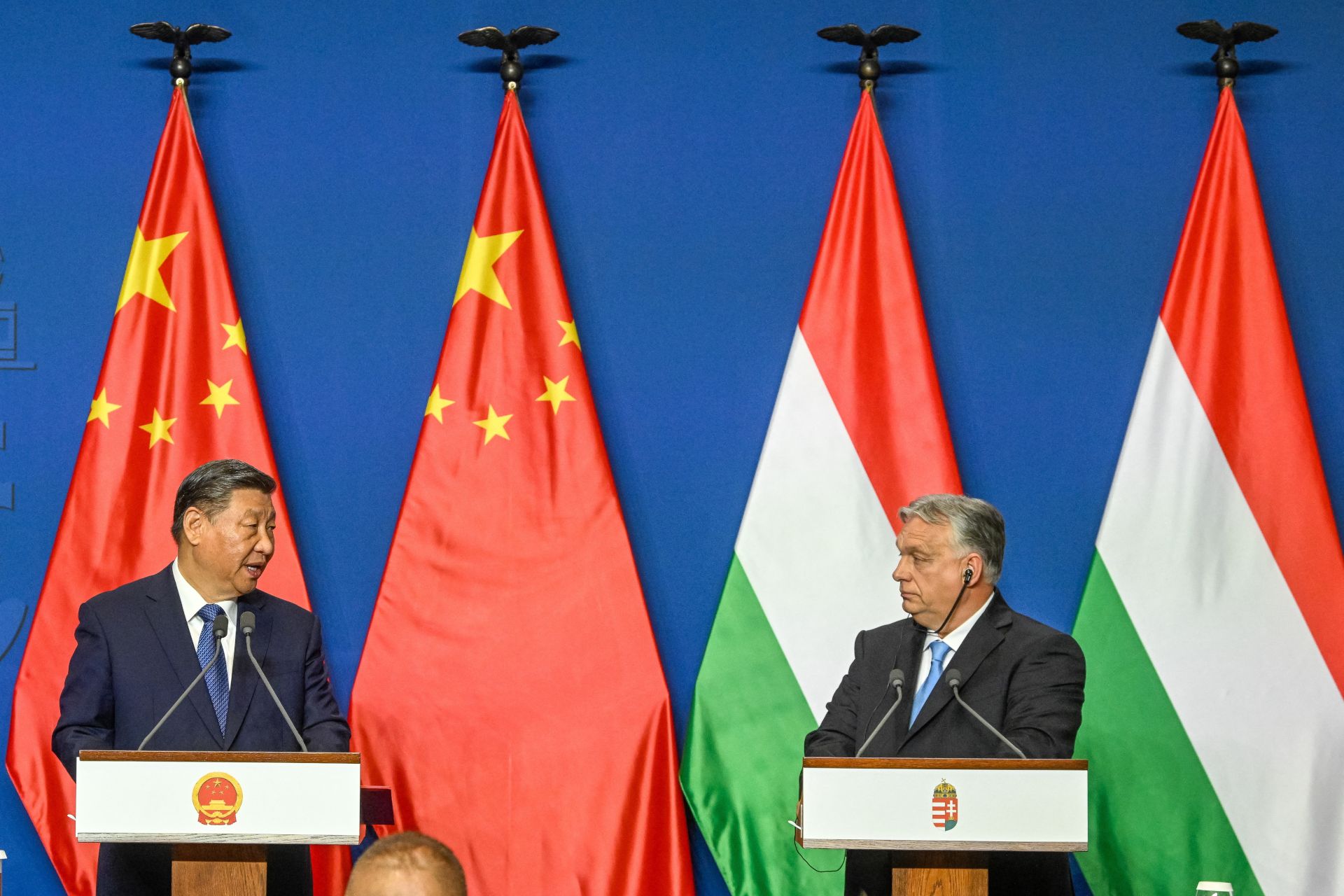
Xi Jinping visited Hungary in 2024. The two countries signed several cooperation agreements in areas concerning railway and infrastructure, oil pipelines and a nuclear energy project, while China agreed to modernize a border crossing between Hungary and Serbia. Shortly after the visit, Hungary accepted a $1.17 billion loan from China; it was the largest loan in Hungary’s history, intended to finance infrastructure and energy projects. Its terms remain classified despite pressure from the independent media and a court ruling mandating the authorities disclose them.
“Hungarian citizens have the right to know the terms under which they are being put into debt,” said László Varjó, a parliamentarian from the left-wing Democratic Coalition party. His party sued the Government Debt Management Agency to release the details of the loan. Even though they won in both district and regional courts, the Supreme Court decided that the case should be repeated, and it’s currently pending. This is not the first such case in Hungary: In 2014, the Orbán government signed a contract with Russia to expand the country’s nuclear plants, but the details were kept secret for years, until opposition politicians obtained them through the courts. Both cases drew fierce backlash from the opposition.
“Some of China’s investments are threats to local industry, some pose economic or security risks, and some of them are threats to our national security, like the nuclear cooperation, or some of the railway projects,” said Fehér from the Atlantic Council, who is a native of Hungary. “A lot of them also are threats to overall EU national security. So they’ve raised eyebrows in other capitals and in Brussels,” he added.
According to Fehér, Hungary’s relationship with China and Russia alienated the country from its allies in the EU and NATO, also presenting a political risk. In Hungary, Xi has “a country that does China’s bidding within the European Union and also within NATO,” Fehér said.
“Every time the EU wants to adopt a resolution about China’s conduct, whether it’s human rights violations in Hong Kong, Xinjiang, Tibet or Taiwan, Hungary defends China. It vetoes [any resolutions], or tries to steer the conversation away,” he said.
But the more Hungary cozies up to China, and the more alienated it becomes from Western partners and investors, the more it needs Chinese investment. The EU is withholding $21 million of funding from Hungary over rule-of-law concerns, while other European investors fear growing pressure from Orbán’s government, which has reportedly attempted to appropriate German retail chain Spar, and recently attacked Austrian Erste Bank and British oil company Shell in a speech, calling them “dogs of war” and accusing them of funding his opposition.
“The relations with regional partners are at rock bottom,” Fehér told New Lines. “And Hungary, a country with limited resources other than its workforce and import-export-oriented economy, needs the investments.”
Hungary has yet to profit from the Chinese investments, he said, adding that “the Hungarian economy has been in free fall since 2022.”
In Debrecen’s city center, the company has integrated itself by hosting Chinese-style events and participating in local traditions, like funding elaborate Christmas displays during the holiday season.
While Debrecen is a multicultural city, largely due to foreign students at its universities, the arrival of Chinese workers has sparked tensions. One Chinese CATL employee was arrested, as police investigate a family’s claims that he raped a 16-year-old girl. Meanwhile, CATL reportedly laid off hundreds of Hungarian workers last summer, fueling anger and speculation about a lack of local interest.
In February, Hungarian media outlet Telex revealed that authorities were aware of serious pollution at a battery factory owned by Samsung in God, a town 14 miles from the capital. The local population and independent media outlets have continually raised the alarm. Yet the Hungarian government and local authorities failed to compel Samsung to comply with the law or suspend operations, fearing that stricter enforcement might discourage battery manufacturers from choosing Hungary for their investments. Residents of Debrecen fear a similar scenario, in which they would be unable to stop the factory from operating despite environmental or legal concerns.
Debrecen’s residents complain that they have not been consulted about CATL or the other factories ahead of the construction. They have been locked out of semipublic events organized by the Chinese companies. When Magyar, Orbán’s main contender in the 2026 general election, came to town, he sat down for a livestreamed conversation in front of the construction sites and promised to develop a “comprehensive battery industry strategy.” He promised to stop prioritizing investment from Asia and to “reduce support for assembly plants and environmentally harmful technologies.”
Balázs Szilágyi, the Public Affairs Manager at CATL Debrecen, says the plant will organize test operations and factor in the opinion of locals ahead of production.
“It’s going to be an open factory, so [residents] can come in and see it with their own eyes,” he told New Lines at a press conference in Debrecen.
But residents are wary of these promises and feel powerless against the growing influence and construction. In 2023, one local activist, László Nándor Horváth, sought judicial review of the permit granted to CATL, after which the court annulled the plant’s catastrophe management license. But construction never stopped.
“I know we can’t stop the construction, or the operation of CATL. But it would have been great to show that a few civilians can at least halt it temporarily,” Horváth, the founder of the civil society organization Demosz: Association for Debrecen, told New Lines.
László Szőnyi’s lawsuit, which he filed in 2023 to challenge CATL’s environmental permit, is currently suspended because CATL has issued a new, updated version of its environmental license, which it claims is in line with regulations.
“It seems that CATL is betting that it will submit new application amendments, again and again, which will slow the case down, delaying the court’s decision,” the lawyer representing another plaintiff in the same case, Edina Tímár, told New Lines.
“We hoped that the legal path would be fruitful. But we see that the lawsuit has been going on for two years. And because of these delays, there is a greater chance that the factory will be built and start operating before we reach a decision,” added Tímár.
Their fight is a David-and-Goliath struggle: While Szőnyi and Tímár have gone to court to challenge the factory’s environmental permit issued by local authorities, CATL and its lawyers work closely with the administration. Those suing have to shoulder the financial burden of the court case and face attacks from government-funded media, which label them as foreign-funded agents and enemies of the state.
Judit Szemán, the 57-year-old mother of László Szőnyi, has lived here her entire life, and remembers the wildlife: Animals were plentiful here, the soil rich and the fields green and yellow. But since CATL started construction, the area has changed. Natural water reservoirs have disappeared or turned murky.
Some mornings, Szemán sees birds land around their house, afraid to fly over the factory. Hedgehogs and small snakes have disappeared from the area. Birds and wild hare make their homes on their pocket of land. “We are the last green refuge,” Szemán said.
But not for long. Soon, a road will be built by CATL, less than 160 yards away. Judit Szemán and László Szőnyi have grown weary of combing through thousands of pages of legal framework and reading multiple daily updates. Last year, they decided to sell their property.
“We can’t stop this,” Szemán said. She feels they have been alone in this fight that might decide the future of EV production and of a green transition in both ƒHungary and the EU. “As long as people don’t feel it on their skin, they don’t protest against [these factories]. But by the time they feel it, it will be too late.”
Become a member today to receive access to all our paywalled essays and the best of New Lines delivered to your inbox through our newsletters.