



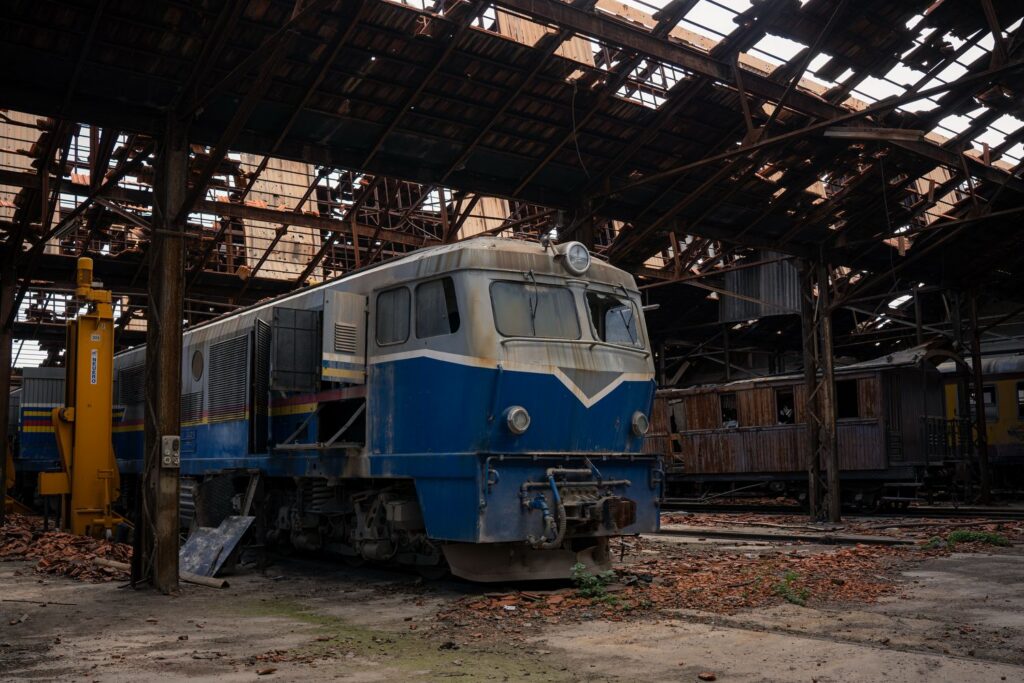
At a refinery station in Baniyas, on Syria’s Mediterranean coast, Soviet-era locomotives arrive coated in oil and dust, their steel bodies worn by decades of use. The ground is covered with black sticky residue, the wagons rusted to a deep red. As the workers begin filling them with crude, some of it drips onto the rail. The train, old and exhausted, struggles to carry its precious cargo. In a few hours, depending on the day’s mechanical failures, it will depart north, toward Aleppo.
The journey, once completed in four to five hours, can now stretch to a full day. At Tartus station, Nidal Abdel Qader, assistant director of the local branch of Syrian Railways, watches with sadness the state of a system he joined in 2000, before being forced to flee to Idlib during the Syrian civil war. He discourages anyone tempted to ride the line. “The cabins are very small, there are few places to rest, and accidents and breakdowns are common,” he tells me.
This freight route carrying oil, phosphates and wheat is the last operational line of Syria’s railway network, which once stretched to every corner of the country. Yet while this system barely operates, Syria is once again being cast by regional partners as the centerpiece of a new transregional trade corridor linking the Gulf to the Mediterranean. It is a chance for the country to be reborn as a new regional logistical hub — though the vision could collide with the reality on the ground.
Renewed interest in overland trade routes has followed repeated disruptions to maritime shipping and rising geopolitical tensions across the region. The war between Israel, the United States and Iran has profoundly disrupted traffic through the Strait of Hormuz, one of the most critical choke points in the global economy. For Gulf states in particular, the Hormuz vulnerability has reinforced the appeal of alternative routes linking the Arabian Peninsula to the Mediterranean.
In recent months, Syrian authorities have announced a series of infrastructure initiatives aimed at repositioning the country as a logistics hub. Central to these plans is a proposed railway linking Saudi Arabia to Syria’s Mediterranean ports via Jordan. This ambitious project for a high-speed train, traveling at speeds exceeding 120 mph, stands in sharp contrast to the capabilities of today’s network.
At the same time, Turkey, Jordan and Syria signed a trilateral memorandum of understanding to strengthen north-south connectivity through the revival of the old Hejaz Railway.
The idea carries both historical weight and political symbolism. Built under the Ottoman Sultan Abdulhamid II and inaugurated in 1908, the railway was conceived as a religious and strategic project, facilitating the pilgrimage to Mecca while reinforcing imperial control over distant provinces. Stretching from Damascus to Medina, it was one of the most ambitious infrastructure projects of its time.
During World War I, large sections of the railway were destroyed in the Arab Revolt. In the decades that followed, what remained was fragmented by new borders, dismantled or simply abandoned. Today, the Hejaz Railway exists mostly as a memory, its tracks scattered and its stations repurposed or forgotten.
“The Hejaz Railway name is used for historical reasons,” acknowledges Osama Haddad. “What we are talking about is a modern economic railway.” Appointed shortly after the fall of Bashar al-Assad, the 37-year-old general director of Syrian Railways came to the position without a technical background in railways. He says he has become, in his words, “unbeatable” on the subject.
“We have plenty of mechanics. My strength is in management: working with people, building teams, getting information,” he says. He argues that Syria’s geographic position makes it uniquely well placed for this role, and views this opportunity as a chance to “strengthen connections between populations, especially after the war, both inside and outside of Syria.”
Yet despite his optimism, Haddad acknowledges the scale of the challenges ahead. The agreement remains at an early stage. According to Haddad, its primary outcome so far has been the formation of a joint committee tasked with assessing the condition of the network on both sides of the Jordanian border. Even preliminary studies are expected to take time. “The line study alone could take up to two years, and implementation another two,” he says. “We are talking about at least five years before anything concrete.”
Reestablishing itself as a transit hub could generate revenue, create jobs and reintegrate Syria into regional economic networks, but it would also require a level of stability, investment and coordination that remains uncertain.
Reconstruction has barely begun. More than a decade of civil war, economic collapse and institutional breakdown has left Syria’s railway infrastructure deeply fragmented. “The stations, machines and rails have suffered theft, destruction and neglect,” says Yahya Duqmaq, deputy director general of the Hejaz Railway. On the line from Damascus to the Jordanian border, rails have been removed and sold as scrap. In some areas, the ground itself has been dug up by people searching for artifacts.
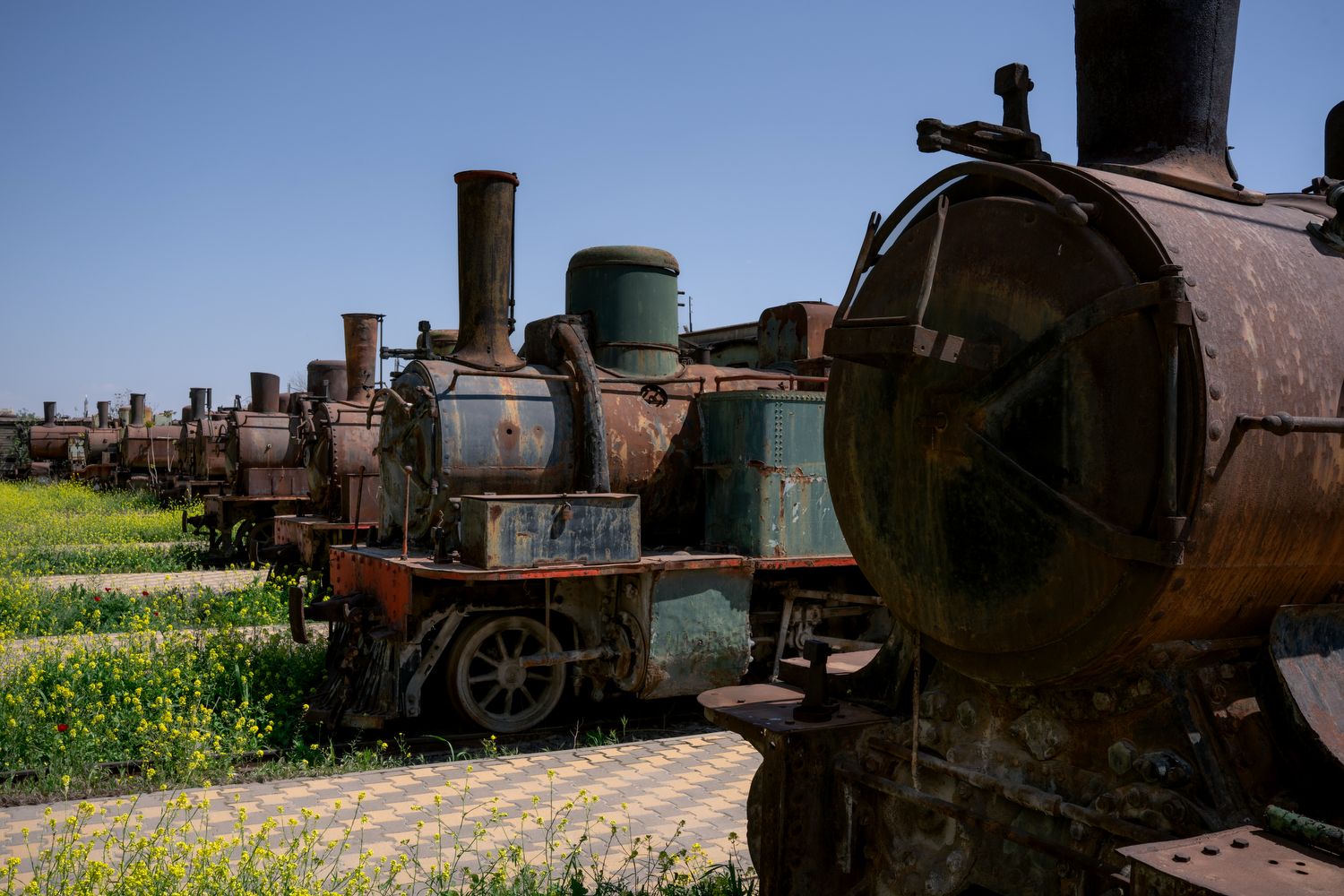
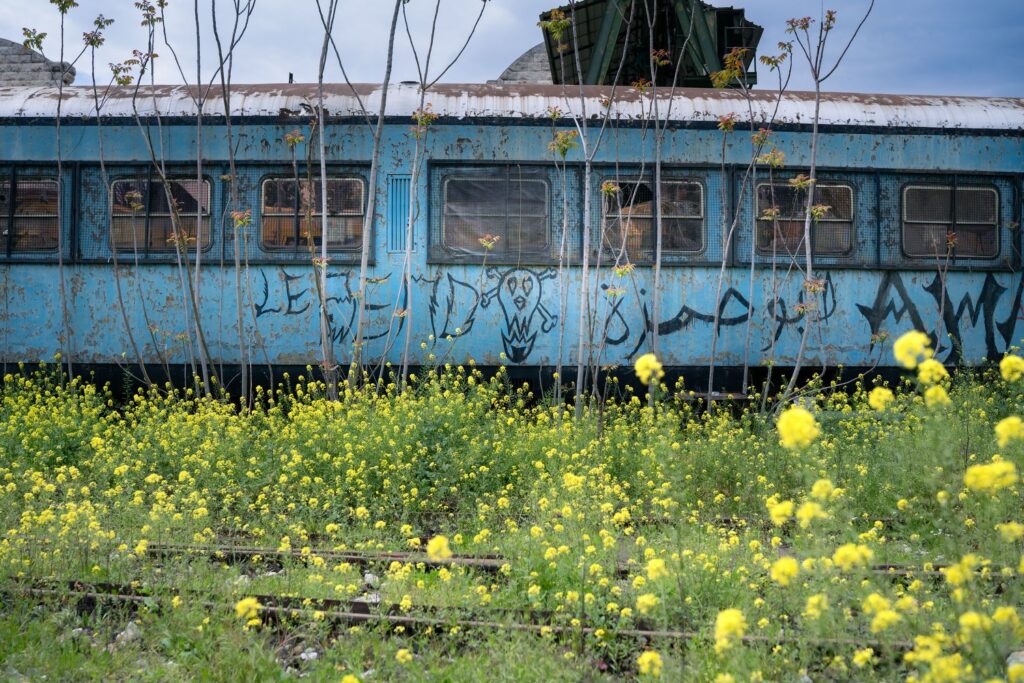
At al-Qadam station in Damascus, where his office is located, wagons still bearing the logo of Chemin de Fer Syriens (Syrian Railway), a legacy of the early 20th-century French mandate era, sit motionless amid fields of wildflowers. These trains have nowhere to go.
Before 2011, Syria’s railway network stretched across roughly 1,500 miles. Freight trains used to move regularly between Syria and Jordan before the war, carrying fuel, cement and agricultural goods. Today, more than 60% of those lines are damaged or out of service, leaving only around 600 miles still operational, often under severe constraints.
Aleppo, once the hub of the northern network, has been largely cut off: Four of its five lines are now unusable. The only remaining route links the city to Homs and the coast. Even there, trains rarely exceed 25 mph on tracks originally designed for three times that speed. Nidal Abdel Qader sighs as he lists the system’s failures. “All the systems were destroyed. Everything is ruined.”
In the absence of functioning signaling systems, railway workers have been forced to improvise. In some areas, train movements are coordinated by phone calls between stations, while drivers rely on handwritten “line permits” to confirm that the track ahead is clear of other wagons or accidents.
If the infrastructure is deteriorating, the rolling stock is in even worse condition. According to the Ministry of Transport, only around 25 locomotives remain in service nationwide, many of them in urgent need of maintenance, with spare parts difficult to obtain due to years of sanctions and financial constraints. “If we don’t get new locomotives, or at least spare parts, we are going to get completely stuck,” the director says.
At the Ministry of Transport, the aging of the railway workers is starting to worry the administration. “Seventy percent of our workforce is over 50,” Haddad says. “We rely on them to train younger workers, but it is a challenge.” Without people who can repair these machines, the department would be forced to replace all of the locomotives.
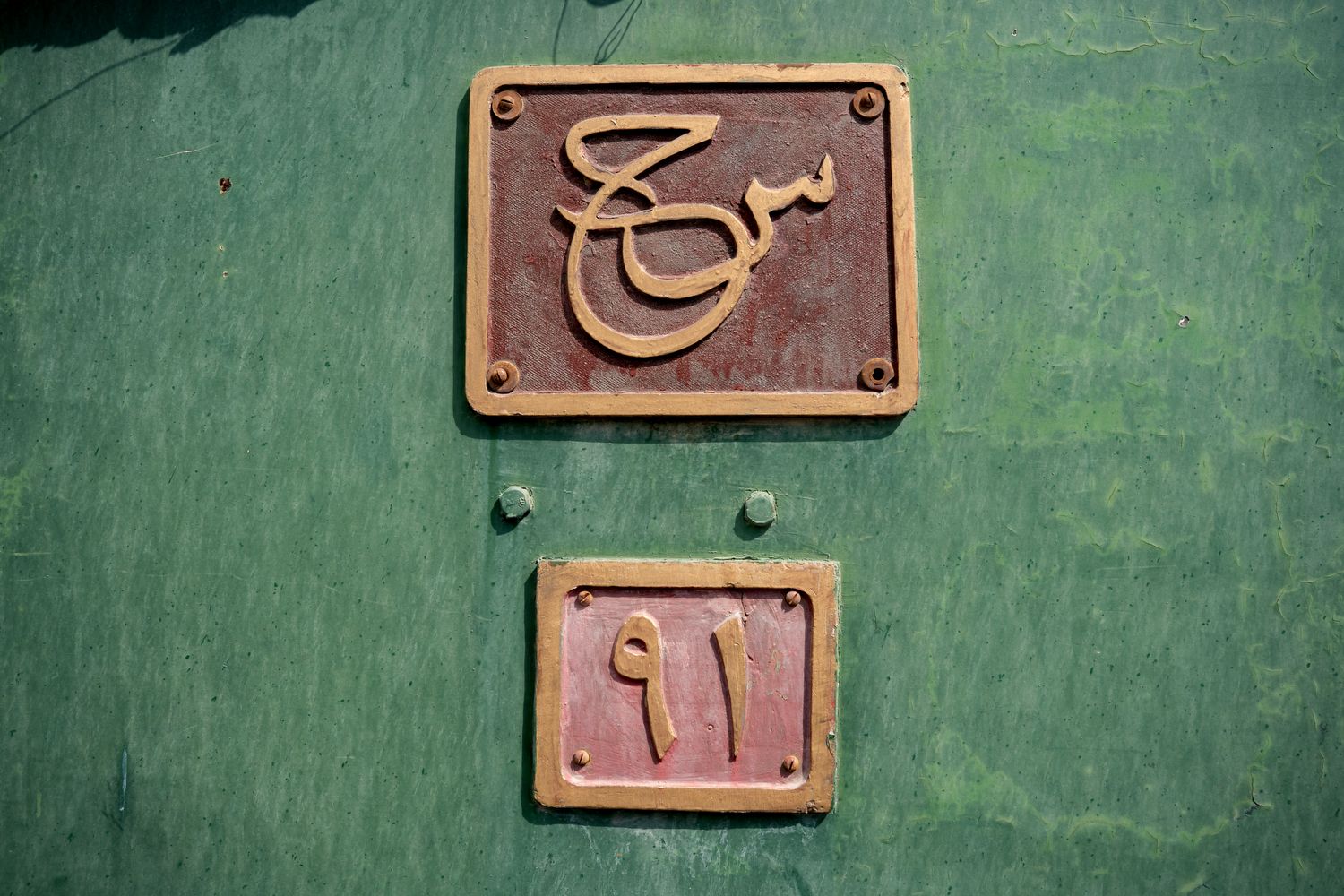
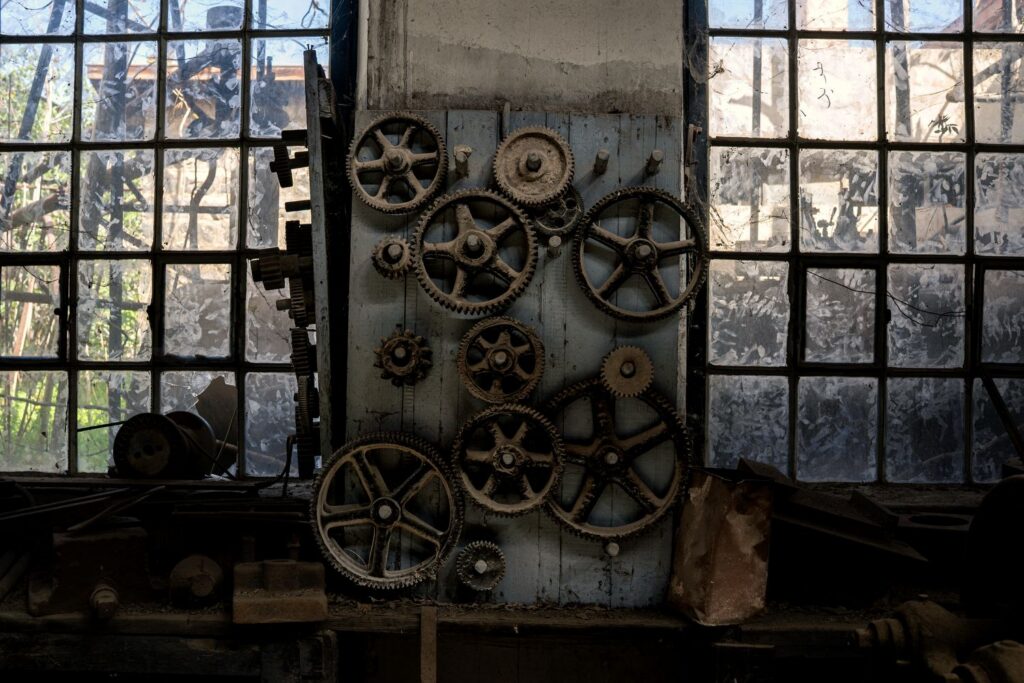
In a warehouse at al-Qadam station, a small team is working to bring two steam locomotives back to life. Old identification plates from decommissioned trains are stacked in a corner. The air fills with the smell of burnt steel, as a mechanic welds a damaged boiler inside one of the engines. Supervising the work is Yahya Muhammad Helwani, 73.
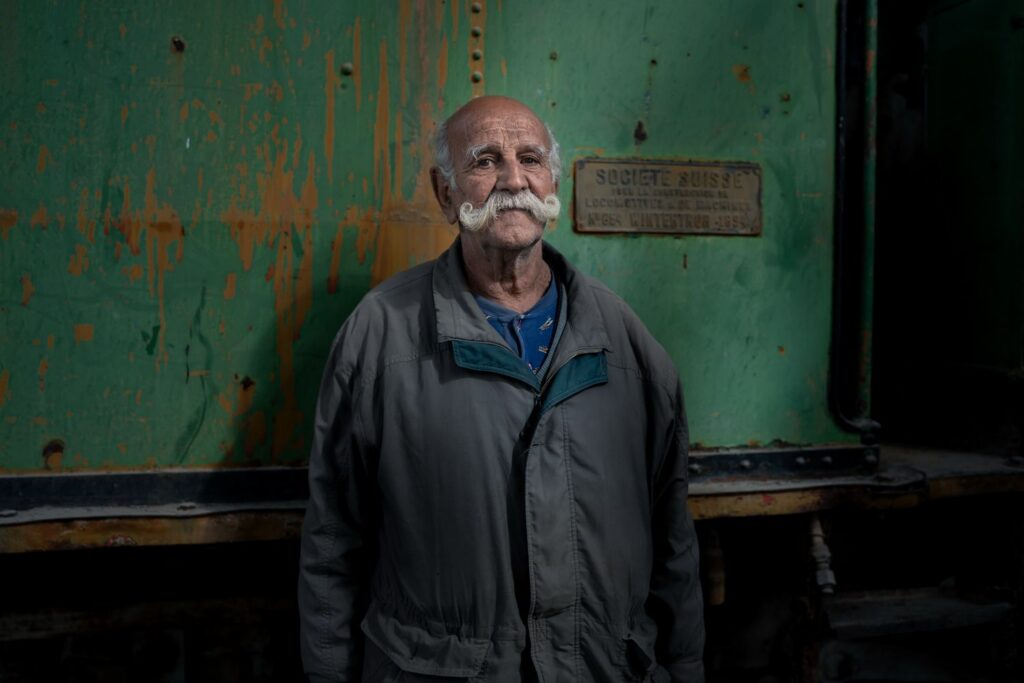
The mechanic is a legend among his co-workers, not only because of his large white mustache but also because he is among the last in Syria to understand the inner workings of these machines. A former driver and mechanic, he began working on the railways in 1968. On his phone, he keeps photographs of a different era: Damascus in the 1950s, when trams ran through the city and passenger trains connected regions across the country.
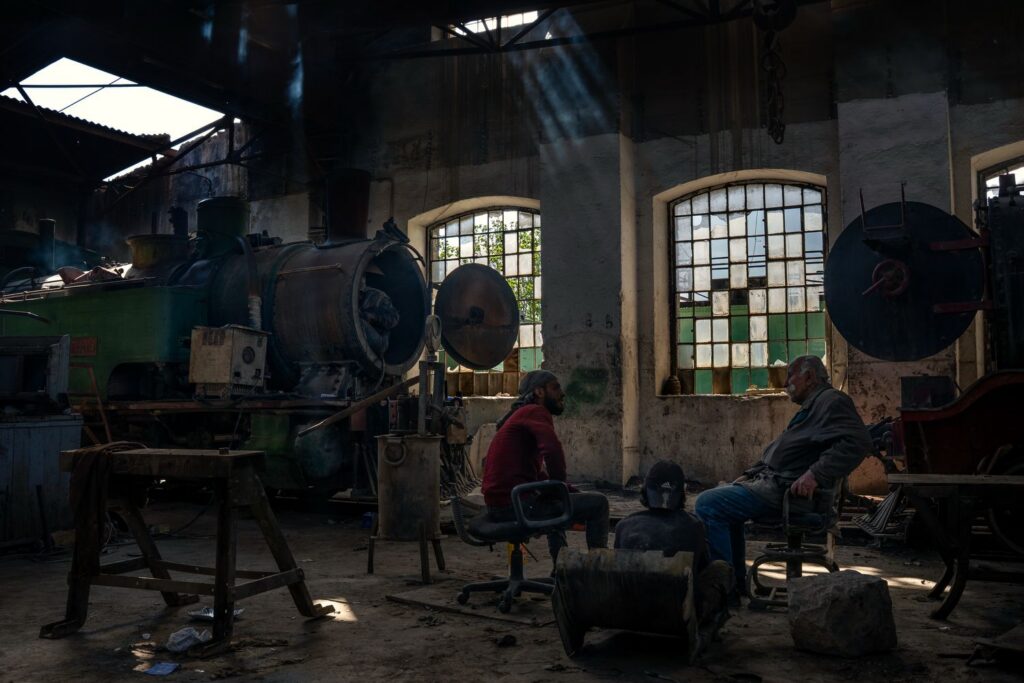
“We used to take tourists on these locomotives every year,” he says. “The trips were full. We would go to the Yarmouk Valley, to Bosra.” The journeys lasted days. The workshops, he recalls, were once so busy that “you couldn’t hear yourself speak.” Those days are long gone.
The locomotives that are being restored today are part of another project of the Hejaz Railway. Today, this corporation is in charge of the stations located between Damascus, the surrounding countryside and Daraa, in the south. The rest of the provinces are served by a different line, the Syrian Railways Corporation.
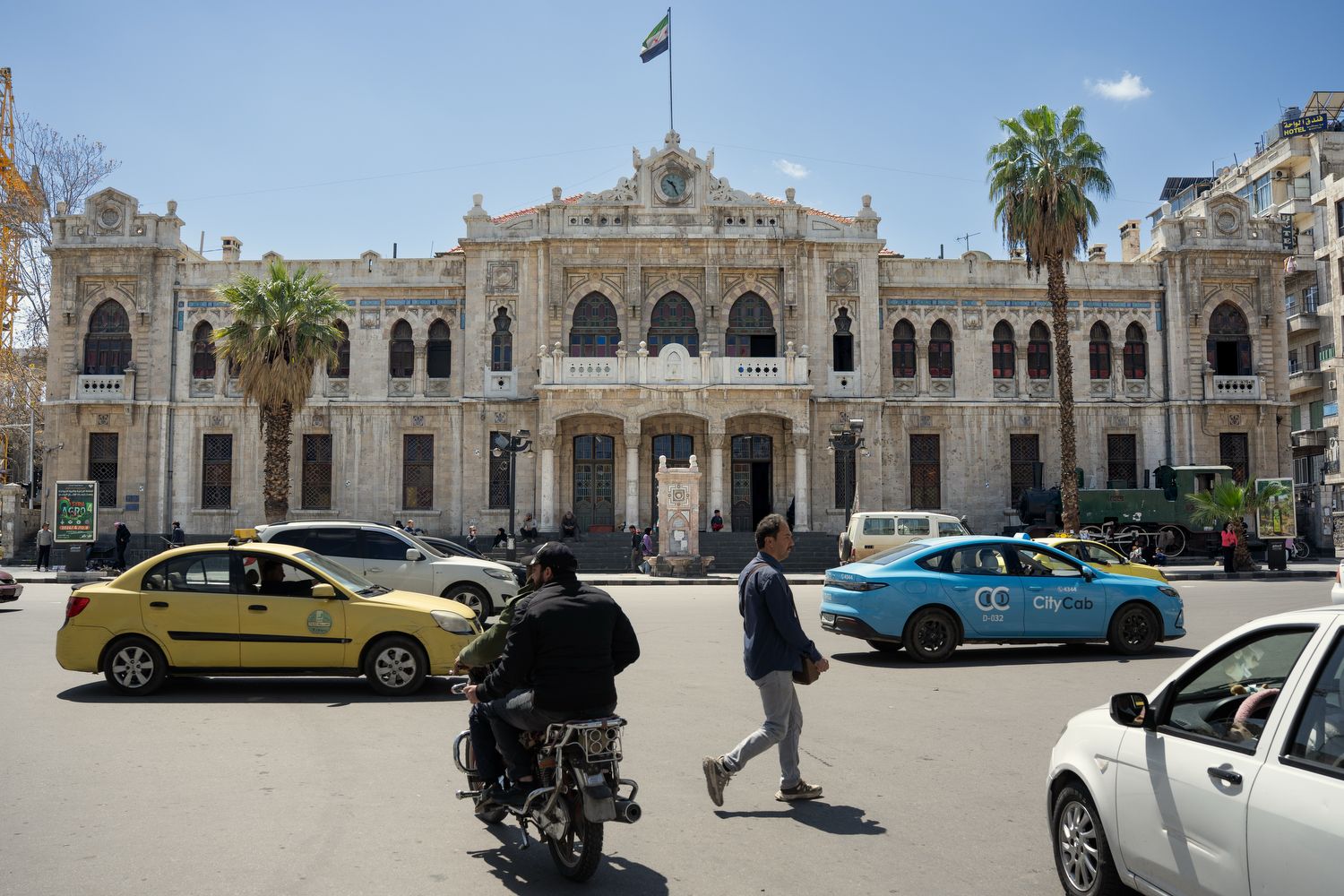
If the focus in Aleppo is building an international freight network capable of generating profits, the Hejaz network is working on a more local project. The historical al-Hejaz station located in the center of Damascus is an architectural landmark, a mix of traditional Damascene woodwork, stained glass and rococo European design elements. But if the place is set to be turned into a museum, the locomotives are to be set on the tracks once again for a railway connecting Damascus with surrounding suburbs.
“This is a major strategic project, linking Damascus with its countryside, airports, educational and health centers, integrating the city with rural areas,” says Manal Khalifa, 46, communication officer of the Hejaz Railway. They are also planning an even more ambitious project designed to relieve the heavy traffic of the capital: a subway that has been in the works for 20 years. Some tunnels have been dug. Now, the only thing missing is funding.
Reconstructing Syria’s railway network is estimated to require between $3 billion and $5 billion, just to restore the 900 miles of nonoperational track and the necessary signaling. High-speed lines, like those envisioned in regional plans, would cost significantly more.
The network’s design adds another layer of limitations: Most Syrian railways are single-track, meaning trains cannot pass each other without careful coordination and long delays. “To handle the volumes of a new corridor, we would need double or triple tracks, and modern signaling,” Haddad explains. “Without all of that, we cannot increase speed or safety.”
Even sourcing materials presents difficulties, as parts of the existing network use a narrow gauge incompatible with international standards, requiring large-scale replacement. “To integrate with regional networks, we need the standard gauge,” Duqmaq says. “That means rebuilding even parts that are still functioning.”
As costs continue to rise, funding remains uncertain. Foreign delegations have visited railway facilities, raising hopes of future investment, but little has materialized. “Everyone says they want to help,” says one Syrian official, speaking on condition of anonymity. “But when it comes to actual investment, then comes hesitation.” Private investors, he adds, are wary of political risk, sanctions and return on investments. “There is talk of revival for a regional railway,” the official says. “But in reality, nothing concrete exists yet.”
For now, between rusting locomotives and high-speed renderings, Syria’s railways exist in two timelines that have yet to meet. Until reconstruction moves beyond promises, the vision of Syria as a logistical hub remains just that: a vision.
Become a member today to receive access to all our paywalled essays and the best of New Lines delivered to your inbox through our newsletters.