


Behind the wheel of an oversized SUV, Nurtay Iskakov seemed eager to stave off boredom amid endless hours of driving. This playful and devout middle-aged man knew our Western references, and the American accent. “This is our Wild West, brother,” he said.
It was accurate. Western Kazakhstan, empty for hundreds of miles, did resemble Texas to our eyes. Only the smoke trailing from exhaust pipes mounted on the roof of his vehicle punctuated the monotony of the road. Almost nothing grows here.
And yet it is a land of possibility, perhaps the richest in the country. Iskakov calls it blessed by God. Harsh and inhospitable, this soil was once crossed by his nomadic, then seminomadic, then settled ancestors. Today, a single hectare sells for the price of a duplex in Astana, the capital, a 30-hour drive away. Beneath the surface lies oil, dangerous, coveted. All it takes is knowing where to look, or a bit of luck.
Europe, the U.S. and Asia all need it, particularly since the sea lane through the Strait of Hormuz has grown increasingly precarious. The three vast Kazakh oil fields rank among the most profitable outside the Middle East: Karachaganak, Tengiz, and the more recent offshore giant in the Caspian Sea, Kashagan. Western joint ventures have poured staggering sums into drilling, refining and transporting the oil — mostly through Russia. Locally, the work is embraced with almost no complaint; few jobs fill bank accounts quite like this sector. Being hired also opens the door to another kind of wealth: national pride, and the prestige of belonging to a workforce that contributes more than any other to the country’s economy and its independence.
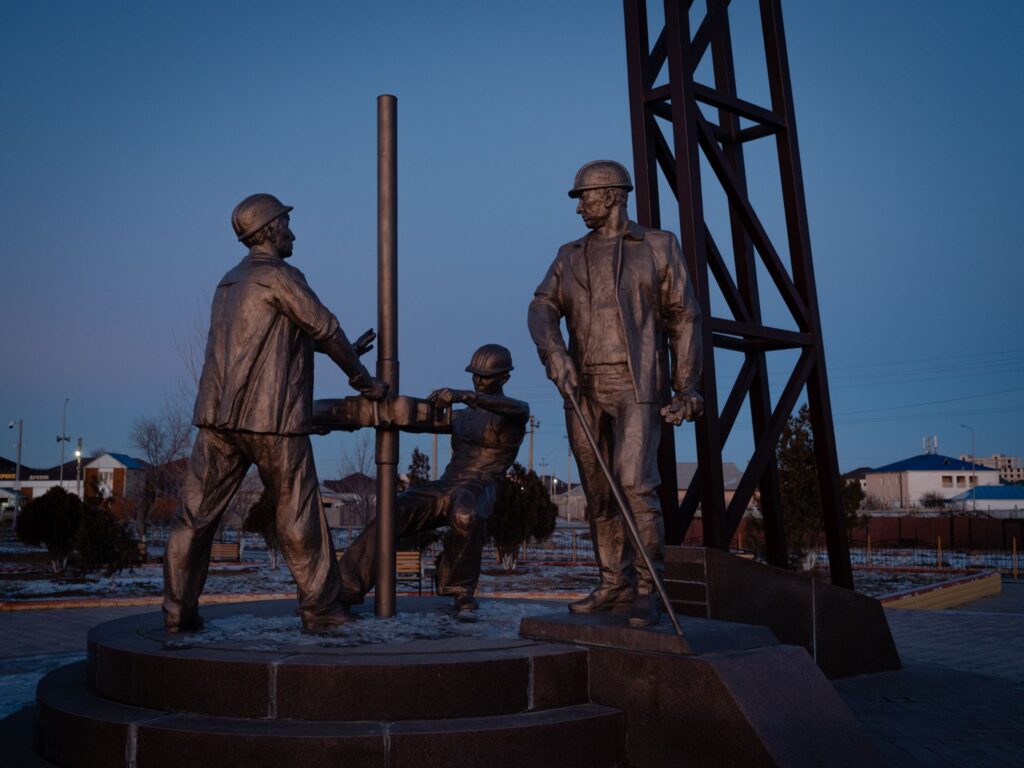
The 13th-largest oil producer in the world, Kazakhstan relies heavily on petroleum revenues: Hydrocarbons account for nearly half the national budget and two-thirds of exports. Iskakov praises both the Almighty and the oil that made him suffer; to him, there is no contradiction. After years spent repairing pistons lowered into wells, he quit as soon as he began to cough. “I didn’t want to develop a respiratory disease.” Today, he sells hookahs and inhales their smoke to pass the time when business is slow. Is it paradoxical? In western Kazakhstan, the fever for black gold has seeped into everything, from the soil to the body. Nothing has seemed capable of stopping it.
It was time for prayer. Kairat Kozhamouratov, our host, bent down, then slowly knelt. His prayer mat rested on broken slabs of concrete, sheltered from a restless, almost intoxicating winter wind. A few leaves of wild mint grew nearby. Before, it was brewed into tea. But his childhood village, Karaton, was entirely relocated 30 miles away. Through the gusts, a constant metallic beep pierced the air, drowning out his murmured “Allahu akbar” (“God is great”). The direction of Mecca, toward which Muslims pray, aligned with an endless network of pipes, tipped with flickering flames. Blocking the horizon was the Tengiz oil field, operated for over three decades by the American giant Chevron.
It was from these stacks that the illness came, gripping Karaton in the 1990s and early 2000s. Kozhamouratov recalls first noticing the smell of rotten eggs. Then came the fainting episodes, seizures, coughing fits and breathing difficulties. The entire village was affected to varying degrees, but it was thought at first to be a coincidence or maybe the result of poor diets. Then, one day, local officials arrived in pickup trucks to announce that the village would be rebuilt elsewhere.
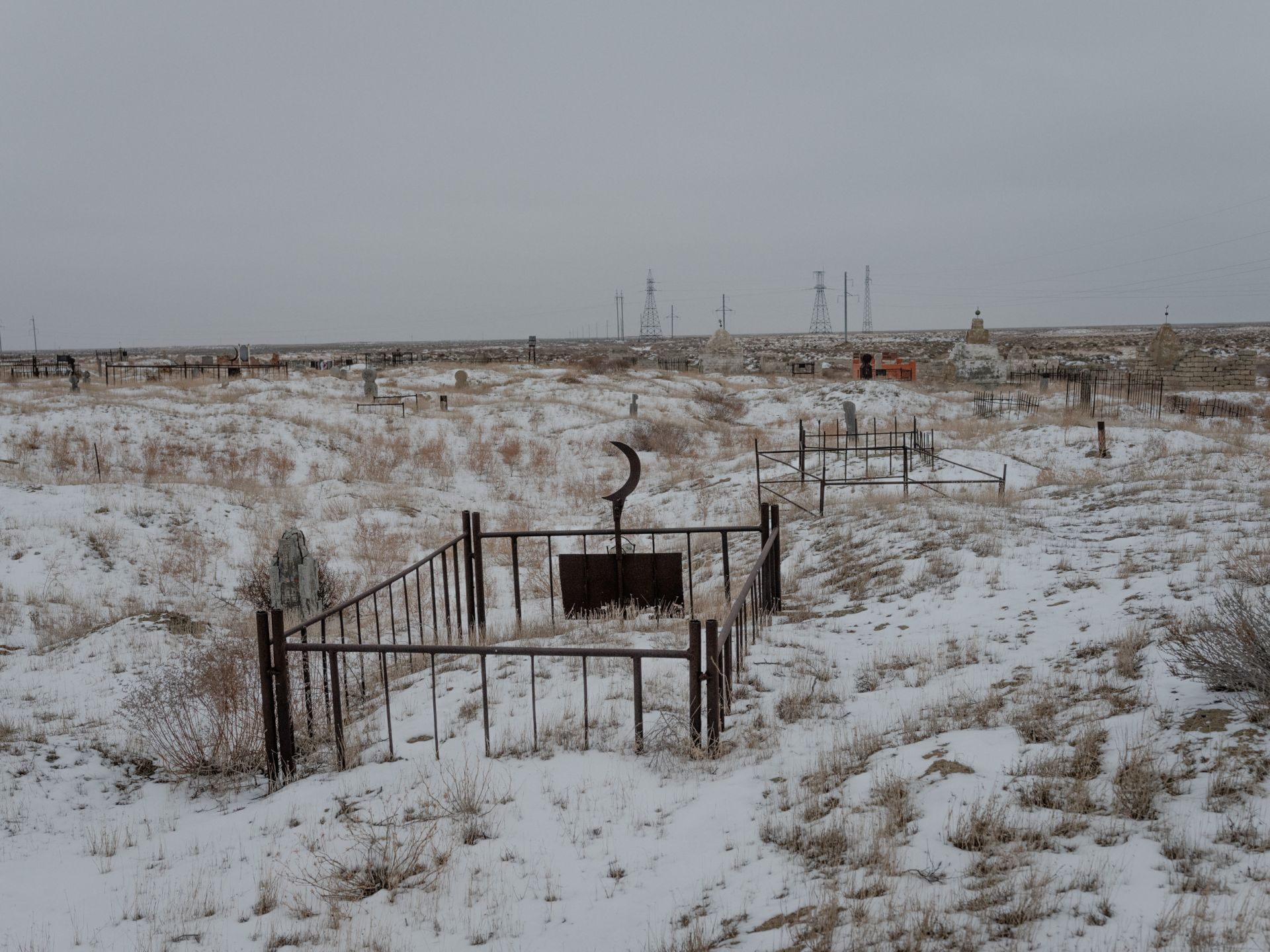
Twenty years later, only the graves remain, since they are harder to relocate than the living. By common agreement, Kozhamouratov said, Karaton’s cemetery was left untouched. People return to mourn, risking once more that acrid smell. Kozhamouratov rarely goes now, except to show visitors the scale of the damage. Before his mother’s grave, he stroked his face, then prayed again. Several villages in western Kazakhstan have met a similar fate.
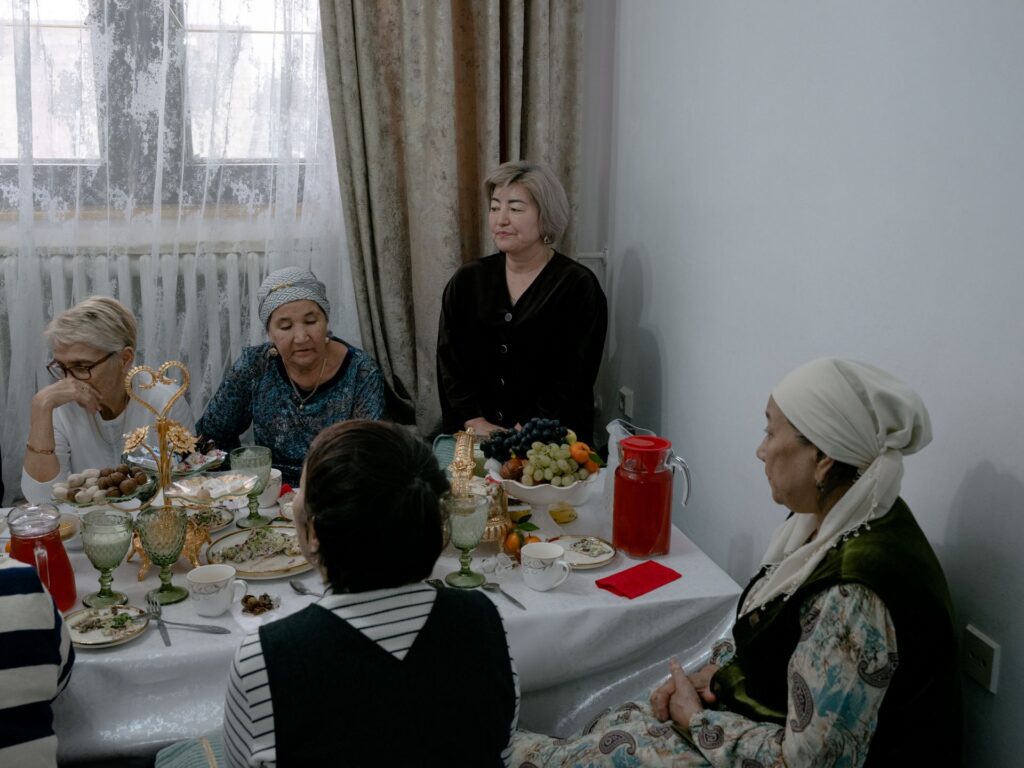
Zhana Karaton — “New Karaton” in Kazakh — bears no resemblance to the old. About 35 miles from the original location of the town, each household has its own home and garden plot, arranged in an American-style horizontal grid laid out by the oil company. From the Kozhamouratovs’ house to the mosque, there are exactly six right angles. The same goes for the grocery store. In mid-December, about 20 family members gathered at Kozhamouratov’s home. A sheep had been slaughtered in memory of a relative who died the previous month; women sat in one room, men in another. Then came the toasts, desserts and cigarettes outside. The average age hovered around 40. Where are the elders? “They’ve passed away, too,” an uncle answered. Doctors never said much about the cause of the respiratory diseases.
Those shivering around the ashtray shared one thing in common: They never worked directly at the Tengiz site, or only from a distance or for off-site subcontractors. The closest to the oil was Kozhamouratov, the host, who had been a driver for the operating company, but never assigned near pipelines or storage tanks, as far as he recalls. Does this suggest it is better to keep one’s distance? Kozhamouratov’s eldest son did not think so. He was dreaming of landing a good job at Tengiz and buying a new car. No one dissuaded him. “Everyone knows it’s harmful. Some don’t even wear protective masks. They know they’re useless given the toxic concentrations. The flow never stops. What else would we do here? There’s barely enough to feed the wild horses,” another one added, spitting onto the ground.
Extracting oil here, where it is buried more than 11,000 feet underground, is a technical challenge involving complex feats that defy easy explanation and are proudly taught in engineering schools. Another feature of Kazakhstan’s oil fields: They contain a high concentration of hydrogen sulfide, a gas that deprives the brain of oxygen when inhaled, potentially causing dizziness or cardiac problems. Classified as both an irritant and a neurotoxin by the World Health Organization (WHO), the U.N. agency offers strict exposure guidelines: no more than 30 minutes at a time.
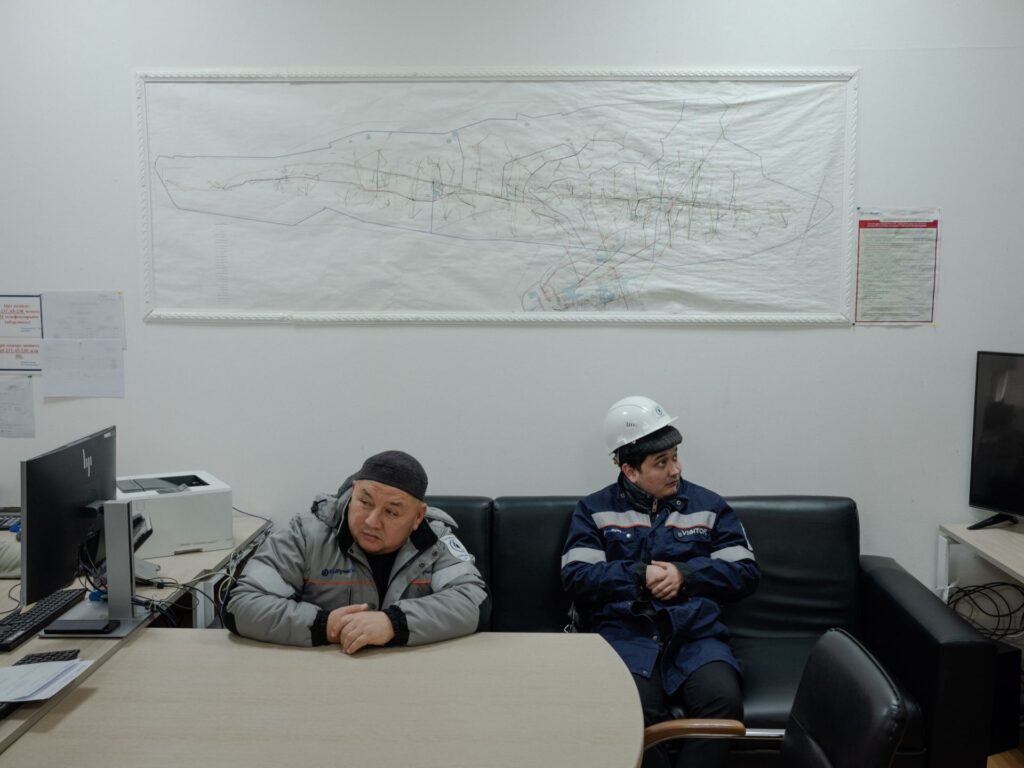
The region records cases of sudden death and permanent brain damage, though none has been conclusively linked to the oil fields’ operations. Deaths tied to hydrogen sulfide exposure were documented some 20 years ago, and long-term effects remain poorly studied. Data on cancer does exist. The regions of western Kazakhstan and Mangystau, which we visited, are among those that recorded an above-average annual increase in cancer-related mortality between 2014 and 2022. This could be for any number of reasons, however, such as delays in treatment and diagnosis, or other factors (such as smoking or alcohol use). The challenge for activists is to link environmental conditions to cancer rates zone by zone, work that has not yet been carried out. One air quality supervisor at the Tengiz site, speaking anonymously, describes a system rife with manipulation: “Falsification is so common that it affects not only air quality data but also collected samples. If my results don’t match theirs, I have to change them. The filters are inadequate, and within a 90-kilometer radius, exposure to hydrogen sulfide or nitrogen oxides can be severe.”
In early 2025, Chevron announced a nearly $60 billion expansion project at Tengiz, aiming to push production to almost a million barrels of oil equivalent per day. This number is approximately 1% of global output. So far, Kazakhstan has not yet taken advantage of the crisis in the Strait of Hormuz to become a credible alternative on the global market, since it is already pumping at full capacity. Another issue lies in its export routes. They run primarily through Russian territory, under drone attacks from the Ukrainian military — notably at the port of Novorossiyksk on the Black Sea, where Kazakh oil is loaded onto tankers. In the long term, reducing dependence on Russia and trading with a wider range of partners from China to Turkey represents a tremendous opportunity for Kazakhstan, according to experts.
Tracking down the victims of oil extraction feels like playing a grim game of hide-and-seek. During two full weeks spent talking with oil workers out in the open, at the mercy of a punishing steppe winter wind, we hoped, perhaps naively, that some would begin to describe what may be a possible health disaster. But conversations were difficult. Employment and immediate income, in a region that has little to offer beyond the resource being drawn from beneath its soil, outweigh any other concern. Young, healthy workers are hired almost automatically. Few say more than the expected platitudes, wary of losing their jobs. Older workers rarely make it to retirement; life expectancy here is said to be lower than anywhere else in Kazakhstan. Official figures do not exist.
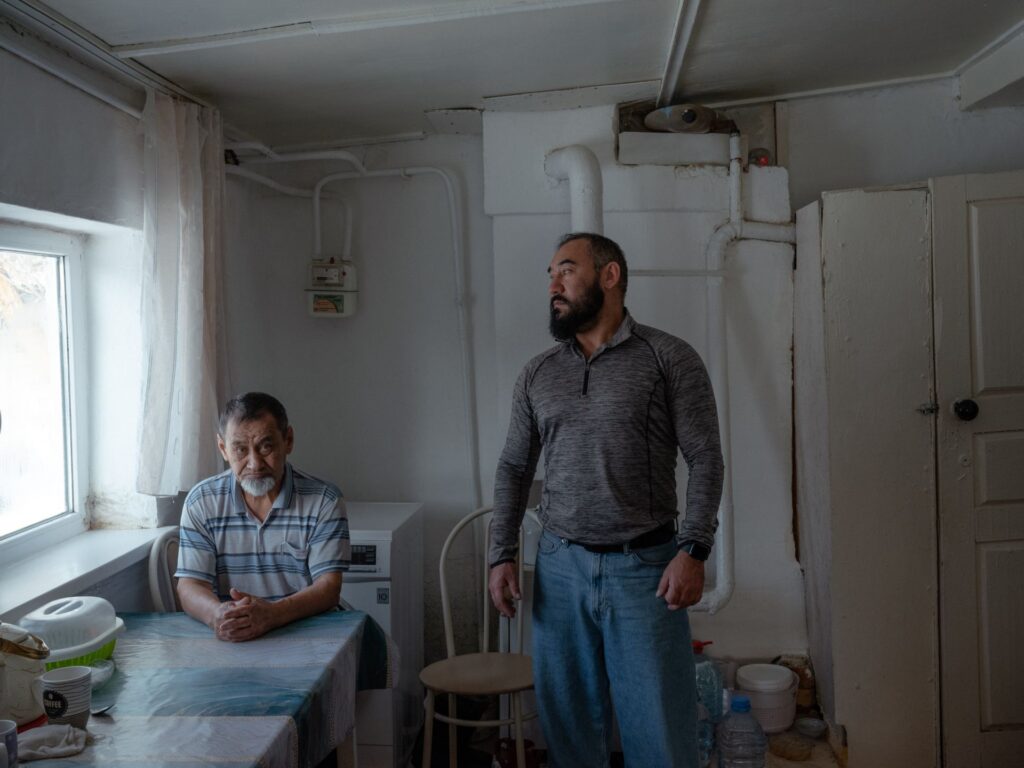
Evidence is scarce or misinterpreted. State surveillance, fragmented information and the spread of unverified claims all complicate the picture. But worse still is the acceptance of the situation across a region the size of Texas.
Along the railway that ferries oil workers from site to site, the small town of Makat serves as a waypoint, dotted with roadside motels and restaurants. In the back room of one such establishment, suited representatives from a company called GPC Investment, tasked with building a gas processing complex for the Kashagan field nearby, were presenting their case.
Kazakh law requires public consultations before such projects. The “public,” in this case, consisted of three rows of elderly women, handbags on their laps, gazing blankly at dense technical slides. The plans indicated that 600 tons of sulfur would be processed daily. “I don’t understand what they’re saying,” admitted a young man at the back. He was not there to debate technicalities. On the contrary, he hoped to be among the 400 workers the company was planning to hire. The presenters promised a new school as well. “And our health?” asked one of the women, before cutting herself off. “In any case, you can tell us anything, how would we know? What guarantees do we have?” No one was there to investigate. The meeting ended. Outside, snow fell. The women left arm in arm to avoid slipping, exchanging family news. “How is your son?” one asked.
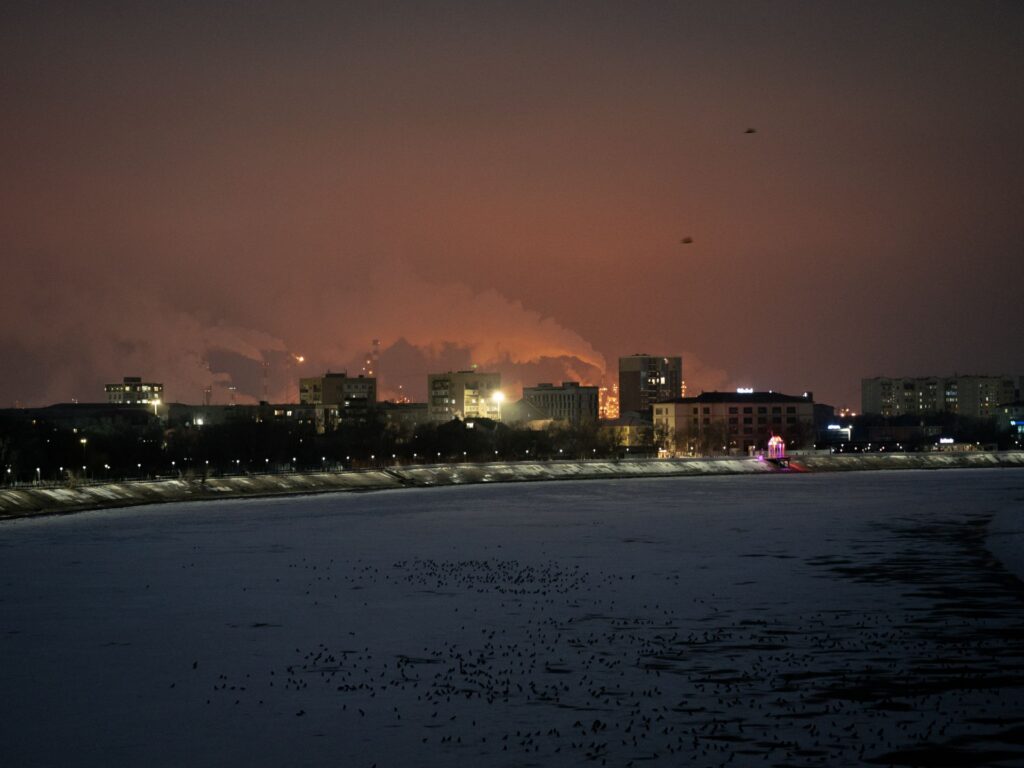
In Atyrau, everything revolves around this oil that brought the city into being. The headquarters of Tengizchevroil towers over the city hall; pubs for expatriate engineers display a patchwork of international flags; roundabouts are decorated with oil derricks. Offshore, in the Caspian Sea, lies Kashagan, one of the largest oil discoveries in decades.
The regional environmental protection department is among the most active in the country. Its head, Askar Zhusupov, receives visitors in a suit, a big watch on his wrist, and deflects responsibility toward higher authorities whenever possible. Yet he was among the ones who pushed to designate the region a “zone of ecological disaster” and to commission a study by WHO scientists last fall. The study is expected to take about six years, according to Zhusupov, “depending on what they find.” He had little more to add. Air pollution readings? “Concerning on certain days.” One site in particular worries residents: the Atyrau refinery, located amid residential buildings, where flaring causes pollution levels to spike. Local activists accuse authorities of disabling online monitoring systems whenever readings become too alarming.
Tengizchevroil was recently fined over $1 million for several “serious violations,” including unauthorized emissions of 5 metric tons of pollutants in late 2023 and early 2024. The company is known for its silence toward the press. Two sources suggest these fines may serve less as health safeguards than as leverage in negotiations with Kazakhstan. For years, disputes have pitted the government against foreign operators in arbitration courts, over historical bribery cases and inflated costs.
A 2024 investigation by the International Consortium of Investigative Journalists documented these tensions, which are based on the share received by foreign consortia — up to 98% of oil revenues after the payment of initial royalties, according to the consortium’s findings. Kazakhstan hopes to recover trillions of dollars and increase its stake in these projects. In a confidential international arbitration case, a ruling made public by Reuters disclosed that a Stockholm court sided with the Kazakh state, though the case is still ongoing. In July 2025, Astana officially announced the start of negotiations to revise production-sharing agreements. No timeline has yet been given. Later, in April this year, the Ministry of Ecology announced that a court in Astana had upheld a $5 trillion environmental fine imposed on the North Caspian Operating Company for an allegedly excessive amount of sulfur stored at the site of Kashagan. The company appealed the decision.
The road ends to the south, in Zhanaozen, one of the country’s oldest oil sites, sustained with difficulty by the state-owned company KazMunayGas. “They see us as national heroes, the workers who made Kazakhstan independent. But at what cost?” asked Hassan Demesinov, 50, who suffers from severe respiratory illness. “We’ve been treated like disposable equipment, like plastic gloves, if you want.”
Around him, broad-shouldered union men nodded in agreement, huddled together over soup. Experts say extraction is barely profitable in Zhanaozen. Reserves are dwindling, equipment is aging. But who will tell that to the thousands of oil workers, the sons of workers before them and fathers to those who came after?
Astana fears unemployment could spark unrest. That word, “unrest,” is one the regime has long sought to erase. Here, people are born and die among nodding pumpjacks.
For Demesinov, the end may come soon. His pension barely covers his medication. He stood up slowly. “Dear, where did you put the scans?” he asked his wife. “Above the closet,” she replied. Through the translucent blue of the X-ray film, the light revealed a hollow space on the left side of his chest. His lung was removed last year.
Additional reporting by Naubet Bisenov.
This reporting was supported by the Belgian grant “Fonds pour le journalisme.”
Become a member today to receive access to all our paywalled essays and the best of New Lines delivered to your inbox through our newsletters.