

If you walk down Independence Avenue in Lusaka, Zambia, one of the city’s busiest and most historic streets, the Cathedral of the Holy Cross immediately stands out. It faces the High Court, sits near the Ministry of Foreign Affairs and is just a stone’s throw away from State House, the president’s office. As a child, I would look up at its soaring walls and feel that the cathedral held a power all its own. It was a place where faith and authority seemed to meet at every corner.
From the outside, it looks solid and plain, all concrete and clean lines. Inside, the ceiling rises high, light slips through stained glass and the organ stands above the pews. Even as a child, you could feel that this was the main church, the place everything led back to.
I was born Anglican and began to attend Mass at the cathedral when I was 4 years old. I clearly did not know much then, but I knew the order of things: when to stand, when to kneel and when to be still. The church was not merely a place we visited. It was a major part of my family’s life.
On Sunday mornings, the cathedral felt large and quiet. The organ would start, and soon the whole congregation would be singing, “Praise to the Lord, the Almighty, the King of Creation.” The sound filled the nave and stayed with you long after the hour-and-a-quarter service ended.
My late father Dennis Phillip Liwewe used to say he was “Anglican to his bone marrow.” It was not a joke. He was a canon, and the church shaped everything in our home, especially how we spoke, how we behaved and how we understood right from wrong. He was also a well-known broadcaster and football commentator, a BBC sports correspondent who travelled widely across Africa covering matches. When he was away, it was my mother who took us to church every Sunday, with humility, quietude and firmness. There were hardly any exceptions. Praying and worshipping God did not pause because my father was out of the country.
Growing up, the headquarters of the Anglican Communion in Canterbury, England, felt far away, but it also felt unquestionable. Canterbury was so sacred in our eyes. It was not a place we talked about often, but its authority sat quietly behind the life we lived. That sense of order stayed with me for years. The church felt fixed, held together by tradition and patriarchal authority.
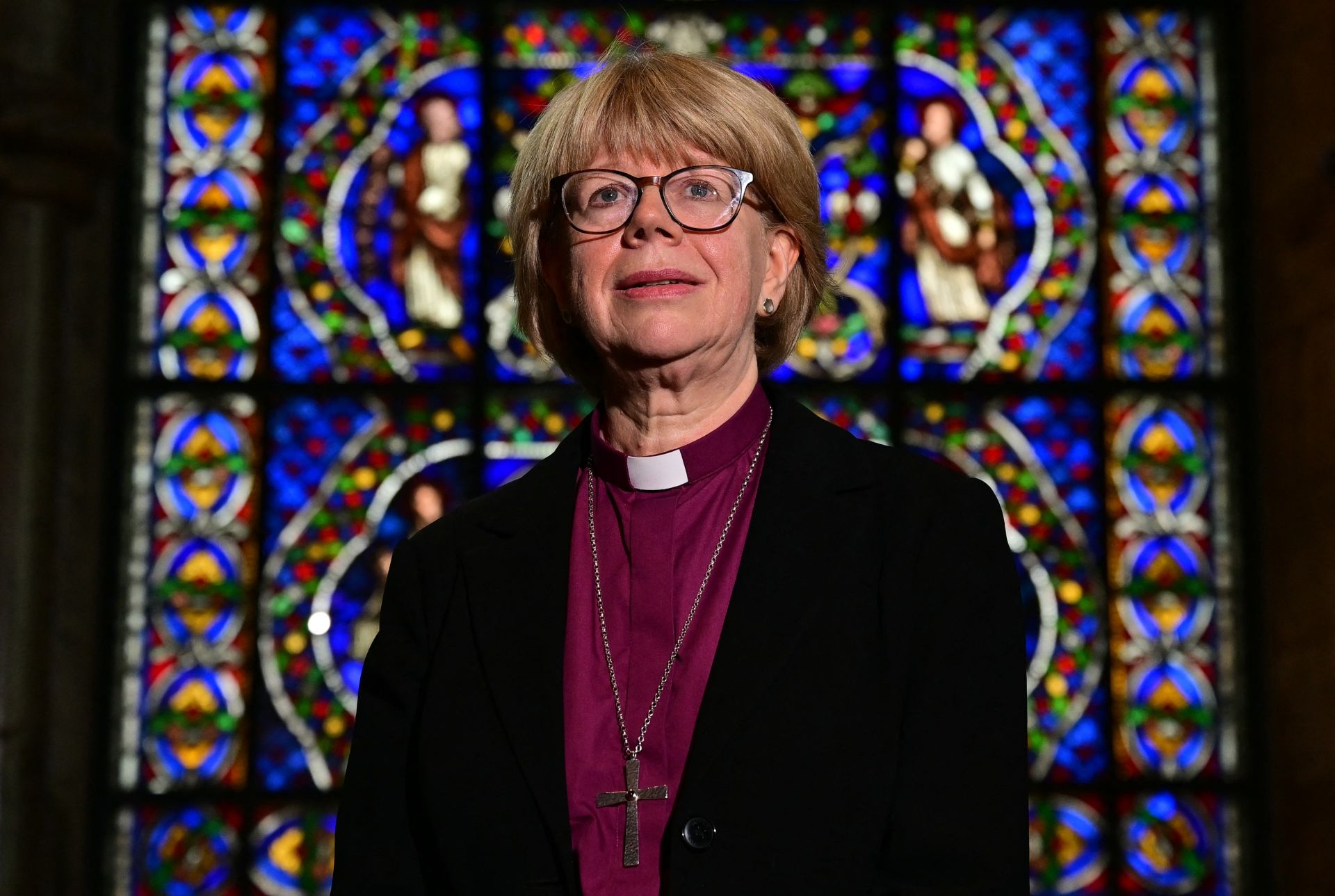
When the Church of England confirmed that Sarah Mullally, 63, would legally become archbishop of Canterbury on Jan. 28, 2026, following a confirmation election at St Paul’s Cathedral in London, a long-settled sense of certainty cracked.
For many African Anglicans, the unease is not only about her becoming the first woman to hold the post. It is also about what her appointment signals: a church leadership that accepts women bishops and is open to blessing same-sex marriages.
Mullally is a former nurse and was first ordained as a priest in 2006. She later became the first female bishop of London in 2018.
In 2023, when she was still bishop of London, Sarah Mullally publicly supported blessing same-sex couples. She and the archbishop of York, Stephen Cottrell, said that sexual intimacy within these relationships could be “celebrated.” This followed a bishops’ report that opposed same-sex weddings in churches but allowed clergy to bless couples. Both leaders emphasized that “stable, faithful relationships” between two men or two women could receive a blessing, directly challenging historic Christian teachings on sexual ethics. For many African Anglicans, this was a clear sign that the church they had grown up with was moving in a new direction.
The reaction to Mullally’s appointment across Africa was immediate and sharply divided. In Nigeria, Uganda and South Sudan, church leaders called it unbiblical and devastating. In South Africa, it was widely welcomed as a long-overdue change.
Talking to bishops, priests and young Anglicans across the continent, one thing became clear to me: For many, Canterbury no longer sets the moral tone it once did. But in South Africa, younger Anglicans embraced Mullally’s appointment, shaped by a church that has long been part of a more liberal society.
The divide is not just about belief. It’s about a deeper question now facing the Anglican Communion about who holds authority in a church most of whose members no longer live in England. Africa is home to around 63 million baptized Anglicans compared to approximately 23 million in Europe, according to Church Times. And the question keeps coming back to one place: Canterbury itself.
Canterbury matters because it is a historic symbol and a point of unity for the Anglican Communion. No church can be part of the communion without being linked to Canterbury’s archbishop. The archbishop is seen as “primus inter pares” (first among equals) and leads bishops’ meetings and represents the shared faith set out in the Anglican Book of Common Prayer and the Thirty-Nine Articles. So in essence, the archbishop leads and represents the other bishops but he, and now she, does not have authority over them, unlike the Pope in the Catholic body, who can command and overrule the rest.
Across much of Africa, the reaction to Mullally’s appointment went beyond debate and revealed real tension over authority in the church. Senior clergy led the pushback. Laurent Mbanda, the archbishop of Rwanda and chair of the GAFCON Primates Council (the Global Fellowship of Confessing Anglicans, a conservative Anglican movement) said the news was “received with sorrow” in a statement weeks after Mullally’s appointment, warning that it could deepen divisions in the Anglican Communion.
What followed was not just a disagreement, but a clear message from a large section of African church leaders that they no longer accepted moral direction from England.
The archbishop of Central Africa, Dr. Albert Chama, explained to New Lines that there is a widening rift among Anglicans, driven by Western moves on same-sex blessings and leadership appointments. He firmly rejected Western authority, stating that African provinces govern themselves according to their own culture and theology. Both elders and youth, he said, share the view that African values and scripture do not align with these Western trends. Chama’s message was clear: Africa’s growing numbers and energy give the continent a right to shape the moral direction of the global church.
“You cannot keep speaking for Africa while refusing to listen to Africa,” he said. “You cannot ask a church to grow its body then choose to ignore its conscience.”
Adding another layer to the debate, Trevor Mwamba, the former bishop of Botswana, emphasized that the diversity within African Anglicanism is often overlooked. He explained that different regions have distinct histories, traditions and approaches to faith and that lumping them together risks misunderstanding both their concerns and their authority.
“There is no single African position,” Mwamba told New Lines. “Africa is not a voting bloc that can be mobilized to settle other people’s arguments. Our churches come from different traditions and different histories. Anyone who claims to speak for all of Africa is not being honest.”
Mwamba warned that Africa’s size is often treated like a weapon. He explained that Western conservatives lean on it to win their arguments, and then pull African churches into battles that have nothing to do with the lives of their people.
“In many cases, Africa is being used,” he said. “While people argue over power and authority, our churches are dealing with poverty, fragile health systems, and communities under real strain. These global fights can distract us from the work the church is actually meant to do.”
For Mwamba, the reaction to Mullally’s appointment exposes a deeper confusion about power. The archbishop of Canterbury, he said, is not a global commander but a symbol, the first among equals in a communion of independent churches held together by shared history, not control.
“That distinction matters in a postempire church,” he said. “The communion was never meant to function like an empire. It survives through relationship, humility, and grace. Africa’s role should not be to harden divisions, but to help the church hold together its differences and to remember that God’s kingdom is larger than any one argument.”
Authority in the church is shifting, however, and young leaders are making it clear that they will not sit on the sidelines. David Sakala, a 31-year-old Zambian church leader, told me he sees nothing wrong with women serving as bishops. He calls it a biblical fulfillment. Same-sex unions, however, are a different matter. For him, they are both culturally foreign and scripturally unacceptable.
“Women as bishops fit with scripture and our tradition, but same-sex unions cross a line,” he said. “They are foreign to our culture and our faith. Africa provides the people, the energy and the growth of the church, and our beliefs must count in these debates.”
Sakala and others like him are part of a new generation that isn’t afraid to speak up. They want a real voice in how the church is run, hoping to modernize a system that has long been top-down and distant from the people it serves.
In Kenya, the Rev. John Mark Odour, the provincial director of missions for the Anglican church of Kenya, who also happens to be a graduate of Canterbury, offered a sharper warning. While the church supports women in leadership, he said the controversy over same-sex relationships has stirred deep unease.
“The problem isn’t that she is a woman,” Odour told New Lines. “The real issue is her stance on same-sex relationships. That’s what is dividing people. Some young Anglicans see these debates as a fight over culture, not faith, and it makes them question whether the communion really represents them.”
He added, “If we continue to ignore the voices of Africa and the Global South, the communion risks becoming a church in name only: united on paper, but totally disconnected from the people who keep it alive.”
Reactions among young people in Africa vary sharply.
In Nigeria, the response is far more critical, reflecting a sharper divide over faith, tradition and authority. Ugwu Kenneth Chukwuemeka, 26, an Anglican youth leader and agricultural student based in Enugu, is deeply troubled by recent changes in the Anglican Communion. He sees the appointment of a female archbishop and the church’s embrace of same-sex relationships as a direct challenge to scripture and the traditions that have guided his faith for generations.
“I cannot follow a leader whose beliefs go against the Word of God,” he told New Lines. “If Canterbury cannot be corrected, then Africa must stand on its own to protect what is right, and we should stick to what our faith is really about.”
His words underscore a stark divide: Young Nigerian Anglicans remain fiercely loyal to the foundations of their church, even as parts of the global communion move in a radically different direction.
South Africa tells a different story. There, the church welcomed Mullally’s appointment, seeing it as overdue justice and a sign that it can evolve. With same-sex marriage legal and widely accepted in the country, their perspective comes from a very different moral world.
Thabo Makgoba, archbishop of Cape Town, called it “a thrilling development.” He said, “We heartily welcome the announcement and look forward to working with her as we all try to respond prophetically and pastorally to what God is up to in God’s world.”
Younger South African Anglicans shared that enthusiasm. Thandeka Khumalo, 26, an Anglican musical theater student, told New Lines, “This is long overdue. It shows that the church can change, that it can respond to the world we live in without losing its faith. We have waited for someone like her to lead, to show that women belong at the top, and to remind us that inclusion is part of God’s work. The church can evolve and it must, otherwise it will lose touch with reality.”
For Thandeka and many young South Africans, Mullally’s appointment reflects justice, healing and overdue reform. According to them, Anglicanism must adapt, or it risks losing relevance. Where young South Africans see overdue transformation, their peers in other countries see a deviation from God’s law. They see it as the same church and the same communion, but from entirely different moral worlds.
This isn’t just about individuals or their opinions. South Africa is more liberal than many countries in Africa, both in law and culture, and the church has grown alongside that society. In places like Nigeria, Uganda and Zambia, life is shaped by stricter laws and stronger traditions, where scripture holds more sway and questioning local authority carries a much heavier weight.
The real argument here isn’t about gender; that barely scratches the surface. The deeper question is about power: who decides, who leads, and who defines what Anglicanism is today. It’s empire versus postempire, numbers versus symbols, scripture versus new interpretations and unity versus independence. The Anglican church I grew up in followed English authority. The church I see in Africa now doesn’t.
What struck me most in reporting this story is how clearly the old rules no longer hold. The church I grew up in taught me to listen upward, toward England. Today, that instinct is fading. The Cathedral of the Holy Cross still rises over Independence Avenue, steady and familiar, but the world around it, and the church it belongs to, has changed. Across Africa, Anglicans are no longer waiting for permission or answers shaped by distance and tradition alone. Authority is being questioned, voices are growing louder and the old assumptions about who leads and who follows no longer stand. The cathedral remains a place of worship, but the direction of the Anglican Communion is no longer coming from one place. It is being shaped, argued over and claimed by churches far beyond Canterbury.
Become a member today to receive access to all our paywalled essays and the best of New Lines delivered to your inbox through our newsletters.