


Among the world leaders coming to New York this month for the U.N. General Assembly, Abdirahman Mohamed Abdullahi occupies a peculiar place. His country’s flag does not fly from the masts on the plaza outside the U.N. headquarters in Manhattan, nor does his delegation receive diplomatic security. Yet Somaliland, the country he leads, is very real. This statelet of some 6 million people has sought recognition from the outside world since 1991, when it broke away from Somalia, so far to no avail. That changed last December, when Israel became the first country to offer recognition.
Israel’s alleged motive for the recognition was to gain a military foothold on the Gulf of Aden, just across from the Houthis; but this did not prevent Somalilanders from seeing the moment as a turning point in their history. At last, an influential state was recognizing Somaliland’s decades-long efforts to build a stable state and a functioning democracy, as well as the strategic importance of its location overlooking the Bab al-Mandab Strait, one of the world’s major trade routes. Now, Abdullahi, known colloquially as “Irro,” is coming for the ultimate prize: U.S. recognition.
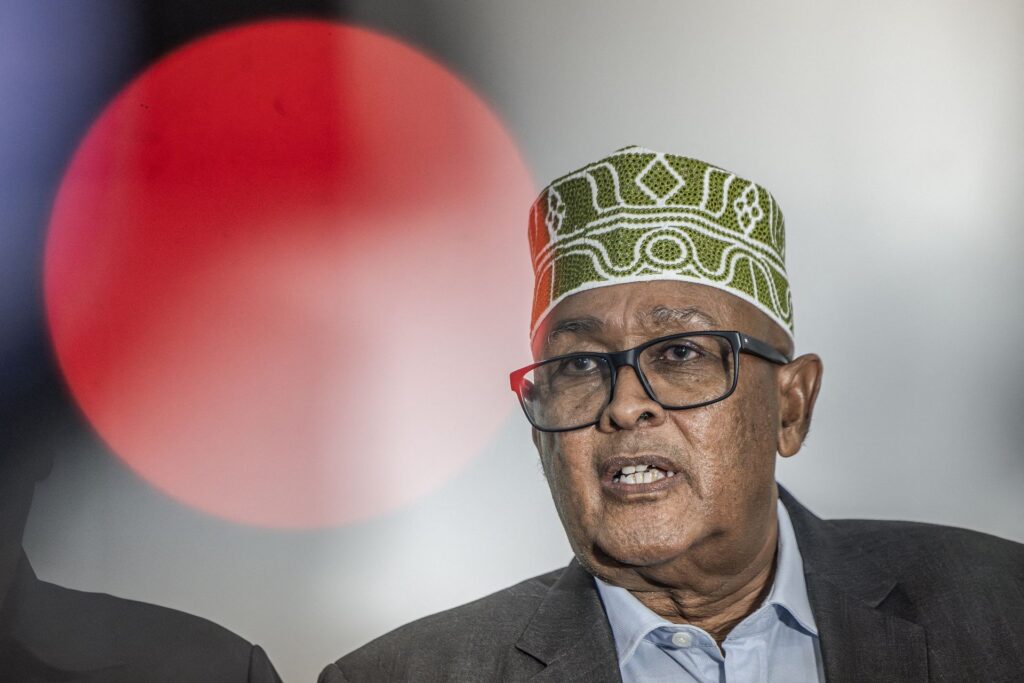
That outcome is far from certain. The Somaliland delegation knows this, so it’s taking plenty of time to make its case. Abdullahi arrived in the U.S. on Sept. 5 and will spend the entire month in New York and Washington. “Our goal is to meet as many lawmakers and top officials as possible. The stakes for us are very high,” said Mohammed Abdirahman, director general of Somaliland’s Ministry of Foreign Affairs and International Cooperation. Abdullahi’s team is being deliberately vague about the “top officials”: They are hoping to secure a meeting with Secretary of State Marco Rubio or President Donald Trump but are still not sure they will succeed.
The long-shot meeting has been in the works for months. Abdullahi met Eric Trump in Davos last January and has several influential friends in Washington, from Israeli diplomats and lobbyists to senior Republican lawmakers such as Sen. Ted Cruz, the top Somaliland cheerleader on Capitol Hill.
A small but influential faction of Republicans is pushing for the U.S. to recognize Somaliland. In June 2025, Rep. Scott Perry of Pennsylvania introduced a bill to formally recognize its independence, while in March 2026 Rep. John Rose of Tennessee introduced a separate measure directing the Treasury Department to examine and eventually lift barriers preventing Somaliland from accessing the U.S. financial system. Neither bill has made it out of committee. In July, Cruz even urged the State Department to issue a separate travel advisory for Somaliland, rather than lumping it together with Somalia.
“The Republican foreign policy hawks are rooting for Somaliland for a variety of reasons, from securing a launching pad to keep the Houthis in check and preventing China from gaining another foothold in the Horn of Africa, to standing with Israel and promoting democracy in the region,” said Michael Woldemariam, an associate professor at the University of Maryland’s School of Public Policy and an expert in African security studies.
The debate over recognizing Somaliland is hardly new in Washington. In the wake of the 9/11 attacks, as Somalia faced yet another major crisis, senior members of the Bush administration seriously discussed the matter as a way to counter the spread of al Qaeda across the Horn of Africa. A Senate hearing on Somaliland even took place in 2006. But Washington ultimately chose to wait for the African Union to lead the way, which it never did.
In October 2021, the Heritage Foundation, an influential right-wing think tank, made the case for U.S. recognition of Somaliland. But it was the Hamas attack of Oct. 7, 2023, and the ensuing war in Gaza that truly put Somaliland back on Washington’s radar. For the first time, the Houthis disrupted traffic through the Bab al-Mandab Strait. The U.S. Navy spent months patrolling the Red Sea and fighting the Iran-aligned militia.
That coincided with Trump’s increasingly fraught relationship with Somalia, which he called “probably the worst country in the world” during a December 2025 press conference. Just days earlier, top generals from the U.S. Africa Command (Africom) had met with Abdullahi in Hargeisa, Somaliland’s capital.
Then Israel recognized Somaliland, prompting speculation that Washington might follow suit. The excitement was almost immediately dampened by Trump. “No,” he replied when the New York Post asked whether the U.S. had any plans to recognize the East African statelet, before adding, “Does anyone know what Somaliland is, really?”
Joshua Meservey, author of the 2021 Heritage Foundation report, isn’t too worried about Trump’s dismissive rhetoric: “Somaliland is a niche topic, even among African policy circles,” he told New Lines. “Go ask anyone on the street, or even at Washington think tanks, if they’ve heard of Somaliland. No one has. So of course President Trump would say that. He just hasn’t been briefed yet.”
The pro-Somaliland crowd in Washington still believe the geopolitical winds are shifting in their favor. In early 2026, the House Appropriations Committee directed the State Department to produce, within 120 days, a report on the “potential areas for improved United States engagement with Somaliland, including in security, diplomacy, trade, and development.”
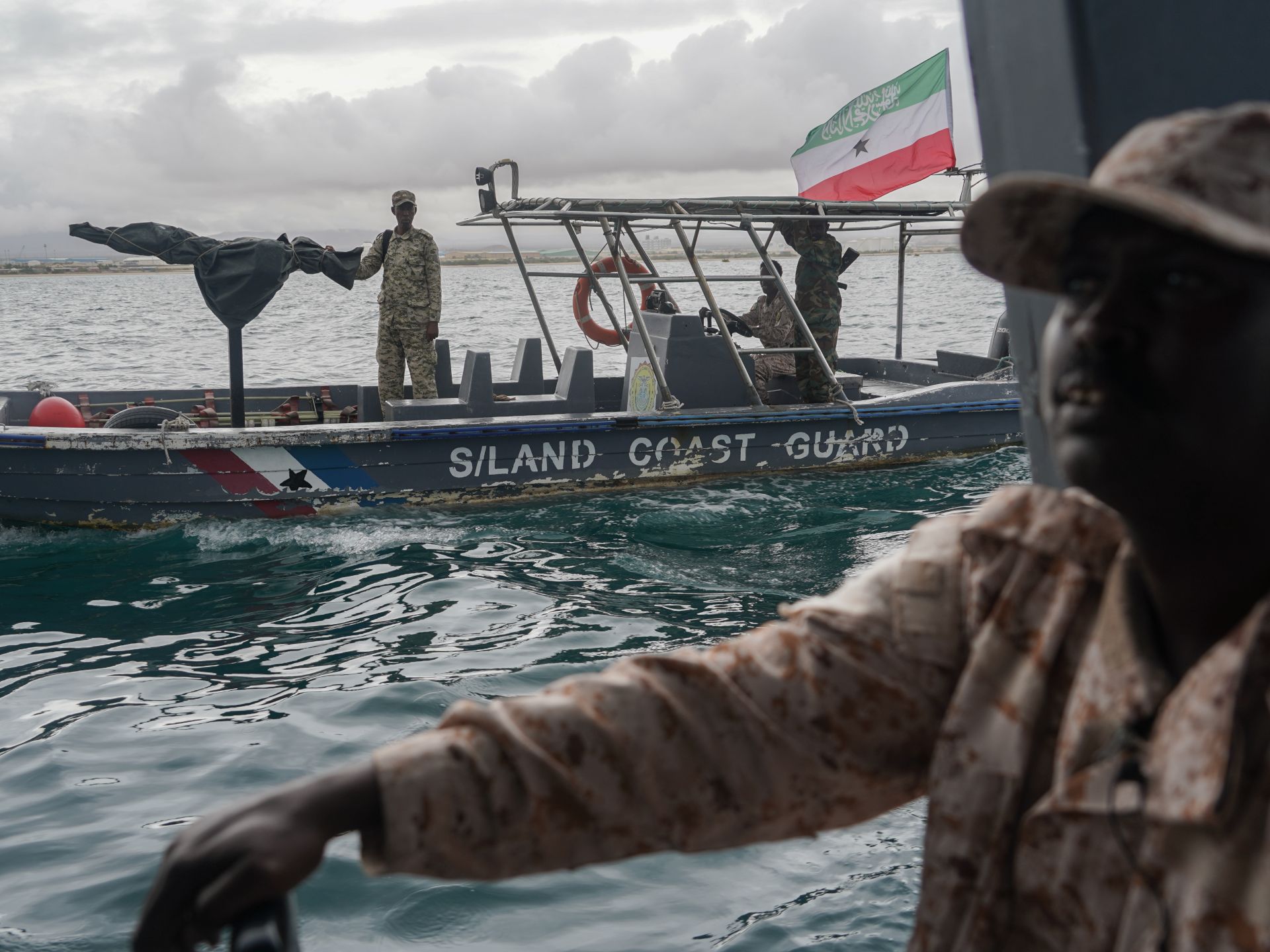
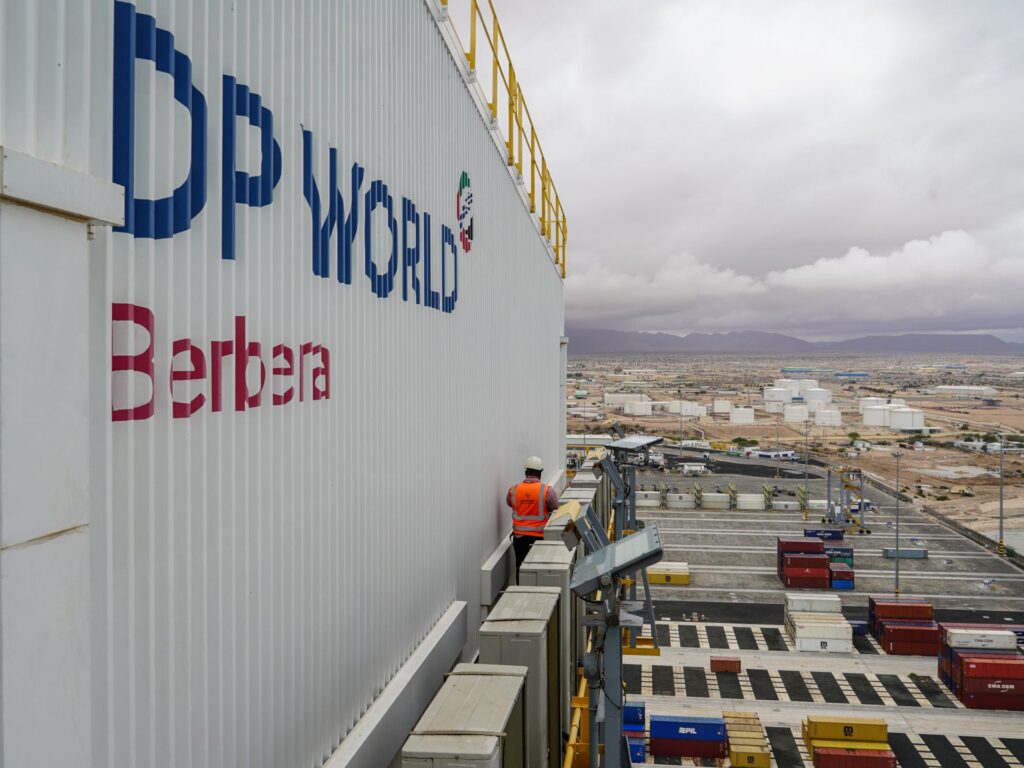
In the meantime, Abdullahi’s government kept pitching itself to the U.S., offering “exclusive” access to its mineral resources, believed to contain significant lithium deposits, a key raw material for electric batteries, as well as “military bases” along its 500-mile coastline. Berbera, Somaliland’s main port city, already boasts a modern deep-water port, operated by the United Arab Emirates, and one of the longest runways in Africa. Abu Dhabi turned the airport into a military base in 2017, primarily to support its operations in Yemen.
In June, the State Department issued its report to Congress. At just two pages, it fell short of offering anything new: While reaffirming Washington’s recognition of Somalia’s “sovereignty and territorial integrity,” including “the region of Somaliland,” it pledged to maintain a “positive, constructive relationship” with the breakaway territory and “explore additional opportunities for engagement.” The head of Africom, Gen. Dagvin Anderson, later said the U.S. military had “no plans to build a base in Somaliland,” while visiting Mogadishu.
The bureaucracy had managed to preserve the status quo, for now. “I don’t think that’s the end of the argument. The U.S. government changes its position on things all the time. Somalilanders just need to be strategic and smart about how they continue to make their case,” Meservey said.
David Shinn, a former U.S. ambassador to Ethiopia, is more pessimistic: “After Israel’s recognition, I thought U.S. recognition had become highly likely. But it failed to materialize,” he told New Lines. “And now, I believe the opportunity has passed.” The career diplomat testified before the Senate in 2006; he argued that the African Union must recognize Somaliland first, a position he still holds. Today, he sees Abdullahi’s visit to the U.S. as a last-ditch effort before the midterms: “If the Republicans lose the House or the Senate, it doesn’t fundamentally change Trump’s ability to recognize Somaliland. But it does reduce the influence of the pro-Somaliland Republicans.”
Given the Trump administration’s personality-driven and unpredictable decision-making process, a face-to-face meeting between Abdullahi and Trump could still produce a breakthrough. The Houthi maritime blockade of Saudi Arabia over the summer may also have handed Somaliland a last-minute card to play. For some regional observers, a new round of war in Yemen increasingly looks like a matter of when, not if. The Houthis threaten Saudi Arabia’s economic ambitions and are forging closer ties with jihadist groups in the Horn of Africa, from the Islamic State group to al-Shabab.
On Sept. 10, the Houthis seized Mocha, a key port overlooking the Bab al-Mandab Strait, dealing a major blow to Saudi-backed Yemeni authorities. On Sept. 15, they seized the strategic Hanish Island. They could soon extend their grip across Yemen’s entire Red Sea coastline, including Perim Island, which sits at the heart of the strait. The Red Sea seems poised to remain a major flash point for years to come.
But Somaliland might not be strategically valuable enough for Washington to fully throw its weight behind it. Unlike Israel, the Pentagon does not need Somaliland to access the Gulf of Aden: Camp Lemonnier, in neighboring Djibouti, is already the largest U.S. military base on the African continent. Shinn told New Lines that while “using Berbera as a backup could be useful, allowing us to fly planes in or land ships there from time to time,” he did not “see the need to build a fully fledged base there, especially when U.S. forces are already facing tight budget constraints.”
Meservey disagreed. He told New Lines that “Djibouti is under immense Chinese influence, so much so that it has become one of the most Chinese-influenced countries in Africa. It would be wise to have options.”
A U.S. source close to the Somaliland government also highlighted Berbera’s potential for replenishing U.S. ships patrolling the region. In June 2025, amid the U.S.-Iran escalation, Djibouti reportedly refused to allow U.S. warships involved in fighting the Houthis to replenish their munitions, forcing them to sail to Diego Garcia, more than 2,000 miles away. U.S. military planners are looking for a cheaper alternative to Djibouti in the region. Berbera could fill that role.
American forces also have a military foothold in Puntland, one of Somalia’s semiautonomous regions, through a presence at a Puntland security base near Bosaso airport. The facility is closely tied to the UAE, which operates a military air base there. The airstrip has played a major role in projecting Abu Dhabi’s power across Africa and in the provision of weapons and mercenaries to Sudan’s Rapid Support Forces. In August, Africom signed an agreement with the Puntland government to expand the U.S. military presence there.
Although the deal likely bypassed Mogadishu, whose authority is rejected by Puntland, the Bosaso military base allows Washington to work with Puntland without formally challenging Somalia’s territorial unity. Since 2024, Somalia has been mired in a political crisis, with several federal member states increasingly challenging Mogadishu’s authority.
Shinn told New Lines that recognizing Somaliland “would throw a huge wrench into the relationship between Mogadishu and Washington,” and that while Trump was not concerned about the U.S. relationship with Somalia, “we need to keep having access to Somalia in order to contain ISIS and al-Shabab, which still have a significant presence there.” He added that if jihadists embedded in the Horn of Africa, “that could come back to bite the U.S.” He expressed concern that, if other Somali regions followed Somaliland’s lead, that would destabilize neighboring Ethiopia and Kenya.
Woldemariam told New Lines that Somalia might be coming apart already. “The political landscape in Mogadishu has been unraveling for years,” he said, adding that “Somalia has been drifting into increasingly dangerous political territory.”
The final stage of Somaliland’s pitch to the U.S., its potential mineral resources, is unlikely to be a major selling point. Just a handful of companies from Taiwan, Australia and the U.K. are currently exploring the barren desert. Any mining infrastructure would have to be built from scratch in a country that lacks reliable and affordable electricity. It could be decades before Somaliland actually becomes a significant mining producer.
Abdullah will face an uphill battle in Washington, according to Woldermian. “If the U.S. wants something from Somaliland, it can get it without having to offer recognition and risk a backlash from regional partners, from Somalia and Djibouti to the African Union and the Gulf,” he told New Lines.
Abdirahman Osman Gaas, an economist based in Hargeisa, agreed: “I don’t think U.S. recognition can happen just yet,” he told New Lines. “What’s achievable for now is some form of political engagement from the U.S. Mining deals and a closer counterterrorism relationship would also be significant wins.”
The likeliest scenario is that Somaliland will leave the U.S. with multiple signs of friendship, short of formal diplomatic recognition. That would be a setback for Meservey, who wants the administration to look at a “confluence of arguments” in favor of recognition. “Somaliland has been a de facto independent state for 35 years. It has a functioning democracy and wields control over most of its territory, more so than Somalia or many other African countries,” he said. He added that the U.S. should “reward” Somaliland for being “pro-Western and pro-American.”
In the Trump era, however, being a good ally is no longer enough. Somaliland will need to prove that it is a useful one, which means that Abdullahi might have to plan another visit to Washington.
“Spotlight” is a newsletter about underreported cultural trends and news from around the world, emailed to subscribers twice a week. Sign up here.