


Omar Ahmed and Ismail Bihaya are still a little dazed.
In late March, the two hydrologists, both 32, were taking selfies against the dazzling gold of Jerusalem’s Dome of the Rock. The trip, the first of their lives, had long felt out of reach.
Their country, Somaliland, does not exist in the eyes of the world.
“Our passport isn’t recognized anywhere. Except, now, Israel,” says Omar, with a grin. He is back in the lab where he and his colleague spend their days testing the water quality of Hargeisa, the capital of this breakaway region of Somalia.
Everything changed on Dec. 26. That day, Israel became the first country to formally recognize Somaliland (formerly British Somaliland) as a sovereign state. Prime Minister Benjamin Netanyahu appeared in a video call congratulating Somaliland’s president, Abdirahman Abdullahi. The backlash was immediate. Somalia, the African Union, the Arab League and even the United Nations Security Council condemned the move, accusing Israel of violating the principle of territorial integrity.
In Hargeisa, those reactions barely registered. That night, crowds flooded the streets in celebration. For several days, Israeli journalists covering the event were greeted with cheers as they moved through the city, an almost surreal scene in a Muslim-majority country, and all the more striking in the immediate aftermath of the war in Gaza.
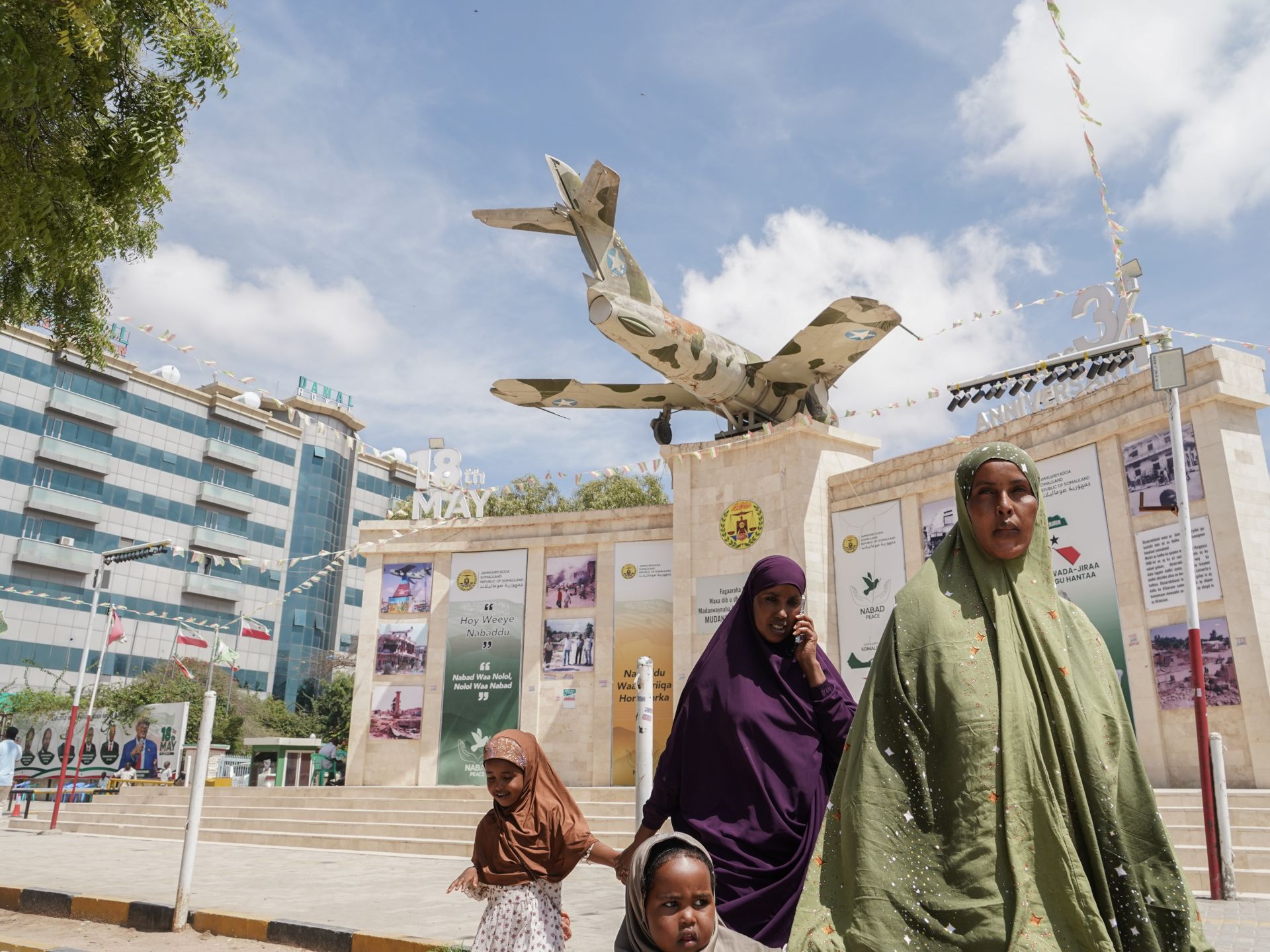
To understand that joy, one has to go back to the late 1980s. A former British protectorate, Somaliland gained independence in 1960 before voluntarily uniting with Italian Somalia. The union soon began to unravel. Amid growing clan tensions, the regime in Mogadishu launched a brutal campaign against the region, culminating in the near-total destruction of Hargeisa in 1988. The civil war left between 50,000 and 200,000 dead. “Hundreds of thousands more were driven into exile,” recalls a businessperson who returned years later. “It was apocalyptic.” In 1991, as Somalia descended into chaos, Somaliland declared independence.
More than three decades later, that independence remains unrecognized — everywhere except Israel.
To inaugurate their new partnership, Israeli authorities invited 25 hydrologists from Somaliland, Omar and Ismail among them, for training in modern irrigation and water management. They came back impressed. “The scale of their desalination plants is staggering,” Omar says. “They are global leaders in water management. With infrastructure like that, we could completely transform our country.” Cooperation has accelerated quickly. Beyond training programs, Israel has announced investments in Somaliland’s infrastructure. The two governments exchanged ambassadors in April.
Still, few here believe Israel’s intentions are purely developmental.
Most analysts believe that Israel’s real motivation is Somaliland’s strategic location, with its roughly 500 miles of coastline along the Gulf of Aden, through which around 12% of global trade passes. “It’s an open secret,” says a businessperson close to the authorities. “Israel wants to establish a forward position here to monitor the Bab al-Mandab Strait and the Houthis in Yemen.” According to Bloomberg, Israeli officials have already identified a potential coastal site for a future base. Somaliland, however, has denied the report.
Other countries are watching closely.
Ethiopia, landlocked and eager for access to the sea, nearly finalized a deal in 2024 to secure a 12-mile coastal strip along the Gulf of Aden, before backing down under pressure from Mogadishu. The United Arab Emirates, which normalized relations with Israel under the Abraham Accords, has also taken a keen interest. Its port operator, DP World, built a major terminal in Berbera as early as 2016.
“We’ve invested $400 million,” says Maftouh Harir, a DP World executive, standing high above the docks on a towering quay crane. “The goal is to serve Ethiopia, which has no access to the sea.” Out on the horizon, a control tower rises above the sea spray. Nearby, Berbera’s airport, whose runway is among the longest in Africa, is no longer open to the public. Abu Dhabi is now converting it into a military base.
Ultimately, however, Somaliland’s hopes rest largely in Washington.
Within parts of the Republican establishment, support for recognition has been building. As early as 2021, The Heritage Foundation, a conservative think tank, published a policy paper urging the U.S. to recognize Somaliland as a way to counter China’s growing influence in nearby Djibouti, where Beijing has established its only overseas naval base just miles from Camp Lemonnier, the largest U.S. military base in Africa.
Sen. Ted Cruz, a close ally of Israel, has emerged as one of Hargeisa’s most vocal supporters. During a Senate hearing on April 23, the Texas Republican emphasized Somaliland’s “growing strategic relevance” and suggested that President Donald Trump could formally recognize the territory before the end of his term.
At the same time, several members of the House of Representatives introduced legislation in March directing the Treasury Department to identify legal barriers preventing Somaliland from accessing the U.S. financial system. Their goal is to integrate Somaliland into SWIFT, the global network for effecting international financial transactions, which is a crucial step for dollar transactions. “Our banks cannot raise capital on international markets,” explains a Somaliland economist. “That forces them to charge prohibitively high interest rates. Access to SWIFT would be even more decisive than diplomatic recognition.”
For now, Somaliland’s government is trying to turn these diplomatic signals into economic gains. At the Ministry of Foreign Affairs in Hargeisa, a delegation of Australian businesspeople has come to explore opportunities in the mining sector.
“What are your impressions of the country?” the minister asks, smiling broadly.
“Very positive,” replies one of the visitors. “It was important for us to see things firsthand. We’ll be sending a positive message to our shareholders.”
“They can rest easy,” the minister says. “Somaliland is a haven of peace and stability. It’s the safest place in the Horn of Africa.”
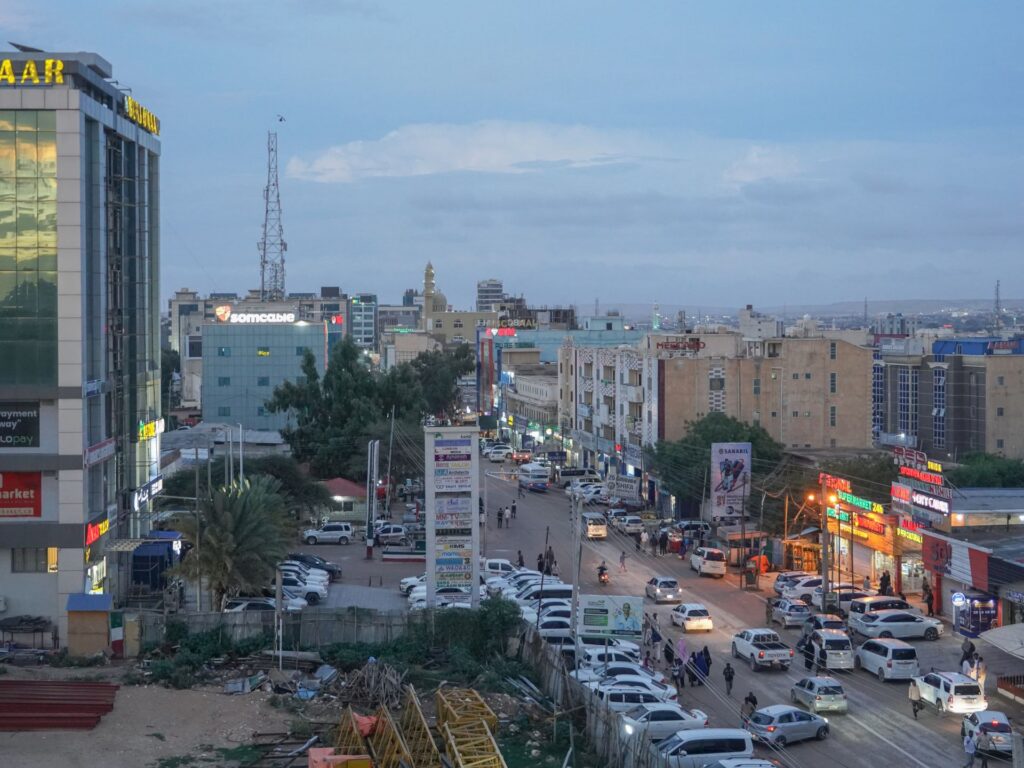
From the ground, that claim is not entirely unfounded. Hargeisa bears the marks of a surprisingly dynamic African city. Cafes are filled with stylish, digitally connected youths. Students snap selfies to celebrate the opening of a waffle shop. A new shopping mall of glass and steel is preparing to open its doors. Power outages are rare. The streets are clean. Markets are well stocked. Overlooking it all, the country’s first five-star hotel, which opened last August, glows at dusk.
Despite lacking international recognition, Somaliland’s gross domestic product per capita is about 50% higher than that of the rest of Somalia, and its poverty rate is roughly half. Even more striking is its political system.
“We are a functioning democracy, the most advanced in the region,” says Guleid Jama, a lawyer known for his work defending fundamental rights. “Since 1991, we’ve held six presidential elections, each followed by a peaceful transfer of power.” He is quick to add a caveat. “Our constitution, adopted in 2001, is relatively progressive. But our penal code still reflects the Mussolini-era legacy of Italian colonial law. Police frequently interfere with journalists and opposition figures.”
Marwo Sucaad, an opposition leader, confirms the mixed picture. “Our governments are elected democratically. There’s no doubt about that,” she says. “The 2024 campaign was vibrant; turnout was high. But corruption exists, and women remain largely excluded from power. No democracy is perfect, though.”
Israel’s arrival may now complicate that fragile balance.
Barely two months after recognition, Tel Aviv became embroiled in a confrontation with Iran, the consequences of which could extend into the Red Sea and the Gulf of Aden. On the set of Somaliland’s main television channel, MMTV, the tone of the debates has changed.
“Now that we are allied with Israel, could this war reach us?” a journalist asked a political analyst in early April. “We have nothing to fear,” the analyst replied confidently. “Since the attacks of Oct. 7, 2023, Israel has gained the upper hand over its enemies. It has become the dominant power in the Middle East. This alliance will allow us to develop, just as Saudi Arabia benefited from U.S. protection after World War II.”
Others are less reassured. In Yemen, the Houthi movement declared on Dec. 28 that Berbera had become a “legitimate target.” Somaliland has limited means of deterrence. Its military is largely equipped with tanks and rocket launchers captured from Mogadishu at the end of the civil war in the 1980s and has no air defense capabilities.
“Somaliland is preparing for this kind of scenario,” insists a senior official at the Ministry of Foreign Affairs. “Our generals are working day and night to ensure the country’s security.”
For opposition figures, the greater risk lies elsewhere. “The eastern regions are still disputed,” Sucaad says. “Somalia, backed by Turkey, China, Egypt and Saudi Arabia, could resume hostilities in response to Israel’s recognition. We are on the brink of another war.” The militant group al-Shabab has also vowed to fight any attempt by Israel to establish a presence in Somaliland.
For Somaliland’s leaders, Israel’s recognition is only a first step. “Only Washington can rein in Somalia’s backers,” Sucaad says. “That is the only protection that truly matters.” The government appears to share that view. In late February, Khadar Hussein Abdi, Somaliland’s minister of the presidency, told Agence France-Presse that Somaliland would be ready to grant the U.S. “exclusive access” to its mineral resources and its military bases.
U.S. military delegations visited Hargeisa and Berbera in June and November 2025.
Still, there is little indication that Washington is eager to deploy troops, especially as the U.S. already maintains a base in Djibouti and cooperates with Mogadishu on counterterrorism.
Beneath Somaliland’s soil, geological surveys suggest the presence of oil, gas, lithium, rare earth elements and other minerals. Several foreign companies have already taken positions. The British firm Genel Energy has been exploring hydrocarbons since 2012. Taiwan’s Chang Development Company and Saudi Arabia’s Kilomass are looking into lithium. EAU Mining, the Australian company whose delegation visited Hargeisa, may soon follow.
Yet beyond these early indicators, few deposits have been formally confirmed. Ahmed Guelleh, a local industrialist, urges caution. “This is not how we will create the thousands of industrial jobs our youth need,” he says, standing in a warehouse stacked with crates of Coca-Cola bottled in his factory north of Hargeisa. “We need to focus on manufacturing, technology and agriculture. Once we build that economic base, international recognition will follow naturally.”
For now, Somaliland faces structural constraints that recognition alone cannot resolve. Electricity is expensive, generated almost entirely from oil. The workforce remains largely unskilled. Water is scarce in the arid climate.
In the laboratory in Hargeisa, where he spends his days testing the city’s water, Omar Ahmed has been thinking about that gap ever since he returned from Israel.
“The scale of what we saw there … it’s billions of dollars,” he says. “Our entire Ministry of Water runs on about $1.8 million a year. Agriculture gets barely $2.8 million. Even with help from NGOs, we’re talking about a few million here and there. What we actually need is on a completely different scale.”
Omar pauses. “That’s the real gap. We come back with the knowledge, but we don’t have the money to do anything with it.”
Become a member today to receive access to all our paywalled essays and the best of New Lines delivered to your inbox through our newsletters.