


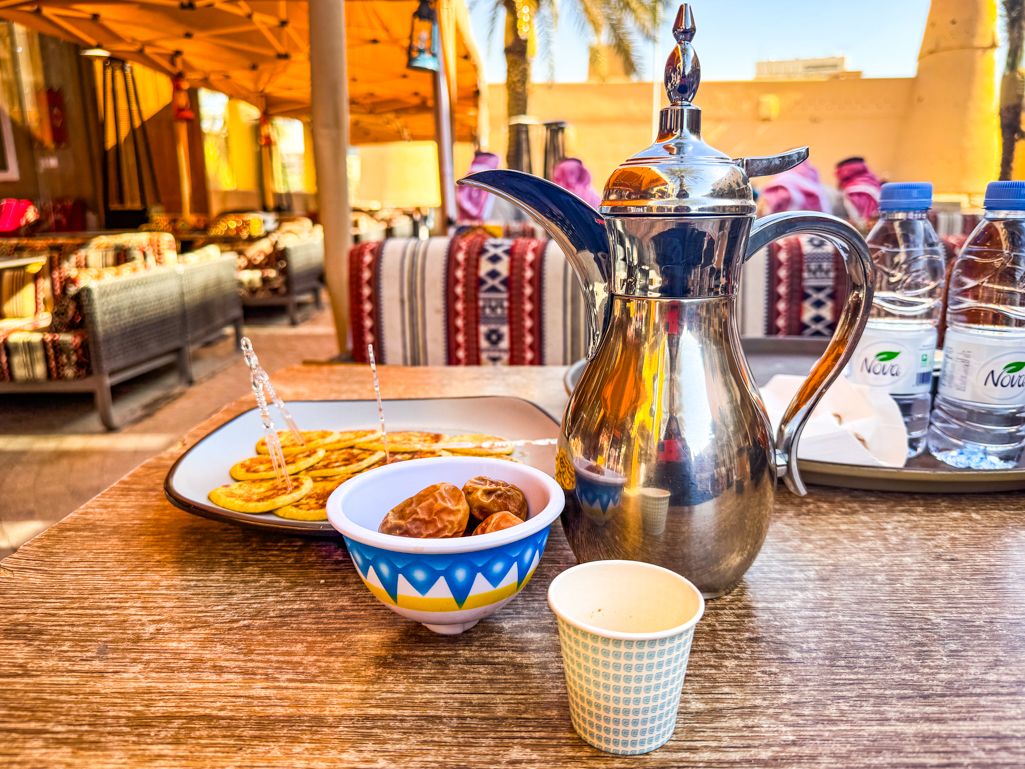
On a cold, wintry morning in January, I walked into a quaint, warmly lit coffeehouse on Alsafat Square in old Riyadh. Known as Qaysariat al-Kitab, or the Caesarea Book Cafe, this traditional venue is richly decorated with Najdi motifs and doubles as a library and cultural venue. Visitors linger over steaming cups of Arabic coffee and exchange ideas as they immerse themselves in Saudi culture.
For the next two hours, I enjoyed the hospitality of Faisal Alahaydib, my tour guide in Riyadh, who has been coming to this cafe for years with friends and family. As I sipped fragrant coffee, spiced with cardamom, and sampled dates and masabib (tiny Saudi pancakes) served alongside, Alahaydib unraveled the world of Saudi coffee for me.
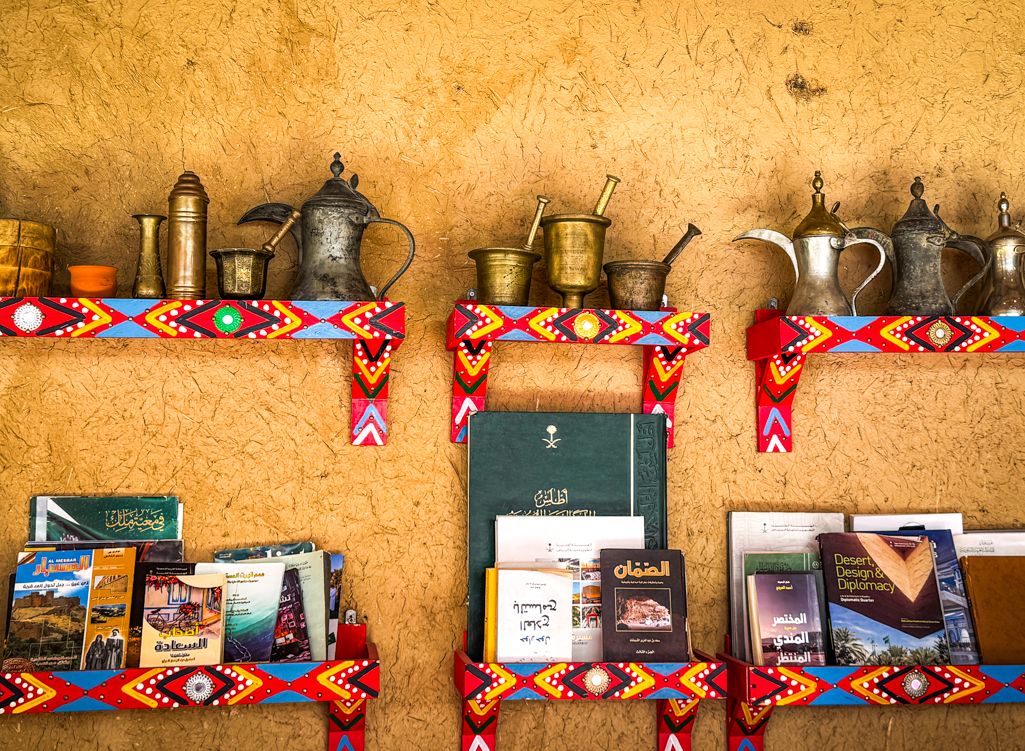
He explained how coffee is carefully prepared in a long-necked coffee pot called a dallah and poured into a small, handleless cup called a finjan. There is an unspoken etiquette that guides how coffee is offered by the host and received by guests, with deeper meanings behind each gesture, including how full the finjan is and how long a guest can linger before asking for a refill. With every story, he revealed layers of tradition and ritual surrounding this beverage, whose history in the region dates back centuries.
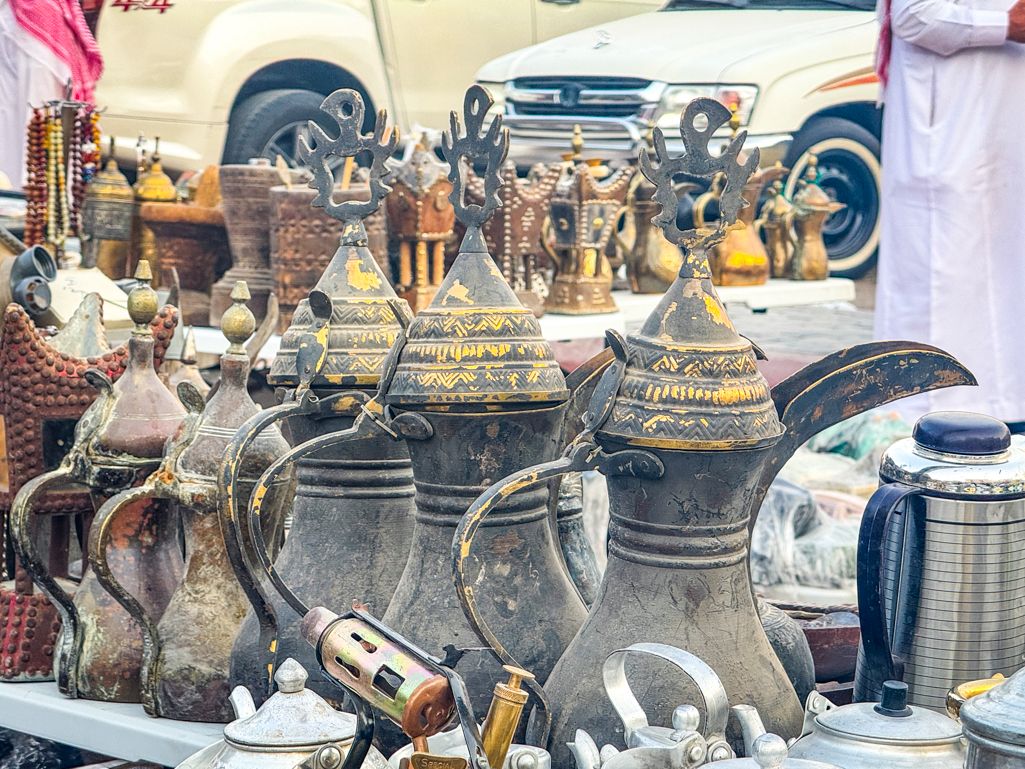
In Saudi Arabia, coffee has long been a core part of hospitality rituals and a stage for social life. Today, amid a government-backed push to revive domestic cultivation and a boom in specialty cafes and global chains, the kingdom is experiencing a coffee renaissance that is both cultural and commercial, with artisanal roasters helping modern cafes become shared spaces for conversation, creativity and community.
Coffea arabica, or Arabica coffee, native to Ethiopia, is believed to have first traveled across the Red Sea to modern-day Yemen, where it was being cultivated and brewed as a beverage in the 15th century. From the Yemeni port of Mokha, which later gave its name to the famous “caffe mocha,” coffee traveled inland across the Arabian Peninsula via caravan routes and quickly spread throughout the region, giving the Gulf its enduring association with the drink.
In what is now Saudi Arabia, coffee cultivation found a permanent home in the mountainous regions of Jazan, al-Baha and Asir. The highlands of Jazan have long produced the rare, high-quality Khawlani coffee beans, and the region’s agricultural knowledge and practices have now been recognized by UNESCO as intangible cultural heritage.
As coffee spread across the peninsula, it was embraced not only as a stimulant but also as a social institution. “Public coffeehouses … emerged along trade routes and in cities as places where travelers, merchants and locals gathered to exchange news, poetry and debate over a cup,” said Kurniawan Arif Maspul, an independent coffee researcher based in al-Qassim. These early cafes quickly became hubs of intellectual and social life — a role they would continue to play for centuries.
“Even today, over 70% of Saudi youth visit coffeehouses for engaging in conversation, poetry and intellectual discourse,” Maspul said. “Coffeehouses serve as essential ‘third places,’” he added, referring to places for interaction beyond the home and workplace, “allowing young people to forge connections, while bridging generational and socioeconomic divides.”
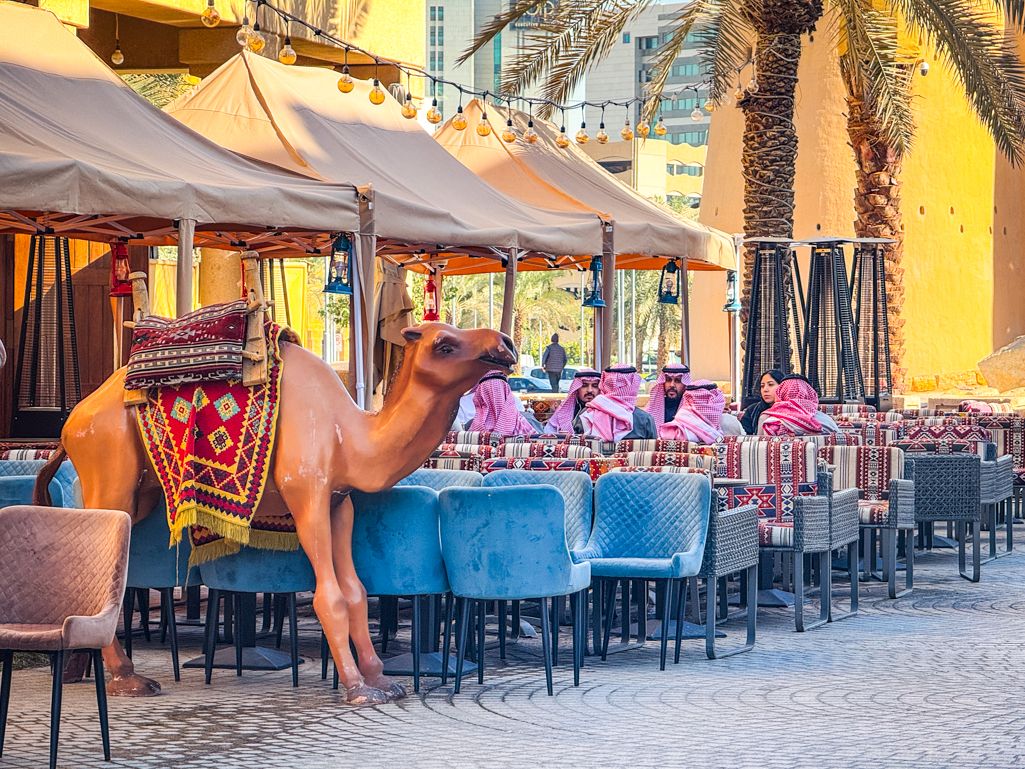
Along with the rise of public coffeehouses, private Bedouin homes also saw the emergence of the ritualized coffee ceremony. This was an elaborate custom that involved roasting coffee beans over coal in flat pans called tawas, brewing fresh coffee in dallahs, and serving it in beautiful finjan cups — all performed according to established protocols.
“In many ways, the coffee ceremony was like a little theater — a show of generosity, hospitality and trust by the host,” Maspul said. “Every movement mattered. Who was served first? How many times did the host pour? Did guests pause between sips?”
“Often, these gestures signaled welcome in the Bedouin society, and sometimes reconciliation, too,” Maspul added. Over time, the coffee ceremony became deeply woven into social life, becoming an integral part of gatherings, family events and celebrations.
Even today, according to Maspul’s research at the Islamic University of Al Madinah, more than 80% of Saudi households serve coffee daily in the traditional manner, and over 90% believe that offering coffee to guests is not merely an act of politeness but a moral obligation. It is regarded as part of a cultural code that binds individuals to Saudi Arabia’s heritage and communal values.
“Coffee has never been just a drink for us,” Alahaydib agreed. “It has always been our favorite way to welcome guests into our home, shower them with our hospitality and introduce them to Saudi culture.”
As I stepped out of Qaysariat al-Kitab, I couldn’t help but notice the chic and modern Elixir Bunn coffee outlet right next door, teeming with customers.
Saudi Arabia, like the rest of the world, has felt the growing effects of global coffee trends. International chains like Starbucks, Tim Hortons and Dunkin’ have entered the race, and so-called “third-wave” coffee culture, with an increasing focus on specialty coffee, artisanal roasters and modern cafes, has spread throughout the country. Instead of replacing local traditions, however, these influences have reshaped and expanded the kingdom’s coffee landscape.
Today, Saudi Arabia’s coffee market, valued at between $1.3 and $1.9 billion annually, is growing rapidly. Saudis drink more than 36 million cups of coffee every day (the figure in the U.S. is around 400 million cups), and according to the latest Project Cafe Middle East 2025 report, the country is expected to have more than 5,350 coffee outlets by 2027. Saudi Arabia already accounts for nearly half of all coffee shops in the Middle East and is currently the region’s largest branded coffee shop market — a sign not only of consumer appetite but also of how deeply embedded coffee is in contemporary Saudi life.
Apart from a rich coffee culture, a long history of cultivation in the southern highlands and a burgeoning cafe scene in major cities, government support has played a key role in further propelling the Saudi coffee market. As part of the Saudi Vision 2030, the kingdom’s development initiative, the country launched a dedicated Saudi Coffee Company in 2022 to focus on the sustainable production, distribution and marketing of Khawlani coffee.
So far, the Saudi Coffee Company has planted over 600,000 trees in the country, primarily in the fertile mountains of Jazan, in addition to training farmers and supporting them with solar-powered irrigation systems, canopy management, agroforestry and integrated pest control.
“By using hands-on training and technical guidance in postharvest handling and processing, farmers have been able to increase their capacity and improve the quality [of the coffee],” said Denise Bustamante, a coffee adviser who worked with a leading international organization to train farmers in the main coffee-growing regions of Saudi Arabia.
According to a recent report by the Sustainable Rural Agricultural Development Programme, a collaboration with the U.N. Food and Agriculture Organization, these initiatives have not only improved yields and reduced waste but also led to the creation of innovative new beans, such as the complex, richly flavored Maghmoul variety developed by local farmer Abu Majid.
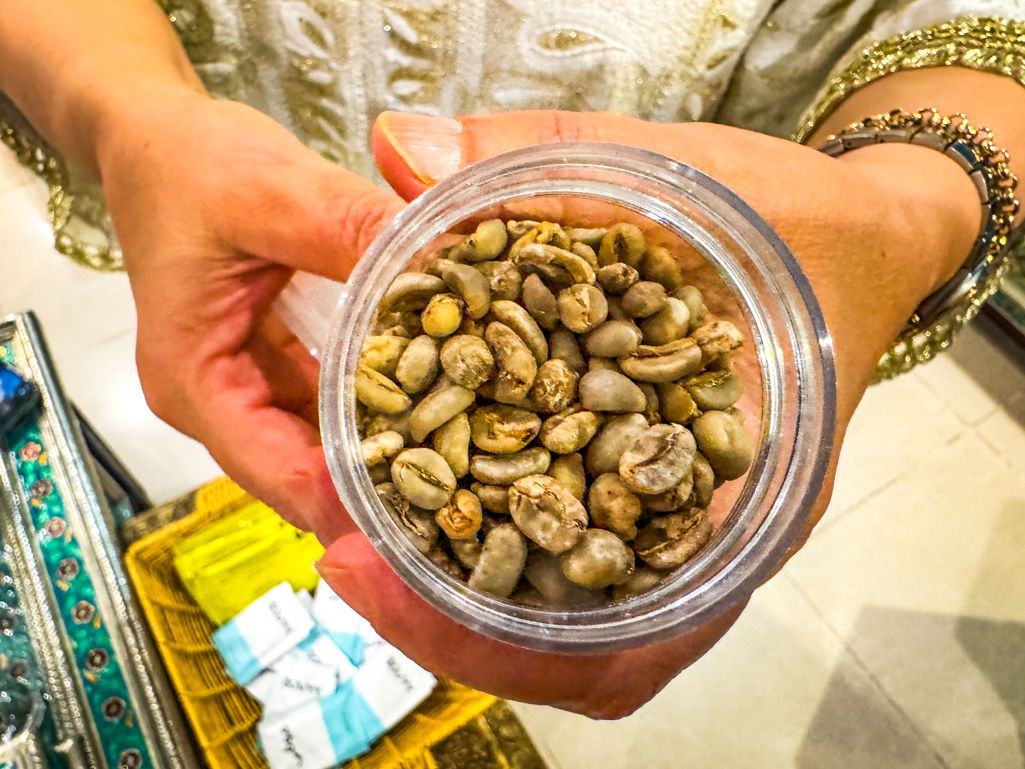
At the same time, the rapid growth of homegrown specialty chains such as Barn’s, Kyan Cafe, Half Million and Elixir Bunn has given the Saudi coffee industry an additional push.
“There is a growing appreciation for coffee origin, roasting techniques, unique flavors and ethical sourcing among Saudi consumers,” said Khadija Mehrez, a professor at Jazan University. “Specialty coffee appeals to them because it combines craftsmanship, storytelling and authenticity. At the same time, specialty coffee also offers a space where global trends can fuse with local identity.”
This fusion has reshaped coffee culture in Saudi Arabia, as modern cafes serve high-quality, artisanal drinks. Yet traditional coffee rituals continue to thrive in Saudi homes and ceremonial settings. “People move easily between a traditional evening coffee and a daytime craft flat white,” said Maspul, “showing how seamlessly one culture has blended into the other.”
As coffee culture continues to evolve in Saudi Arabia, it is also, in many ways, reclaiming its roots. Once again, the communal experience — which was slowly fading away with the advent of fast coffee, espresso machines and large chains — is beginning to matter as much as the coffee itself, harking back to an era when coffee shops were key spaces for conversation and connection. This has led to creative spaces and thoughtfully designed cafes becoming central to the industry, shaping how people meet and engage over coffee.
“Today, customers want more than just good coffee — they want an experience that fits into their lifestyle,” said Wadha AlRashid, founder of the DRAFT Cafe chain in Riyadh. An interior designer by training, AlRashid believes that thoughtfully designed spaces encourage conversation, focus and creativity. They help people feel comfortable and inspired.
In today’s fast-paced world, “it is important to provide people with a space where they can slow down, connect with their community, and find their rhythm,” said AlRashid, “much like the traditional coffeehouses once did.”
That energy is palpable across the kingdom.
Everywhere I traveled, I saw cafes brimming with enthusiastic groups, smiling, talking and brainstorming over coffee cups. The atmosphere is energetic, often infectious.
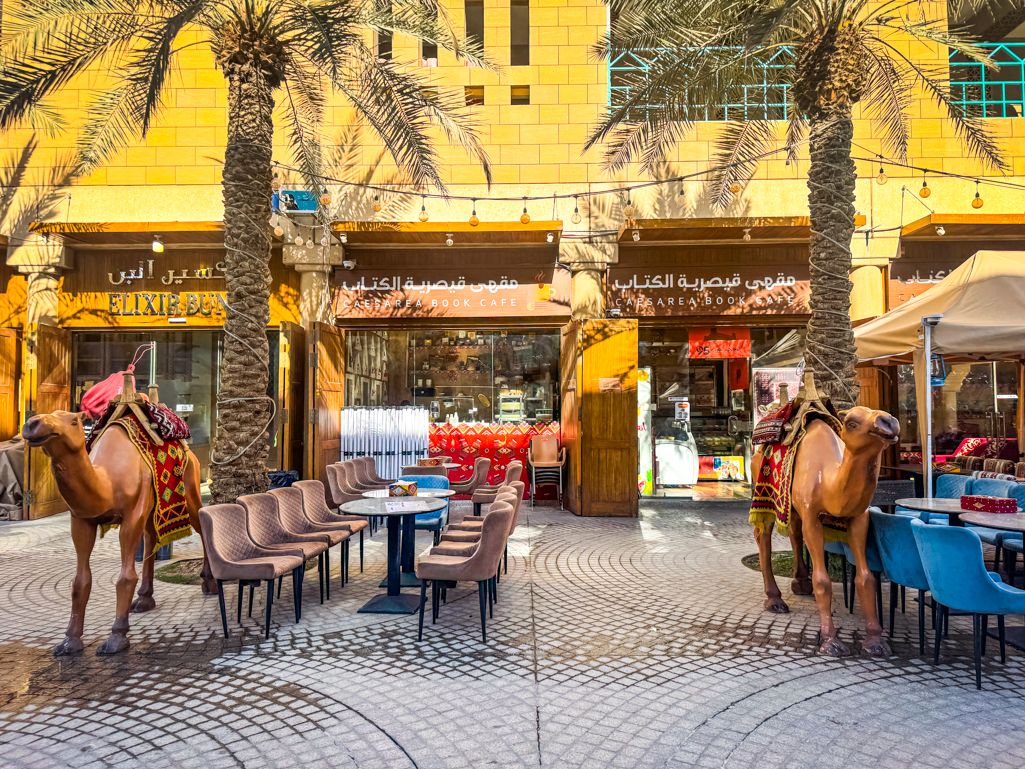
Hundreds gather at Qaysariat al-Kitab every Tuesday evening for the cafe’s weekly book-reading session. Several others head to Sociale Cafe for its poetry nights and flower art workshops, while many visit AMSY Lab for its woodworking classes — all happening over expertly brewed coffee. Coffeehouses in Saudi Arabia are reviving their historical role as literary and artistic hubs where writers, readers, thinkers and artists come together to share ideas and inspiration.
“Today, cafes have become cultural hubs and places for learning, socializing and self-expression [beyond just places to sip coffee],” Mehrez said. “This resonates strongly with the younger generation who seek meaningful experiences over mere products.”
As I walked away from Alsafat Square, passing many lively coffee spots filled with laughter and conversation, I was struck by a familiar realization: In Saudi Arabia, perhaps more so than elsewhere, coffee is never just about the drink. It is just as much about the place where one drinks it. Whether in the comforting warmth of Qaysariat al-Kitab, the poetry-filled evenings of Sociale or the beautifully designed corners of Draft Cafe, these places evoke a sense of community, hospitality and generosity — the enduring values that have shaped Arabian coffee culture for centuries and continue to do so even today.
“We Saudis love coffee,” Alahaydib said. “But we love it more when we are surrounded by friends and family, chatting and discussing life and the world.”
“Spotlight” is a newsletter about underreported cultural trends and news from around the world, emailed to subscribers twice a week. Sign up here.