


The Israeli war on Hezbollah in Lebanon is the latest of many, but this time it’s different. Israel has never fought a war in Lebanon that achieved its strategic objectives. It failed to impose a new political order after expelling Palestinian militants in 1982. It failed to pacify southern Lebanon despite a 22-year occupation that began in 1978. It was embarrassed by Hezbollah’s impressive performance in 2006. And its repeated blows to the group in 2024-25 were devastating, but not fatal.
But we are in an unprecedented context. While it is unclear whether Israel will single-handedly destroy Hezbollah (probably not), it is laying the grounds for an open-ended war, occupation and displacement of hundreds of thousands of Lebanese. For the Israelis, Lebanon presents a military challenge. For the Lebanese, this is a more painful and disturbing problem. For the first time, a country enamored of compromises, half measures and trickery is watching these options vanish, replaced by a brutal choice: confront Hezbollah and risk destruction, or ensure it by doing nothing.
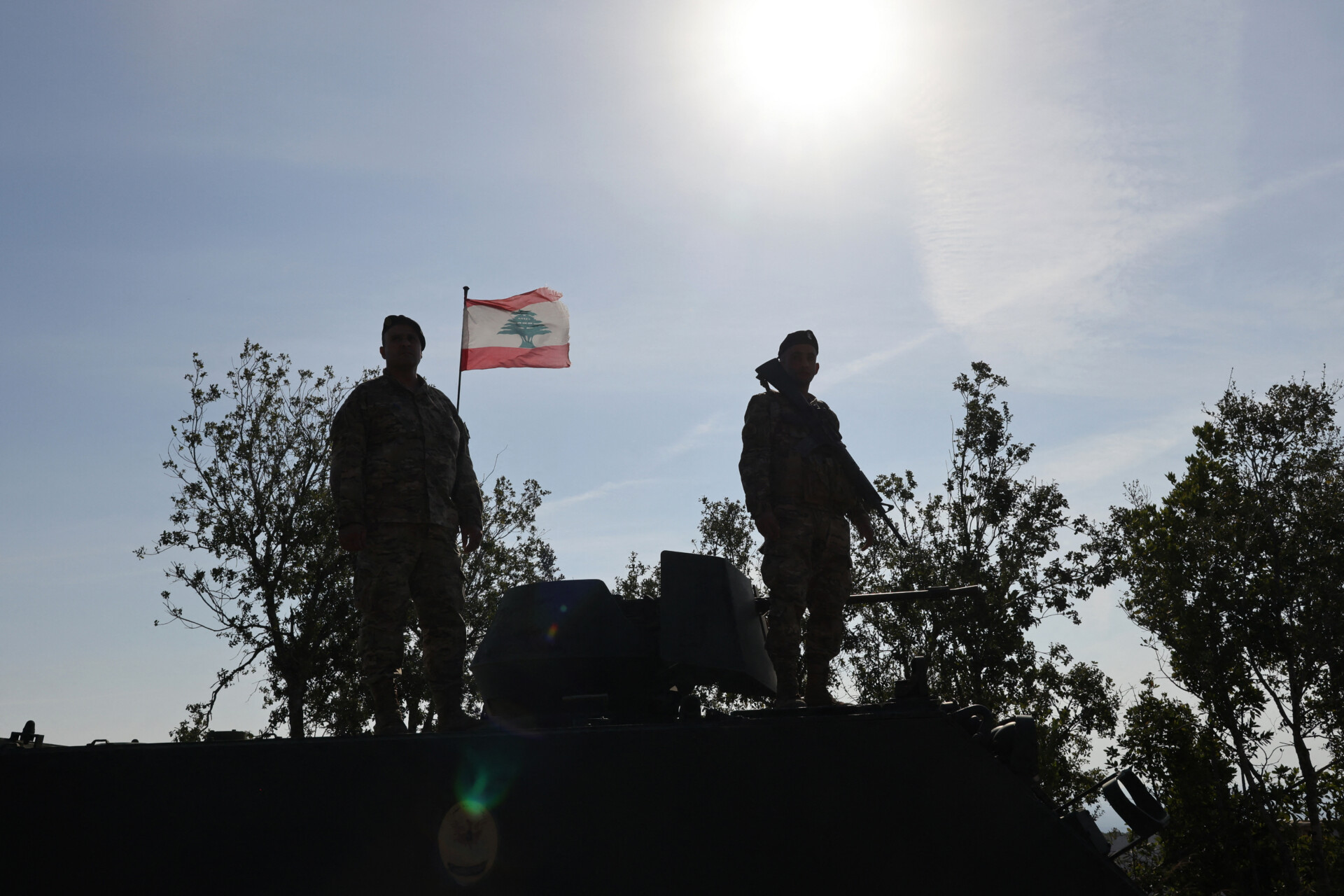
It is this same attachment to half measures and dealmaking that landed Lebanon in this war. The 2024 war and subsequent ceasefire required Lebanese authorities to disarm Hezbollah. While this “ceasefire” failed to stop Israel’s relentless attacks on the militia as it continued to rearm, the more interesting development was the Cabinet’s subsequent pledge to disarm the militia. Though skepticism was warranted, this was so unprecedented that the government deserved the benefit of the doubt. Political leaders had been killed by Hezbollah for merely flirting with the idea of disarming it. But the current war proved that the government and the Lebanese Armed Forces (LAF) failed in their mission. The LAF lacked both the capability and, more importantly, the political will to risk sectarian violence involving the group’s Shiite base and the LAF’s fragmentation along communal lines. So it did the Lebanese thing: It crafted different messages for different parties, and played make-believe until the reality of war exposed that south Lebanon was awash with Hezbollah fighters and weapons. The current war has put on display the worst tendencies of Lebanese decision-makers: their dishonesty, pathological aversion to conflict, doublespeak and masterful manipulation of outside players. Now it appears that Lebanon has run out of clever work-arounds and must make excruciating decisions about its future, all while masses of Lebanese are being displaced and killed.
I am not an “Israel-friendly” Lebanese. While I do not support war with Israel, I resent its belligerent approach to its neighbors, obscene treatment of enemy populations and incorrigible militarism. I do not believe Israel has Lebanon’s interest in mind, despite the relentless (and, I confess, rather entertaining) propaganda spewing forth from Col. Avichay Adraee. I merely see Israel as a constant rather than a variable, and expect that any provocation of the country will trigger disproportionate escalation and collective punishment against Lebanon and its people. I believe most Lebanese would agree. This simplifies Lebanon’s risk calculus: Antagonize Israel, even with useless rockets that seldom hit anyone or anything, and pay the price. That is, of course, what Israel wants to convey, and it has succeeded. With this understanding, the government of Lebanon must accept its responsibility toward the country and its people: to ensure they are not subject to violence without a compelling reason and a reasonable chance of performing well enough to generate leverage in negotiations. And like most Lebanese, I believe this decision belongs to Lebanon’s elected government, not Hezbollah (or Tehran).
It appears that a key Israeli war aim is to establish a buffer between Hezbollah and Israel’s northern population. This will require the permanent displacement of tens of thousands of Lebanese and the militarization of significant Lebanese territory. Establishing such a security zone, which would, of course, come under Hezbollah attack anyway, would not end Israeli operations in Lebanon. Israel would continue to target Hezbollah personnel and assets countrywide. Its expansive goals, Hezbollah’s staying power and the Lebanese state’s unwillingness to disarm it together imply that Lebanon is headed to a state of permanent war. This is a country with no currency, financial system or basic infrastructure, hosting 1.5 million Syrian refugees in addition to hundreds of thousands of Palestinian refugees, and now hundreds of thousands of displaced Lebanese. This is a recipe for absolute calamity, and the displacement of hundreds of thousands of Shiites into areas where sectarian tensions run high is catastrophic. In other words, Lebanon cannot survive this coming chapter.
Lebanon cannot outsource the Hezbollah problem to Israel, because Israel does not care about or understand the Lebanese context. In fact, it has become clear that Israeli foreign policy is allergic to politics and is really just warfare. Israel has no appreciation for the intricacies that define Lebanese public life. Its threat to destroy civilian infrastructure unless the Lebanese turn on Hezbollah is especially ridiculous and cruel. Polling shows that the vast majority of Lebanese already oppose Hezbollah. Tossing leaflets urging Lebanese to liberate themselves from Hezbollah while threatening to turn the country into Gaza in the same breath is pigheaded and barbaric. Yet despite its superficiality, Israel has introduced fluidity into a situation that was ossified for decades: Hezbollah’s hegemony in Lebanon. The sheer relentlessness and effectiveness of its campaign against Hezbollah over the years have weakened the group to an unprecedented degree. So even if the facilitator of change, Israel, is deeply unpalatable to Lebanese, the promise of permanent war combined with pressure on Hezbollah presents an urgent opportunity to transform the strategic situation in Lebanon and shift the balance of power away from the Shiite militant group.
We now know that the LAF’s commitment to disarming Hezbollah was incomplete at best. In fact, days after the Lebanese Cabinet took the recent unprecedented decision to outlaw Hezbollah’s arms outright, the commander of the LAF, Rodolphe Haykal, announced that the military’s job is not to implement the government’s orders, but rather to keep the civil peace. It is unclear whether this blatant insubordination by Haykal will undermine the LAF’s high standing among most Lebanese, but it is clear that the institution (or Haykal) does not want a fight with Hezbollah. The same logic was behind the capture and release on $25 bail of illegally armed Hezbollah members. While this thinking may have had a place in the old Lebanon, it is nonsensical now. If Hezbollah is not disarmed, Israel is going to destroy and occupy Lebanon, turn a large chunk of its people into permanent refugees and trigger mass unrest and communal violence. There are no more options in Lebanon that preserve “civil peace,” no clever Levantine workarounds.
Confronting a powerful militia while a foreign power wages a war against it that is killing and displacing masses of Lebanese is deeply unpalatable. To supporters of Hezbollah, it would look like treason. For the rest of Lebanon’s population, it raises the frightening prospect of civil war amid foreign aggression and occupation. To the LAF itself, a collision with Hezbollah risks splitting its own ranks along sectarian lines. These are all real risks, but Israel will not rescue Lebanon from Hezbollah, and the alternative is open war in a country that barely held together before this fighting.
Lebanon’s political leadership seems to understand that this war is different. President Joseph Aoun recently offered direct talks with Israel in pursuit of ending the war. While Israel should (but won’t) appreciate the significance of this unprecedented diplomatic overture, Aoun is trying to be clever and dance around the issue: The Lebanese government is not a player in this war, unless it confronts Hezbollah. Israel is not interested in peace negotiations with a government that does not control its territory. It is no longer a country that sees intrinsic value in diplomatic overtures from Arab states. The United States is similarly not interested in helping a military that has literally refused to take orders from the government, with U.S. envoy Tom Barrack — himself of Lebanese descent, with a keen nose for Lebanese tricks — urging Lebanon to “stop with the bullshit” on disarming Hezbollah.
What would such a policy look like? The point is not to force some decisive battle between the LAF and Hezbollah. There are things the LAF can do to annoy, harass and supplant Hezbollah. One powerful move would be to deploy Lebanese troops to the heavily bombed Dahiyeh area immediately, in a civil defense or humanitarian role, and a symbolic one given this is seen as a Hezbollah “stronghold.” LAF soldiers could seek out and confiscate Hezbollah stockpiles and begin limited emergency response work such as clearing debris. This would have several positive effects: It would demonstrate that the LAF is present while Hezbollah has escaped, that it is responsible for making this territory livable and that it can play a security role in Hezbollah’s place. Anyone carrying arms should be arrested. This would have a profound psychological impact on the Lebanese. In contrast to Israel’s Dahiyeh Doctrine, based on collective punishment of civilian populations, the LAF’s Dahiyeh Doctrine would reflect responsibility and a population-centric approach. It would also expose the LAF to possible Israeli attack. In the past, such attacks have tended to target soldiers seen as aiding Hezbollah. Still, Israel cannot be trusted to let them be, given that it keeps threatening the collective punishment of all Lebanese. International, especially U.S., pressure on Israel to refrain from targeting Lebanese soldiers clearing out a Hezbollah stronghold will have to be high, but it is a realistic ask. The risk is worth it. If Hezbollah attacks the LAF outright in such a context, the ensuing catastrophe will simply hasten its isolation and demise.
In fairness, the LAF is sorely lacking in funding and equipment. It is simply not able to take a confident stand, in a situation where optics reign supreme. Soldiers who are not even being paid a full salary will be less inclined to risk their lives regardless of cause. Morale is crucial given the psychological complexity of the task at hand. There needs to be U.S. support for the LAF tied to visible, good-faith efforts on Lebanon’s part — precisely like a Dahiyeh deployment. An LAF commander who disagrees with his orders should resign rather than make a public show of his views on national security policy. And while regime change in Tehran would solve Lebanon’s problems quite elegantly, this does not appear to be in the cards despite its intermittent endorsement from Washington.
There will be inevitable clashes between the LAF and Hezbollah. But this standoff is as much about psychological mind games and bluffing as military power, and here the Lebanese state has some capability. Hezbollah has always calculated that the LAF would not dare confront it. It was right. But now it is on the back foot, weaker than ever, with no end to its ordeal in sight. Would it really go to war with the Lebanese army? Maybe. But the choice is not between Haykal’s illusory “civil peace” and civil war. Israel has ensured the Lebanese have no such choice, and appears poised to fight an open-ended war on Lebanon and, increasingly, in Lebanon. This war will gravely harm Lebanon and tear apart its social fabric, probably triggering widespread sectarian tension. The vast majority of Lebanese, many of whom are now on their fifth or sixth war with Israel, understand that the old ways are done. They are just waiting for the state to get creative, catch up and take an enormous risk.
“Spotlight” is a newsletter about underreported cultural trends and news from around the world, emailed to subscribers twice a week. Sign up here.