



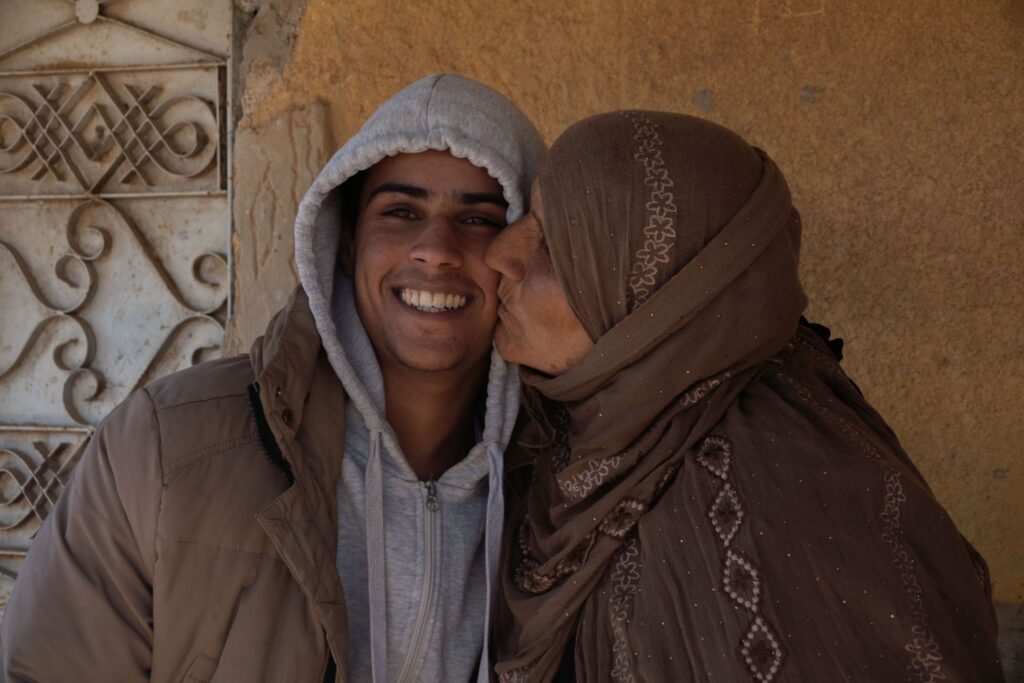
In the muddy street outside his home, Moaz, 16, hugged his weeping mother amid the sounds of ululation and gunfire. His whole village had come out to celebrate his newfound freedom. For them, Moaz was a symbol of their own liberation.
Only a few hours earlier on Jan. 25, he had been released from al-Aqtan: a notorious prison that had, until that day, been run by the Kurdish-majority Syrian Democratic Forces (SDF). It has since been taken under the control of the Syrian government, following a broad offensive against the SDF in late January that saw Damascus seize control of the entirety of Raqqa and Deir ez-Zor governorates.
It was the first time the teenager had seen his family in months. “I missed my mum most of all,” he said with a nervous chuckle, sitting in his home surrounded by his family. In the back, his year-old nephew babbled.
“Thank God for returning him to me, and thank God that nothing happened to him,” his mother cut in. “For more than a month we had no idea what happened to him.”
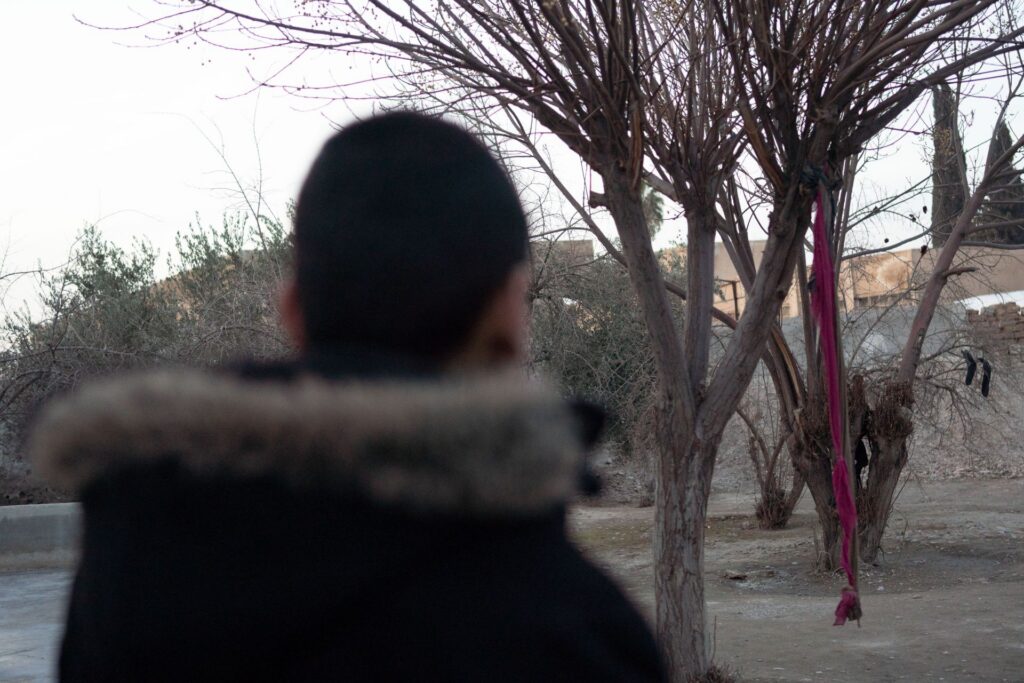
Moaz was just one of 126 children who were released from al-Aqtan Prison that day; he was just one victim among many of the SDF’s growing paranoia about a hidden “fifth column” within northeastern Syria’s Arab population.
In December, Moaz had been at his job at a pharmaceutical supply company. Having handed over a crate of expensive medicines to a courier, he photographed the car’s number plate for his record. Unfortunately for him, two SDF fighters happened to be in the background.
They approached him, demanding to know why he was photographing the military. On seizing his phone, they discovered a picture of the Syrian president, Ahmad al-Sharaa. They immediately grabbed him.
“They demanded to know: ‘Why do you have this photo with you? Who are you wanting to send the photo of us to?’” Moaz recounted. He was arrested and taken to a local security branch where he was investigated for four days.
“For four days [they interrogated me], every day the same questions, and every day they beat me. They beat me with a hose, they used electricity,” he said. “I was just 16 at the time.”
After days of interrogation, he was transferred to al-Aqtan Prison and placed in a cell with 32 other, mostly adult, men. “Most of the people in my cell were affiliated with the Free Army,” he says, “I never saw anyone who was with the Islamic State. I don’t know. Maybe in other cells but not mine.”
Conditions in the cell were grim. “It was so dirty, and there was so little food,” he explained, but worst of all was the boredom.
“We had to get out of our beds at 9 a.m., and then just wait for food to be brought. We would sit and chat but were forbidden to sit in groups. Occasionally someone would be taken out for questioning and return bloodied and bruised.”
Moaz never really understood how he had ended up there. He was never even told his exact charge. “I was sent to jail because of a photo,” he said with a shrug.
Meanwhile, his father had gone looking for his son. After being stonewalled by the SDF’s internal security, he enlisted the help of a lawyer. “I paid him $200 to give him power of attorney, so that he could go and find out at the court,” he said.
The lawyer suggested that he could possibly get Moaz released if the family paid $3,000. “I earn a daily wage. My whole salary in a month is $70,” said Abu Moaz, who works in cleaning for the local municipality, exasperated. “How can I pay $3,000?”
Moaz wasn’t the only one. Seven miles away, Mohammed al-Shahin, a smiley 16-year-old, sits in the well-lit living room of his home in the village of Assadieh. For over a year, he had missed the high ceilings and the lush furnishings of his family home, as he crouched in a dingy cell in al-Aqtan Prison.
Mohammed’s dream was to join his brother in Germany. He had just failed in his attempt to sneak into Turkey in December 2024 when he was arrested trying to smuggle himself back into SDF territory. He had been returning from Tal Abyad, an enclave carved out of SDF territory by the Turkish military and the Turkish-backed Syrian National Army (SNA) in 2019. He openly admits that he had stayed with his uncle, who was involved with the “free army” before he tried to cross to Turkey. The SDF found a picture of them together on his phone.
They accused him of being sent to spy for them, but according to Mohammed, he “had only been trying to get to Germany.”
Like Moaz, 16-year-old Mohammed was interrogated under torture in a security branch in Raqqa. “They beat me, hanged me by my wrists, lifted me up in the ‘scorpion’ position,” he explained, a hint of a swagger in his voice. His uncle, who now works for Syria’s Ministry of Defense, walked in during the interview, smoking cigarettes and lounging in the shadows of the room.
“They threatened me with electricity and said, ‘We will arrest your family as well and use this on them,’” he recounted. “So I confessed that I had traveled to the border because I wanted to work with the free army.”
Such a confession, even if elicited under torture, rendered Mohammed a “terrorist” in the eyes of the SDF. He was sent to al-Aqtan, where he was to remain for over a year without any due legal process.
A 2024 report on the SDF prison system by Amnesty International concluded that “The autonomous authorities have committed serious violations of human rights and humanitarian law, some of which amount to war crimes.”
“People who were detained were tortured to confess, and most of the prosecutions were based on these confessions, even if the threshold of evidence was weak,” explained Janine Morna, the author of the report. “The individual would then be prosecuted without access to an attorney.”
She added that “there were also many cases of arbitrary detention, where people were imprisoned without ever being formally charged.”
The SDF did not reply to a request for comment on the allegations of arbitrary arrest and torture in their prison facilities.
It was not just children who were caught up in the dragnet of the SDF’s deepening suspicions. Journalists were targeted too. Firas al-Burgess, 26, considers himself a revolutionary. For him, his journalism is an extension of that revolution. Lips slightly chapped, framed by a handlebar moustache, he sits at a cafe next to Raqqa’s Dalla roundabout. With his lifelong Kurdish friend, Hussein, he recounts life under the Islamic State group. “We called this ‘the roundabout of hell’ at the time. The Islamic State had piled the heads of 400 captured prisoners here.”
“I became a journalist after the liberation of Raqqa from the Islamic State [because] I wanted to cover that new period in the city’s history,” he explained. “However, I began to see how the SDF was treating the people of Raqqa, the spread of corruption, drugs and the deprivation of rights.”
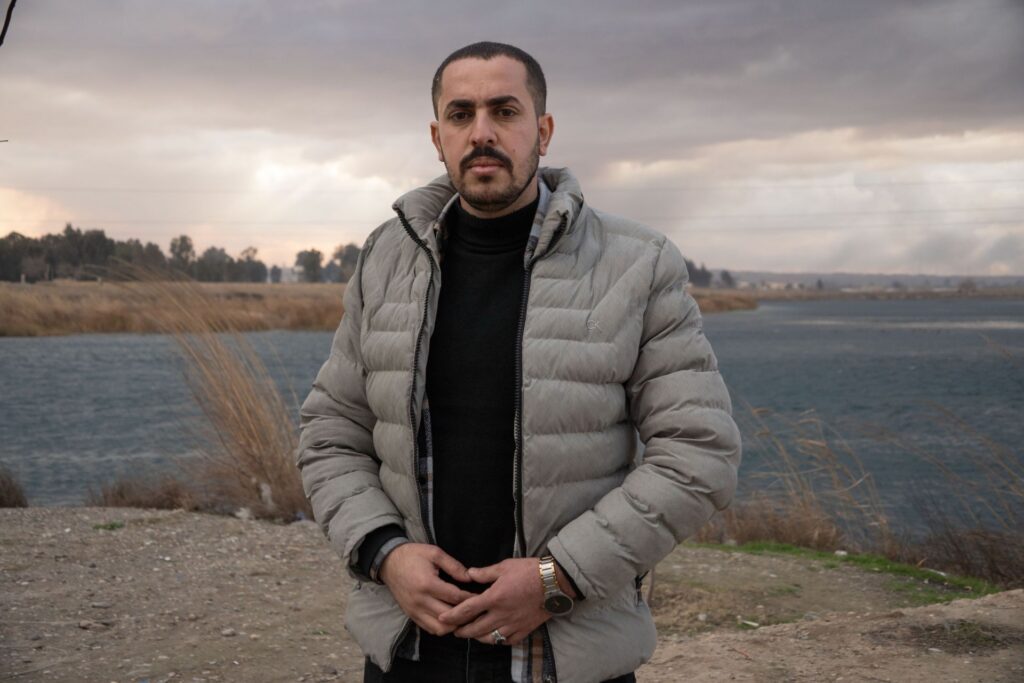
In December 2025, on the anniversary of the fall of Assad’s regime, Firas posted a picture online of a letter he wrote congratulating the victory of the Syrian revolution. That evening, a group of the SDF’s internal security burst into his home, pulled his jumper above his head and dragged him into a waiting van. He was tortured and interrogated for 11 days.
“I lost all hope,” he said. “They cuffed my hands behind me and then hung me from them. They beat me with a falaka [foot whipping], and poured cold water on me when I fell unconscious.”
He was brought in front of the public prosecutor, where he was forced to sign his confession. Although he confessed to posting the letter, he denied all of the SDF’s suggestions that he was working as part of a bigger group. When he later asked to see the paper he signed under pressure, he was denied the opportunity. Despite that, he was charged with “terrorism and dealing with illegal entities,” a sentence he says carried a 15-year term.
“The evidence [New Lines] presented very much aligns with the evidence we gathered, that individuals were arrested on flimsy grounds and denied access to a lawyer,” said Morna, the author of the Amnesty report. “No matter the evidence that was produced, there was no one present during the proceedings with enough fluency in the law to assert a defence on behalf of the accused,” she added, “especially considering the fact many of those accused were children.”
With many of the arrests having little legal footing, many of those accused of terrorism can be understood as victims of a climate of growing tension and paranoia between the SDF and Syria’s post-Assad government.
The SDF feared Syria’s new government because much of its legitimacy in places such as Deir ez-Zor and Raqqa was derived from being a positive alternative to Assad and the Islamic State, said Alexander McKeever, a researcher and author of the “This Week in Northern Syria” newsletter.
With the fall of the Assad regime, however, that pillar of legitimacy crumbled, bringing a “massive decline in support for the SDF, with many wishing to return to the rule of the internationally recognized government,” explained McKeever.
Correspondingly, the SDF’s security organs “responded with increased paranoia and repression,” he added.
Despite the charges against him, Firas was never sentenced. With his proceedings due to take place any day, Firas and his cellmates began to hear the sound of fighting. “We thought maybe the [Arab] tribes had rebelled, but then we heard the sound of jets and heavy bombardment and knew this was something different.”
As the Arab tribes defected from the SDF and the government advanced into Raqqa and Deir ez-Zor, the SDF withdrew en masse to their Kurdish heartlands further north. But al-Aqtan Prison, a squat, ugly building that sits a few miles from the blasted outskirts of Raqqa city, became the site of a defiant holdout by a 900-strong contingent of SDF fighters.
The government’s forces, having surrounded the complex, cut the electricity and water. On the outskirts of the prison, government fighters were setting up mortar and rocket artillery positions in preparation for storming the site. A few hundred yards further back, large crowds of families had gathered, demanding the government free their loved ones immediately.
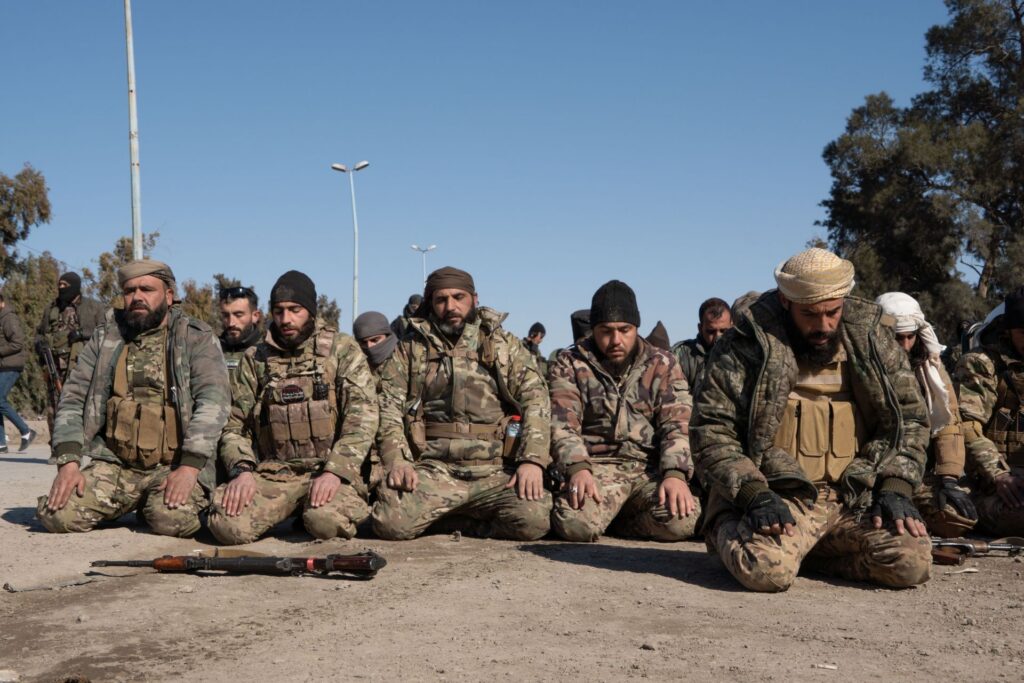
Inside, the conditions for the prisoners became dire, as the prison administrators abandoned their jobs and security was handed over to the SDF fighters. “There was no food, water was rationed,” Firas recounted. He suggested that the treatment from the ordinary prison guards was tolerable, but that “the new guards treated us as if we were Islamic State.”
“They imposed themselves on us through force,” he added. “They would stand us up at the windows of the prison like human shields.”
The week-long siege ended after a negotiated evacuation of the SDF contingent, who withdrew to Kobani, following which the government’s security services entered the complex. “It was a day of victory. A day of joy,” Firas said. However, the government soon told the prisoners that they couldn’t release them because the SDF had destroyed the prison records when they left.
Instead, the head of Raqqa’s Syrian Lawyers Syndicate, Mohammed Saleh Al-Najm, was tasked with investigating the cases of the al-Aqtan prisoners to determine who had been imprisoned unjustly and should be released.
Their first move was to immediately order the release of all 126 minors imprisoned in al-Aqtan. Explaining the decision, Al-Najm says that “the arrest of most of these children was not based on any real legal procedure, and they were largely detained without charge.” As a result, the government decided there were no legal grounds for keeping them in al-Aqtan Prison any longer.
“I can’t describe the feeling when I got home; the whole village came out to welcome me,” Moaz said. “Everyone was crying. I cried a bit too.”
According to Al-Najm, arrests were often designed to “pressure families or punish them for their political stances.” Cases like that of Mohammed al-Shahin seem to align with this suggestion, since it was only when the SDF discovered he was related to a known SNA fighter that he was detained.
Other cases, like that of Firas, were relatively easy to resolve. “I got out because of social media and journalist colleagues,” he explains. “The [former] Minister of Information even contacted me to check on my health while they were organizing my release.”
Many others were imprisoned for genuine crimes, and their cases could be established by cross-referencing individuals with the arrest warrants ordered by the courts. “The government has allowed the families of these individuals to appoint lawyers to appeal their cases,” Al-Najm said.
Yet the issue of security or political crimes has been more complicated. “These are individuals accused of belonging to terrorist organizations,” Al-Najm explained, but “the SDF arrests its political opponents under the pretext of terrorism, and so now they have to be investigated to uncover the true reasons for their arrest.”
Rawda was trying to flag down a taxi outside al-Aqtan Prison, having just visited her husband, Fouad, inside. “The conditions inside have improved a lot. The treatment now is really good,“ she said. “It was so difficult to visit him before as we had to pay a lot, but now I can visit regularly.”
Rawda said that her ex-husband had been an Arab SDF fighter, who, spiteful about her remarriage, accused Fouad of having ties to the SNA. In July 2024, the SDF raided their home at night and dragged him off to prison. She is now waiting for his release.
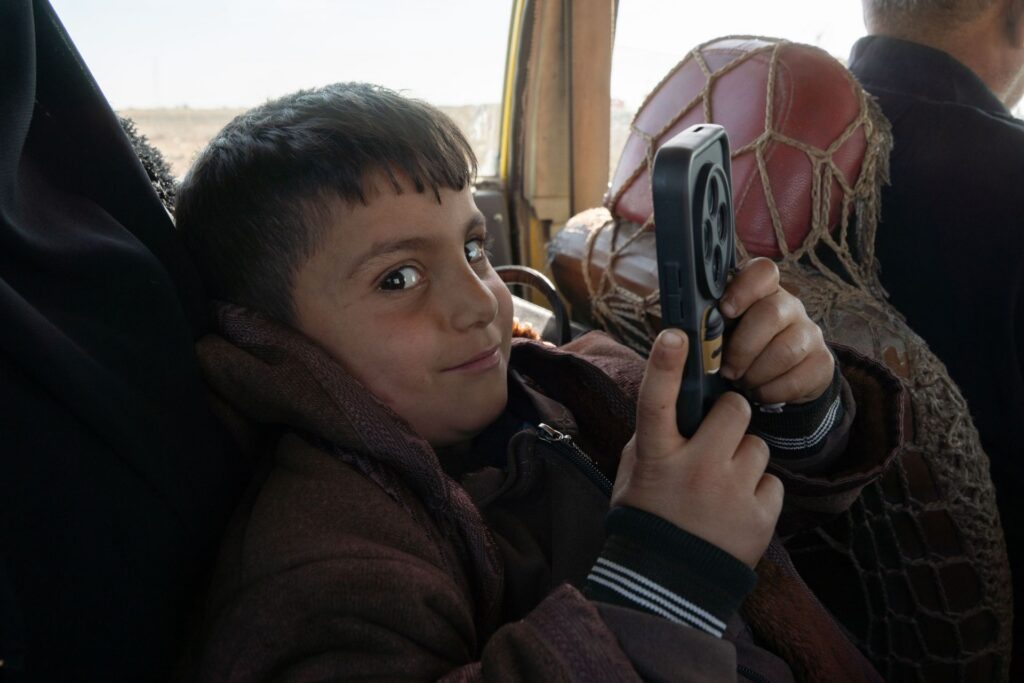
“Hopefully he will be free soon. We have suffered under [the SDF] for so long. Hopefully it will all get better,” she said, while clutching the hand of Hamoudi, their 5-year-old son. She seemed confident and at ease, adding that she regularly visits her husband now.
As the state works its way through the prisoners’ cases, there have been a number of subsequent releases. Including the 126 minors, 936 detainees have now been released according to Al-Najm. Yet some relatives are still waiting. “They’ve released most of the prisoners, and I am still alone. God, how oppressed we are,” one later messaged.
Both Mohammed and Moaz find it difficult to sleep. They are physically and mentally scarred by their ordeal. “I had bad dreams for a while after I got out,” Mohammed said. “I felt sick a lot.” His dream is still to get to Germany. He doesn’t know when he will try again.
Moaz can’t see properly. His vision remains blurry as a result of damage to his eye from the beatings he endured. “[The eye] has a slight deviation now. It hurts me.”
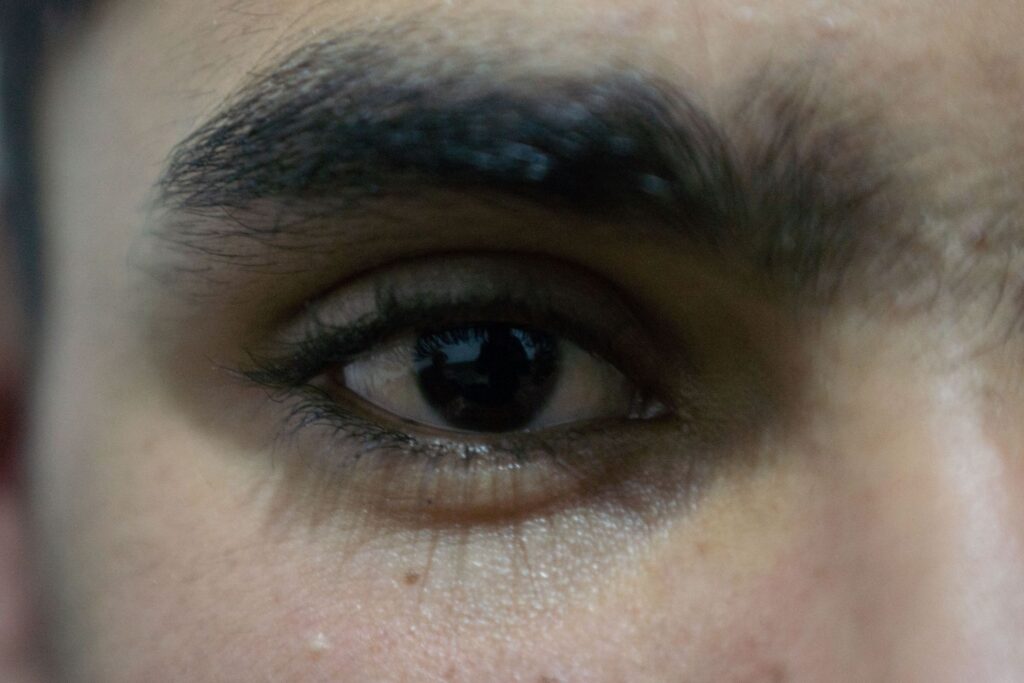
He dreams of becoming a pharmacist, but for now he has returned to work with his father. “Everything is fine now,” he said with a shy smile. “Maybe I will go back to education, but for now I just want to stay here and support my family.”
“Spotlight” is a newsletter about underreported cultural trends and news from around the world, emailed to subscribers twice a week. Sign up here.