

New York City remains one of the major flashpoints for pro-Palestinian advocacy and activism. It witnessed the birth of a nationwide collegiate encampment movement at Columbia University and the election of Zohran Mamdani, not only the first Muslim mayor of New York but also a fervent supporter of Palestine (and the Knicks).
The city, in turn, became the testing ground for policies that stretched legality, cracking down on pro-Palestinian protests and implementing actions targeting Arab and Palestinian New Yorkers.
And of course, the Trump administration homed in on Mahmoud Khalil as a centerpiece of its deportation agenda because of Khalil’s involvement in pro-Palestinian protests at Columbia.
The New York Knicks have largely stayed out of the fray, though the team does have a connection to Israel.
Back in 2007 and 2009, the franchise hosted the Israeli club team Maccabi Tel Aviv for exhibition matches at Madison Square Garden. Many former players for the Knicks have gone on to play for Israeli basketball teams. Most notably, NBA Hall of Famer and former Knick Amare Stoudemire received Israeli residency and citizenship in 2019 after playing several seasons in the Israeli basketball league, and has since been an outspoken supporter of Israel.
Arab Knicks fans have grappled with the push and pull of rooting for a team that plays for a city that has implemented policies targeting their communities.
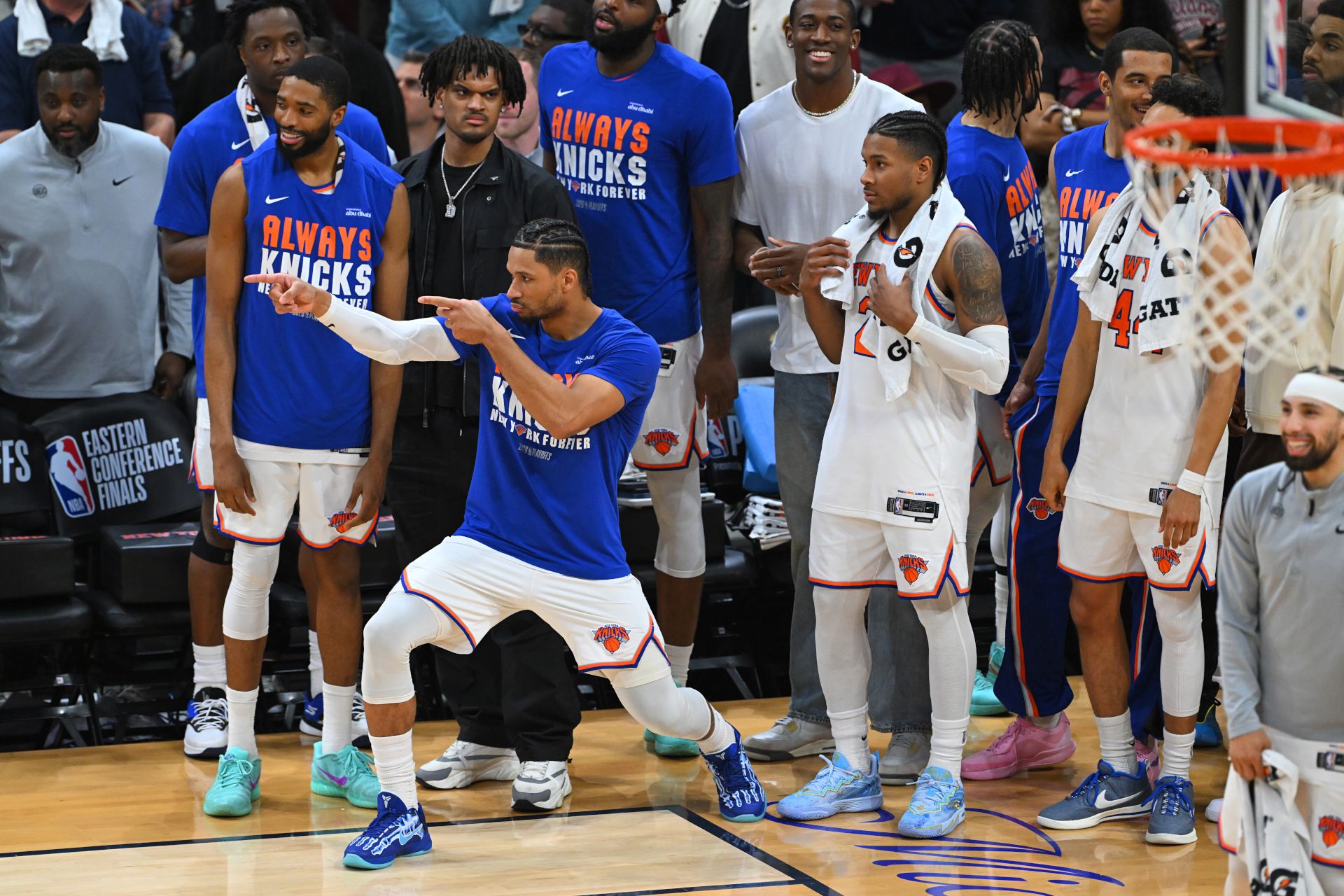
But this year, as the Knicks gear up to play in their first NBA Finals game since 1999, in a rematch against the San Antonio Spurs on Wednesday, Arab fans of the team feel a renewed sense of pride not only in the franchise but in New York City.
They feel this year’s Knicks to be more emblematic of the cultural vibrancy of the city they inhabit, one that has welcomed Arabs and Muslims in spite of the political targeting pursued at times by their local government.
Mike Lawoo, a native Long Islander and son of Syrian immigrants, goes so far as to say the Knicks remind him of the Middle East and North Africa itself. “It’s a team that is beloved by its people despite how dysfunctional and disorganized the last 20 years have been,” he shares.
One big reason has to do with Mamdani himself, who has authentically communicated to Arabic-speaking populations in New York and declares his love for the Knicks in the same passionate way that anyone from the city would: loud boisterous confidence, a hint of arrogance and emotional extremes.
Mohammad Abunuwar, a Palestinian and Jordanian cultural curator also known as “qabeeleh” on Instagram, and a lifelong Knicks fan, echoes this brashness: “Eric Adams is Albania’s problem now. Free Palestine, Knicks in four.”
The team maintains a particularly special relationship with immigrant communities across the city. When former Knick Jeremy Lin, the son of Taiwanese immigrants, went on a three-week historic run for the team in 2012, Asian communities in the city saw themselves in him. New York’s Latino and Caribbean populations in the Bronx and Queens count themselves among the most avid fans of the franchise — with Knicks heroes Carmelo Anthony, Patrick Ewing and current star Karl-Anthony Towns as icons for their respective peoples.
The Knicks themselves also have loose, indirect connections with Arabs and Islam. For one, the common nickname of Madison Square Garden is “The Mecca,” signifying the reverence New Yorkers have for the arena.
Earlier this season, the Knicks played against the Philadelphia 76ers in the NBA’s annual exhibition game in Abu Dhabi, prompting the sale of Knicks merchandise in Arabic.
And the team has its own recent history with Arab and Muslim players. In 2021, French-Algerian Evan Fournier became its first player of Arab descent. This year, rookie Mohamed Diawara observed Ramadan during the season, fasting during games played in the holy month for Muslims.
Not every connection is without controversy. The franchise itself also maintains a lucrative sponsorship with the Abu Dhabi Department of Culture and Tourism, with “Experience Abu Dhabi” displayed as a prominent patch on team jerseys (a partnership that has been a source of tension for the team and the NBA given the UAE’s involvement in what the U.N. has described as genocide in Sudan).
Yet there’s a certain unifying, underdog mentality to this year’s Knicks team, whose grit and fearlessness catapulted them to this stage.
It’s that mentality that Arabs and immigrants in New York empathize with and relate to.
While all eyes will be on the celebrities as they descend to The Mecca to catch the Knicks play for their first championship in over 40 years, New York’s Arab communities — the Yemeni coffee shops, the Egyptian halal carts, the Moroccan bodega owners — will remain on the edge of their seats for each exhilarating moment.