

Fighters relaxed under shaded market awnings — walkie-talkies buzzing — as they waited to be called back to the front. Other militants filled hospital wards, recovering from bullet, bomb and shrapnel wounds. We were in the Nuba Mountains, the new front in Sudan’s war and a potential staging ground for militias pushing back toward Khartoum.
Our journey had begun in Yida, a small town on the South Sudanese side of the border. Photojournalist Guy Peterson and I were met by a minder from the Sudanese People’s Liberation Movement-North (SPLM-N), who ferried us calmly through a checkpoint and into Sudan. We had traveled here to report a series of stories, including one about the escalating use of drones in the country’s civil war.
The SPLM-N has ruled the remote Nuba Mountains for decades, establishing a proxy government administered by volunteer civil servants. There is no cellphone signal, and only rocky roads connect the thorny hills.
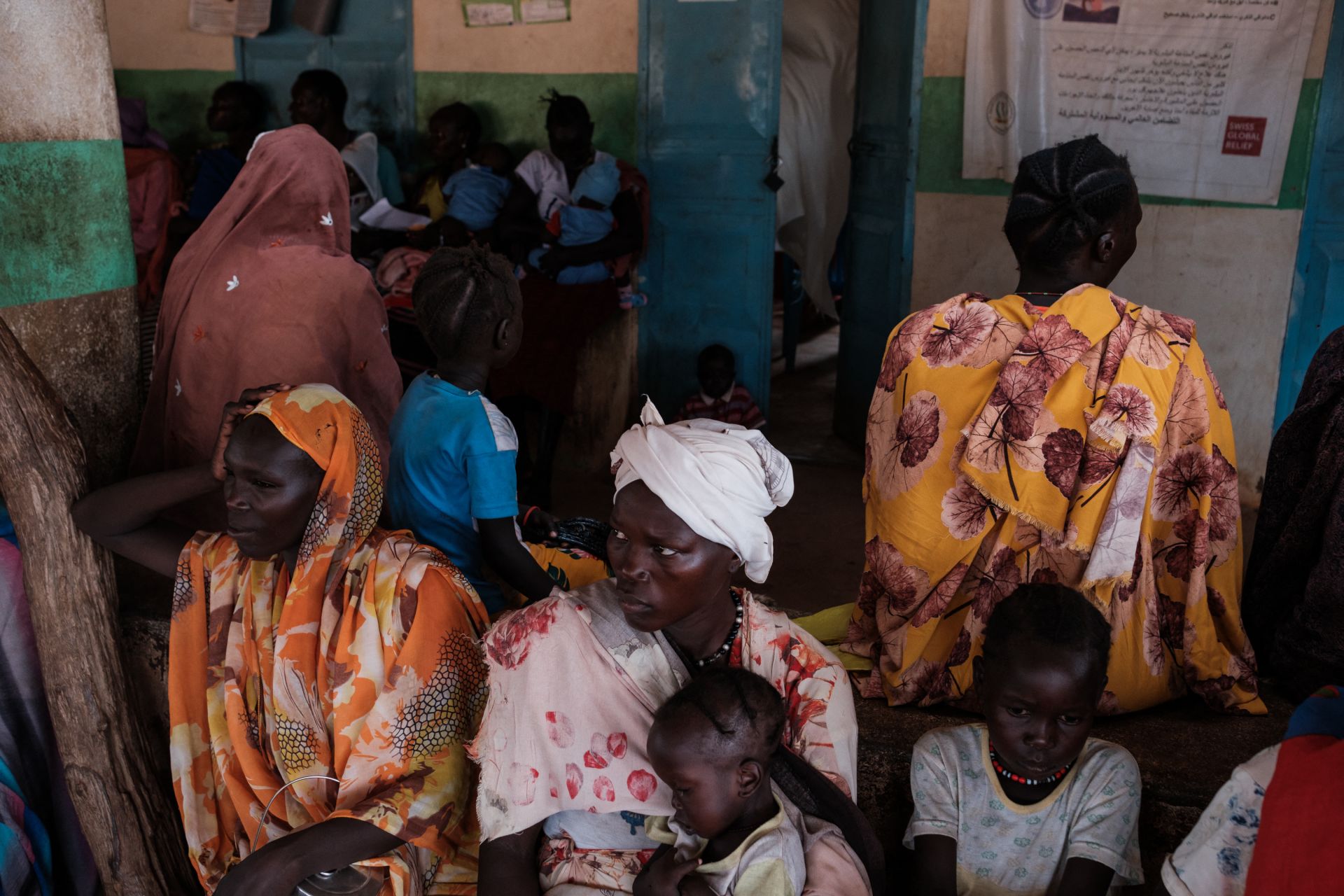
When war erupted in April 2023, the region was distant from the wider conflict. SPLM-N simply continued fighting the same battle for autonomy that it had fought for decades, facing the Sudanese Armed Forces (SAF) on one side and the Rapid Support Forces (RSF) on the other. Because much of the territory was isolated from the violence tearing Sudan apart, some 1 million people flooded into displacement camps here, finding protection but little food to eat.
But last year, the SPLM-N grew tired of battling two enemies, so it announced an unexpected alliance with the RSF. The SPLM-N has long claimed that it wants to establish a democratic, secular government. The RSF, by contrast, grew from the remnants of the Janjaweed, notorious for slaughtering civilians in the Darfur war of 2003. More recently, the United Nations said the RSF’s massacre in the Darfur city of El Fasher bore the “hallmarks of genocide.” The SPLM-N’s long battle for freedom lends the RSF much-needed political credibility.
More importantly, the physical position of these rugged slopes is highly strategic. The RSF holds much of Sudan’s west, and the SAF occupies the capital city Khartoum and the east of the country. While the SAF still controls some towns in the Nuba Mountains, access to these hills gives the RSF a staging ground for its push back to Khartoum.
“We are fighting for our land. The SAF took our land,” Younis Moussa, a 23-year-old RSF soldier, told me from his hospital bed. “We are marginalized.” Debris had embedded in the flesh of Moussa’s leg after a drone strike in December, but he still grinned wolfishly, seemingly eager to return to the front.
He told me that “only God knows” how the war will end, but he hopes that the RSF will someday “liberate” all of Sudan. Pressing my luck, I asked Moussa about allegations that RSF fighters have turned their weapons on civilians. He shook his head, insisting that they only killed soldiers.
I was not sure I believed him as I walked past other patients, this time civilians, whose bodies had been torn by bombs and bullets. The room smelled of sweat and sickly-sweet cleaning fluid.
The injuries here are a sign of how fierce fighting has become. One thing is clear. Violence has become the norm in a place that was once spared conflict. These battles could decide the course of the war. Foot soldiers like Moussa will soon join more firefights. The drone warfare I’d traveled to report on has also become more prevalent, making fighting particularly deadly. Soon, we will publish a longer piece on that.
Reporting for this story was supported by the Pulitzer Center.