

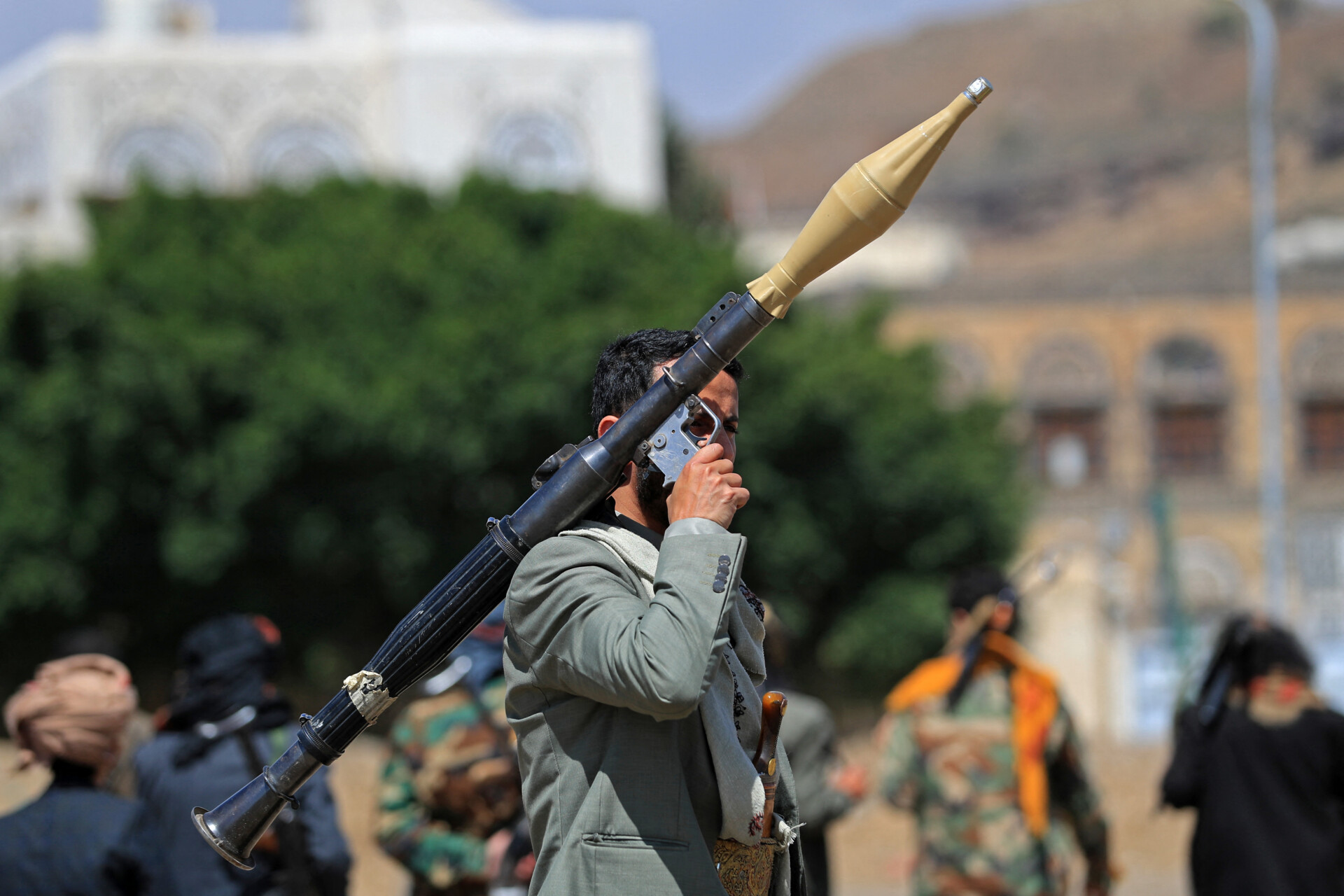
When the ongoing U.S.-Israeli war on Iran began on Feb. 28, much attention was paid to the Iran-backed Houthis in Yemen. An increasingly indispensable partner in Tehran’s much-weakened “axis of resistance,” which includes Lebanon’s Hezbollah and Iraqi Shiite militias, the Houthis were expected to swiftly join the regional fray in support of Iran — ideally by firing ballistic missiles toward Israel and against shipping in the Red Sea.
Four weeks later, however, the Houthis made what was widely seen as a “very calculated move,” marking their entry into the war while also showing unexpected restraint. At the time, the group launched a salvo of missiles and vowed to continue such attacks “until aggression on all resistance fronts ceases,” apparently referring to Israel’s operation against Hezbollah. Since then, the Houthis have been relatively quiet.
Yet, on Monday, 14 weeks into the U.S.-Israeli war on Iran, the Houthis seemed to have pushed their response a bit further. Yahya Saree, a Houthi military spokesperson, said in a taped statement posted on social media that the group had targeted Israel with a barrage of ballistic missiles and imposed a total ban on all Israeli-linked vessels in the Red Sea, warning of further escalation. “We will meet escalation with escalation,” he said.
The announcement has already left residents in Hodeidah, including relatives and friends, in fear of retaliatory airstrikes. The Red Sea coastal city in western Yemen was the scene of Israeli and U.S. strikes between 2023 and 2025. During the Israeli war in Gaza that began on Oct. 8, 2023, the Houthis attacked Israel and Red Sea shipping in what they described as solidarity with the Palestinians.
The Hodeidah seaport, a lifeline for 80% of the Yemenis who rely on foreign aid, was repeatedly knocked out along with other infrastructure. A cousin working at the public electricity corporation still cannot shake off the scene of last year’s Israeli airstrike that hit the station where he works. Another Israeli airstrike to the east left a large public cement plant razed to the ground and hundreds of its local workforce jobless.
The recent Houthi move came as Israel and Iran exchanged strikes, but it also came as tension mounted between President Donald Trump and Prime Minister Benjamin Netanyahu. On Monday morning, Iran said the missiles it fired were a warning to Israel to halt its attacks on Lebanon, which had continued unabated despite an ostensible ceasefire. In retaliation, Israel launched strikes against Iran. While both sides announced they would halt the strikes, Israel’s subsequent retaliatory attack may have aggravated that tension.
Trump has repeatedly told Netanyahu to cease airstrikes, as the Israeli attacks hamper American efforts to reach a deal with the Iranians. While the Iran-aligned Houthis have been reluctant to join the war since late February, their decision on Monday to reenter the conflict is difficult to interpret. It may have been an attempt to exploit the tension between Trump and Netanyahu. But Tehran may have also played its last card in the regional conflict, involving the Houthis as a way to exert maximum pressure on Israel. To what end remains an open question.
Mohammed Al-Bukhaiti, a senior Houthi political official, said: “We are proceeding from the premise of unity of the battlefields, and a ceasefire is necessary on all fronts.”
Meanwhile, most of Hodeidah’s residents seem to have no option but to sit tight and brace for whatever may come next.