


My dad went to fight in Vietnam as a member of the Marine Corps shortly after I was born in 1969. Decades later, he would tell me about the hardships of being separated from his family, so far away on another continent, in such an alien place. It was a terrifying international conflict, the legacy of which still troubles him — and our country.
As a kid, he had enjoyed playing “cowboys and Indians,” but as a Marine, he found himself in the role of cowboy, not the Native American that he identified with and liked to playact as. He also discovered that the villages of peasant rice farmers that troops swept through and cleared out reminded him too much of places and people in Mexico he knew as a child through his cousins, extended family and father — my granddad, who had himself been pulled into the Mexican Revolution of the early 20th century as a child combatant. Such is the price of living in a country, my grandpa had told him: to sacrifice one’s own well-being and life for the good of the nation and the people who birthed you. These sacrifices, especially those of my grandfather, led to the historical happenstance of my growing up in small-town South Texas when I did, aware of both the Vietnam War, as something my dad survived when I was a baby, and the 1976 bicentennial celebration of American independence, the ideals of which had inspired not only my dad and me, but also the armed guerrilla force he was pitted against at the risk of his life in Southeast Asia.
The American Revolution, which took place on a relatively small strip of land along the eastern seaboard of North America, inspired revolts over the next two centuries against absolute power, colonialism and slavery from the Americas, across Europe, to Africa and all the way to Vietnam. Ho Chi Minh, the founding father of Vietnamese independence, was directly inspired by the words of Thomas Jefferson in the Declaration of Independence, using the American’s ideas to challenge first French occupation and then intervention by the United States itself.
As someone who grew up in the shadow of Lyndon B. Johnson’s Great Society, a set of domestic social programs aimed at eliminating poverty and racial injustice, I am amazed that America’s colonial uprising had such a galvanizing influence long after it concluded. Its revolutionary ideals extended to my own modest early education, which involved reciting the Pledge of Allegiance in elementary school and watching public television and Sesame Street — themselves outgrowths of the bicentennial’s interpretation of “We the People,” the opening words of the U.S. Constitution, as including all of us, not least people of color. Despite waning faith in the American experiment in the wake of Watergate and the disastrous war in Vietnam, I grew up in far South Texas, isolated from the chic cynicism and sardonic irony of the “me generation,” learning every single word of the Preamble to the Constitution of the United States, which I remember today, line for line, thanks to Saturday morning “Schoolhouse Rock” cartoons.
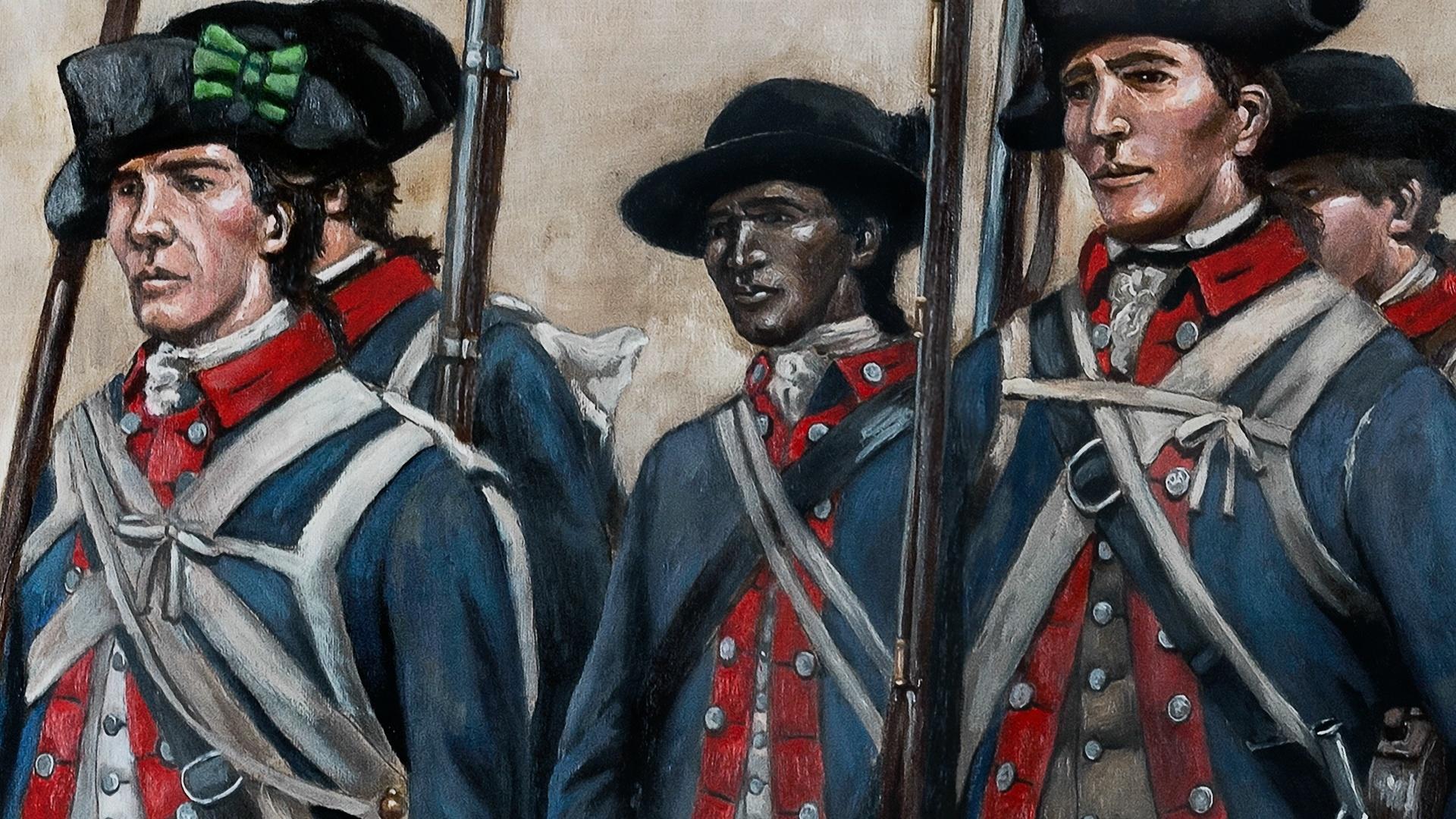
After watching “The American Revolution,” a new six-part documentary by filmmakers Ken Burns, Sarah Botstein and David Schmidt, which aired on PBS in November and is available for streaming, I wonder how the revelations of the country’s most recognized popular documentary historian would have affected my childhood enthusiasm for America’s founding lore. How would I have felt had I known how many African-descent, Native American, Caribbean and mixed-race peoples participated on both sides of the conflict, and the conflicting reasons they got involved, despite so many risks? The documentary begins with the origins of the French and Indian War between Britain and France, part of the global Seven Years’ War (1756-63), and ends with the peace between the newly formed United States and Britain in the early 1780s.
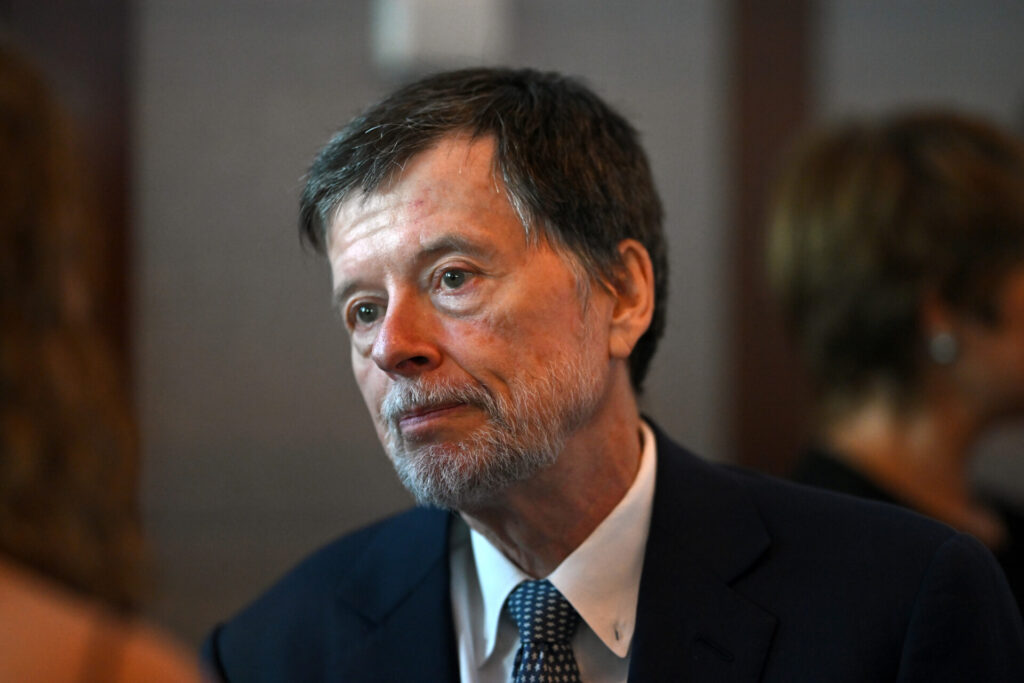
At this point in the sprawling career and oeuvre of Ken Burns — with movies on topics from the U.S. Civil War to baseball, jazz and America’s national parks — audiences may have become accustomed to hearing about his latest historical foray without recognizing the impact of his contributions to popular history and their value as educational resources. In a recent interview with Smithsonian Magazine, Burns explained how the nine years of work that went into this series upended his prior thinking and forced him to reconsider what he thought he knew about the American Revolution, while offering lessons for what the story means today. “We’re in a moment that people have described as existential, certainly a moment of division,” he said. “Maybe there could be some understanding that during this revolutionary period, we were more divided than we are now. And maybe by going back and reinvesting some time in this origin story, we’ll be able to put the ‘us’ back in the U.S.” This challenges all of us to imagine our role in the republic then and now, and what choices we might have made had we been there.
For me as a kid, it was not hard at all to imagine Mexican Americans participating in the republic, because I saw my dad do that, first in the Marines and then in the Army as a career military man, a nationalistic cold warrior throughout the 1980s, a U.N. peacekeeper in the Middle East and a soldier in Operation Desert Storm. But yes, even people from Mexico participated in the American Revolution, starting in May 1781. After Spain joined the battle to undermine Britain’s holdings in Florida and the Caribbean, the governor of Spanish Louisiana, Bernardo de Galvez, led a force bolstered with men from Mexico, France, Ireland, Native American nations, Africa, Puerto Rico, Hispaniola and Cuba, displaying the diversity of the Gulf Coast I would come to know and love in Texas. I can’t help but wish I had known all this growing up; it would have provided more ammunition to fight the battle over the place of myself, my family and my Mexican-descent people in the great American tale. Instead of being on the margins, in the shadows or relegated to the fields, we were, it turns out, on the front lines of forging and furnishing this country.
Learning about the global dimensions and aftershocks of the conflict expands the revolt’s significance to me, shedding light on how it affected the rest of the world and the eventual decline of colonialism, as people of many different skin tones and creeds took the words “All men are created equal” and ran with them. It didn’t register fully for me as a schoolboy that our country’s Founding Fathers were largely landed slaveholders, because I somehow grew up imagining and fashioning myself as an empowered partisan of the republic and every bit the enfranchised citizen equal to any white guy in a powdered wig and tricorn hat. Such were the illusions of a little brown child not yet seeing the never-ending (and ongoing) power struggles of people of color in the U.S. as a heritage of colonialism, slavery and conquest. I did not yet know back then the painful, conflicting reality of what my dad experienced while serving the country. I now see these two wars — the Revolutionary War and Vietnam — as symbolic of the dialectic between the promise of freedom and the reality of the American empire.
Everyone in this country finds themselves caught between the poles of this dialectic of living history, and it is up to each one of us to respond and act.
The documentary by Burns et al. would have only added to my fervor, which was born out of small-town civic values and lavishly imagined pageants of emancipation, homespun in their realization, a fervor that was elicited every Fourth of July by raucous fireworks and the big-sounding words that I was invited to share. (I recall getting a minor role one year in a grade-school musical about the Revolutionary War, with a few spoken lines if not a full show tune — Lin-Manuel Miranda, eat your heart out.) The patriotic ideology of the era in which I grew up — that of the Spirit of ’76 bicentennial, after the gains of the Civil Rights Movement and the benefits of liberal Great Society legislation — is stoked like a campfire by the main takeaways from this documentary and its remarkable retelling of an improbable revolt still improbably rousing me today.
In grade school, a teacher assigned my class the task of writing a letter to our Mexican-descent representative in Washington, who had been born around the corner and down the road in Mercedes, Texas: Eligio “Kika” de la Garza, who helped hack out a trail for others from our upbringing to follow and was a founder of the Congressional Hispanic Caucus. I don’t remember the substance of my correspondence — I think it was enough to bring to his attention my existence in our mutual home of the Rio Grande Valley, and an awareness that I knew of him and his political and ethnic significance — but I do remember the great surprise of receiving a brief, neatly typed letter in response, like everyone else in class who wrote to him, signed in ink that glistened on beautifully embossed, immaculate paper. It seemed like magic to me that someone important in our government would answer a handwritten letter and acknowledge my words, my life, my youthful, hopeful dreams birthed in a sleepy little corner of nowhere.
To this day, this memory stays close to me as a huge influence on how I grew to see the United States and the exciting possibilities of my place in it. I try to remember it when times are hard, and I feel that I have not lived up to the promises of my schooling and youthful ambitions. I remind myself that I grew up in humble economic circumstances, raised by grandparents with, at most, a 4th-grade education and who spoke only Spanish at home.
This memory also came vividly to mind near the end of “The American Revolution” documentary, when Vincent Brown, a professor of African and African-American history at Harvard, put a fine point on the significance of our country’s originating narrative for those not included in its designs: “The idea that government derives its authority from the consent of the governed was pretty radical. It’s still pretty radical, if we take the words of the Declaration of Independence written by Thomas Jefferson [that] all men, let’s say men and women, are created equal. Jefferson clearly didn’t take that seriously, as a slaveholder. But I do [his emphasis and mine]. And I think it’s incumbent on all of us to take those words from Jefferson and make them real in our own lives, even if they weren’t real in his.”
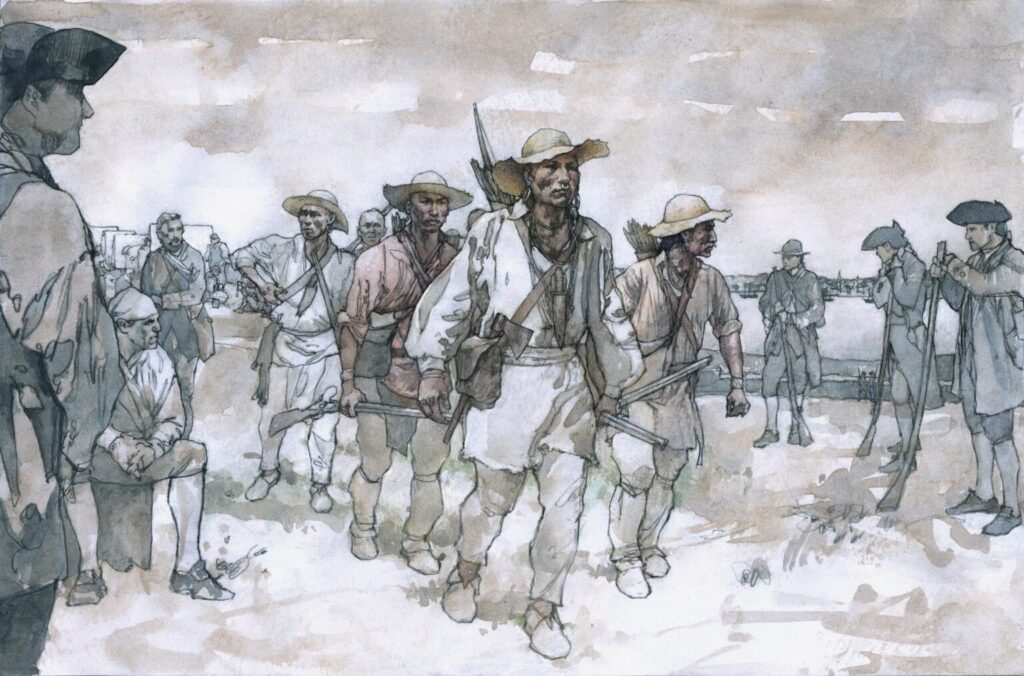
The ubiquity of men and women of color in the documentary is one of its most powerful contributions, and a corrective to conventional storytelling focused on “The Great Men of History.” Africans from far-flung points on the British imperial map and Black Americans (freed formerly enslaved people, enslaved people and runaways), Native Americans, mestizos and biracial peoples with roots across the hemisphere and the globe participated on opposing sides of the conflict. Not all were inspired by revolutionary rhetoric. They became involved out of calculated self-interest that informed their own unique pursuits of life and liberty: Native Americans fought for and against the British in hopes of securing their territories and lives; Africans, marshaled by British imperial forces, opposed Africans and African Americans who joined the Continental Army and militias in hopes of freedom and opportunity; loyalists and rebels who called the colonies home came to vicious blows over the future of their claims to dominion; and a wide variety of people sought the safety and power of protection under both British and Continental governments.
This included African women like Mumbet, later known as Elizabeth Freeman, who was born into slavery but lobbied for freedom upon learning of the Massachusetts Constitution in 1780, which was a part of its separation from Britain. She later won emancipation in a case that challenged the consistency of slavery with the declaration of liberty and equality as the law of the land in the commonwealth, part of the anti-slavery movement set into motion by the rhetoric and legal apparatus of the revolution.
Historical actors like Freeman sparked the inexorable march of abolition, to make Benjamin Franklin’s claim, “Our cause is the cause of all mankind … we are fighting for their liberty in defending our own,” real for everyone. Equally inspiring are Phillis Wheatley, the enslaved author of the first book of poetry published by an African-American writer, and James Forten, a freeborn enthusiast of independence who signed on to privateer naval missions raiding British warships, becoming a prisoner of war and later a successful businessperson helping fund the abolition movement.
In his 2002 book “Brown: The Last Discovery of America,” American author Richard Rodriguez argues that this country has always been brown, generated out of a “founding triad” or “founding palette” of European, African and Indigenous peoples. But race is only one aspect of the striking diversity in the revolutionary story. Taken as a whole, the mix of vast differences and jousting opinions from so many dissimilar people make it all the more incredible that a union came out of this roiling crucible, with so much divergence in geographical origin, language and inflection of dialect, education, social class, belief about the cosmos and a grand deity, disposition, temperament, experience, culture. Many of the armies on both sides found themselves fighting with and against people who did not share the same native tongue, and in the case of the Continental Army they somehow found themselves nonetheless united under a common cause.
This diversity is also evident in the woeful divisions that led to conflicting loyalties. Per the documentary, Native Americans and people of African descent largely went over to the British, who promised an end to colonial depredations on Indian territory and freedom for slaves who would quit the plantations and defy their masters. As the documentary suggests, the fates of these actors would have been better in the short term had the revolutionaries been defeated and colonialism maintained in North America. In particular, Native Americans would not be counted as U.S. citizens until 1924, and their participation in the Revolutionary War was completely erased when the eventual peace treaty was concluded between the U.S. and Britain. In fact, an important precedent and source of motivation for the colonial rebellion can be found in the French and Indian War preceding the revolt, and the desire of colonists to expand beyond the Appalachian Mountains and into the Ohio River Valley.
We see history now as a done deal, but every individual of the time took a huge gamble with their choices and actions, perceiving no clear outcome but a very real possibility of failure, penury, shame and death. In all, the colonial cause was itself a preposterous wager — not only on defying the British Empire, but on attempting a form of federation that had little European precedent, and which drew inspiration from the Haudenosaunee Confederacy of Native nations (the Mohawk, Oneida, Onondaga, Cayuga, Seneca and Tuscarora), which has been called “the oldest continuous participatory democracy in the world.” Ironically, looming behind the colonial cause was indefinite expansion, endless population growth, and the “manifest destiny” of a nascent empire that itself began as a colony, gaining full steam in the mid-19th-century resolve to spread across the whole continent, over and against any people or powers that might stand in the way.
“The American Revolution” documentary is history that blasts through border walls, even as our country is in a moment of bolstering barriers and stoking divisive rancor. It pulls together strands of academic trans-Atlantic studies (the interdisciplinary examination of the global currents that inspired local movements and concepts in the U.S.), “borderland” studies and transnational scholarship. And it should remind us that the American experiment of union out of many is something we can work toward here and now, reflecting the ideas of people like Jefferson and Franklin who believed in lifelong learning and the need for education to create an informed, active and participatory citizenry. Unlike passive imperial subjects, we are equipped with the instruments right here and now to inform ourselves daily of current events, interact in debates and discussion with fellow partisans, and — yes — to vote and act locally with global effect, for the sake of that more perfect union we continue to create.
Sign up to our mailing list to receive our stories in your inbox.