


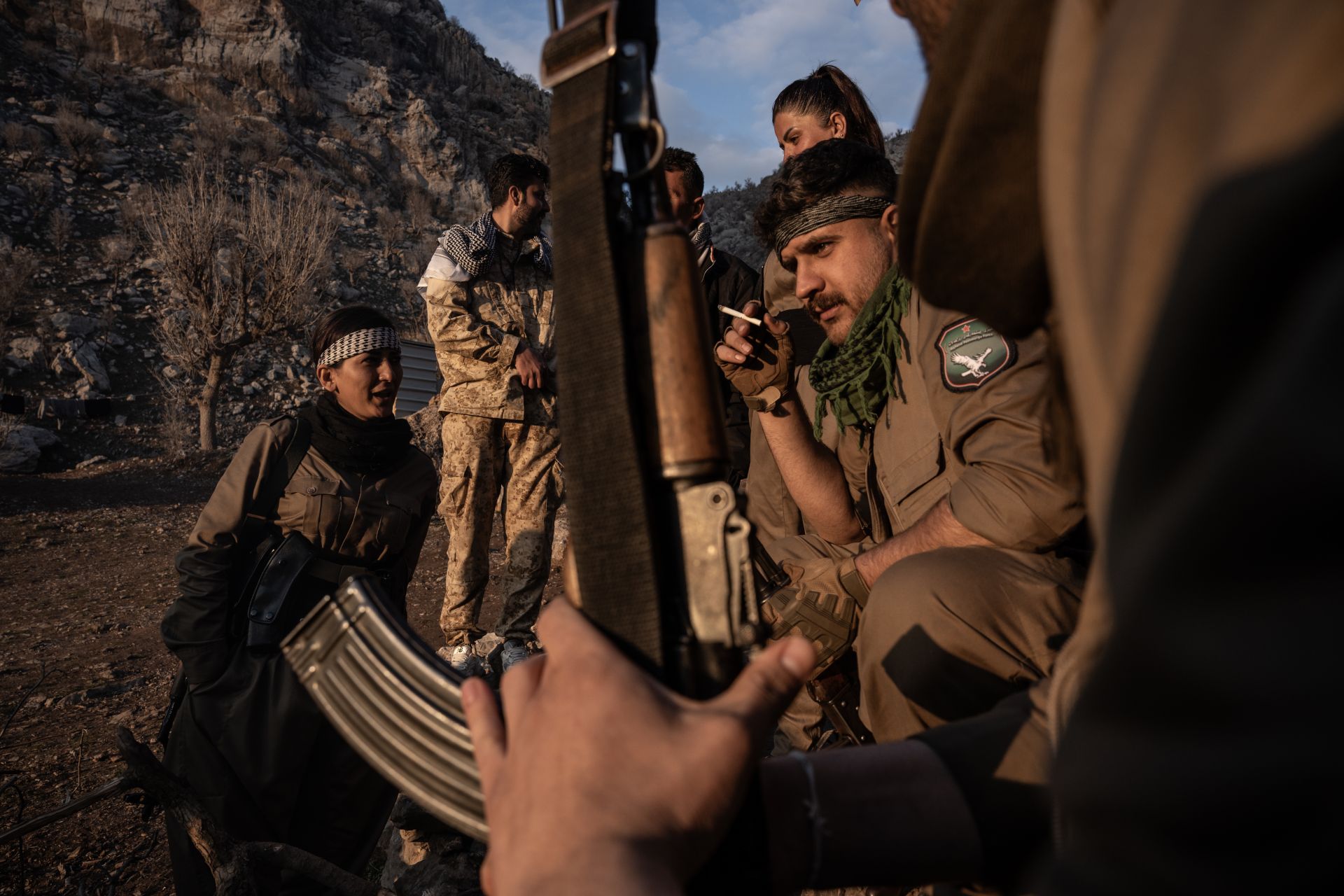
In the early days of the U.S.-Israeli war on Iran, Shaho Bluri led a small unit of Iranian Kurdish fighters into the country from Iraq, under cover of darkness.
They hiked on foot from their mountain hideout in Iraq, equipped with newly acquired night-vision goggles. The plan was to scout the strength of the Iranian regime’s presence, check roads and bridges for booby traps and meet with their contacts on the ground.
The mission proved riskier than expected. Airstrikes thundered around them. With no coordination between the fighters and U.S. or Israeli forces, one scouting unit was nearly hit, said the commander.
“We changed our minds and came back,” Bluri said. “It was very difficult.”
Bluri, 53, is a camp leader with Komala of the Toilers of Kurdistan, one of several Iranian Kurdish militant groups based in Iraq. In recent weeks, speculation has swirled that such groups could serve as potential ground forces in an incursion into Iran backed by the United States and Israel.
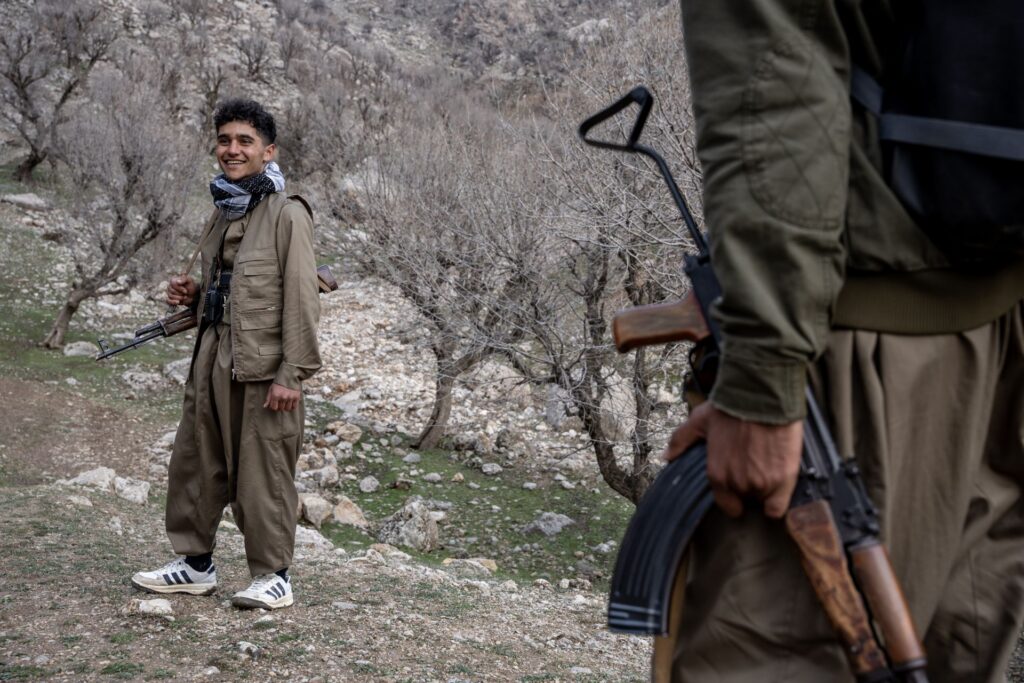
But as the abortive trip illustrates, the fewer than 10,000 Iranian Kurdish peshmerga fighters based in Iraq lack the reach, experience and weaponry to spearhead a major ground push. Shadow warfare, however — both misinformation and covert operations on the ground — is already well underway.
And some Kurdish officials see the radioing of an imminent offensive by factions not ready to launch one as part of an asymmetric campaign against Tehran. “It’s a psychological pressure game,” said one senior Kurdish official in Erbil. “Will they be able to topple the regime? No.”
Iranian Kurdish armed groups have maintained bases in northern Iraq since they were pushed into exile in the early 1980s, when an insurrection for self-determination and rights was brutally suppressed by the Iranian regime. Hundreds of Kurdish villages were razed in retaliation. Ethnic Kurds in Iran number around 10 million, roughly 10% of the population. Iran has frequently accused exiled groups in Iraq of using the territory of Iraqi Kurdistan to launch attacks and foment unrest, at points conducting ground operations deep across the border and frequently targeting their camps with missiles.
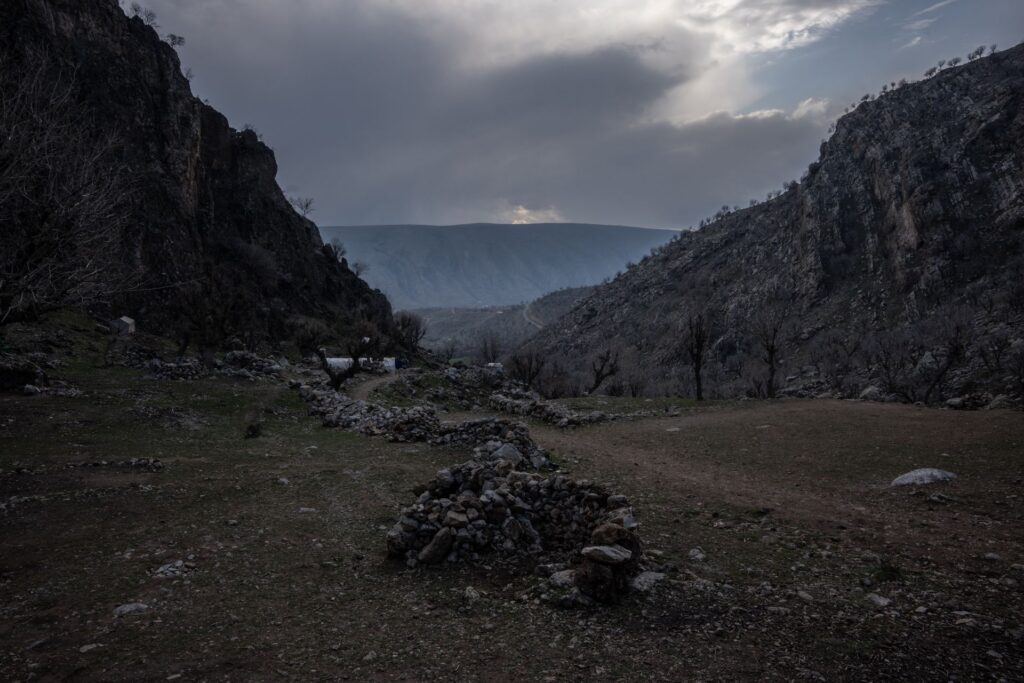
In 2023, after months of pressure from Tehran, some of the groups were forced to move their bases away from the border to less accessible locations inside Iraq. But secret training camps and outposts can still be found in gullies and nestled among the snow-capped mountains. Some factions maintain armed cells in Iran.
Until recently, the exiled groups like the Toilers, which has Marxist roots, had garnered little international attention. But since the first Israeli jets began their bombing campaign against Iran earlier this month, multiple reports that the CIA and Mossad are backing the Iranian-Kurdish factions have dramatically intensified the spotlight on them.
Speculation about a Kurdish offensive was heightened by news that President Trump had called Mustafa Hijri, the leader of the Democratic Party of Iranian Kurdistan (KDPI), the oldest Kurdish faction in Iran, when Israel and the United States first launched the bombing campaign.
But the call never happened, said Hassan Sharifi, a member of the KDPI’s executive board. Kurdish outlets soon followed up with reports that Hijri had been invited to Washington.
Trump did call the leaders of the two main Kurdish factions in Iraqi Kurdistan — Bafel Talabani, the president of the Patriotic Union of Kurdistan, and Masoud Barzani, the leader of the Kurdistan Democratic Party (KDP).
But Qubad Talabani, deputy prime minister of the Kurdistan Regional Government in Iraq, denied reports that Trump demanded passage for Iranian Kurds to launch an offensive during the call with his brother, which came in just hours after the airstrikes began on Saturday morning. “There was no mention of the Iranian opposition groups, and there was no ask of us,” he said.
In the thick of conflict, both the Trump administration and Kurdish Iranian factions may see advantages in exaggerating the reality or maintaining ambiguity. “Let’s forget how much is false or true,” Sharifi said. “At the end of the day, the world sees us. I feel that’s useful.”
The question of how much foreign support is being given is painfully sensitive. The Kurdistan Regional Government in Iraq has long been trying to fight the impression that it is a tool of Israeli intelligence and a vassal for Western interests. Two years ago, Iran fired missiles at what it claimed was an Israeli “spy headquarters” in Erbil, the capital of Iraq’s semiautonomous Kurdish region. The KRG vehemently denied that it was a Mossad outpost.
But few deny that there has at least been contact between the opposition groups and foreign intelligence services over potential operations inside Iran. One senior Kurdish official characterized the talks between the Iranian Kurdish factions and the United States as a “sounding out” — with Washington deciding “if” it wants to use them, rather than how.
“The Americans are well within their remit to assess the capabilities of these groups, to speak to these groups and find out their readiness and capabilities, but at no point have I seen America even begin to operationalize these groups against Iran,” the official told New Lines.
Israel’s intentions, he suggested, may be different. “It doesn’t mean somebody else has not been pushing them,” he said. “Israel is likely very eager for these groups to do things inside Iran, regardless of whether they will be successful. That’s the tragedy.”
It’s “natural” that Israel would be engaged with Iranian Kurdish groups, and there have been contacts with them for several decades, said Oded Eilam, a former senior officer in Israel’s Mossad. According to Eilam, Israel’s goal is to inflict as much damage on the Iranian regime’s forces as possible, and “using locals would also facilitate this aim.”
As the sun dipped below the mountain ridge at the Toilers’ training camp in a picturesque valley in the mountains, young fighters in traditional Kurdish dress showed off their military exercises, running in formations and shooting their Kalashnikovs over the valley at imaginary Islamic Revolutionary Guard Corps fighters.
Bluri, who has lost three brothers to the Kurdish struggle against the regime, demurred on questions of support to the faction. There has been “a little,” he said, though he wouldn’t give details of what or from whom. The group claims to have around 1,000 fighters ready to reenter Iran, as well as sleeper cells on the ground in the country.
“If someone says, ‘We can give you weapons,’ we’ll take it,” said Bluri. But, like other commanders whose units dot the rugged mountains along the Iran-Iraq border, he is clear-eyed about what any ground operation would require: either far greater external support or a dramatic weakening of Iran’s hold across the frontier.
“We cannot fight with drones or rockets,” he said, gesturing toward his Kalashnikov. “I cannot just send peshmerga inside to die.”
In a safe house in Erbil, the faction’s leader, Reza Kaabi, said there has been “nothing official” in terms of contacts with the United States and Israel. Regardless, Kaabi feels that the moment is nearing for the exiled Kurdish groups to make a move. Like other members, he has paid a deep personal toll in the struggle against the Islamic Republic. His two sisters, both nurses, were executed by firing squad in Iran in 1980, after being accused of treating Kurdish partisans.
“For the past 47 years, we’ve been fighting against this regime,” Kaabi said. “Of course this opportunity is huge for us. The regime is at its weakest point in history.”
It was last summer, when Israeli jets crippled Iran’s air defenses and U.S. Air Force B-2 stealth bombers dropped bunker-busting bombs on Iran’s nuclear sites, that contacts with the United States began to pick up, according to Ehwen Chiako, a member of the executive council of the Kurdistan Free Life Party, or PJAK.
An offshoot of the Kurdistan Workers’ Party, PJAK is designated as a terrorist organization by the United States, but it remains one of the most organized Iranian Kurdish militant groups.
The conversations have focused on the circumstances under which forces might enter Iran, he said. He denied any contact with Israel, explaining that the group finds Israel’s apparent backing of Reza Pahlavi, the son of Iran’s last shah, to be “worrying.”
Since its formation in 2004, PJAK has spent years building its presence on the Iran-Iraq border. It has burrowed tunnels below the mountains and claims to have units of guerrilla fighters inside Iran. But Chiako stressed that any operation would require significant assurances from Washington.
“In all of our conversations, we have stressed that we need guarantees,” he said.
While U.S. and Israeli strikes may have weakened Iran’s long-range missile capabilities, Iran still possesses formidable short-range weapons that could devastate Kurdish fighters operating near the border. Without air cover or a no-fly zone, he said, Kurdish forces would face overwhelming risks. “We try to convey that our move cannot lead to a massacre of our own people,” Chiako said. So far, he added, discussions have not covered any materiel support. PJAK has no need for additional light weaponry, he said.
More militant factions say they have already stepped up operations against the regime, also pointing to the 12-day war as a turning point. At a riverside base belonging to the Kurdistan Freedom Party, known as PAK, the prefabricated buildings are painfully exposed to attacks.
Fighters dashed between structures and spread out to minimize the casualty toll in strikes. In the previous 10 days alone, Iranian attack drones had struck the area six times. But they have no choice but to remain here under the terms of security arrangements between Baghdad, the Kurdistan Regional Government and Tehran.
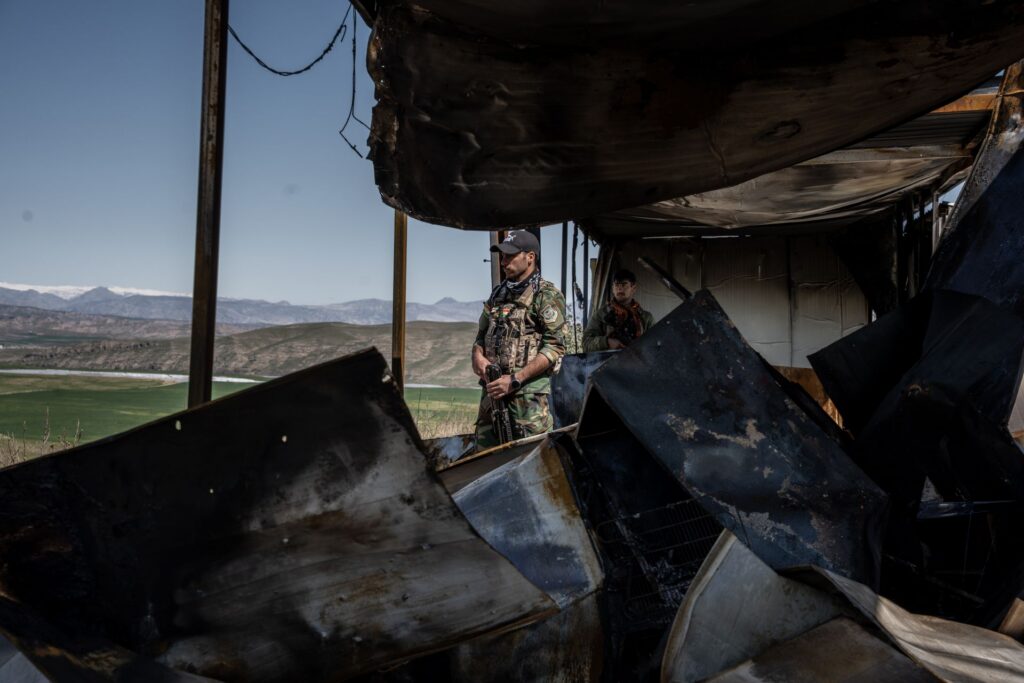
Iran’s newer models of drones approach almost silently, leaving only seconds for fighters to dive for cover. Since January, two of the group’s fighters have been killed and four wounded.
Operations on the ground have been building since the summer bombing campaign, said Rebaz Sharifi, one of the group’s commanders. “The war never stopped,” he said. “It’s just that nobody knew about it.”
He said that the destabilizing activities by the faction have been codenamed “Fire of Revenge.”
According to Sharifi, the group’s sleeper cells inside Iran were activated during nationwide protests earlier this year. He pulled out his phone to show a video clip that he claimed depicted an operative detonating explosives at the gate of what he described as a regime cash storage facility in Tehran.
Cells operate independently, he said, sometimes without direct contact with commanders across the border. “There were activities we didn’t even know about at the time,” he said. “We only found out afterward.”
He claims the group has had no outside support. Other factions said they had refrained from acting in January, beyond calling for a strike, due to fear of reprisals in Kurdish areas. But for PAK, the mission is clear, said Sharifi. “Our job is easy,” he added bluntly. “Whoever is against us, we kill them.”
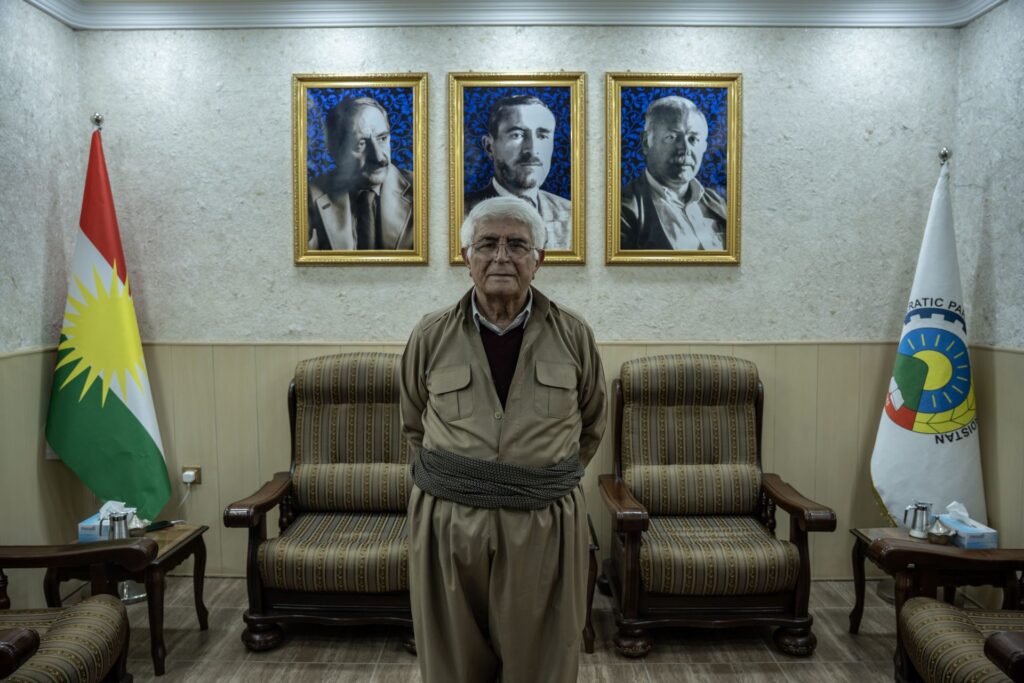
Before any more organized push on the ground in tandem with the United States, Kurdish groups also want a political guarantee that their rights will be secured in any new power structure in Iran. There are concerns about Trump’s unpredictability as a partner, as well as Israel’s aims.
The unraveling of Kurdish gains in the country’s northeast following U.S. withdrawals is fresh in memories. “I watched them leave with my own eyes,” said Behzad Mohammed, 28, a member of the Toilers who spent months fighting in Syria.
Publicly at least, Trump appears to have rolled back interest in working with the Kurdish groups. “The war is complicated enough as it is,” he said after initially describing their potential involvement as “wonderful.”
“It’s not about trusting them, or relying on them,” Kaabi said of the United States. “It’s about what we want to get.” He said his faction, like other members of a newly formed alliance of Kurdish groups, is not seeking secession and wants to see a federal, democratic Iran.
But reports of an offensive may have dampened momentum, for the moment at least.
Turkey, home to its own population of Kurds — roughly 20% of the population — has deep reservations about any backing of Kurdish groups that could bolster secessionist sentiment. In recent weeks, officials in Iraqi Kurdistan have scrambled to assure allies in both Ankara and Tehran that it would not be used for an attack.
A puff of smoke from an intercepted Iranian drone that lingered in the air near the office of senior KDP official Hemin Hawrami on a recent afternoon was a reminder of the threat. The semiautonomous region in northern Iraq has already been hit with more than 250 drones and missiles.
“Our number one priority is the interest of the Iraqi Kurdistan region,” Hawrami said. “We will not allow the Iranian Kurds to cross the border. We don’t want the Iraqi Kurdish region to be used as a launchpad for attacks on our neighbors.”
There are still significant levers of escalation available to Tehran. Iran has signaled that it will attack critical infrastructure in Iraq, assumed to include gas fields and oil pipelines, if opposition groups cross the border, Kurdish officials say.
But they quietly concede that there may come a tipping point, when their position on a movement by Iranian Kurdish groups could change — when they are sure the regime won’t be coming back.
Some invoke a Kurdish saying to underscore the risks: You can’t injure a snake, you have to kill it. Not doing so means you risk getting bitten.
And on that basis, Kurdish factions are also waiting.
“We believe they are still strong enough on the ground, locally at least, to kill their own people,” said Kaabi, the leader of the Toilers, referring to the Iranian regime. But he believes the right moment is nearing; “100% it will happen,” he said.
Become a member today to receive access to all our paywalled essays and the best of New Lines delivered to your inbox through our newsletters.