


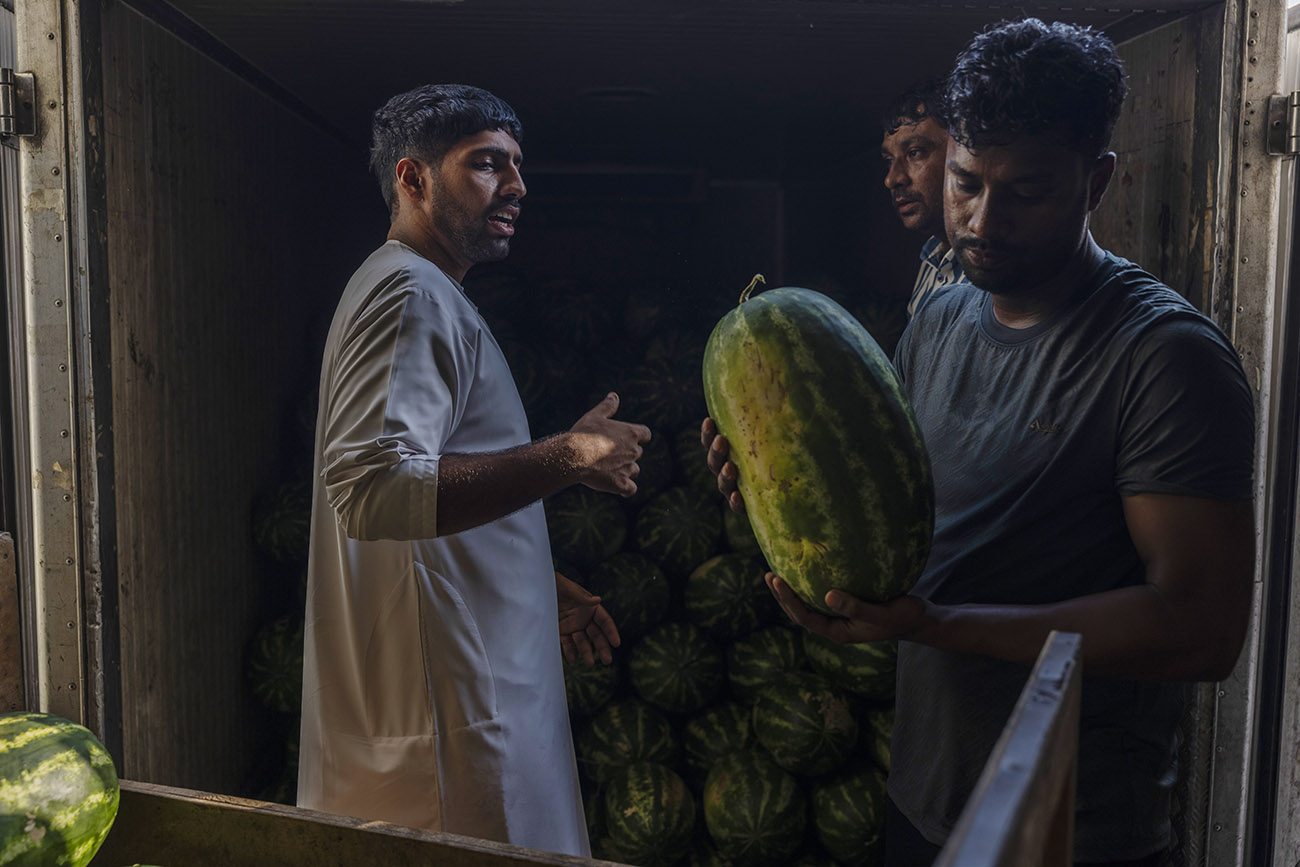
Rashed Aljabri swings a watermelon from the truck to his colleague standing on the floor of Al Aweer, Dubai’s largest fruit and vegetable market. After building up a pyramid-like stack, he slices one in half with a knife and cuts out a scarlet segment from the center.
The origin?
“Iran, Iran, Iran,” Aljabri chants. It is 6 a.m., and pallet trucks loaded with cauliflowers, boxes of tomatoes, bulbous pumpkins, eggplants and broccoli in ice-filled foam boxes whiz around the wholesale market, narrowly avoiding beeping tuk-tuks in near-orchestrated harmony. “Ninety percent of the produce in this market is from Iran,” Aljabri estimates. Containers marked with Tehran addresses reverse into the docking bays, traders unloading trolleys of salad and celery.
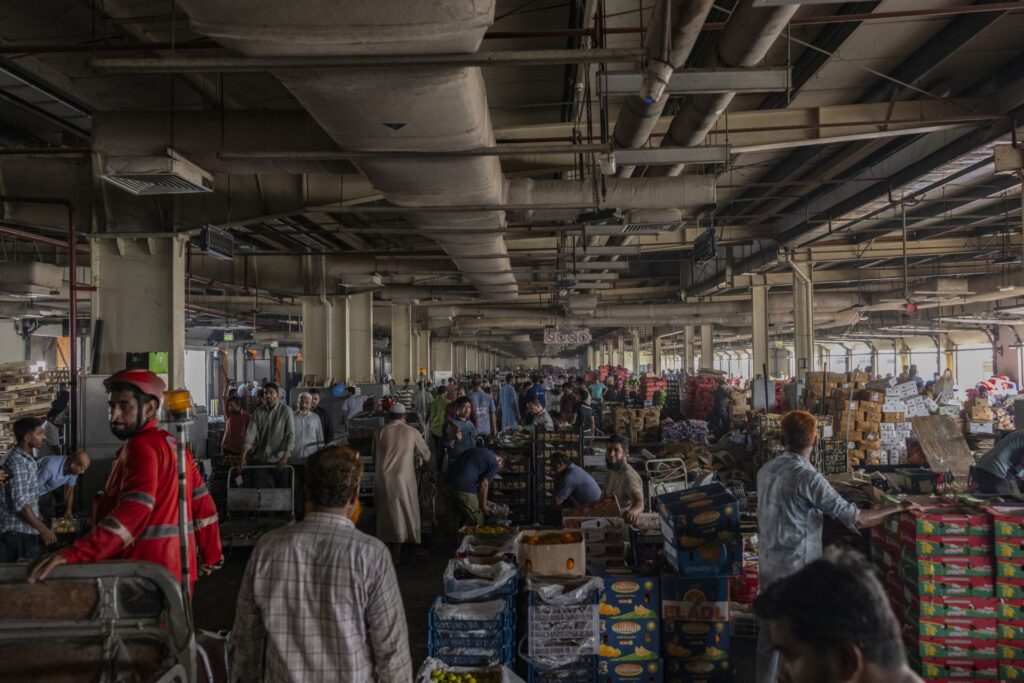
More than six months into the war with Iran, with no end in sight, the United Arab Emirates is once again ramping up pressure on its neighbor across the Gulf, announcing last month that it would halt all trade ties. The move, announced in response to Iranian strikes on Emirati ships, is seen as part of the Trump administration’s strategy of economically strangling Iran. But Iranian watermelons, and much more, are still flowing into Dubai’s markets, feeding its restaurants, supermarkets and hotels, and providing one small example of how difficult it would be to fully separate the two countries’ historically linked economies.
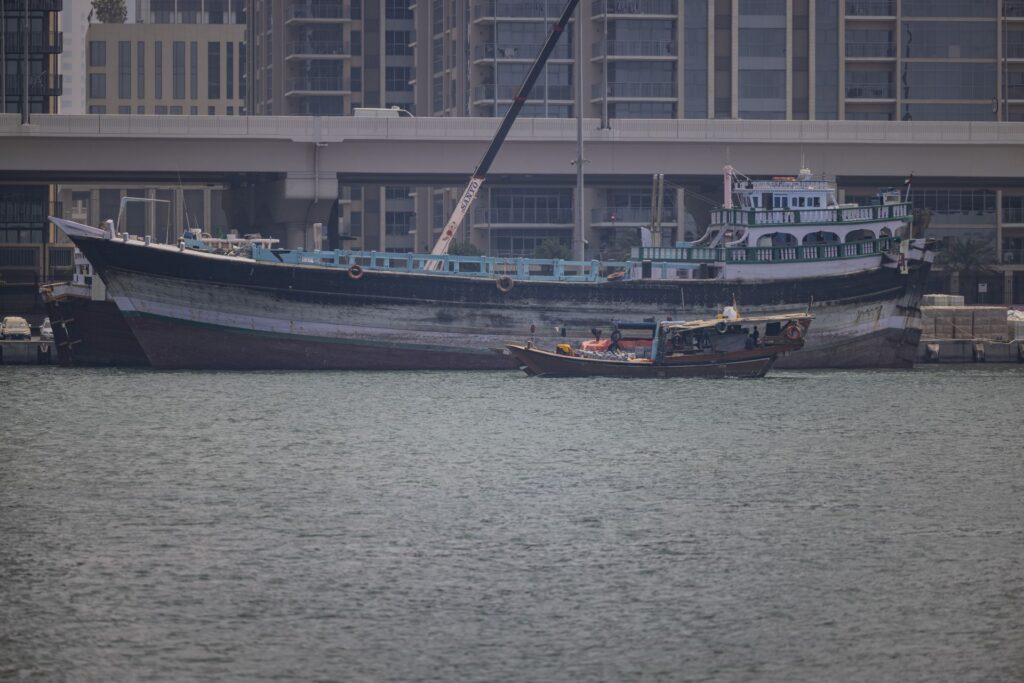
Although the Strait of Hormuz has today become a geopolitical choke point, blocking the flow of oil, fertilizer and global trade, the area has long been a local hub of economic and cultural exchange. For centuries, merchants from Iran and the Arabian Peninsula sailed across the Gulf on wooden dhows, ferrying saffron, pearls, spices and pottery.
Over the years, communities in the ports of Dubai, Bandar Abbas and Bandar Lengeh became a melting pot of Persian and Arabic culture, speaking both languages. Despite the ongoing conflict, this ancient trade is still visible in Dubai. In the old town, impressively large turquoise and white dhows parade the port at Marfa Wharf, cranes loading their cargo, soon ready to sail.
In 1979, the Iranian Revolution sparked a huge influx of wealthy Iranian business owners and educated professionals fleeing the new Islamic Republic. Today the UAE is home to some 560,000 Iranians, the vast majority in Dubai. They own businesses, buy property and employ workers, representing a cornerstone of the economy.
Iranian wealth and trade with Iran were foundational to Dubai’s dizzying growth. The city served as Iran’s gateway to the outside world, a logistics hub to bypass U.S. sanctions. Trade between the UAE and Iran totaled $28 billion in 2024, and the UAE was Iran’s second-largest trading partner after China. Jebel Ali, Dubai’s vast container port, was a conduit for 90% of Iran’s exports before the war.
“Iranians helped build this city,” says Reza Namazi, an Iranian restaurant owner in Dubai.
Iran also feeds it.
In 2024, Iran was the single largest supplier of fruit and vegetables to the UAE. Iran’s fresh produce exports have boomed in recent years, particularly to the UAE, which has become dependent on the trade for its food supplies, importing over a million tons from Iran in 2023, a third of the UAE’s total fruit and vegetable imports.
Iran is perfectly placed to supply the UAE, a desert nation that imports 90% of its food, says Omid Zamani, a researcher in food and agriculture policy and economics at the International Institute for Applied Systems Analysis in Austria. They are geographically close, their trading systems have adapted to sanctions, and Iran has a varied climate that allows for year-round production.
“Iran has very different climatic zones, from the humid Caspian Sea in the north to mountain regions and the warmer south,” says Zamani. “They can keep a constant flow of exports.”
Seeking ways to earn foreign currency, the Iranian state has helped farmers to export more, expanding greenhouse production and access to irrigation and fertilizer. Exports to the UAE were worth more than $387 million in 2022 according to Comtrade, the U.N. database on trade. But the real figure could be much higher since much of the trade is informal, relying on cash payments and intermediaries to bypass sanctions.
Replacing Iran’s vast, cheap and fresh supply of fruit and vegetables will not be easy, especially at a moment when the UAE’s food supplies are under strain due to the closure of the Strait of Hormuz. Food and logistics companies are rerouting supplies via ports in Oman, the southern UAE and overland from Turkey, costing up to four times more in shipping costs, according to traders and supermarket buyers.
“Iran is an important contributor to the UAE’s food system resilience, but not indispensable,” says Zamani. “The market can be compensated by other countries, but with much, much higher prices and probably lower quality.”
As conflict with Iran flares up once again, traders in Al Aweer worry about this prospect.
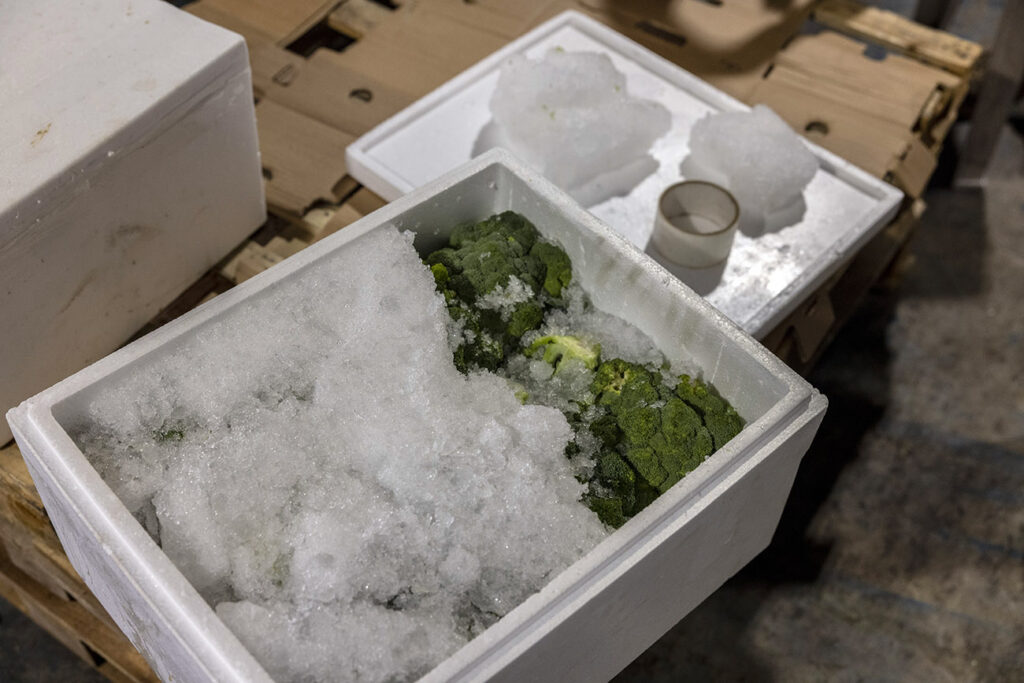
“It’s a big problem if there’s no produce from Iran,” says Sultan Arefin, a trader at the market, opening his cool boxes of broccoli on ice that arrived at Dubai’s Al Hamriya Port from Iran in a container this morning. “Six years ago, Spanish broccoli was 20 dirhams [$5.50] per kilo, but since Iranian broccoli came on the market, it only costs 8 dirhams.”
Arefin says this is what happened in March as Iranian missiles and drones rained down on Dubai’s airspace. While the nation’s defence system largely prevented widespread damage and casualties, 15 people died and 246 were injured. Trade ceased with Iran, and Al Aweer Market was starved of produce for two months.
As tensions eased in May and commerce restarted, a sign of thawing relations and de-escalation between Iran and the UAE, the market got back to business.
Yet after months of detente in the Persian Gulf, on Aug. 18 Iran fired two missiles at UAE ships, sparking a fresh wave of conflict. A day later, Emirati leaders announced a suspension of all trade with Iran. U.S. President Donald Trump piled on, declaring economic warfare on Iran and issuing a public warning on X that any nations supporting Iran through trade and bypassing sanctions would face “tremendous economic consequences.”
This has slowed the flow of fruit and vegetables to the market, but not stopped it.
“Politics and war are always bad for business,” says Hadi Mirzaei, an Iranian exporter based in Karaj City near Tehran. “Shipments to the UAE are not like last month, but business is still going on.”
The UAE is the second-largest market for Iranian fresh produce after Iraq, and its loss would be felt deeply. Mirzaei is already looking to different markets, including Oman — fast becoming a transit point and hub for Iranian goods — Qatar and Russia.
Despite deep ties between the UAE and Iran, Emirati leaders see more rewards in aligning with the U.S. and cutting trade ties with Iran, even if it pushes up the price of food, says Alex Vatanka, senior fellow at the Middle East Institute in Washington, D.C.
“The UAE is clearly on the U.S.-Israeli bandwagon,” Vatanka says. “They are much more interested in getting what the Americans have in terms of AI tech than agricultural goods from Iran.”
But the degree of separation between the two Gulf countries is part of an ongoing internal debate between the two main players in Emirati politics, Abu Dhabi and Dubai. Dubai, a mecca for Iranian business for centuries, stands to lose more from an isolated Iran, whereas Abu Dhabi, with its vast oil revenue, can do without Iran.
Vatanka says it’s only a matter of time before the UAE goes further. “[The UAE] will genuinely try and support the United States — they probably have more reason to do so than ever before having been struck thousands of times in the last six months,” he explains. But he adds that parting ways with Iran will take time because it would mean undoing decades of relations.
“Dubai will hurt big time in the short term,” Vatanka says.
Meanwhile, many ordinary businesses in Dubai are already hurting, facing higher prices for supplies. At Khoori Special Kabab, an Iranian restaurant by Al Hamriya Port, the side dish of cucumber, tomato and arugula that accompanies the smoky kebab and wood-oven-baked flatbread is from Al Aweer Market. Sadif Ranjbar, who works with his father Kavoos, says the disruptions to food supplies have hit them hard.
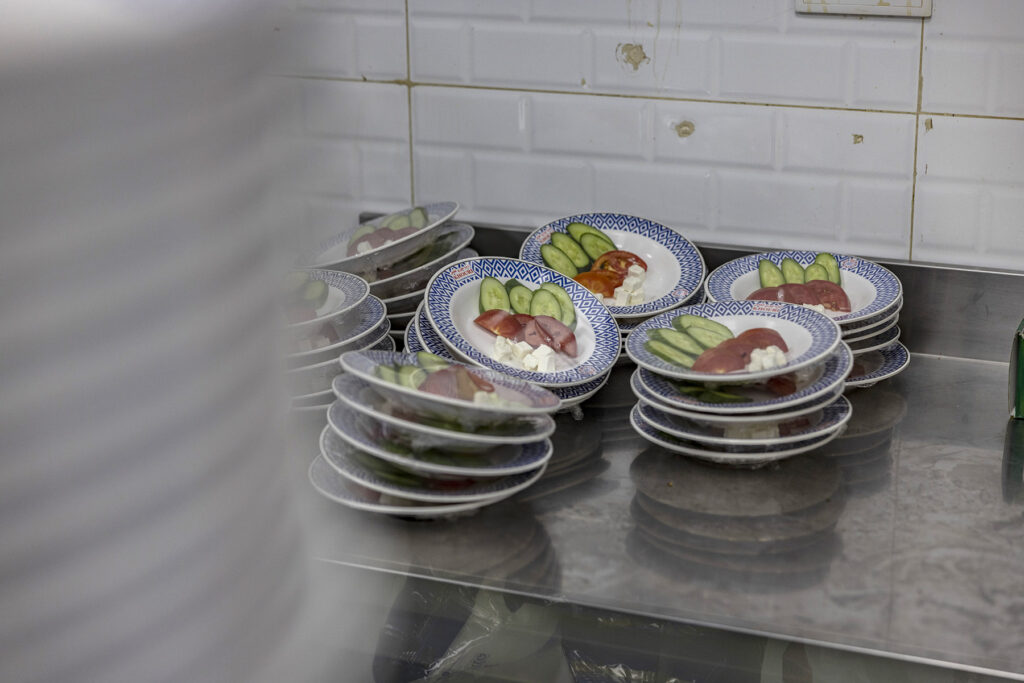
“We haven’t increased prices for 20 years until three months ago,” Ranjbar says. Restaurants and the food industry have been hit hard, with food prices increasing by 7.81% in July according to UAE government data, and tourism expenditure down by half compared to last year according to Redseer Strategy Consultants, a market research company.
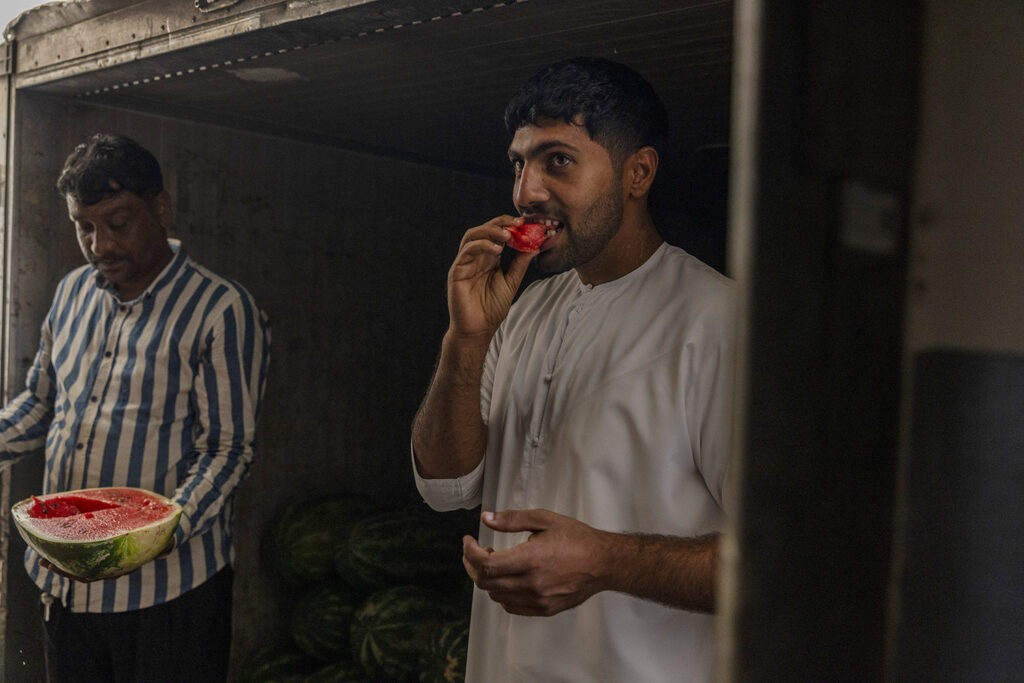
Back at Al Aweer, the sun rises over the industrial park on Dubai’s outskirts. At 6:30 a.m., the market has already finished for the day, the floor strewn with empty cardboard trays and plastic wrapping as if locusts had torn through. Although war may feel far away, Aljabri worries that the ongoing attacks will make his watermelons more expensive or, worse, stop them arriving at all.
“I can send money, and the shipment can disappear if there is a missile.”
Become a member today to receive access to all our paywalled essays and the best of New Lines delivered to your inbox through our newsletters.