

Hosted by Faisal Al Yafai
Featuring Luke Harding
Produced by Finbar Anderson
Listen to and follow The Lede
Apple Podcasts | Spotify | Youtube | Podbean
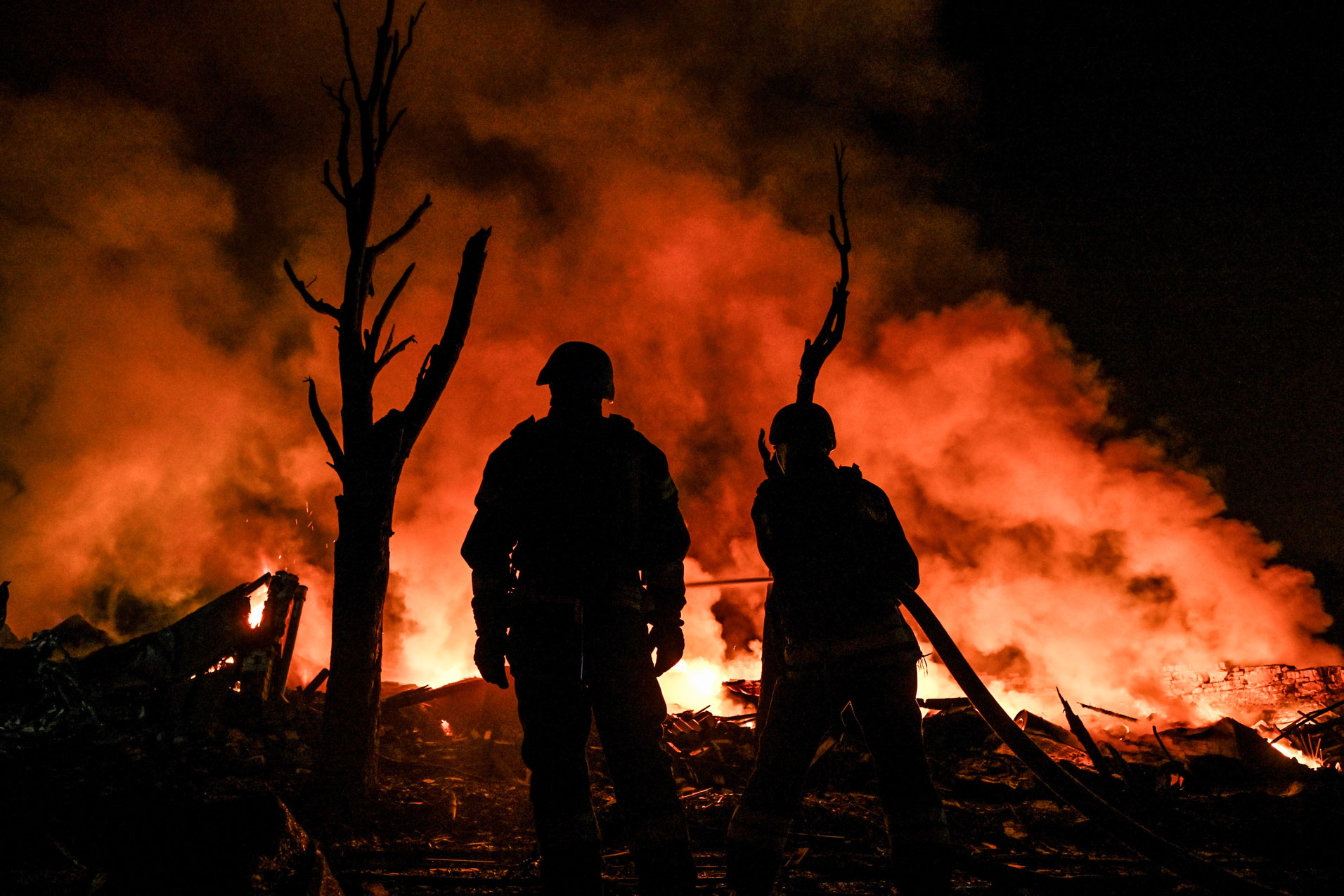
That European politicians refuse to admit they are at war with Russia, Luke Harding tells Faisal Al Yafai on The Lede, is “ultimately a failure of storytelling. There’s no one who is fully recognizing reality and telling the story of now. And the story of now is that Russia is a fascist power, which has launched the biggest war in Europe since 1945, is chewing up Europe’s borders and trying to make Ukraine disappear.”
More than four years after his last appearance on the podcast, Harding joins Al Yafai to discuss how the war in Ukraine marks a global inflection point, as set out in his new book, “Betrayal: Trump, Putin and the New Age of Conquest.”
“The story of now is that Russia is a fascist power, which has launched the biggest war in Europe since 1945, is chewing up Europe’s borders and trying to make Ukraine disappear.”
That inflection point, Harding clarifies, has been years in the making, and has not been caused solely by the two leaders named in his subtitle. “Much as I dislike Trump, we can’t lay it all at his door,” Harding says. “If the U.S. can stand as a virtuous power that respects rights and borders, and then invade Iraq on the most dubious of pretexts, what’s to stop the Russians doing the same thing?”
Nonetheless, Harding says that the betrayal referenced in his title is the responsibility of the sitting American president. “It’s a breach of what America was, which was an Enlightenment-created republic based on values, based on ideas,” Harding says. “Very often it fell short, of course, but rhetorically, among both Republicans and Democrats, it was a shining city on a hill. All of that is gone — it’s become greedy and predatory, unreliable and shabby under Trump.”
From the perspective of Ukraine, despite the arduous years-long grind of the war to date, a route to victory exists. “There’s a recognition in Ukraine that they don’t have the infantry to push deeply entrenched Russian positions out of occupied territory,” Harding says. “But what they can do, with a sort of thousand pinpricks, is ruin Russia’s economic base. Russia’s strategic depth, which for a long time has been a colossal advantage, is now a weakness.”
Questioned by Al Yafai on why he continues to return to Ukraine, Harding says that his motivation is to “bring the reader back to ground level — to civilians on the bus who are suddenly bombed and maimed. And to explain that but for a fluke of geography or DNA, that could be us.”