

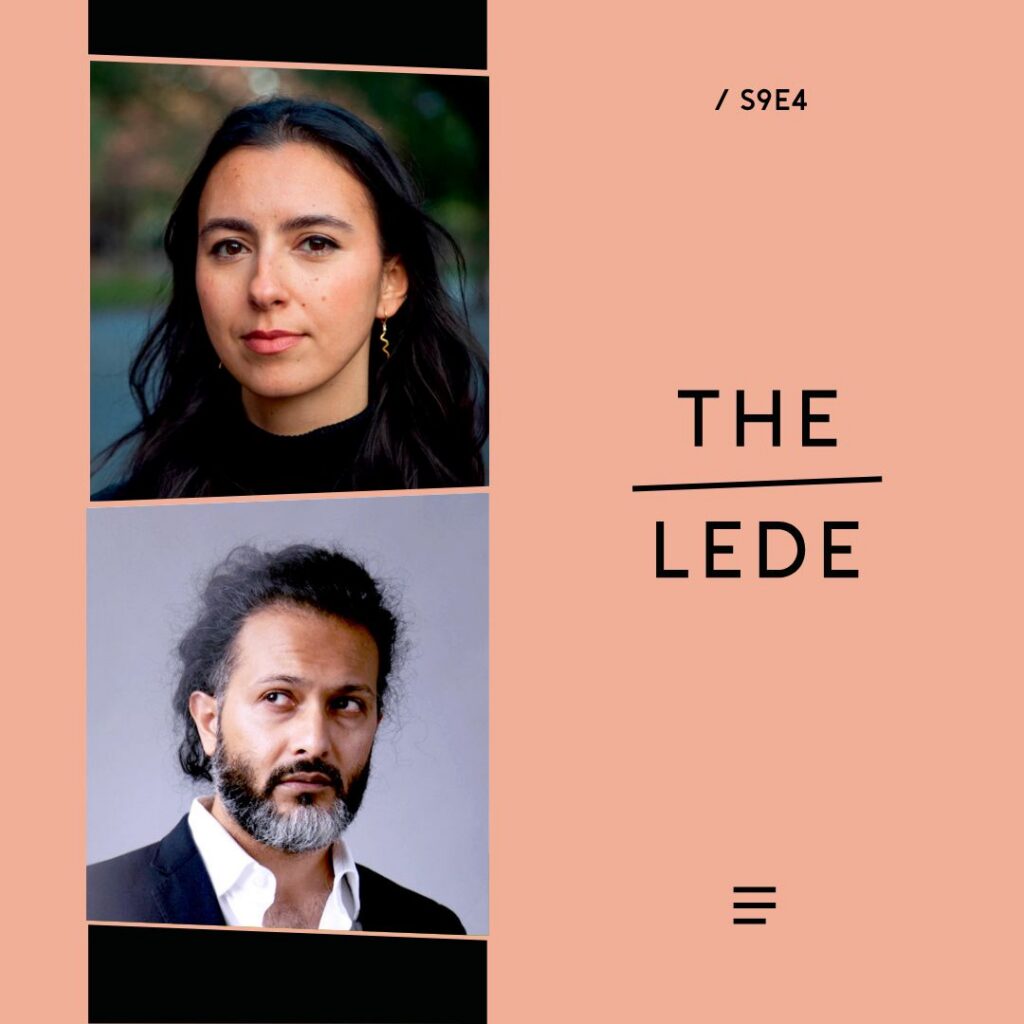
Hosted by Faisal Al Yafai
Featuring Nilo Tabrizy
Produced by Finbar Anderson
Listen to and follow The Lede
Apple Podcasts | Spotify | Youtube | Podbean
Nilo Tabrizy does not believe that a journalist should be completely objective. “When I’ve read other books about certain topics that are reporter-led, I’m very curious about the person writing: What are their intentions, what is their positionality?” she tells New Lines’ Faisal Al Yafai on The Lede.
She was therefore up-front about her own views, as an Iranian in exile covering her own country, when writing her new book about Iran’s women-led uprisings, “For the Sun After Long Nights,” alongside co-author Fatemeh Jamalpour. “I wanted people to know where we came from and why we cover the story,” she says. “What I was trying to show in the book is that I’m deeply attached to Iran, and that sensitivity and that level of humanity only makes me a better reporter, because I can have more genuine conversations and interactions with people.”
“The Iranian protesters want support, and how do you support them without making it more dangerous for them?”
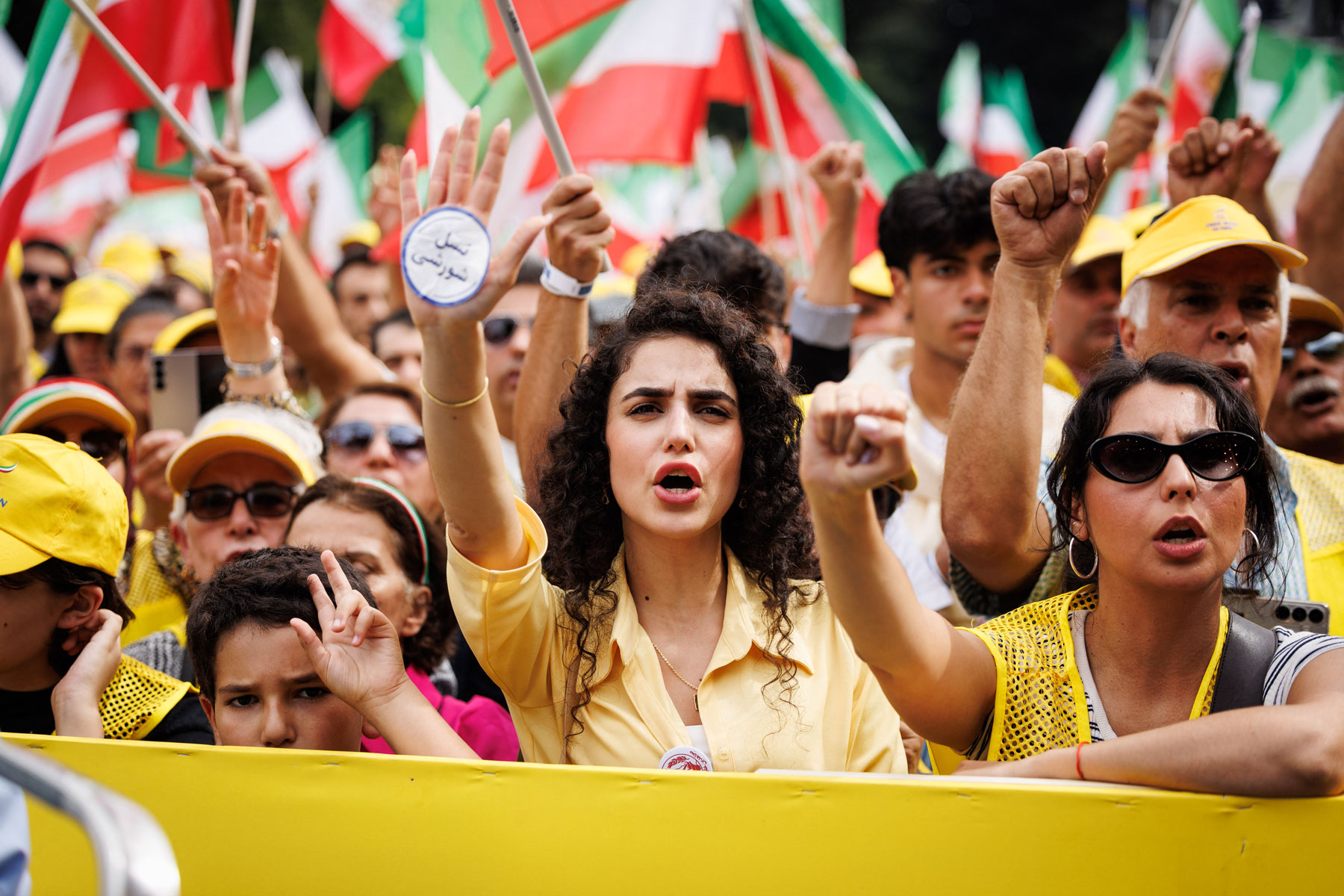
Despite her book focusing on the uprisings that began in September 2022 after the death in police custody of Mahsa Jina Amini, that series of protests has much in common with the current anti-government uprisings in Iran. “The Woman, Life, Freedom movement grew out of people standing in allyship with Jina and demanding accountability for her killing,” Tabrizy says. “But the undercurrent for that was a call for the downfall of the system and to voice dissatisfaction with the corruption and mismanagement of daily life. That is absolutely continuing in this current uprising.”
Tabrizy argues that Western support for the protesters can be a double-edged sword, as government forces will typically accuse protesters of being funded by the West — particularly with a U.S. armada gathering off Iran’s coast. “It’s a really difficult position to be in,” she says. “The Iranian protesters want support, and how do you support them without making it more dangerous for them?”
One element that has distinguished the current protests from the Woman, Life, Freedom movement that was the main subject of Tabrizy’s book is an increase in vocal support for Reza Pahlavi, son of the former Iranian shah who was deposed in the Iranian Revolution. Tabrizy contends that the reason for Pahlavi’s dominance of the conversation is the fact that so many other potential opposition figureheads have been imprisoned.
As an exile, Tabrizy acknowledges that being asked to work on her home country, for which she continues to have so much affection, can be lonely. “Whenever there’s work on Iran, I feel very isolated, and so I have to think about how I can do this work without that deep sense of dread and isolation,” she says. “I knew if I was going to get involved, I needed to close the door of returning to Iran for myself and just move forward.”