


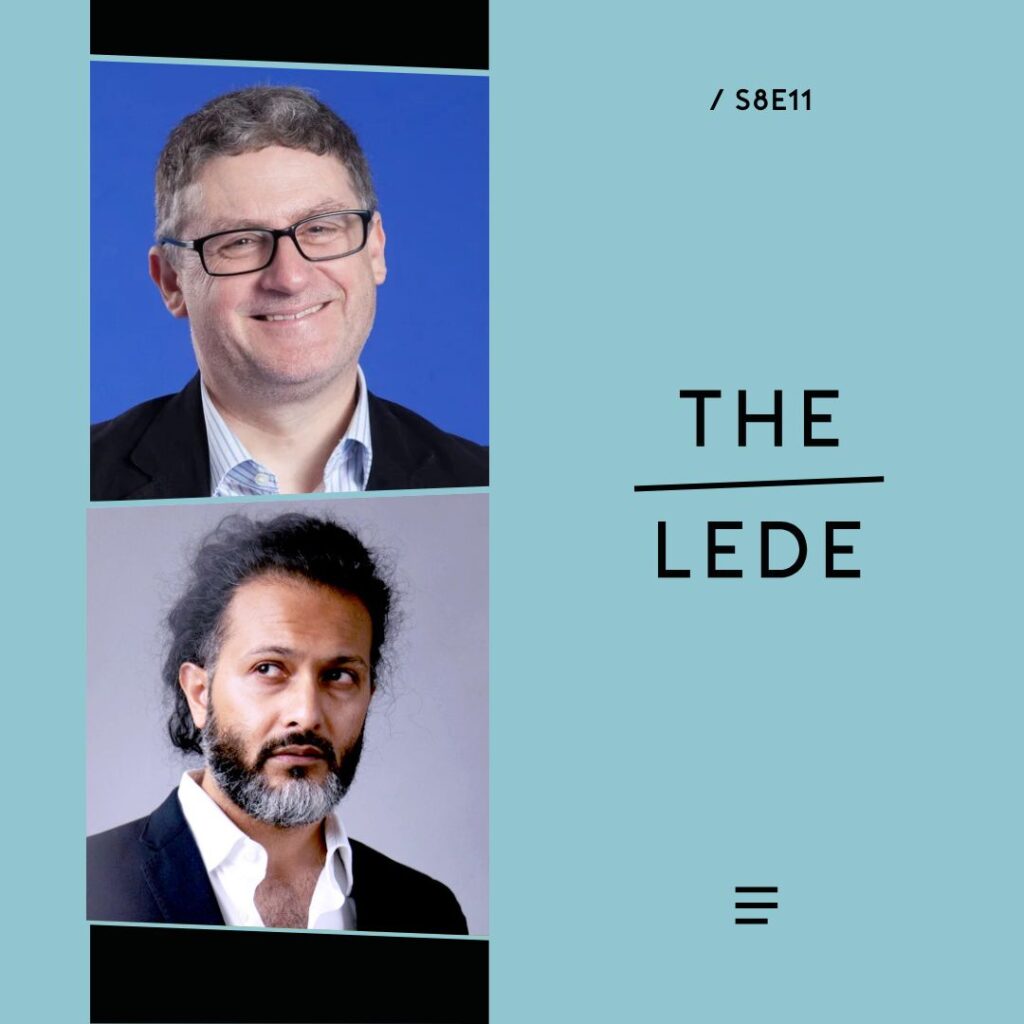
Hosted by Faisal Al Yafai
Featuring Mark Galeotti
Produced by Finbar Anderson
Listen to and follow The Lede
Apple Podcasts | Spotify | Youtube | Podbean
Mark Galeotti is quick to reassure New Lines’ Faisal Al Yafai that he’s not an “organized crime fanboy.”
“I’m fascinated by it, but on the whole these are ghastly people — especially from the ones I’ve met,” he tells Al Yafai on The Lede.
Galeotti’s fascination led to his new book, “Homo Criminalis: How Crime Organizes the World.” The book is a sweeping history of how crime has been central to, and indeed continues to shape, the building of human society.
“These two worlds are directly interconnected much more frequently than we are often comfortable admitting.”
One of Galeotti’s key takeaways from his research is that the divide between the “legitimate” world and criminal society is much more hazy than we might like to think. “These two worlds, because they’re made up of human beings with the same impulses and the same expectations, are directly interconnected much more frequently than we are often comfortable admitting,” Galeotti says.
Furthermore, many of the origin stories of modern societies involve some level of injustice, he points out. “The way societies emerged — we can’t call it organized crime because crime is defined by laws and by definition the people who are creating it are writing the laws — but when it comes down to it, the initial impetus for state-building is actually people who had the capacity to impose their will, largely by force, on others.”
Galeotti’s interest in state-linked criminality stems from his interest in Russia, which has offered many such stories that he recounts to Al Yafai, from schemes by the Cali cartels to buy Russian submarines to the infiltration of the British economy by Russian oligarchs.
Galeotti and Al Yafai broaden their discussion to the Russia-Ukraine conflict, a topic on which Galeotti has significant expertise thanks to his background in studying Russia and authorship of books such as “We Need to Talk About Putin” and “The Weaponization of Everything.”
Galeotti suggests that U.S. President Donald Trump’s 28-point peace plan for the conflict, while flawed, could still offer a starting point for a future peace deal, and suggests that commentators need to reframe what a Ukrainian victory in the conflict would look like.
“What does victory for Ukraine mean? Frankly, it means they manage to hold the line and don’t lose any more territory, rather than chase the Russians out of every square centimeter of occupied territory. But there’s very little willingness to actually engage with what happens behind the words,” Galeotti says.