


On March 17, 2003, we were sent home from school in Kuwait with a simple instruction: Until further notice, stay home. At the time, there was no such thing as remote learning. Schools simply closed, and the country braced for what everyone sensed was coming. In the days before the shutdown, our teachers had us practice emergency drills for missile attacks. As teenagers, we followed instructions that felt surreal: where to take cover, how to react if sirens blared, what to do if the unthinkable happened. Kuwait had lived through war before, and the memory lingered in every precaution.
That day, then-U.S. President George W. Bush gave an ultimatum to Saddam Hussein to leave Iraq within 48 hours. After two days, the U.S.-led war called “Operation Iraqi Freedom” began next door. Sirens echoed throughout Kuwait City within hours of the first U.S. strikes on Baghdad. Over the next few days, more than a dozen missiles were launched toward Kuwait. Some targeted U.S. and British troop-staging areas, others were aimed closer to Kuwait City.
The fear was not only of missiles but of what they might carry. At the time, the possibility of chemical or biological attacks hung heavy over the region. In our house, like many others, we had a designated safe room. Windows were sealed with tape. Food and water were stockpiled. Gas masks were in short supply, so my mother sat at home sewing masks by hand for the family. She had been trained to do this during emergency drills at the school where she worked as a teacher. Western governments urged their citizens to evacuate, and many did. But my family, who already had bitter personal memories of the Iraqi invasion in August 1990, chose to stay in Kuwait, while many of our family friends left on the last buses crossing into Saudi Arabia.
Many of us living in the Gulf assumed those memories would remain in the past, a chapter in our childhood. And yet, more than two decades later, history has repeated itself. In Doha, where I am currently based, Feb. 28 began like any other Saturday. But then came the news of U.S.-Israeli strikes on Iran, and our cell phones lit up with public emergency warnings. When I first heard the sirens on my phone, I paused for a moment. A strange sense of deja vu washed over me. Just like in March 2003, I instinctively walked to the balcony and looked up at the sky.
Amid phone alerts and distant sounds of interceptions, news outlets reported that Iran had launched strikes on all six member states of the Gulf Cooperation Council (GCC). I quickly realized that this was quite different from Tehran’s June 2025 missile attack on Al Udeid Air Base in Qatar, which came in retaliation for America’s participation in an Israeli bombing campaign against Iran. Like Saddam’s missiles on Kuwait years earlier, Iranian missiles and drones targeting the GCC states have not been confined to U.S. military bases alone. Civilian sites, including airports and hotels, as well as major oil and gas infrastructure across Gulf states, have also been targeted. The United Arab Emirates has received the largest number of Iranian strikes, followed by Kuwait, Bahrain, Qatar, Saudi Arabia and Oman. In several GCC states, these attacks have already resulted in casualties.
The days since the war began have passed with alerts repeatedly appearing on my phone: “The security threat level is elevated; everyone is required to remain indoors.” A few minutes later come the distant sounds of interceptions, followed by another notification: “The security threat has been eliminated, and the situation has returned to normal.” With every strike hitting Qatar, I immediately called my family in Kuwait to make sure everything was fine with them over there. They told me to remember to keep the windows slightly open to reduce the pressure from possible nearby blasts. “We’ve been through this before, and we can get through it again,” they said. The last time we were forced to stay indoors was during Saddam’s attacks on Kuwait. Perhaps it is not surprising to see that Kuwait has emerged as the voice of the Gulf in this war, sharing national songs and TV ads that reflect its pride and experiences from the past, as well as offering support and solidarity to its GCC neighbors.
For those who grew up in the Gulf, the unfolding events have recalled memories of previous conflicts. The actors are different and, for some of us, so are the cities, but the reality is the same: The Gulf has found itself in the midst of a war it neither initiated nor wanted to be part of. President Donald Trump described the Iranian attacks on the GCC states as “the biggest surprise.” This may be true in Washington, where there still appears to be no clear roadmap for what the attacks were meant to achieve or how long they might last. For the GCC states, however, the Iranian attacks were less a surprise than a litmus test. They had invested considerable diplomatic and political capital in containing the conflict, trusting that their leverage — and their recent reconciliation with Iran — would prevent the situation from reaching this point.
To be sure, Iran’s attacks are reshaping the strategic calculus of the Gulf monarchies regarding the reliability of U.S. security commitments in the region, and the need to diversify their alliances and strengthen security frameworks among themselves. At the same time, however, these attacks are now reshaping perceptions of Iran: a direct result of its behavior toward the GCC states and the threat it poses to the region’s societies.
In response to Iranian strikes, the GCC states have banded together, demonstrating a sense of Gulf solidarity. They have made it clear that Iranian attacks crossed a red line and that they reserve the right to respond. From the first hours of the war until today, the GCC states have shown an impressive resilience in intercepting missiles and drones in daily incidents. These defensive efforts have helped maintain a sense of confidence among residents of the Gulf. The decision by the GCC states not to retaliate against Iran’s continuous attacks has also been met with broad popular support and has resulted in widespread solidarity with the governments of the region.
Although the Gulf states have been effectively managing to intercept the intense wave of Iranian attacks, there is another aspect of this war that goes beyond material damage — especially in the economic, political and security spheres — and is perhaps less measurable: its social and psychological impact. Repeated exposure to external threats does more than shape security policy; it forges a collective memory that influences how entire societies perceive threats, trust neighbors and prepare for future crises. The Iranian attacks will leave a deep psychological imprint on the societies of the Gulf, including citizens and residents. Although Iran has said the attacks are aimed at U.S. targets and has apologized to the Gulf states, for people living under the threat of Iranian missiles and drones, this explanation is unacceptable. These attacks are reaching the very places where everyday life happens — cities, homes and neighborhoods where we live and work.
Geography does not change, and Iran will remain a neighbor to the Gulf states. For Iran, these attacks will be an episode in its history; however, their psychological and political significance for the GCC states will be a defining moment in shaping collective societal perceptions of security. A generation in the Gulf will not easily forget what has occurred. Just as Iraq has long been viewed in Kuwait and other GCC states through the lens of its aggression, Iran may increasingly occupy a similar place in the regional imagination and collective memory. For many who are now witnessing these attacks in the Gulf, Iran may come to be seen primarily as a constant source of tension, suspicion and caution for decades to come. Worst is that Iranian behavior risks creating a lasting psychological distance between the societies on both sides of the Gulf, because trust, once broken, requires time to rebuild.
What causes further frustration among those living through these attacks is that they have occurred during the holy month of Ramadan, a time traditionally marked in the Gulf with late-night gatherings known as “ghabga” and evening taraweeh prayers. Under the shadow of the war, for the first time, social gatherings were limited; taraweeh prayers, initially suspended, were later resumed but shortened, and only at a select number of mosques; Ramadan programs and Garangao (called Gargeean in Kuwait) children’s celebrations were canceled. These restrictions had a significant psychological impact on people, particularly those who focus on Ramadan rituals and family gatherings.
Many of us were unable to visit our families. For example, my flight from Doha to Kuwait in mid-Ramadan to celebrate Garangao with my family was canceled, and the airport where I have always landed since my childhood was targeted. The war has completely changed the feeling of Ramadan and Eid al-Fitr, as people may not even be able to travel to celebrate the holiday with their families. Since the onset of the attacks, most places have shifted to remote working, and schools are teaching online, recalling the atmosphere of the COVID-19 pandemic. Even though there are no formal restrictions on going out to malls and cafes, or visiting family, many people prefer to stay at home — partly because of Ramadan, but also because they are following the government’s guidance. During this period, the governments of the Gulf have consistently informed the public about developments to help them better understand the situation and remain calm. They have also urged the public not to film or share footage of strikes and interceptions and to only rely on official sources.
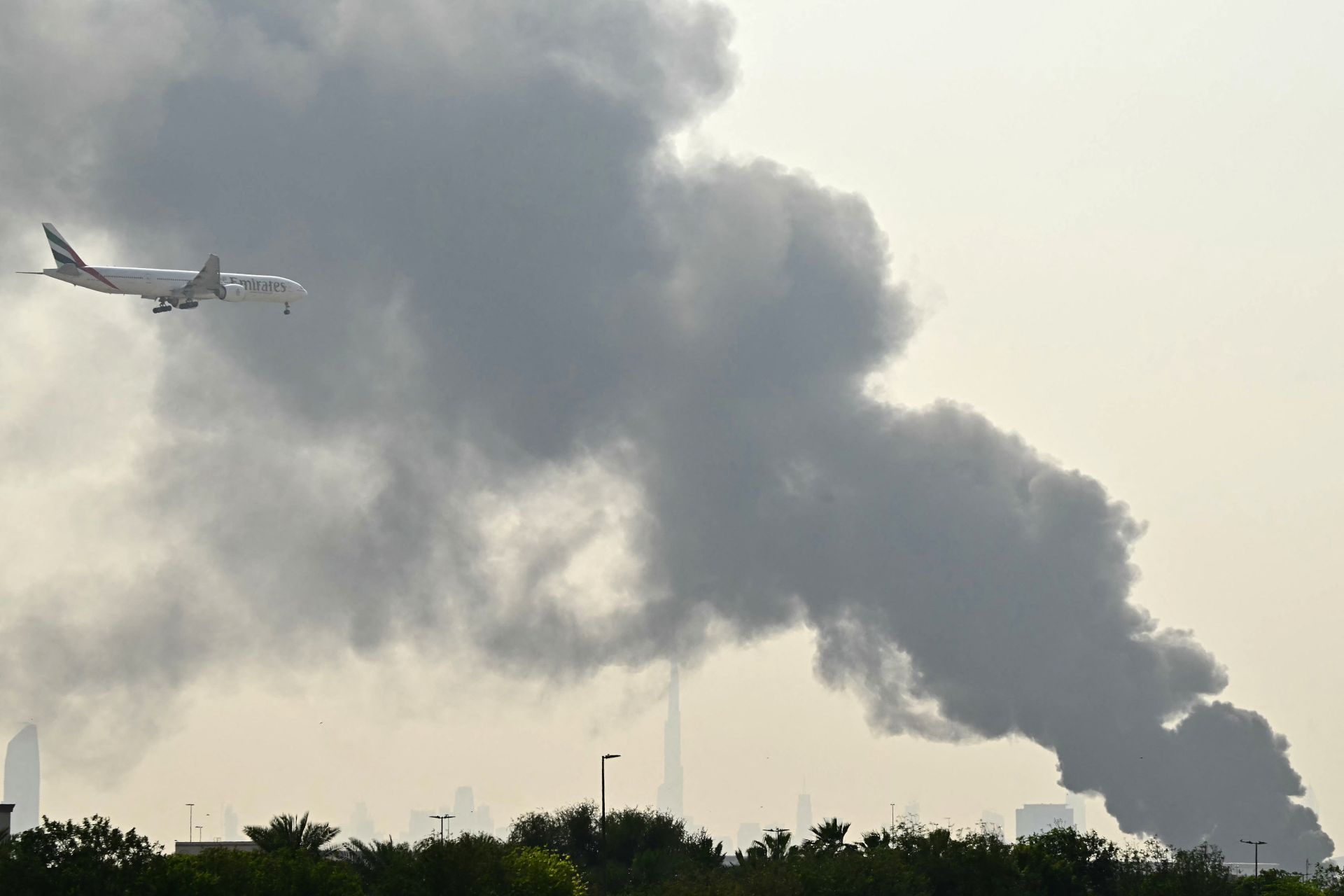
In the midst of these attacks, there were several headlines in international news outlets and on social media that portrayed the Gulf — particularly Dubai — as having “failed,” arguing that these countries can no longer be regarded as a model of economic prosperity and stability. Iranian strikes hit a luxury hotel on Dubai’s Palm Jumeirah, residential areas in Manama and the international airport in Kuwait. The images of those attacks carry consequences far beyond such material damage: They target the reputation that these states have strived to build for years. There are even narratives circulating that the Gulf states will suffer if the Strait of Hormuz remains closed, framing the attacks on the GCC states with a degree of detachment or implicit approval. Some social media accounts drew comparisons with the experiences of people in Iraq, Syria and Palestine, claiming that Gulf states deserve what is happening to them now. These narratives deeply affect societal perceptions in the Gulf, and some of the discourse exhibits a selective empathy for the victims of war’s violence.
These narratives are also causing a growing sense of frustration, not only within Gulf societies, but also among their political elites, who note the silence (or neutrality) of some Arab states toward developments in the region. For example, former Qatari Prime Minister Sheikh Hamad bin Jassim Al Thani criticized this stance in a post on X, writing: “Surprisingly, we have not heard a strong position from several Arab countries regarding the challenges facing the GCC states. These countries have chosen to turn a blind eye and remain neutral, prioritizing their own interests.” In a similar vein, Saudi journalist Abdulrahman al-Rashed and Amr Moussa of Egypt, a former secretary-general of the Arab League, sparked a public debate on X after Moussa made the argument that the threats targeting the Gulf states were peripheral to the broader geopolitics of the region, a stance that drew criticism from many Gulf commentators.
Al-Rashed’s criticisms of Moussa were echoed by several other journalists and intellectuals (many from the Gulf) who found fault with some Arab states for refraining from strongly condemning Iran’s attacks against the GCC states. During this period, there were several commentaries noting that this silence resembled the silence of Arab nations who turned their back on Kuwait during Iraq’s invasion. I have heard from several Gulf citizens that their countries need to evaluate their policies toward these states when the war is over. Having followed the Gulf for decades, I have observed that every major crisis in the region — including the invasion and occupation of Kuwait in 1990 and 1991 and the 2017-2021 Gulf crisis — has been a turning point in state-society relations, which includes both citizens and residents. This war is likely to be no different.
Today, the Gulf model is being tested, as several major events have been canceled, and many people are currently reluctant to spend or invest. Some considered transferring their savings to banks in their home countries, while others immediately left. But this is not the first time the Gulf model has been tested; it has already faced major crises, including the financial crisis, the Arab uprisings and the pandemic. The lessons these countries learned from past crises explain why they have demonstrated effective crisis management during Iran’s ongoing attacks.
As part of these crisis management policies, some GCC states, such as Qatar and the UAE, provided free accommodation and extension of visas for tourists stranded by the war. They have refunded canceled tickets, including mine, and have been flexible in accommodating any losses resulting from the war. For example, the UAE has indicated that it will allow expatriates to spend more time abroad without losing their lucrative tax status.
For those — mostly tourists — who wanted to leave, the GCC states have effectively managed their evacuation through either the limited flights operated by airlines or through land routes via Saudi Arabia or Oman. Last week, a friend left on one of the few evacuation flights from Doha. He had to wait for two hours on the plane before it finally took off. Another friend had to leave by car through Saudi Arabia and mentioned the long lines at the border checks. Both left safely, yet without knowing when they might return. Most residents, however, including myself, have chosen to stay in what they consider their “second home,” where they have strong personal and professional bonds. Many express their confidence in the way the governments are managing the crisis.
Given the rapid spread of disinformation, perhaps the bright side of this war was the increasing visibility of local scholars, analysts and practitioners who have emerged as prominent voices from within the region, offering perspectives that challenge the narratives that have long shaped global perceptions of the Gulf. The GCC states have invested heavily in developing their human capital for decades, and that investment has become evident. Gulf societies are often described as reserved, but many citizens have used this moment to articulate their countries’ positions and, in some cases, directly counter disinformation on TV shows and social media platforms. In doing so, they provide an informal yet meaningful form of societal support for the state. This is a challenging task, especially while under constant pressure.
On the day the attacks began, I received a call from a journalist working outside the Gulf. She said, “You’re living through historic times — it’s time to write about this experience, perhaps a book.” I replied, “It is challenging to gather your thoughts when you are living through a situation firsthand.” I, like all the friends I talk to in other GCC states, do not feel directly endangered by missiles or drones, yet we experience mental fatigue as we try to carry on with our daily lives while knowing that the situation is far from normal.
For those in Kuwait, or for people like me who once lived there, the resemblance of the situation to years past has made it feel exhausting to go through it again, yet it has also revealed a certain resilience. There is a belief among both citizens and residents that, once the war ends, the Gulf states will recover from both the material damage and the broader economic impacts of the attacks. Many argue that Dubai, Abu Dhabi or Qatar could experience the story of Kuwait, where the invasion trauma severely set back decades of progress and development. Having grown up in Kuwait following the invasion, I do not see a similar scenario unfolding. Unlike Kuwait in the early 1990s, the GCC states are not dependent on a single sector, and other structural conditions are not the same. To suggest that they will repeat Kuwait’s experience underestimates their long-term financial, technological and infrastructural planning, investments and vision, which are able to absorb and respond to future shocks.
Over the years in the region, I have seen how the Gulf states have repeatedly demonstrated resilience in the face of crises, taken lessons from them, and emerged stronger than before. As the proverb says, past actions are the best guarantee of future actions. There is a strong sense of belief here that Gulf states are likely to accelerate their efforts in line with their national visions, but certainly with significant shifts in their strategies, priorities and perceptions. The Gulf has never been a “crisis-free” region; it has always been in a complex strategic environment shaped by major events, including the 1980-88 Iran-Iraq war, followed by Kuwait’s invasion in 1990-91 and the U.S. invasion of Iraq in 2003.
What may prove different this time is how the experience reshapes perceptions — both among Gulf political elites and within the region’s societies. Even if the war were to end tomorrow, it has, in many ways, already had strong and lasting effects in the GCC states. Just as Saddam’s invasion became woven into Kuwait’s DNA, this war is likely to shape the GCC states’ future relations with Iran, the U.S. and other Arab states, and even relations among themselves. Moreover, it has deeply affected the perceptions of the people experiencing those attacks, both citizens and residents, and will leave an enduring open wound in their collective memory.
Become a member today to receive access to all our paywalled essays and the best of New Lines delivered to your inbox through our newsletters.