


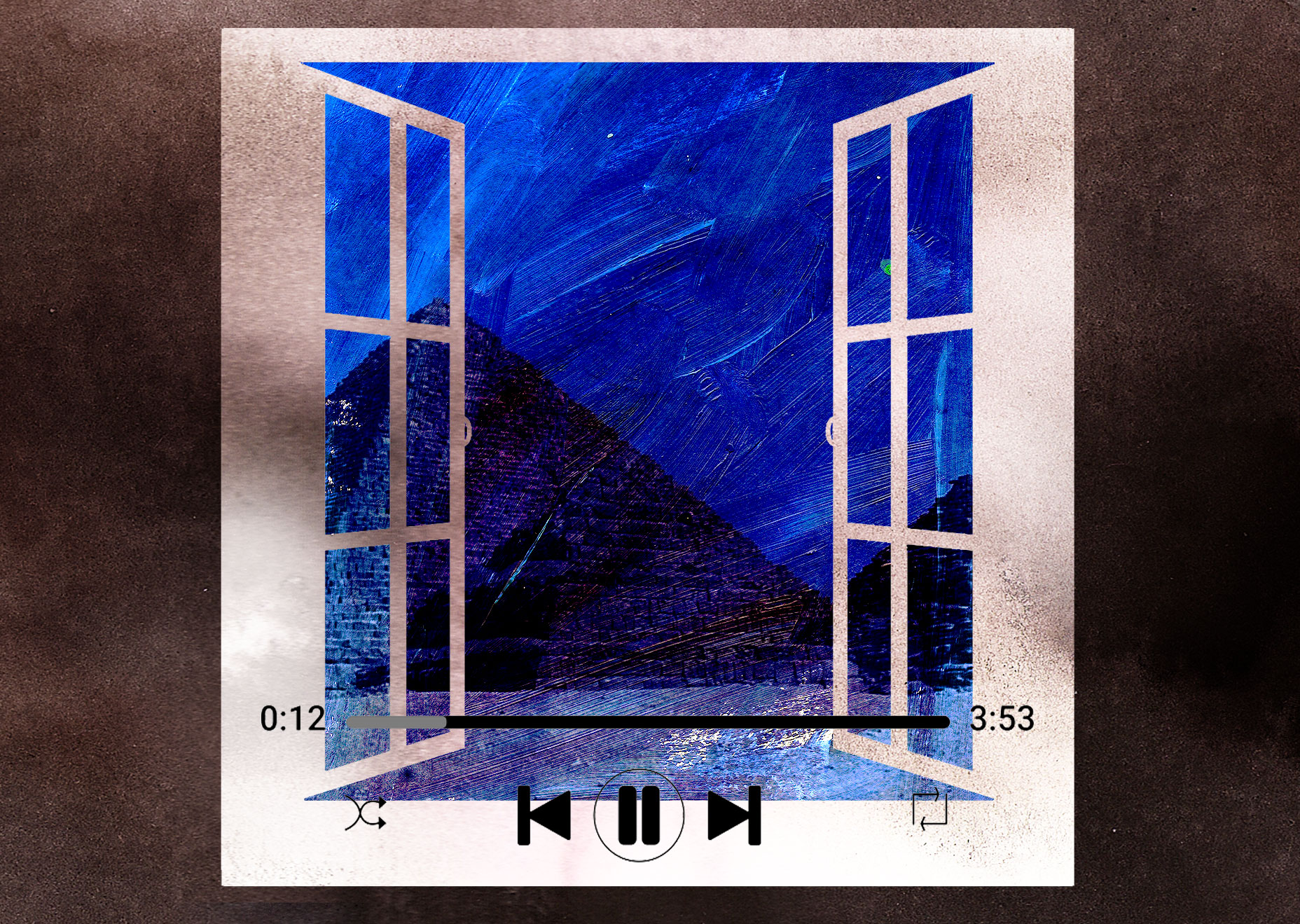
Passant Soliman was an Egyptian blogger, model, law school graduate and mother of two girls. Last week, she broadcast a Facebook livestream in which she seemed visibly distressed, speaking at length about the pressures that had come to define her: a decade-long divorce battle with her husband, who had left the country and withdrawn all financial support, and an ongoing child custody dispute. Soliman sometimes seemed composed and even resilient. At other times, she broke down and spoke about how the injustices had left her exhausted. The stream went on for nearly an hour before she ended her life as hundreds watched on.
In a place where suicide is almost always shrouded in denial and moral condemnation (across all religious communities), Soliman’s death reverberated with a different tone. A wave of public sympathy swept across social media and TV commentary, and even found its way into statements from public officials. Some online commentators invoked mercy and forgiveness, terms that, though common in mourning, are typically withheld in cases of suicide due to religious and social stigma. On X, one user posted: “May God have mercy on her, forgive her and make her dwell in the spacious gardens of Paradise,” alongside a video purportedly showing Soliman’s body covered in a black shroud on the street below, three large dark spots staining the cement next to it. A yellow ambulance can be seen close by, its back doors open.
This was not the first time she had narrated her suffering in public. Before Soliman took her own life, she spoke about pressures that had accumulated over years: a failed marriage, a stalled divorce, financial strain, custody disputes, the burden of raising children alone with limited support. Years earlier, Soliman had appeared on popular TV programs, like a 2020 episode of Lamis Hadidi’s “Cairo Now” and a 2021 episode of “Tea with Yasmine El Khatib,” where she detailed the same marital disputes, legal limbo and financial pressures. By her own account, those struggles had already stretched on for years at that point, so by the time she had reached the brink in that final broadcast, her crisis had been unfolding for about a decade.
But Soliman’s social media feeds are also filled with images of a woman who loved fashion, who liked to lip-synch to trendy songs and to sport different wigs. She was a woman raising two exuberant young girls whom she showered with loving affection. The last photo on her Instagram account shows her outstretched hand holding a Red Bull, along with two small ones holding a juice box and a chocolate milk box on either side of her. There’s a tray full of snacks on the table below and, in the background, Macaulay Culkin’s smirking face from one of the “Home Alone” films. Soliman had stamped the words “Happy New Year” on the post.
In Egypt, as elsewhere, streaming has become a normalized extension of social media, propelled by the founding of Twitch in 2011, the introduction of Facebook Live in 2016 and the rise of mobile apps like Periscope. The very act of livestreaming collapses the distance between poster and viewer, and this desire for “authentic,” real-time connection (instead of edited content) intensified during the COVID-19 pandemic. At times, however, this desire for connection has included the circulation of violent acts and accidents, and sometimes even death itself, blurring the line between documentation and spectacle. The format’s immediacy creates a sense of complicity: We’re no longer just gazing at an event after it has happened, but witnessing it as it unfolds.
Suicide in Egypt is often underreported or euphemized, even in death records. Families sometimes resist acknowledging it outright, and official data remains unreliable at best. The most recent figures available from the World Health Organization were updated in 2024, and those are widely understood to undercount the reality. Soliman’s livestream left behind a record, one that resists sanitization or reinterpretation.
But visibility alone hardly guarantees sympathy, and other highly publicized deaths have not elicited the same responses. Sarah Hegazy was an LGBTQ+ rights activist and self-professed atheist who was imprisoned and exiled for her work. Her 2020 suicide was met with derision online, with numerous comments saying nobody should pray for mercy and salvation for her in the afterlife. Soliman’s story fits more comfortably in the landscape of social norms: a single mother navigating marital breakdown and unsupportive in-laws, a model and blogger who was used to being in the public eye and had taken to popular TV talk shows to discuss her issues openly.
Although Soliman’s life reflected the hierarchies of Egyptian society, her experience confronting the structural realities facing women in the country was familiar to a broad cross section of viewers. Divorce in Egypt remains a stigmatizing experience and requires a complex legal process, particularly for women. Soliman’s attempt to leave her husband stretched over years and involved lots of legal hurdles and pressure from her in-laws and the wider community. The purgatory she described of being neither fully married nor divorced is not uncommon. But the stakes are different for men and women, with the latter typically more economically vulnerable and socially constrained. Men retain broader legal and social flexibility in marriage and separation, including the possibility of multiple marriages under Islamic law, while women often face intense scrutiny.
In a lengthy Facebook post, Minister of Social Solidarity Maya Morsy linked Soliman’s death to wider social and psychological pressures and “oppression” rather than any individual moral failure, saying that her ongoing struggles with her estranged husband had put her in “the space that becomes too narrow and only death remains.” Urging compassion for the dead and restraint in circulating the footage, she concluded that, “If affection becomes cheap and mercy scarce in human relationships, then know that the mercy of the lord of humanity has no limit, and his mending of broken hearts is a right that is never lost.”
Just after news of Soliman’s death began to spread, the Supreme Council for Media Regulation moved quickly to restrict coverage, ordering outlets not to broadcast or publish any footage, reportedly even taking the unprecedented step of requesting the removal of video clips from social media platforms. These measures draw on the media code of ethics on suicide coverage introduced in 2021, in response to two incidents in which videos of suicides were widely circulated and drew backlash. Yet such content continues to spread on social media. A search of Soliman’s name produces a lengthy timeline of clips and images from the stream, alongside sympathetic messages and less kind comments. The irony is that the same technologies that Soliman used to force us to bear witness are the same ones that have reduced her death to content, made to be consumed alongside the endless parade of memes and viral hot takes that define our online ecosystems.
So whose lives are grievable, and under what circumstances? Soliman’s tragic story is about systemic injustice, about personal endurance, about motherhood and, ultimately, about loss. And it is those myriad meanings that continue to shape the empathy she receives. But there are still so many questions about what made such a crisis possible over such a long period, and why any sort of legal or social intervention didn’t come in time.
Without a sustained shift in the way suicide is spoken about publicly and privately, Soliman’s death risks becoming another fleeting spectacle left unexamined.
“Spotlight” is a newsletter about underreported cultural trends and news from around the world, emailed to subscribers twice a week. Sign up here.