

Preparations for the World Cup in June continue apace, but they don’t seem to be going particularly well. Inflation, anti-American sentiment and the extremely high ticket prices for matches seem to have dampened excitement for the tournament, which will be hosted jointly by the U.S., Canada and Mexico. A report last month in the Financial Times said that hotels in Atlanta, Dallas, Miami, Philadelphia and San Francisco had slashed their rates by a third from their peak earlier in the year, anticipating lower-than-expected demand.
The Athletic, The New York Times’ sports section, said in April that world soccer’s governing body, FIFA, was struggling to sell tickets to the American national team’s opening match against Paraguay in Inglewood, California, with thousands of tickets still available. Few fans appear willing to fork over thousands of dollars for bad seats in early-round matches in the heat of summer, let alone potentially tens of thousands for the final. That’s not counting high transportation costs, with even local bus tickets to and from some stadiums costing upward of $100.
Some of these issues are typical of World Cups, but what makes this year’s tournament different is the growing anti-American sentiment caused by the Trump administration’s belligerence toward its allies and fears among fans of detention and abuse by U.S. immigration officials.
The war with Iran, though, has added an even more unique aspect to the entire debacle.
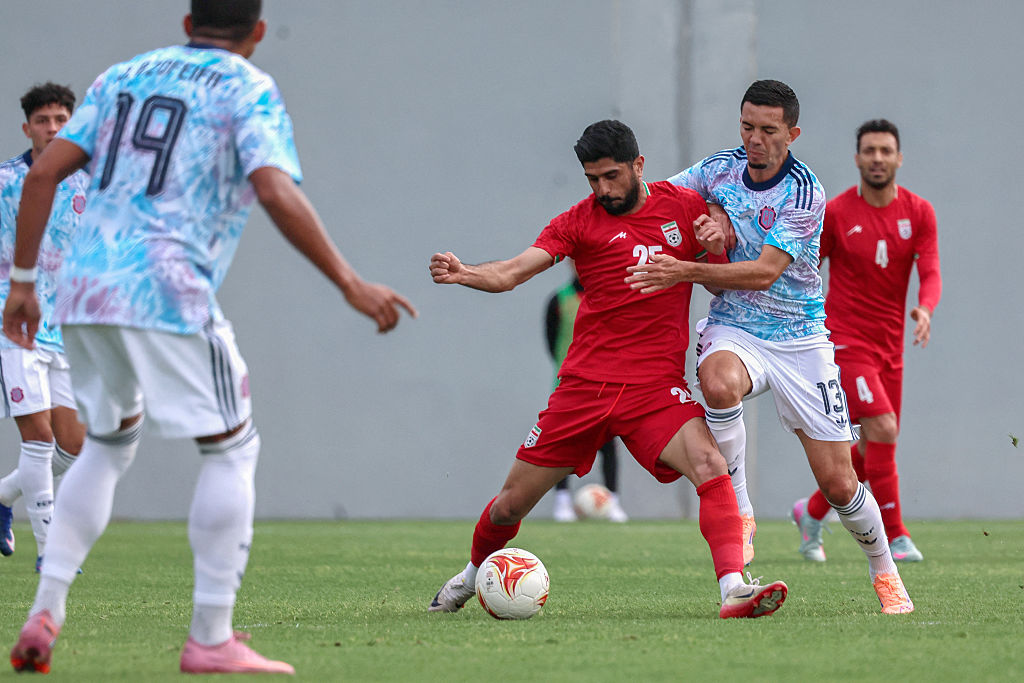
The U.S. is expected to host three group-stage matches in Los Angeles and Seattle, in which Iran will play against Belgium, New Zealand and Egypt. Iran’s presence in a hostile country will be its own logistical nightmare. Just last week, for example, the Iranian delegation was turned back at Toronto’s airport while trying to attend the annual FIFA congress. Trump has vacillated between issuing veiled threats against the Iranians (he previously said it would be “inappropriate” for them to come to the U.S. “for their own life and safety”) and expressing nonchalance at their participation.
After the initial wave of airstrikes and the killing of Ayatollah Ali Khamenei, Iran said it might not participate in the World Cup, but has since pledged to take part and has condemned Trump for his statements. It also asked FIFA to move its matches to the other host countries, which the governing body has refused to do.
The latest twist in the saga occurred in late April. The Financial Times reported that Italian American Paolo Zampolli, a close Trump friend and special U.S. envoy for “global partnerships,” was lobbying FIFA to replace Iran with Italy in the World Cup. Italy, which has won the tournament four times, was eliminated from qualification after a humiliating loss to Bosnia, failing to qualify for the competition for the third time in a row. The lobbying was billed as an attempt to repair relations with Prime Minister Giorgia Meloni, a Trump ally-turned-critic.
The prospect of such a move outraged all involved. The Iranian embassy in Italy condemned America’s “moral bankruptcy,” saying it was “afraid even of the presence of eleven young Iranians on the field of play.” The Italian soccer federation said its team failed to qualify and didn’t deserve to play in the tournament, and that the suggestion was “shameful.” American officials distanced themselves from the idea, FIFA denied that it was under consideration and soccer fans were angered at the blatant interference of politicians in the game.
For now, Iran is set to compete at the pinnacle of soccer on hostile ground, in a country that is bombing it, and surrounded by fans who will likely include supporters of the Iranian government as well as its detractors, especially from the sizable antiregime diaspora in Los Angeles. Ultimately, the Iranian national team’s performances will be a sidenote in a tournament beset by many controversies, but its presence on the pitches of its wartime nemesis will only add to the absurdity of today’s international politics.