


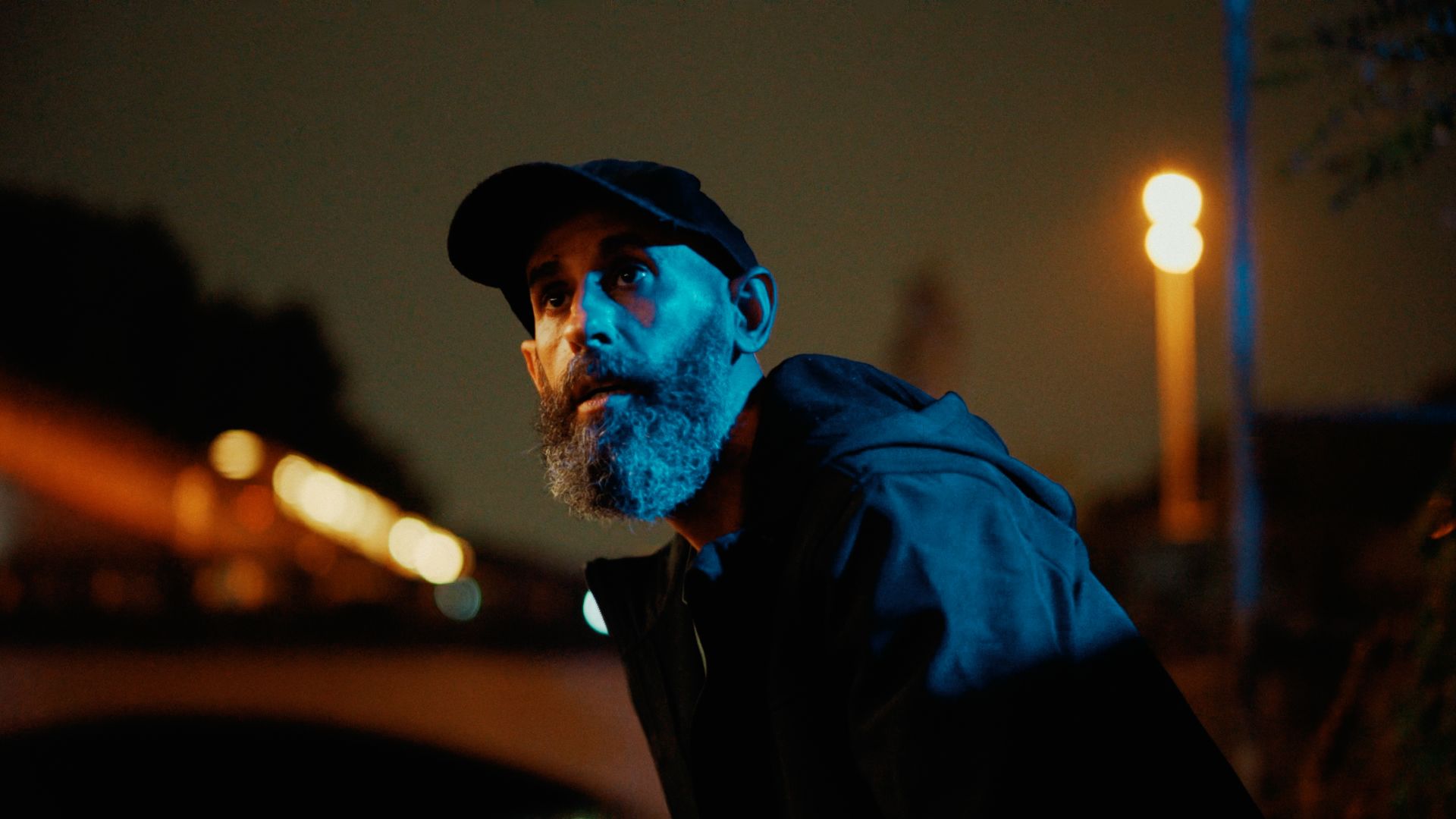
Over the last decade and a half, Berlin came to represent the possibility of a new beginning for a generation of Arabs reeling from the revolutions of the Arab Spring. The German capital became a magnet for refugees, dissidents, writers, intellectuals, artists and political exiles from Syria, Egypt, Iraq, Sudan and other parts of the region, who were looking for the freedoms that had eluded them back home. The city’s famous counterculture, growing Arab creative scenes, relatively low cost of living and geographic proximity to the region helped establish its reputation as a sort of postrevolutionary sanctuary. Yet that image seems to be increasingly difficult to sustain. Germany’s crackdown on Palestinian solidarity movements and growing hostility toward migrants, fueled by the rise of the far right, has exposed the limits of this reputed space of political and artistic freedom. This increasingly unsettling landscape is where renowned Egyptian filmmaker Ahmad Abdalla places his latest film, “BerleeN_” (the Arabic pronunciation of the city’s name). The surreal feature-length drama just saw its world premiere at this year’s edition of the Cairo Film Festival and won the Youssef Cherif Rizkallah Audience Award (Abdalla also received the Next Generation Award in the Established Talent category).
The film follows three main characters over the course of a single day, and opens, appropriately, at the city’s Neues Museum, which has long hosted a robust permanent Ancient Egyptian collection that most famously includes Nefertiti’s bust — one of the many artifacts Egypt has repeatedly called for the return of. Hana (played by Menna Shalaby) is an Egyptian divorcee who is on a mission to find cheap shoes while escaping her ex-husband’s wedding in Egypt, a difficult task in an age when everyone seems to know someone who knows someone back home, and social media makes keeping a low profile all but impossible. Egyptian-Syrian actress Yosra El Lozy plays May, a Syrian food influencer being pursued by a mysterious old man who, we later learn, has mistaken her for a woman from Aleppo. Her visit to another Syrian friend who never leaves his apartment offers a subtler glimpse of displacement, and of the different ways its psychological toll can manifest. Hasan is an Iraqi laborer (played by Iraqi actor and filmmaker Haydar Helo) who is being hunted by unnamed Turkish and Arab forces as he seeks revenge against a man whom he believes is responsible for the death of his younger brother, all while being haunted by strange music along the way.
But far from being a typical immigrant tragedy drama, Abdalla’s characters are complex, imperfect subjects whose seemingly mundane pursuits exist alongside the trauma-filled histories that brought them to Berlin. The film neither gives in to the stereotypical framing of a romanticized European city backdropping conventional narratives of exile, nor does it shy away from confronting the very real violence and exploitation of the contemporary migration journey. The less-than-romantic version of the city, with its precarious work, insecure housing, isolation, surveillance, othering and unresolved traumas — the lingering survivor’s guilt of escaping the brutal war in Syria, for example — is woven into the characters’ everyday lives. There is a persistent tension throughout the film and a palpable sense of fear among the characters, who seem to be perpetually looking over their shoulders. That fear is not simply a matter of physical safety, but of the peculiar psychological limbo of exile: the guilt of having escaped while others remain behind, the inability to fully embrace the freedom of a new place and the lingering sense of being unable to belong in it either. Writing from Berlin, Egyptian writer Dina Wahba captured this predicament in a 2018 essay for Mada Masr: “I feel guilty that I’m here, while some of my friends are in dark cells. I also feel guilty that I’m here and not enjoying all this beauty. Crippling fear has crossed the Mediterranean and taken over my mind. Fear is a strange thing. I cannot go home, but neither can I make a home here.”
Abdalla repeatedly allows the absurdity of these experiences to peek through the film in uncanny ways — through devices like an old camera that seems to reveal alternate realities — that never feel detached from the harsh realities being depicted. Berlin’s rejection of mainstream norms and its magnet-effect for misfits lend themselves to this uncanniness, yet there is something equally unnerving, even surreal, about its current political realities, which surface in “BerleeN_.” This is perhaps most palpable in the policing of Palestinian solidarity, as illustrated by videos of armed officers violently storming protests to arrest demonstrators — old and young alike — for carrying images of watermelons.
Abdalla’s films frequently focus on characters whose unexpectedly intersecting lives inhabit a city that is itself at the forefront, noticeably shaping the possibilities facing the people moving through it. In his feature directorial debut “Heliopolis” (2009), Cairo’s social divisions and unique rhythms shape the encounters between people who are otherwise strangers from different walks of life. The same can be said about his critically acclaimed 2018 film “Leil Khargi” (“Exterior/Night”), the first Egyptian film to top Netflix’s viewing list. And “Microphone” (2010) was widely praised for its raw, authentic portrayal of Alexandria’s underground arts and music scene. “BerleeN_” marks the director’s first foray into a city outside of Egypt, but he still approaches it with the same nuanced, critical and even occasionally surreal lens. Much of the film’s texture comes from its depiction of the city itself: its streets, transit stations, graffiti-covered walls, parks, apartment blocks, restaurants and nightlife are not just backdrops. Abdalla is interested in the everyday geography of a place that is experienced very differently by its various inhabitants and visitors.
When German Chancellor Angela Merkel opened the door to temporary residency for asylum-seekers as the uprisings that began in 2011 gave way to intensified conflicts in the region, more than 1 million people, most of them from Syria, arrived in Germany in 2015 alone. The wave of Arab arrivals is part of the much longer history of global shifts that have given Berlin its appeal as a home for outcasts. Generations of refugees and outsiders have helped shape its identity over the decades, and countless observers have taken note. Amro Ali’s widely discussed 2019 essay “On the Need To Shape the Arab Exile Body in Berlin,” published by openDemocracy, belongs in this tradition. Ali imagined the city as a place where Arab intellectuals (and importantly, a wider community of political and economic exiles) displaced by the uprisings could develop a new political consciousness and participate in forms of collective action. Yet as is often the case, after a surge of interest in Arab cultural production, many initiatives struggled to secure sustained institutional support, leaving artists and cultural organizers increasingly reliant on precarious funding.
Seven years after Ali’s essay imagined Berlin as a new political laboratory for the emerging generation of Arab exiles, where “the newly-arrived Arab suddenly (but not always) recognizes that the frightful habit of glancing over the shoulder — painfully inherited from back home — gradually recedes,” this sense of distinct safety is harder to evoke in the face of Germany’s response to Palestinian solidarity and growing hostility toward Arab and Muslim communities. Although the city has often been characterized as a cosmopolitan exception to the wider European shift to the right, the far-right Alternative for Germany (AfD) made notable gains in recent elections. If Ali imagined Berlin as a space to forge collective political identities, Abdalla’s “BerleeN_” complicates the idea of refuge without abandoning the possibility of solidarity. The Egyptian mangoes that circulate among his characters at the film’s end become one such unlikely connector, bringing together people who have otherwise been navigating their own private uncertainties and anxieties. And while their eventual intersection may not neatly resolve the issues that brought them there in the first place or transform them into a community per se, it offers a realistic moment of companionship among strangers in a strange place. On the cusp of finally confronting the man who is the source of his tension, Hasan leaves a voice note to his Sudanese friend (played by Abdelgalil Abouzeid) who has stood by him, reflecting on Berlin’s “harshness.” “But when I think about it, your presence and the people I met along the way made it a kinder place. … Berlin doesn’t offer guarantees. In any case, I’m grateful.”
It would be disingenuous to suggest that Berlin’s failures somehow make life back home any more appealing, and doing so would overlook the desperation of those who continue to try to flee toward it, sometimes at deadly cost. Instead, the film moves beyond the city’s popular mythology as a cosmopolitan playground or a blank slate in a foreign land. Berlin emerges as a city of parallel lives and improbable encounters where it’s impossible to leave the past behind or perhaps even shake off the feeling of being hunted, but where finding one another, if only fleetingly, remains possible — and maybe even inevitable.
Become a member today to receive access to all our paywalled essays and the best of New Lines delivered to your inbox through our newsletters.