


For nearly three years, I lived in Cairo, while Gaza existed for me through phone screens. I followed the war through calls with my family, voice notes from friends and the steady stream of news alerts that arrived at all hours of the day. Like many Palestinians stranded outside, I learned to measure time by the messages that did — and did not — arrive. A missed call could trigger panic. A short text saying “We are fine” could bring relief for a few hours before the cycle began again.
From Cairo, I tried to stay connected to a place that increasingly felt beyond reach. I listened as relatives described displacement, shortages and loss. I watched familiar streets appear in photographs and videos, sometimes barely recognizable beneath the destruction. As a writer and journalist, I spent years gathering fragments of Gaza through other people’s accounts, trying to understand a reality I could not witness myself.
When I finally returned, I expected to find a changed city. I expected destruction and grief. What I did not expect was how quickly my attention would shift to the details of daily life: finding water, charging a phone, cooking a meal and planning around shortages. From afar, these were details that rarely appeared in headlines. Living them was different.
Back in Gaza, I discovered that there is a difference between knowing a story and living it.
I arrived just days before Eid al-Adha. Growing up, Eid was one of the most anticipated times of the year. Families gathered around large meals, children waited eagerly for small gifts from relatives, and the smell of meat cooking drifted through neighborhoods. The days leading up to the holiday were filled with preparations, visits and celebrations.
This time, the atmosphere felt different. The holiday remained on the calendar, but little of its familiar spirit seemed intact. Many families had gone years without being able to offer the customary sacrifice. For countless people, the question was no longer how to prepare for the feast but how to secure enough food for the coming days.
In the days after my return, relatives, neighbors and old friends came to welcome me home. I was happy to see faces I had not seen in years, yet nearly every visit carried a story of loss. Some spoke about children they had buried. Others described homes that no longer existed. Many had been displaced multiple times before settling in tents or temporary shelters.
What struck me was not only the scale of what had happened but how deeply it had become woven into everyday life. Loss was no longer an exceptional event. It was part of ordinary conversation.
As relatives continued to visit, I found myself listening more than speaking. By the time they left, I often realized that what remained with me was not a single dramatic story but the accumulation of many small tragedies that had quietly reshaped an entire society.
Not everyone who wanted to see me could visit. In the days following my return, I received numerous phone calls from relatives and friends congratulating me on coming back to Gaza. Many of the conversations followed a similar pattern.
“We miss you. We want to see you. Please forgive us.”
They explained that transportation had become too expensive, too difficult or simply unavailable. Their apologies were unnecessary, yet they revealed how much daily life had changed. Distances that once felt manageable had become obstacles. A visit that might have required little planning in the past now depended on finding transportation, securing enough money for the journey or navigating damaged roads and overcrowded routes.
The effects of war extended far beyond what had been destroyed. They had also reshaped the ordinary connections that hold communities together.
One visit in particular has stayed with me.
Before the war, Hossam was already close to my family. My brother is an only child, but Hossam was like a brother to him and a second son to my parents. We had known him for years, but the war brought our families even closer.
Like many families in Gaza, Hossam’s family was living in overcrowded conditions after displacement. Their home was filled with relatives and displaced family members. To escape the constant crowding, Hossam often came to our house. He spent much of his time with my brother and sometimes slept over. During the war, our home became one of the few places where he could relax and feel a sense of normalcy.
Then he was killed.
Hossam was not affiliated with any political faction or armed group. He was simply a young man whose life revolved around family, friends and ordinary routines. Like countless other civilians in Gaza, he became part of the war’s toll.
I learned about his death while I was still in Cairo. Like so many losses during the war, the news reached me through a phone call.
Not long after I returned to Gaza, Hossam’s mother came to welcome me home. I was told that since her son’s death nearly a year earlier, she rarely left the house. Yet she wanted to visit.
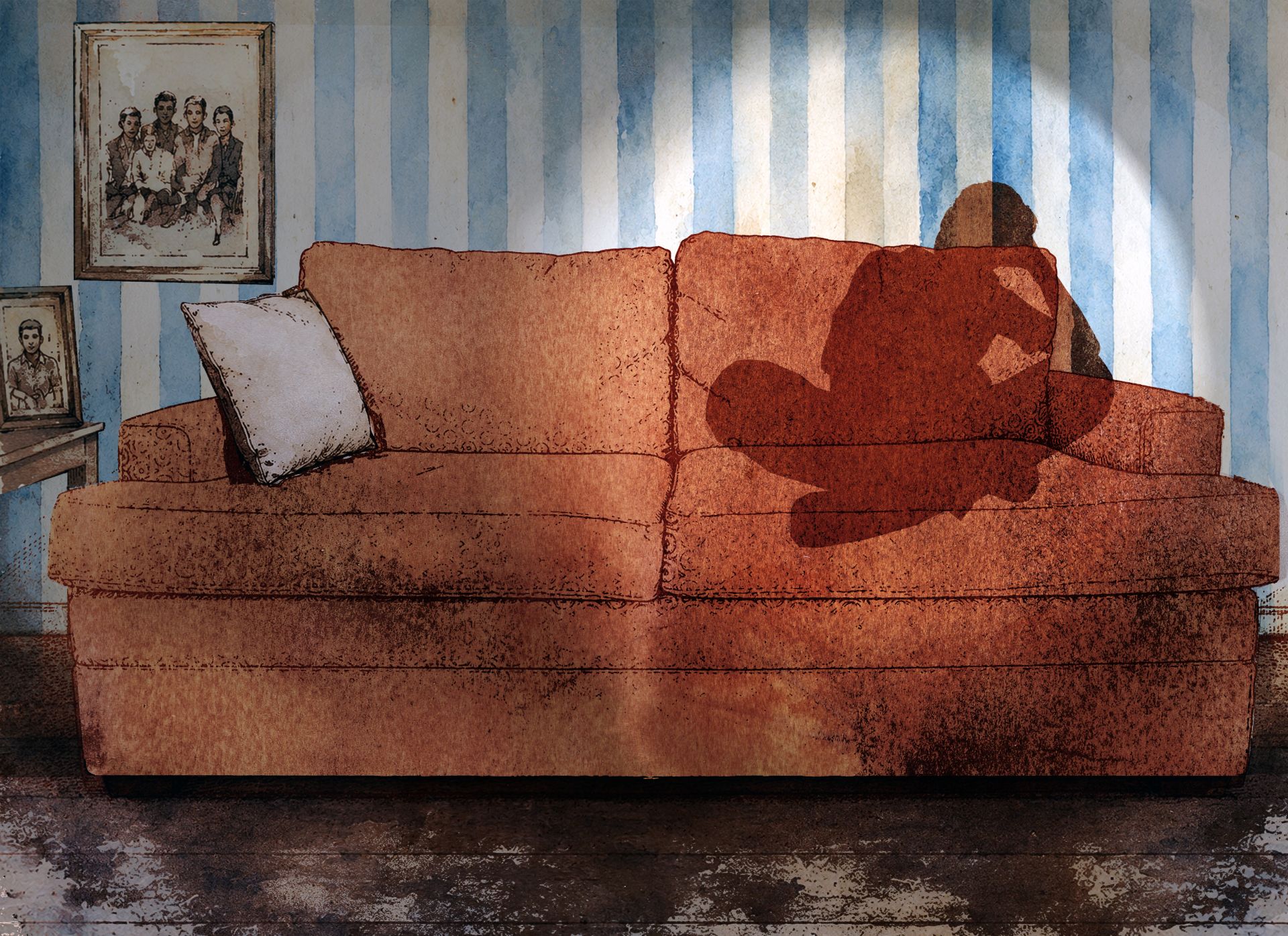
As she walked through our home, she suddenly stopped in the living room.
Her eyes fixed on a couch.
For a few moments, she said nothing.
Then she told us that Hossam had once taken a photograph of himself sitting there.
That was all it took.
She broke down in tears.
The couch had never seemed important to me before. It was just another piece of furniture. But in that moment, it became something else entirely. A reminder of someone who was no longer there. A place where her son had once sat, laughed and spent time with the people he loved.
Watching her, I understood something that no report or statistic could fully convey. Grief in Gaza does not live only in cemeteries or memorials. It appears unexpectedly in living rooms, family photographs and ordinary objects that survive long after the people connected to them are gone.
Hossam’s story was only one among thousands. Yet it was through moments like this that I began to understand the true weight of what the war had left behind.
What I noticed most during those first weeks was not only what people told me, but how they looked. The faces I remembered from years ago seemed older, thinner and more tired. Friends and relatives who had once appeared energetic now moved through conversations with visible exhaustion.
Many people spoke about months of severe food shortages and the constant uncertainty surrounding their next meal. For roughly seven months, many people endured periods of extreme hunger. Even after food became somewhat more available, the effects remained visible. People described persistent fatigue, weakness and difficulty regaining their strength. Some took vitamins in the hope of feeling better, yet many said they still felt drained.
The consequences of those months seemed written on people’s faces. The war had damaged buildings and infrastructure, but it had also altered people’s relationship with food, health and survival. Looking around, I often wondered how long these shortages, even after they had ended, would continue to shape lives.
Food and cooking became recurring topics in conversation. For years, cooking gas entered Gaza only in limited quantities, far below what people needed. As shortages worsened, families turned to alternatives. They burned wood, cardboard and whatever combustible materials they could find. Some cut branches from trees. Others burned old notebooks and schoolbooks when other options ran out.
What shocked me most was hearing that even these alternatives were disappearing. After years of relying on improvised fuel sources, many families had exhausted what was available around them. The cardboard had been burned. The wood had been used. Trees had already been cut or destroyed. The substitutes that once helped people cope with shortages were themselves running out.
The city I returned to was not the one I had left behind.
Before leaving Gaza, I had always thought of Deir al-Balah as a relatively quiet place. Its streets were familiar to me, shaped by routines I had known for most of my life. I recognized the shops, landmarks and rhythms of daily life.
When I returned, I found myself struggling to recognize parts of the city I thought I knew by heart.
The most immediate difference was the crowding. Streets that once felt spacious were packed with people, vehicles, street vendors and makeshift structures. Entire areas had been transformed by the arrival of displaced families from across Gaza. At times, it felt as though the geography of the strip had been compressed into a single city.
Deir al-Balah had become home to an overwhelming number of displaced people. The quiet city I remembered now felt crowded beyond recognition. Roads were congested, public spaces were overwhelmed and familiar landmarks were often hidden behind new layers of activity and temporary shelters.
More than once, I found myself disoriented on streets where I had spent much of my life. The city was still there, but its appearance, movement and atmosphere felt different. What unsettled me most was not that Deir al-Balah had changed. It was the realization that I could feel like a stranger in a place I had always considered home.
The return also changed the way I understood my work as a journalist.
For years, I relied on phone calls, messages and interviews to understand what was happening in Gaza. After returning, that relationship changed. Friends, colleagues and editors outside Gaza began reaching out to me with the same questions I once asked others.
How are people living? What does the city look like? What are people talking about?
I found myself struggling to answer. Not because I lacked information, but because the reality around me often seemed too complex to fit into a single explanation. Headlines captured major developments, but they rarely conveyed the exhaustion visible on people’s faces, the calculations behind every meal or the quiet grief that surfaced in ordinary conversations.
For years, I had tried to understand Gaza through the accounts of others. Now I was witnessing those realities myself. The experience changed not only how I saw the city, but also how I thought about storytelling.
For nearly three years, Gaza reached me through phone screens. I followed events through calls, messages and news alerts, trying to piece together a reality that always felt incomplete.
Returning taught me the limits of that understanding.
Facts can tell us how many people were displaced, how much aid entered Gaza or how many homes were destroyed. They cannot fully capture what it feels like to return before Eid and find grief overshadowing celebration, to walk through streets you once knew by heart and struggle to recognize them, or to sit with relatives who each carry a different story of loss.
For years, I tried to understand Gaza from afar. Now, I am learning to understand it from within. The distance between those two forms of knowledge is the distance between watching a story unfold and waking up inside it.
Become a member today to receive access to all our paywalled essays and the best of New Lines delivered to your inbox through our newsletters.