

The International Criminal Court has faced political attacks before. But this time, the institution is entering a leadership transition at one of the most important moments in its history.
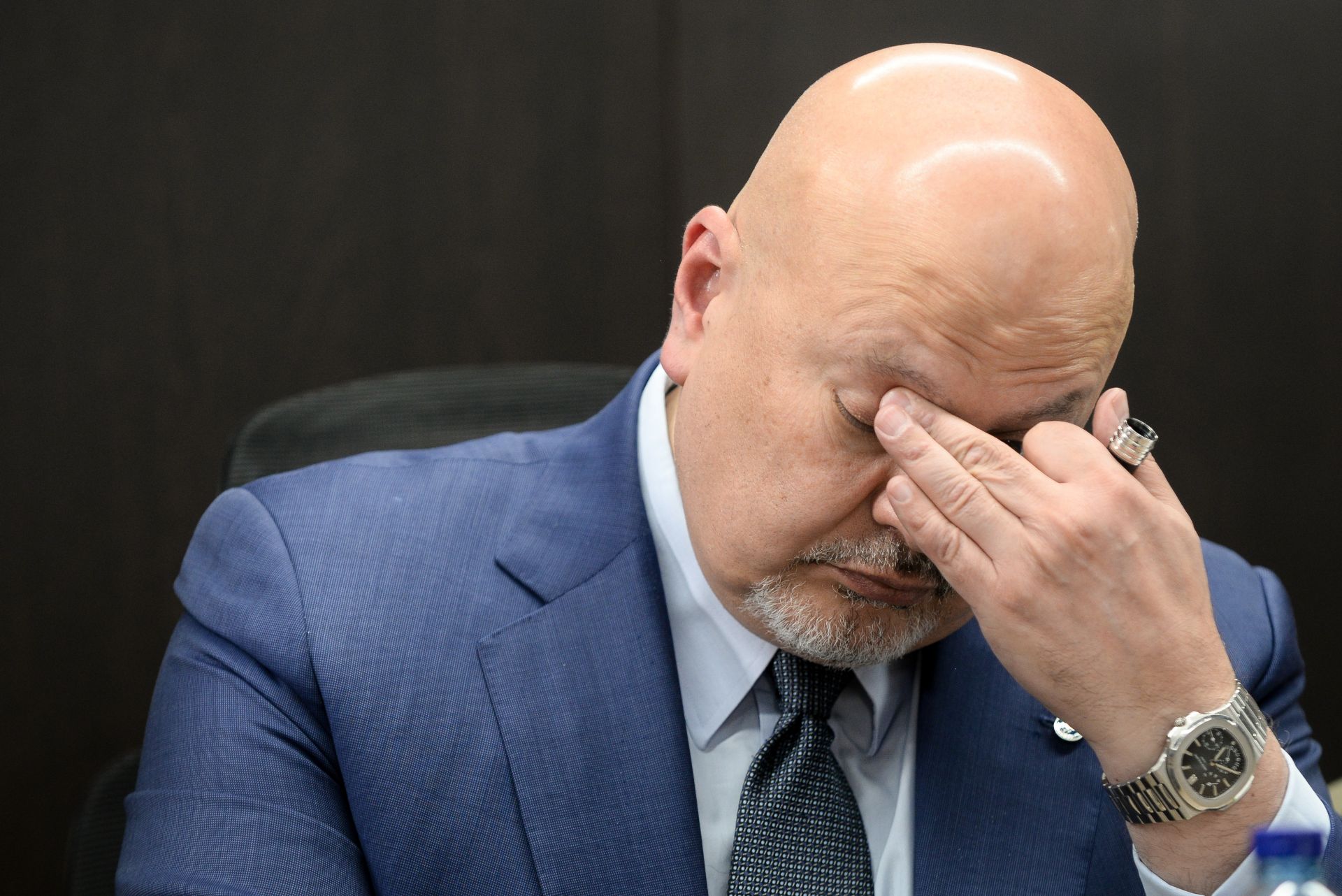
The court is searching for a new chief prosecutor after Karim Khan was removed from office on July 24, 2026, following a vote by member states to oust him over sexual misconduct allegations. His departure comes as the ICC continues handling cases involving some of the world’s most powerful leaders, including Russian President Vladimir Putin and Israeli Prime Minister Benjamin Netanyahu. At the same time, the court is facing pressure from governments that question its authority, threaten its operations and argue that it has overstepped its mandate.
The ICC has always been controversial. Every prosecutor has left behind a complicated legacy. The court’s first prosecutor, Luis Moreno Ocampo, was accused of focusing too heavily on Africa, leading many to believe that the ICC was only targeting leaders from the continent. His successor, Fatou Bensouda, spent much of her term in office trying to move beyond that criticism while facing resistance over investigations involving Afghanistan and Palestine.
Karim Khan expanded the court’s reach with some of its most consequential cases, including the arrest warrant issued for Putin and the case against Netanyahu. But his departure has created another crisis for an institution already struggling with questions about its credibility.
The next prosecutor will inherit a court under unprecedented political pressure. The United States and Israel have intensified efforts to undermine the institution, while some member states have questioned whether the court can continue to function without stronger political support. At the same time, millions of victims of atrocities around the world continue to see the ICC as a necessary check on governments that fail to hold their own leaders accountable.
The choice of chief prosecutor will be important, but it will not resolve the deeper questions facing the institution, which revolve around whether the ICC can maintain its independence while operating in a world shaped by power politics.
For some observers, however, the attacks against the ICC are not evidence of failure. They are proof that the court is doing what it was created to do.
“I think the court’s credibility is very high,” Ian Hurd, a professor of political science at Northwestern University, told New Lines. “It’s very clear what the court stands for and what kind of work it’s trying to do, which is to provide some mechanism to hold accountable people who commit or organize terrible acts.”
But Hurd points to a central problem facing the ICC, which is that those the court seeks to hold accountable are often the most powerful. “The challenge is balancing the desire to hold powerful people accountable with the reality that they often have the means to avoid justice,” Hurd said.
He argues that attempts to undermine the ICC have only reinforced the case for its existence. “The fact that they would like to destroy it doesn’t affect the credibility of the court. If anything, it reinforces the credibility of the court by reminding people how important it is to hold such governments accountable.”
But being seen as legitimate does not mean the ICC can always deliver results.
The court can issue warrants, open investigations and build cases. But without state cooperation, turning those cases into trials remains a major challenge. The incoming prosecutor will have to pursue powerful leaders while knowing that the governments behind those cases may also try to obstruct the court’s work.
Kenneth Roth, former executive director of Human Rights Watch, raised the question of whether the ICC can turn its authority into meaningful results.
“The ICC member states should insist that the new prosecutor continue to pursue cases against the most serious abusers regardless of their country or status,” Roth told New Lines.
For Roth, that means continuing to pursue cases involving powerful leaders, including Putin and Netanyahu, while ensuring that the court does not appear to apply different standards depending on the country involved.
Credibility also depends on results, and while the ICC can spend years building cases, prolonged investigations without trials risk deepening doubts about the court’s effectiveness. Its next leader will have to show that the institution can move with greater urgency while maintaining the independence that gives it legitimacy.
“The ICC has proceeded far too slowly,” Roth said. “It needs to build airtight cases, so some patience is required, but it has done far too little in its two and a half decades. We need a chief prosecutor who can mobilize the ICC’s talented staff and deliver results,” Roth said.
The choice of prosecutor will matter. But the bigger question is whether the world’s governments will allow that person to succeed. Even the strongest leader cannot shield the ICC from political pressure without support from its member states.
Tom Dannenbaum, a professor of international law at Stanford University, sees this as the central issue facing the institution. The next prosecutor, he says, will have to withstand pressure from powerful governments while relying on member states to defend the court’s work.
“The court needs a prosecutor who is willing to pursue investigations and cases against the most powerful actors in the system, despite the extraordinary forces being deployed in the opposite direction,” Dannenbaum told New Lines.
The temptation facing Khan’s successor will be to avoid confrontation. With the United States imposing sanctions and some governments challenging the court’s authority, a cautious approach may seem like the safest path.
But Dannenbaum warned that avoiding conflict with powerful states could come at a greater cost, weakening the very legitimacy the ICC depends on. A prosecutor who allows political pressure to shape decisions, he said, risks turning the institution into a court that exists in name but no longer fulfills its purpose.
“It may be tempting to think that the court will survive longer under a prosecutor that heeds that deterrent,” he said. “However, that would be a catastrophic mistake.”
“A prosecutor who succumbs to the pressure of powerful states, such as the United States, would do so at the cost of surrendering the very legitimacy that is critical to everything the court does.”
For Dannenbaum, resisting political pressure is only part of what’s needed. The prosecutor must also continue building cases even when arrests seem out of reach, because political circumstances can change. He points to the case of former Philippine President Rodrigo Duterte as an example.
While Duterte was in power, a trial appeared unlikely. But investigators and civil society groups continued building the case. When political conditions shifted, the Philippines arrested him and transferred him to The Hague.
For others, however, the ICC’s credibility crisis is not only about who leads the prosecutor’s office. It also reflects questions about how the institution itself is governed.
“The priority at this moment is that the Assembly of States Parties make all the proceedings public,” Triestino Mariniello, a professor of law at Liverpool John Moores University, told New Lines, referring to the court’s oversight body. “The different reports are not public. So for the credibility of the institution, the first priority is that the Assembly of States Parties clarify what has happened,” Mariniello said.
He argues that transparency is particularly important because governments have openly acknowledged attempts to pressure states over the ICC.
“There are states — I’m referring in particular to Israel — that have made it public that they have exercised significant pressures on states,” Mariniello said.
For Mariniello, the appointment process will be a critical test for the ICC. Member states must ensure that political interests do not determine the choice and instead select a prosecutor based on independence and ability.
The debate over the ICC’s future ultimately returns to the same question: Can a single prosecutor save a court whose mandate puts it in the crosshairs of the most powerful people on the planet?
The choice of prosecutor will shape the ICC’s next chapter, but the institution’s difficulties will not end with a new leader. The incoming prosecutor will inherit a court caught between the demand for accountability from victims around the world and the political forces determined to limit its reach. How the ICC manages that tension may determine the future of the institution itself.
“Spotlight” is a newsletter about underreported cultural trends and news from around the world, emailed to subscribers twice a week. Sign up here.