


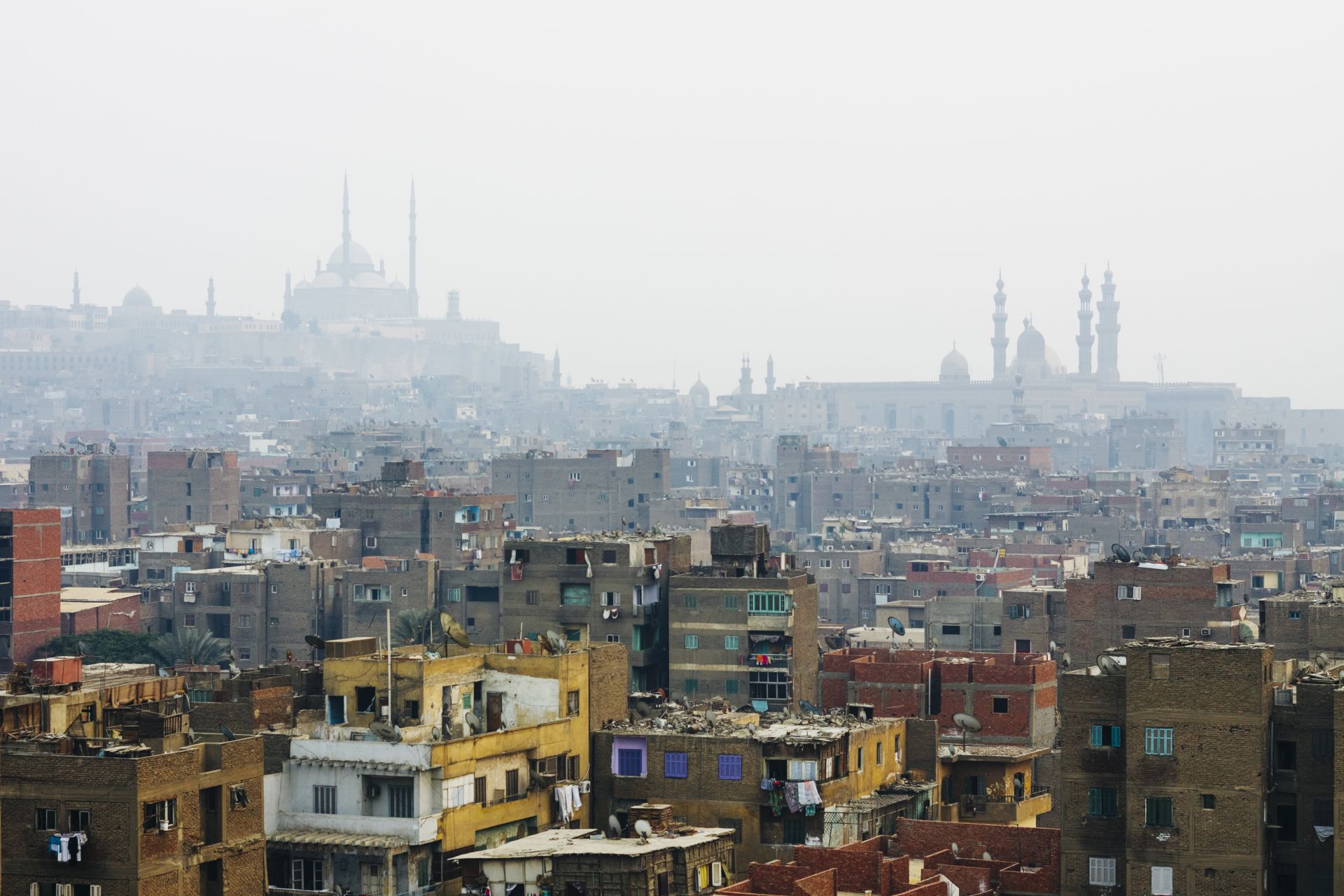
In 1958, when my grandmother moved into her apartment as an 18-year-old newlywed, she and her husband paid 14 Egyptian pounds in rent. Sixty-seven years later, in 2025, she was still paying 14 pounds, currently about 29 cents, for the same apartment: two bedrooms, two baths, a kitchen, a dining room and two living rooms located in the neighborhood of Dokki in the heart of Greater Cairo.
Whenever I told my friends in Berlin about my grandma’s rent, they looked confused. They asked: “Per day?” They laughed when they realized that the amount was, in fact, 29 cents per month for more than 1,000 square feet. In Berlin, we are considered lucky if we pay 5,000 times that price — if we even manage to find an apartment in a landscape of rising rents, speculative vacancies where properties are kept empty by owners holding out for higher prices, and investment companies that know all the loopholes in the system of rent control. The situation is even worse in New York, Singapore or London.
Until the end of the 20th century, Egypt had a rent system that allowed no rent increases or terminations of contracts. And until recently, these old contracts remained valid. Tenants who rented apartments before 1996 paid a fixed price and could even pass their contracts on to their children.
But that is about to change. In 2024, responding to a complaint that had been pending for 26 years, Egypt’s Constitutional Court decided to overturn the laws that fixed the old rent prices. In 2025, Parliament passed a law that annulled old contracts and put all apartments on the open market.
For landlords across the country, this step was long overdue. While everything got more expensive over the years, they were stuck with tenants whose rents were hardly worth collecting. But for around 6 million tenants, living in fixed-rent apartments held the promise of a home that would remain affordable for a lifetime. While my grandmother and many others agree that rents cannot remain frozen forever, they fear the prospect of mass evictions and a completely untethered open market for real estate.
“We just want an arrangement that is fair for landlords and tenants,” my grandmother said. In a society that has been ravaged by years of economic hardship and political oppression, the threat of losing the most essential element of a dignified life — a home — could push people over the edge.
In early 2025, a video went viral on Facebook. In it, a middle-aged Egyptian woman in a black galabiya and patterned hijab addresses President Abdel Fattah el-Sisi, telling him that, over the preceding 11 years, she has been on his side, despite “hardship, pain and humiliation.” She says that as life became more and more expensive, she continued to trust his words that Egyptians needed to be patient. She followed him even when people could no longer pay their bills, and half the population went to bed hungry. “But if you take that pen and sign off on Egyptians being kicked out of their houses, that will be the end of our common path, Mr. President,” she says. “If you sign this law, you will lose us.”
I visited Cairo in October, two months after the president signed the law that the woman on Facebook had urged him to stop. Soon after, the regulations for the transitional phase started being rolled out. The government sent out committees to define neighborhoods as low-income, middle-class or prime. Based on where they are located, apartments with old contracts will see their rents rise as much as twentyfold, with minimum amounts set at 250, 400 or 1,000 pounds for each class of neighborhood. The law also stipulates that, following a government review of the new pricing, rents will rise by 15% annually until the end of a seven-year transition period, which begins this year. After that, all 1.6 million old-rent contracts will be terminated, and landlords will have the right to kick their tenants out. Many owners may use the opportunity to tear down buildings and build higher, more profitable ones. The new provisions will also affect millions of commercial spaces that were rented out under the old system. For some families, this will mean losing their home and source of income at the same time.
“The problem in Egypt is that we went from a system of rent control to a system where rents are completely liberalized,” said Elham Eidarous, 45, a tenant from Cairo’s Agouza neighborhood. She referred to the old renters as “a group of dinosaurs whose extinction was inevitable.” Eidarous has been active in tenant groups against the new law. Following the 2024 Constitutional Court decision to allow rent increases, tenant organizations tried to influence how these changes would be implemented. “The only power we have is our numbers,” Eidarous said. “We tried to show on social media and in conferences that we were many. But the government didn’t care.”
The only option left was street mobilization, she said, but most Egyptians were afraid of that. In June, a lawyer was arrested in Alexandria on his way to a meeting of the Tenants’ Association, a national organization. Security personnel surrounded the building where the meeting was set to take place and prevented dozens of people from entering. Now that Parliament has signed the law, efforts to mobilize have faltered, as everyone is figuring out their own living situation. Complaints have been filed against the new rent law, but it might take another 26 years until the Constitutional Court deals with them.
Eidarous has begun looking for an apartment to buy, even though her husband’s old age and her work as a freelancer might make it impossible for them to get a loan. But renting under the new system was not an option for her. Egypt’s new rent system allows landlords to set prices, yearly increases and contract lengths with zero protection for tenants, beyond the caps outlined in the new law. “I don’t want to have an insecure living situation when I am old,” she said. “Some of my friends are forced to change apartments every two or three years.”
Although she had a good relationship with her landlord, she would not feel secure. What if the landlord passed away and her children wanted more money? “A landlord who sees that other flats are rented out for 20,000 pounds will not be content with 500 pounds. They want to become millionaires without working. This new rent system brings out the worst in people.”
Eidarous has been living in her apartment ever since she got married 23 years ago. Her husband had moved in in 1994, becoming one of the last renters to receive an old rent contract before that system was abolished. Their narrow building stands like a partition between an old, densely populated neighborhood and a more spacious, exclusive part of Agouza. Her apartment on the first floor is tiny but cozy. She and her husband have a bedroom, while her two sons share the second. The walls of the living room are covered with paintings and overflowing bookshelves. Before they had children, her husband used to host literature salons in the living room.
But it is not just emotional value that ties Eidarous and her family to the apartment. Over the years, they have invested a lot of money. “When my husband moved in, it was just red brick.” He took care of all the interior work, opened up the kitchen to connect it with the living room, built storage space on the ceilings to fit all their stuff — more books — into the small flat. And the couple chipped in for all kinds of work on their building that is usually covered by the owners. Whether it was painting the facade, installing an elevator or renewing the plumbing, the costs in Eidarous’ building were shared among all residents. This was the norm for old-rent tenants. Landlords claimed that the rents were too low for them to maintain the buildings, so a lot of buildings were maintained by the tenants. They paid, expecting that they would have a home for their lifetime and their children’s.
I wanted to find out how landlords felt about the recent changes. According to Mohamed Roshdy, they were long overdue. We met in the five-story building he owns in Maadi, an upscale neighborhood that is known for its old villas and mazy tree-lined roads. Two flats in his building are rented out under old contracts; the others are rented out under new contracts or used by his family. In October, the most expensive flat in his building cost 20,000 pounds per month, or around $420. The cheapest one had just been increased from 10 pounds to 260 pounds, according to the rules of the transitional phase.
For Roshdy, it was ridiculous to freeze the rent while everything else got more expensive. “A person could own several buildings and not earn enough money to buy a pack of cigarettes,” he said, adding that this led to landlords using any loophole they could find. In the 1980s, they started selling their contracts for exorbitant amounts of “key money” to compensate for the profit they would never make in rent. Others, like him, rented their flats out furnished, allowing them to avoid the fixed rent system.
On the other hand, tenants, too, tried to get around restrictions. People who did not actually live in their flats were reluctant to give them up, leaving them empty or renting them out for a higher price. Others cheated their way into inheriting contracts from their parents by falsely claiming they had been living with them. Only in this case were they allowed to take over when their parents passed away. According to Roshdy, “the old rent system led to landlords and tenants eating at each other.”
Mohammed Roshdy, unrelated to his namesake, is 70 years old. He grew up in Maadi, in the same building that he and his sisters own and live in today. When he was a child, his family rented a flat in the building that they later bought. It is located on the corner of a quiet street, flanked by old trees. Only rarely is the calm interrupted by a passing car or a pack of barking street dogs. Although Roshdy says he cannot imagine living anywhere else, he has little empathy for tenants who worry about losing their flats. He believes that most could afford to stay in their neighborhoods — and that others were lucky to move into the government’s newly built social housing. “These tenants share the responsibility, because they never tried to buy an apartment,” he said. Instead, they had been relying on paying very little rent, not expecting that the law would ever change.
The debate around the rent system should not be understood as a conflict of tenants versus landlords, said Yahia Shawkat, a housing strategist and policy analyst from Cairo. “It is extremely problematic that it has become a struggle for survival: One side wins, the other loses.” According to Shawkat, both sides had legitimate concerns. By letting the situation deteriorate for so long, the government had laid the groundwork for escalation and hostility.
I met Shawkat in Berlin in November. He told me that the old rent system had been established in the 1940s based on “the principle that private property has a social function and that housing is a fundamental human right.” With the influx of British and then American soldiers during World War II rents began to rise, and the government saw it as necessary to apply rent controls. After the 1952 revolution, these continued. In fact, every few years, the government ordered rent decreases, until, in the early 1960s, a comprehensive rent law froze the prices.
Today, the situation in Egypt is completely different. The real estate market has become one of the main investment sectors for the Egyptian state and military, as well as foreign investors, especially from the Gulf. And the liberalization of rent prices comes at a time when Egyptians have reached their financial rock bottom, due to the devaluation of the Egyptian pound and price hikes in key areas like food and gasoline.
The first thing people gave up on were luxury items like eating out or going on vacation, Shawkat said. The second step for many was to save on education or health. “You see people sending their kids to cheaper schools or not going to the doctor as much as they should.” But Egyptians have already cut expenses in these areas over the past few years. Now, facing exponential rent increases, “They have nowhere else to go.”
With his organization, the Built Environment Observatory, Shawkat found out that the majority of tenants in Cairo affected by the recent rent hikes lived in high-density working-class districts like Dar el-Salam or Matareya. If there are no amendments to the new system over the next seven years, he foresees that a large number of tenants will be forced to crowd in with relatives or move into less adequate housing, such as rooftops or single rooms. Shawkat stressed that it was time to reform the new law. “It’s completely pro-landlord.” If meaningful reforms do not happen over the next few years, “there could be street mobilization,” he said.
While the government has promised to offer alternative affordable housing to those affected by evictions, the waiting lists are already long, and the government’s building capacities are at their limit. It will be impossible to cover the need. What’s more, alternative housing will be on the remote outskirts of the cities, far away from tenants’ old neighborhoods. Recent urban development policies under Sisi’s government indicate what kind of housing awaits them: generic and heavily surveilled, in the middle of the desert. A friend told me that her aunt had already made “a deal with God” that she would die before the end of the seven-year transitional phase, after which she might get kicked out of her home. “Especially for the elderly, forced displacement can be extremely detrimental to their health,” said Shawkat, adding that evictions should at least be prohibited for vulnerable groups.
“I love downtown, and I know every street and alley here. Outside it, I know nothing,” said Hayat El-Shimi, 74, whom I met on a sunny day in late October at Cafe Riche in the heart of Cairo. She had suggested meeting in this downtown institution that was a hub for the city’s artistic, political and intellectual scene throughout the 20th century. For 42 years, El-Shimi has been living just around the corner. Most tenants in downtown were elderly like her, she said. Since the new law was signed, “they can’t sleep, because they have lost any sense of security and stability.”
Her love for downtown started when she was a child living on the Nile island of Zamalek. She often accompanied her father and brother to work in downtown. Her father used to drop her off at one of the cinemas, where she spent hours, until they picked her up. El-Shimi is a short woman with white hair and piercing blue eyes who likes to laugh a lot and tell stories. Listening to her talk about all the important political and cultural figures she met throughout her career as a journalist, it was easy to understand why she loved downtown so much. This is where the traditional bars and cafes are, where art events take place and where the spirit of popular uprisings is ingrained in every old street and building.
“You cannot take me from the navel of Cairo and transfer me to the toes,” El-Shimi said. She can’t imagine living in an unfamiliar place with unfamiliar people around her. Now, when she goes out, there is always a neighbor or a shop owner to greet. “I have a whole community here.”
Additional reporting by Marwa Barakat.
“Spotlight” is a newsletter about underreported cultural trends and news from around the world, emailed to subscribers twice a week. Sign up here.