


About a year into Russia’s full-scale war against Ukraine, Natalia Soloshenko realized she needed help. The news of death and destruction pouring in from across the country had become relentless. Her central Ukrainian town of Zhmerynka had been spared the atrocities of Bucha and the bombardment of Mariupol, but the air-raid sirens still wailed day and night, often forcing the high school chemistry and biology teacher to halt her lessons and hide with her students in the school’s basement bomb shelter.
As the war intensified, Soloshenko found herself losing focus. She started forgetting things — words, scientific concepts, what she had meant to buy at the grocery store. Thinking felt like pushing through a thick fog. Every few weeks, she would hear about another man from Zhmerynka who had been killed at the front. Many of them she had either taught or studied with, but Soloshenko knew something inside her was wrong because she had stopped feeling sadness. Instead, all she felt was irritation.
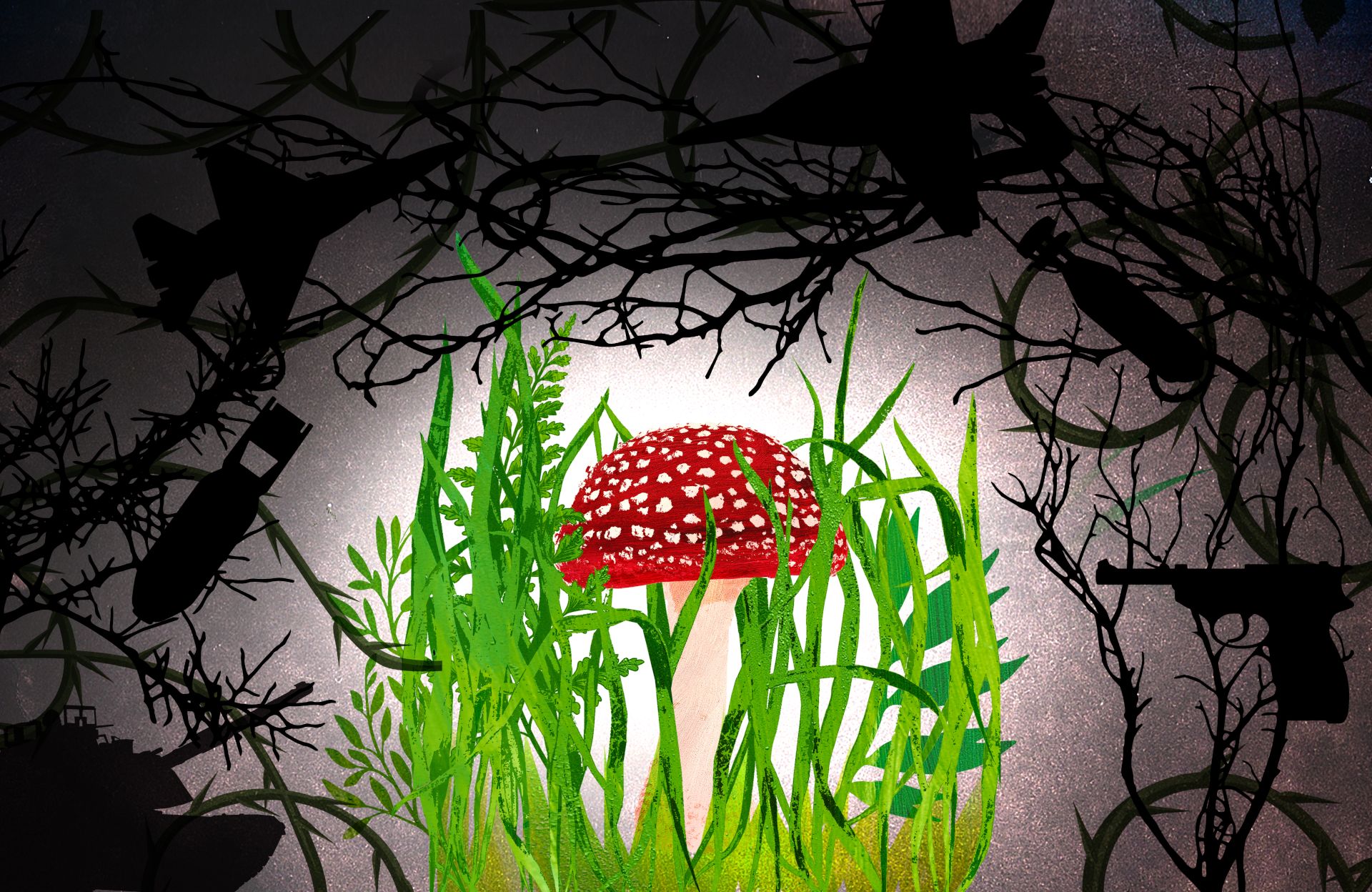
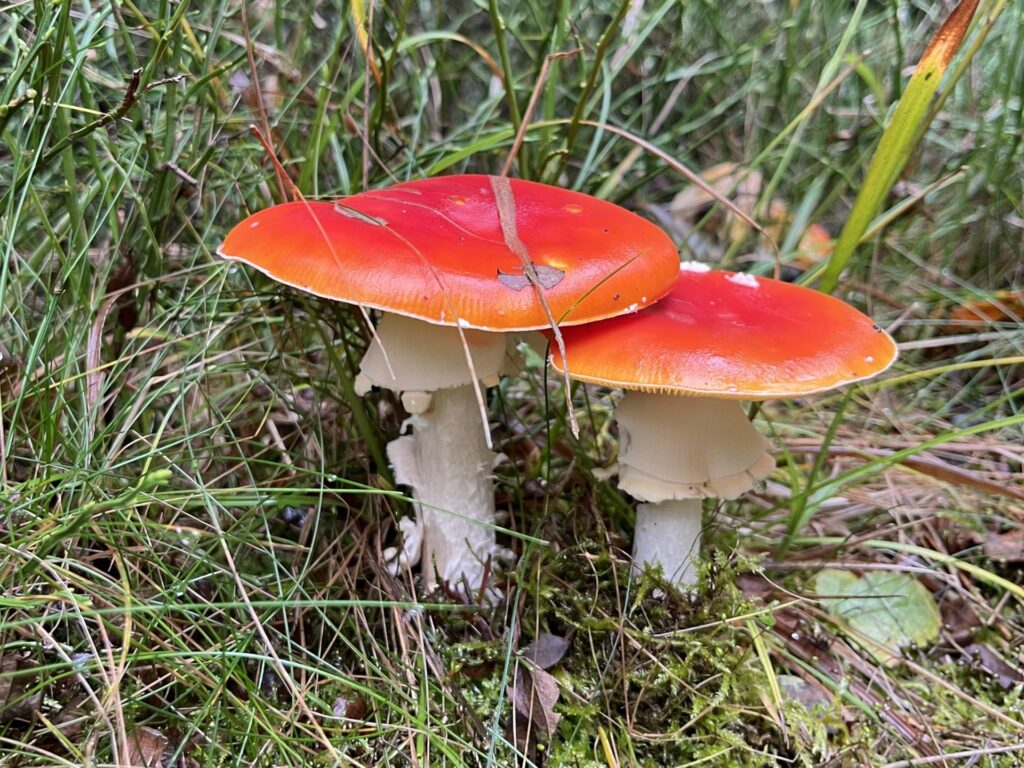
So when her adult daughter came to her bearing a palmful of shriveled mushroom caps, pinkish-orange and speckled with flecks of white, desperation for a solution made her curious. Soloshenko had grown up hearing that Amanita muscaria — known commonly as fly agaric, the red-and-white toadstool mushroom popularized by the Mario Brothers video game franchise — was poisonous, despite its long history as a salve for anxiety and various other ailments in Ukraine, as well as other parts of Eastern Europe and Siberia. But after hearing that her daughter had started microdosing, taking small amounts of the mushroom in a tea with breakfast, Soloshenko decided she would try it, too. To her surprise, she felt her stress and frustration at the people around her melt away. She started remembering things again, and even stopped having migraines, which she’d suffered for years, even before Russian tanks first rolled across Ukraine’s border in February 2022.
In a series of Telegram messages from her home in Zhmerynka, where frequent blackouts made the internet connection too intermittent for a phone call, Soloshenko emphasized that her decision to start taking amanita put her in the company of many others across Ukraine. “So many are missing in action in the war, so many children are left without fathers,” she told me. “The uncertainty of the situation is frightening. There is no confidence in the future. … I think all these are good reasons for anxiety and stress to appear.”
Indeed, as the war in Ukraine nears its fifth year, the country is in the midst of a mental health crisis. A World Health Organization report from October 2024 found that 46% of Ukrainians have mental health concerns, while the war has also interrupted health care services. Lacking other options, some in Ukraine, like Soloshenko, are discovering relief in amanita. They see it as a culturally appropriate way to combat wartime trauma in a society that, like many others in the former Soviet Union, still finds it taboo to publicly acknowledge having depression or anxiety. And although the stigma of addressing mental health has begun to loosen since Russia’s full-scale invasion, there is still a severe lack of access to medicalized solutions like therapy and antidepressants. Amanita, by contrast, is legal and not regulated as a drug in Ukraine. It can easily be bought online.
In the last three years, foragers who collect amanita from forested mountainsides every fall and sell it as an herbal supplement have seen demand balloon. Rather than consuming large amounts, people prefer to microdose, which involves taking small quantities of the mushroom that don’t trigger unpleasant effects like hallucinations and sweating. Amanita has even reached active-duty soldiers at the front. “The whole country requires psychotherapy,” said Tatiana Boichuk, a mushroom forager who has sold amanita to thousands of people across Ukraine over the past two years. “You can bring all the psychologists in the world here, and it won’t be enough,” she told me in a Telegram call from her home in Vinnytsia, south of Kyiv.
As it has grown in popularity, however, amanita has sparked controversy. Ukrainian doctors have warned people against using it, questioning its effectiveness and warning of its potentially toxic effects. Groups like Heal Ukraine Trauma, a nonprofit organization working to treat PTSD in Ukrainian soldiers with psychedelics like psilocybin mushrooms and MDMA, have so far resisted integrating amanita into their practice. And although the mushroom remains legal in Ukraine, the government has indicated it may take steps to regulate it soon, even as it has proposed legislation to allow MDMA-assisted therapy. Nearby countries such as Lithuania have banned amanita entirely. While reporting this story, I, too, wondered whether its benefits were little more than an illusion — and whether, in the midst of a brutal war, such a distinction even mattered.
Ukraine’s embrace of amanita has taken its cues from the U.S., where in recent years a so-called “psychedelic renaissance” has taken hold. Substances such as psilocybin, ketamine, MDMA and 5-MeO-DMT (a psychedelic found in the venom of Sonoran Desert toads) have shed their status as dangerous drugs and been repackaged as the newest wellness cure, particularly for educated, wealthy elites in the U.S. and the wider Global North. Several U.S. states have approved psilocybin-containing “magic” mushrooms to treat depression, while retreats offering ayahuasca, a powerful psychedelic brew made from a South American vine, are becoming increasingly popular for traumatized populations such as military veterans. Some of these retreats operate openly in the U.S. under a legal exemption for religious groups. The federal government has indicated that it may soon approve psilocybin for medicinal use, removing it from the list of banned substances (such as heroin and cocaine) known as Schedule I.
But for the most part, amanita has not caught a ride on this wave. The charismatic fungus remains underground, restricted to a scattering of hardcore psychonauts (the insiders’ term for people who explore consciousness through psychedelic use) in the West and traditional communities of Hutsul, an ethnic group in Ukraine’s Carpathian Mountains. Part of the reason has to do with its resistance to commercialization. Unlike psilocybin mushrooms, amanita has never been successfully cultivated in a lab and must be foraged from its native environment, where it grows in symbiosis with trees such as oaks, firs and birches. Its mycelium — the part of the mushroom that grows underground — forms a mutually beneficial association with the tree’s root system known as an ectomycorrhizal relationship. Mushrooms then sprout from the soil, often in concentric circles known in English as “fairy rings” and in Ukrainian as “witch’s rings.”
Another issue is amanita’s inconsistent effects and potentially toxic nature. The mushroom contains ibotenic acid, a neurotoxin that can cause nausea, vomiting, disorientation and hallucinations. When eaten raw, large doses of amanita trigger a dreamlike, potentially frightening experience that lasts hours and can, on rare occasions, be deadly. Boiling or drying the mushrooms, however, converts the ibotenic acid into muscimol, a chemical that mimics gamma-aminobutyric acid (GABA), one of the brain’s primary neurotransmitters. Another GABA mimic is alcohol, and users have described the effects of medium-to-high doses of amanita as similar to being inebriated.
A cursory search of psychedelics on the website Erowid, run by a harm-reduction nonprofit that aims to provide information on psychoactive substances, reveals that some people are still taking large doses of amanita to try to achieve a “breakthrough,” similar to a traditional psychedelic trip. However, all of the users and six sellers I spoke to in Ukraine and the U.S. recommend microdosing, both for safety and because those large doses don’t typically have any kind of therapeutic utility. Even small doses, though, aren’t one-size-fits-all; while one person might need no more than a half a gram, others can handle up to five without “tripping,” or feeling the mind-altering effects of the mushroom. Finding the right dose is a process, Boichuk told me. She recommends her clients start small and work their way up until they find the amount that’s right for them.
The effects of amanita can also vary depending on the season and the time of day, Boichuk explained. Taking it in the morning can have energizing effects, similar to coffee; at night, however, it helps encourage deeper and longer sleep. Many practitioners, including Boichuk, take it seasonally, finding that they don’t need it as much in the summer.
Just a few years after it was first sparked by the U.S. “psychedelic renaissance,” Ukraine’s amanita boom has begun to boomerang back to the states, though on a relatively small scale. Over Zoom, I spoke with Vadym Khomenko, a 40-year-old Ukrainian entrepreneur now living in Lithuania. After the start of the 2022 invasion, Khomenko wanted to do something to help people suffering from stress and trauma from the war. Like many in Ukraine, he grew up hearing stories about amanita, but decided that rather than selling whole mushrooms, he would isolate muscimol, its main active compound.
This approach is controversial among some amanita practitioners, who argue that focusing on a specific molecule will have different effects from consuming actual mushrooms. But Khomenko believes this could be an easier sell in a difficult regulatory environment such as the U.S., where federal agencies look for consistency and shun unpredictability.
Khomenko’s company, which sells muscimol supplements in Ukraine under the name Muscimol One and in the U.S. as Present Perfect, markets his product as “meditation in a pill.” Rather than helping process long-term traumatic memories, he said it aims to provide short-term relief for high-stress situations, such as during Kyiv’s nightly air-raid alarms.
“You feel present,” Khomenko told me. “You’re not feeling brain fog or overexcitement. You can basically have a bit of control of yourself in this situation.”
Tatyana Voloshin, a Russian-Ukrainian career coach based in Miami, uses amanita to help her clients — who range from everyday Ukrainians to American corporate executives working on Wall Street — to deal with burnout from their high-stress jobs. Voloshin believes that, despite its growing popularity in the U.S., amanita will remain a niche substance because of the mushroom’s aversion to standardization.
“It’s not something you can grow in a lab,” Voloshin told me. “If you can’t make sure it’s uniform, how can you make it a commodity? Amanita is against commodification.”
It may be difficult to envision a serious role for amanita as a mental health aid because for so long it’s belonged primarily to the realm of fairy tale, myth and legend. A popular, likely apocryphal story alleges that Santa’s flying reindeer were actually hallucinations conjured up by Arctic peoples after eating the mushroom. Other tales credit the Vikings’ feared brutality and strength to large doses of Amanita muscaria or another species, the brown-capped Amanita pantherina, which caused them to go “berserk.” In the mid-20th century, R. Gordon Wasson, a former banking executive turned ethnomycologist, argued that Amanita muscaria was the primary substance found in soma, a sacred drink used by the people of the ancient Indus Valley to induce immortality and mentioned in the Vedas, the foundational texts of Hinduism.
In Ukraine and other parts of the former Soviet Union, amanita is known as “mukhomor” (“fly-killer”), giving rise to its English name of fly agaric. Despite its toxicity to insects, humans have consumed the mushroom for millennia, as a medicine, an intoxicant and a ritualistic aid. Russian archaeologists have found rock carvings portraying amanita in Siberia’s Far East. In his 2020 book “Fly Agaric: A Compendium of History, Pharmacology, Mythology, and Exploration,” anthropologist Kevin Feeney relates stories of explorers who traveled through the Kamchatka Peninsula in the 18th century, where they observed Indigenous Koryak peoples consuming amanita during feasts.
The Russian shamanism researcher Olard Dixon, who uses this name as a pseudonym, has posited that Siberian peoples used the dream states induced by amanita to contact spirits or ancestors, calling the hallucinogenic journey “a kind of spiritual flight, or … a descent and ascent of the soul.” Following successive waves of Russian colonization, however, amanita use was discouraged, first by the Russian Orthodox Church, and then by Soviet authorities who popularized the idea that the mushroom was poisonous. After Ukraine gained independence in 1991, these narratives persisted, especially among older generations.
In the years before the full-scale invasion, however, this was beginning to change. Microdosing, a term popularized by American psychedelic researcher and writer James Fadiman in the 2010s, was beginning to take root, and information about amanita was spreading via Russian- and Ukrainian-language websites and social media. In August 2022, a Russian doctor living in northern California and going by the name of Baba Masha published the first full-length book on the subject, “Microdosing With Amanita Muscaria.” In it, she presented data from more than 3,000 people who reported their experiences with microdosing the mushroom, including information on dosage, timing and effects. The book, along with Masha’s Russian-language podcast, Radio Psychedelix (which she said was banned in Russia in 2018, and again in 2020, for “spreading information about drugs”) helped to spread knowledge about how to microdose with amanita across the Russian-speaking world, including parts of Ukraine.
This rise in popularity has coincided with pushback from authorities, as well as some public health scares. Last year, a brand of mushroom edibles called Diamond Shruumz was linked to hundreds of poisonings across the U.S. and at least two deaths. Although it’s not clear which of the product’s various ingredients were responsible, some Diamond Shruumz products were found to contain muscimol, leading the Food and Drug Administration to issue a warning that amanita should not be used in food products (such as mushroom chocolates). Although the mushroom remains legal in all states except Louisiana, sellers say they’ve faced pushback from credit card companies and suspicion from customers as a result.
Experts have also raised concerns that people are turning to amanita to treat mental health disorders without any scientific research that supports such a hypothesis. Writing last year in the American Journal of Preventive Medicine, a group of public health researchers and doctors from the University of California, San Diego warned that “without clinical evidence” for amanita’s effectiveness in treating depression or anxiety, its use “could prolong symptoms that might otherwise be alleviated by proven therapies.”
Yevgeny Skripnik, a Ukrainian psychiatrist, has spoken out against the rising popularity of amanita in Ukraine, arguing that its perceived effects can be attributed to the placebo effect. Without the funding to conduct large-scale studies, practitioners must contend with the often contradictory available scientific literature on the subject. For example, a major study published last year by researchers in the Netherlands and the Czech Republic appeared to support Skripnik’s conclusion regarding classical psychedelics such as “magic” mushrooms. The study, which appeared in November 2025 in the journal Neuropharmacology, found that users who took small doses of psilocybin and expected to feel something did, reporting results like enhanced creativity and cognitive function. But earlier studies involving muscimol, the active ingredient in amanita, have also found that it does lower stress responses by suppressing the activity of the central nervous system.
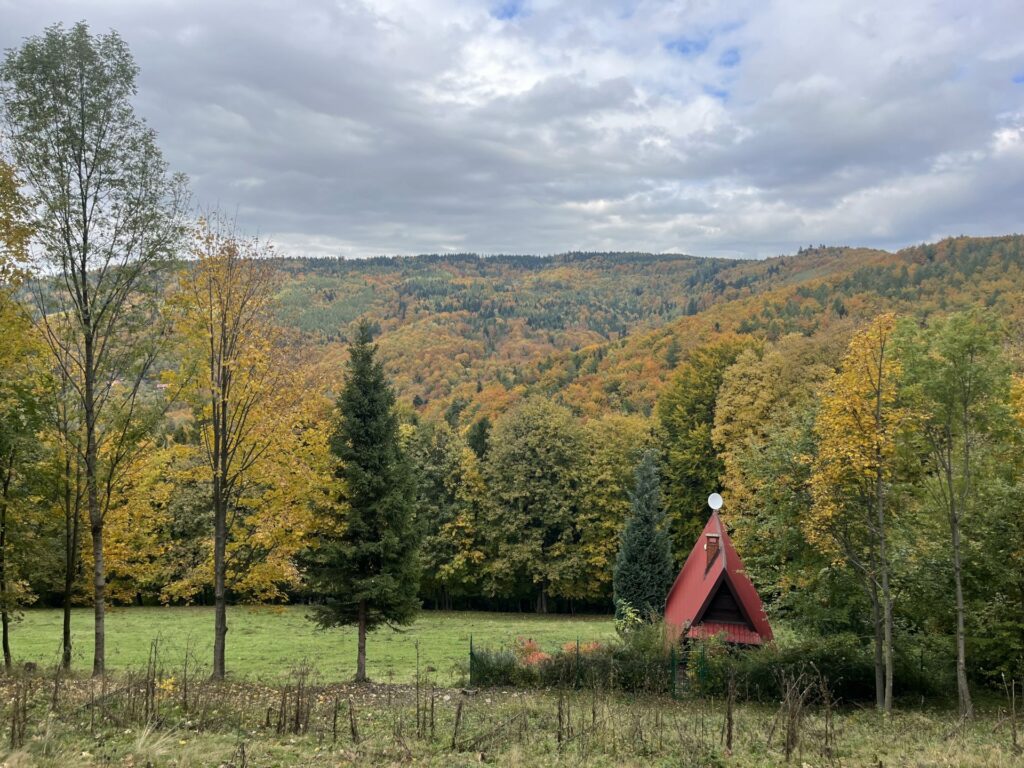
On an early October evening in Kyiv’s vibrant Podil neighborhood, I walked into a brightly lit wellness store called the Humanist Doping Market. The clean, almost sterile space reminded me of a legal marijuana dispensary, minus the glass display cases showing off strains of indica and sativa. Instead, bottles of vitamins and supplements lined the shelves along the walls, along with fridges stacked with kombucha. In between CBD oil and extract of black juniper, I found amanita. Packaged in iridescent silver wrapping, it was sold in the form of capsules containing dried mushrooms, as well as chocolate bars.
I asked one of the workers, a dark-haired woman who appeared to be in her late 20s and only gave me her first name, Alexandra, whether she had seen an uptick in customers buying amanita since the start of the war. Although the store only began selling amanita a few months earlier, Alexandra said the war coincided with a growing interest in microdosing for general wellness, as the psychedelic renaissance spread to Ukraine.
“There has been a lot more demand for amanita, because it can help people cope with states of anxiety, with some situations that destabilize people’s nervous systems,” Alexandra told me. She also started using amanita during the war and found that it helped her sleep — and gain a new appreciation for nature while living in an urban setting.
“Now autumn has come, and I’ve started to notice colors, some little things of beauty more,” she said.
In Ukraine, as in other parts of Eastern Europe and the Caucasus, mushroom foraging is not merely a means to an end. It may have started that way, as a source of supplemental food during times of scarcity and famine. But now, it’s a tradition deeply ingrained in society, with families setting off into the forest each summer and fall, then passing off their bounty to grandmothers in the villages, who dry and pickle it for the winter. Although I was born in California, my family is Russian, and I grew up hearing my parents speak of these foraging expeditions with deep nostalgia. I wanted to understand what it meant to look for amanita in the wild, not just as an economic activity, but as a cultural practice.
Two years ago, I got in touch with Viktor Hordubei, a mushroom forager who sells amanita through his online shop, Amanita Store. At the time, Hordubei was living south of the city of Lviv in western Ukraine, on the edge of the Carpathian Mountains. But by the time I was able to tag along on one of his foraging trips in October, he had moved to southern Poland, fearful for his and his family’s safety after a barrage of Russian missile attacks hit western Ukraine in late 2024. So on a crisp fall morning, Hordubei picked me up at the train station in the town of Bielsko-Biala, south of Krakow, and we drove off into the forest to look for mushrooms.
Hordubei is 31 and works full time as a software engineer for an American company with a branch in Ukraine. Like many in the region, he grew up foraging with his family, and remembers learning from his grandfather about which species to pick and which to avoid. Even before the invasion, Hordubei began receiving requests for amanita from his friends who knew he liked to spend time in the forest searching for the highest-quality specimens. He set up an online store and quickly began supplying amanita across Ukraine, including to active-duty soldiers at the front, who live under the constant fear of imminent death.
“It helps people to forget about it,” Hordubei told me, “like a bad dream.”
Still, the question of whether the hype around amanita is simply opportunistic marketing is a worrying one — as is the question of whether the mushroom is, in fact, actively harmful. In 2023, Ukraine’s State Service for Food Safety and Consumer Protection warned of six cases of poisoning from Amanita muscaria mushrooms, one of which was an 11-year-old who purchased dried mushroom capsules online. Last year, Poland banned the sale of amanita, and some of the foragers I spoke with worried that Ukraine would be next.
The solution, according to Khomenko, the entrepreneur, is to collect empirical data demonstrating that amanita has beneficial effects. So far, its underground nature has left it vulnerable to regulation from a government that doesn’t understand it, he said.
“Humanity feels that they lack a solution to the mental health crisis, and we don’t have many opportunities to help ourselves,” Khomenko said. Muscimol, he believes, is “a powerful molecule” that has the potential to provide relief to people, if done right. “We just need to do our work well and provide as much open and scientific information as possible.”
In some ways, though, I felt that the question of whether amanita “worked” was not the most important one to be asking. It was clear to me that people were turning to amanita out of a lack of other options, in a country where millions face the stress and anxiety of waiting for the next drone strike, or to get a phone call informing them a loved one has been killed. Concerns about toxic effects and shady dealers in an unregulated market were, of course, valid. But in an environment where therapy and medication of the kind accessible in the West were lacking — or, perhaps, not the right fit for everyone — it made sense that grassroots solutions like amanita would work for at least some of the population, whether that is due to placebo or not.
For others, like Hordubei, the chemical composition of the mushroom is less important than what it represents. After leaving Ukraine, he decided to move to Bielsko-Biala, nestled at the edge of the Carpathian Mountains, to be close to nature; after logging off from his programming job, he goes hiking in the forest almost every day, weather permitting. Hordubei sells amanita to customers online and takes it himself, but unlike Soloshenko, he doesn’t credit the mushroom with any major life changes or shifts in his mental health. Instead, what he really feels has helped him is just being outside — the exercise, the calmness, the connection to his family and his heritage.
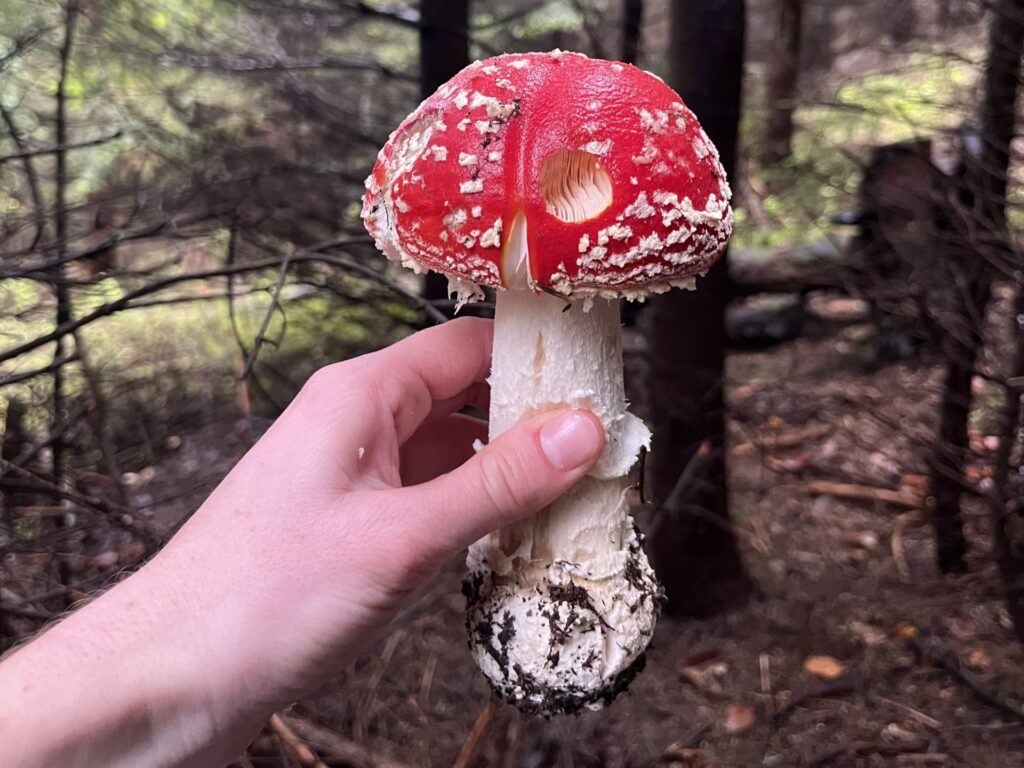
That much was clear as we traipsed through the forest, peeking underneath fir trees and crunching through fallen leaves, our eyes scanning the ground for flashes of red. Though the first 15 minutes yielded nothing, as we trekked deeper into the woods we came upon our first few amanita mushrooms, each bigger than the last. Finally, about 30 minutes in, we came across an ideal specimen, perfectly proportioned and about the size of my fist.
Hordubei held the mushroom by its stem, severing it from its mycelium using a pocket knife. He gently brushed the dirt from its cap, then rotated it between his fingers, marveling at its smooth skin and vibrant color. He turned to me, eyes shining. “Look,” he said. “It’s just perfect.”
Become a member today to receive access to all our paywalled essays and the best of New Lines delivered to your inbox through our newsletters.