


It is January 2026. A few dozen miles from the Iranian border, the small Iraqi Kurdish town of Koy Sanjaq carries the unmistakable feel of Iran, and for good reason: Over recent decades, this city of roughly 30,000 inhabitants has hosted several waves of exiles, largely political, from the neighboring Islamic Republic.
Mehdi is among the most recent arrivals. Only a few days ago, the 25-year-old was still protesting in the streets of Khorramabad, his hometown in southwestern Iran, as part of a popular movement that had swept across the country before being brutally suppressed. At demonstration after demonstration, he witnessed firsthand the ferocity of the Iranian regime, prepared to do anything to extinguish the uprising that had spread nationwide since late December.
He explains that he was gripped by a terror that ruled everything. “Every day we gathered downtown around 6 in the evening. It felt like a state of siege. We had already experienced something similar during the protests after the death of Mahsa Amini [a young Kurdish woman killed in Tehran in 2022]. It was as if the same violence had returned to knock on our door. Special forces, masked and dressed entirely in black, deployed across the streets. Behind them was a second line of security forces, ready to surround us and arrest us, with batons and tasers.”
For the young Kurd, it was “the beginning of a nightmare,” as he feared for his life and that of his family — especially the women, who he says face extreme violence in detention.
“I come from a working-class family. The story of my life is like the flame of a candle that loses its intensity day after day. No work, no money and, above all, extreme violence whenever people protest.”
Then he adds, anger rising in his voice: “They shoot at unarmed people — people who are hungry and asking for rights. If only we had weapons to defend ourselves.”
A few dozen miles away, the Zagros Mountains marking the border between Iraq and Iran rise on the horizon. In this mountain range, hundreds of other Iranian Kurds have taken refuge in exile. It has been a long time since they gave in to the temptation of armed struggle.
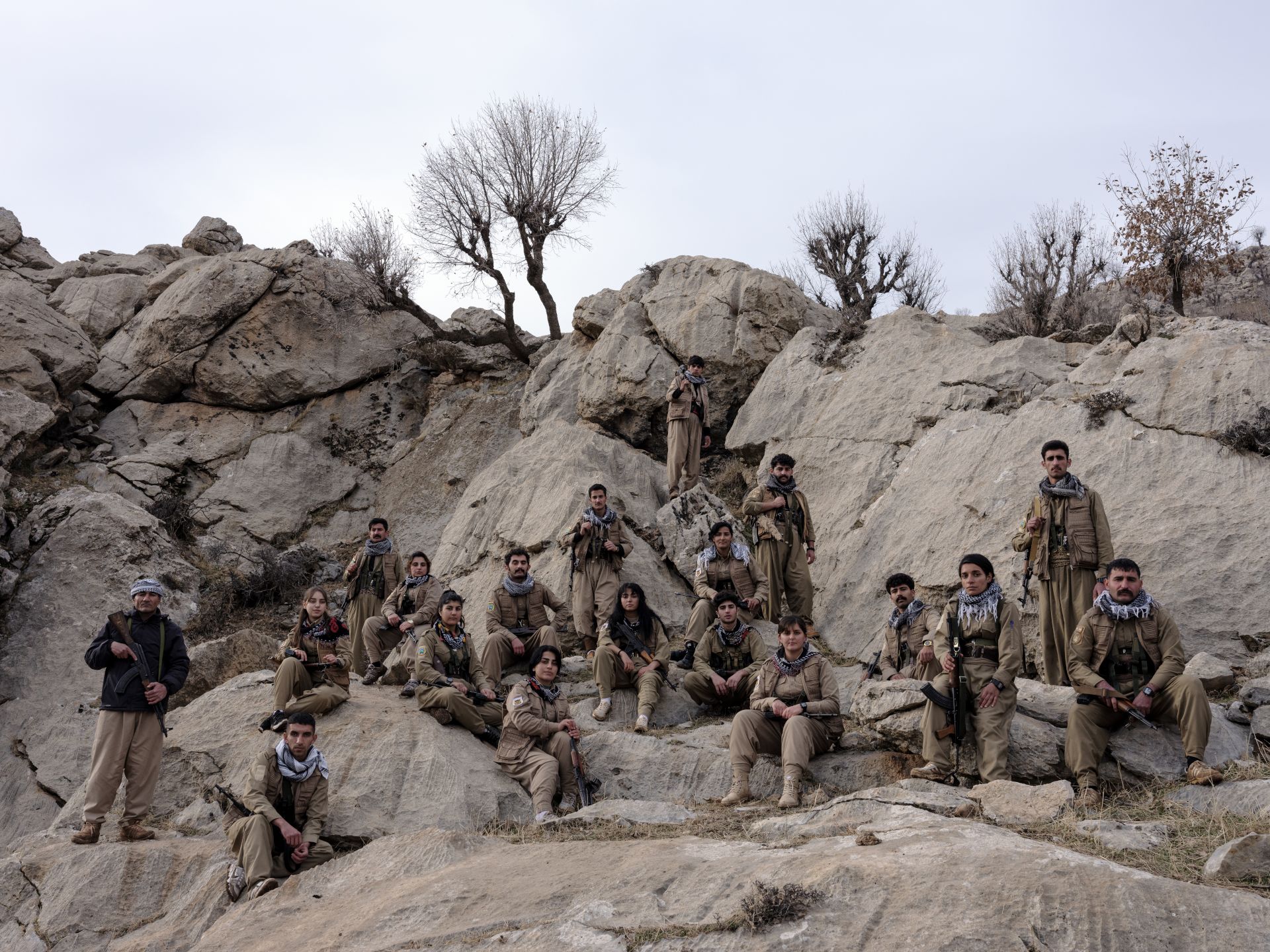
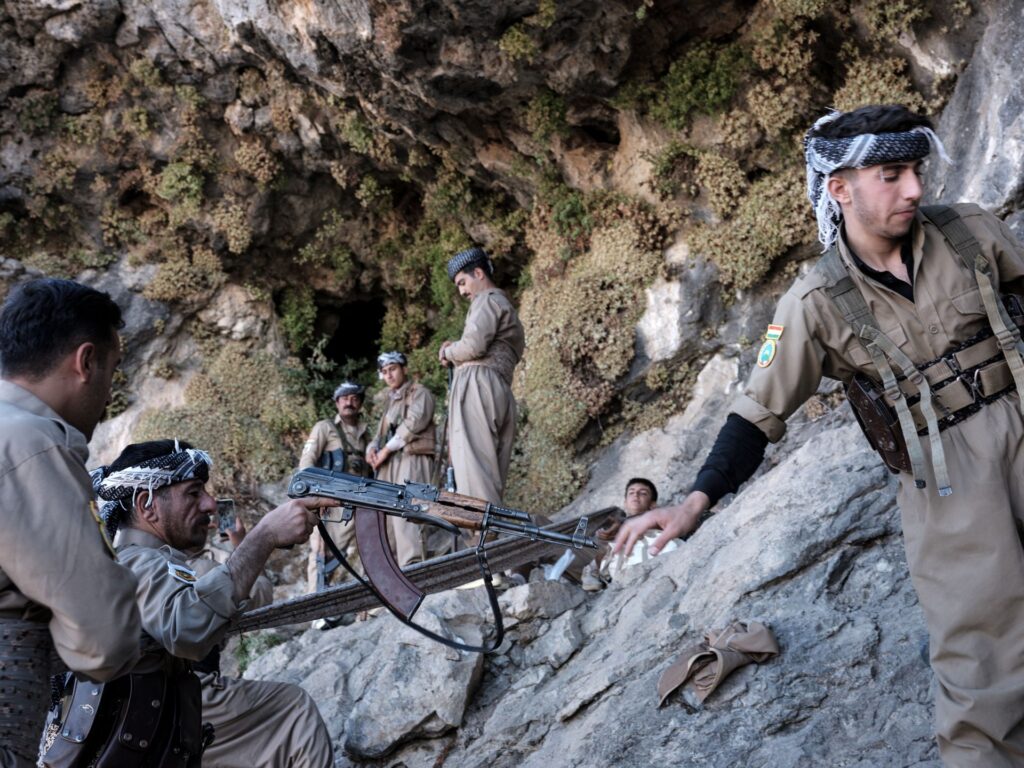
Nestled between two snow-covered peaks towering more than 8,000 feet above sea level, a secret base of the Democratic Party of Iranian Kurdistan (PDKI) — founded in 1945 and one of the four main Kurdish opposition parties — emerges in the landscape. A few dozen fighters, all of whom crossed into Iraq clandestinely, live there in precarious conditions.
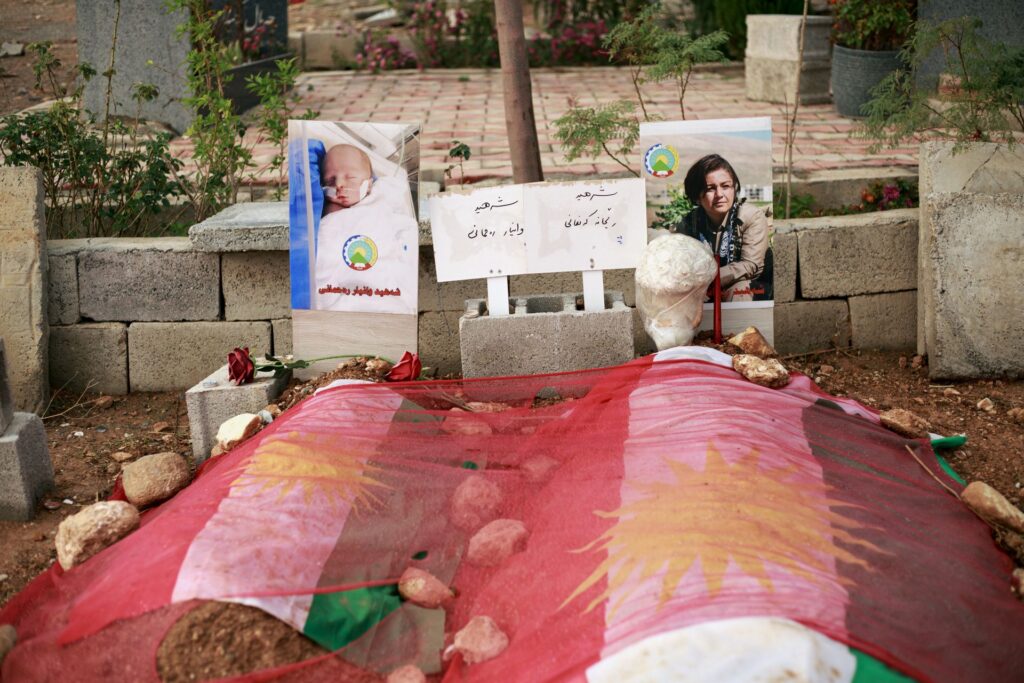
Although the party, which once fought fierce battles against the Islamic Revolutionary Guard Corps along the border strip, no longer conducts armed operations against them, it has managed to maintain its political and military activity, though not without difficulty: On a regular basis, most notably in 2018 and 2022, salvos of missiles launched from Iran have struck their positions, causing dozens of deaths.
It is a hostile environment, to say the least. Yet morale among the fighters remains intact. In fact, every year, according to their commanders, dozens of new recruits cross the peaks of the Zagros to join the guerrilla ranks.
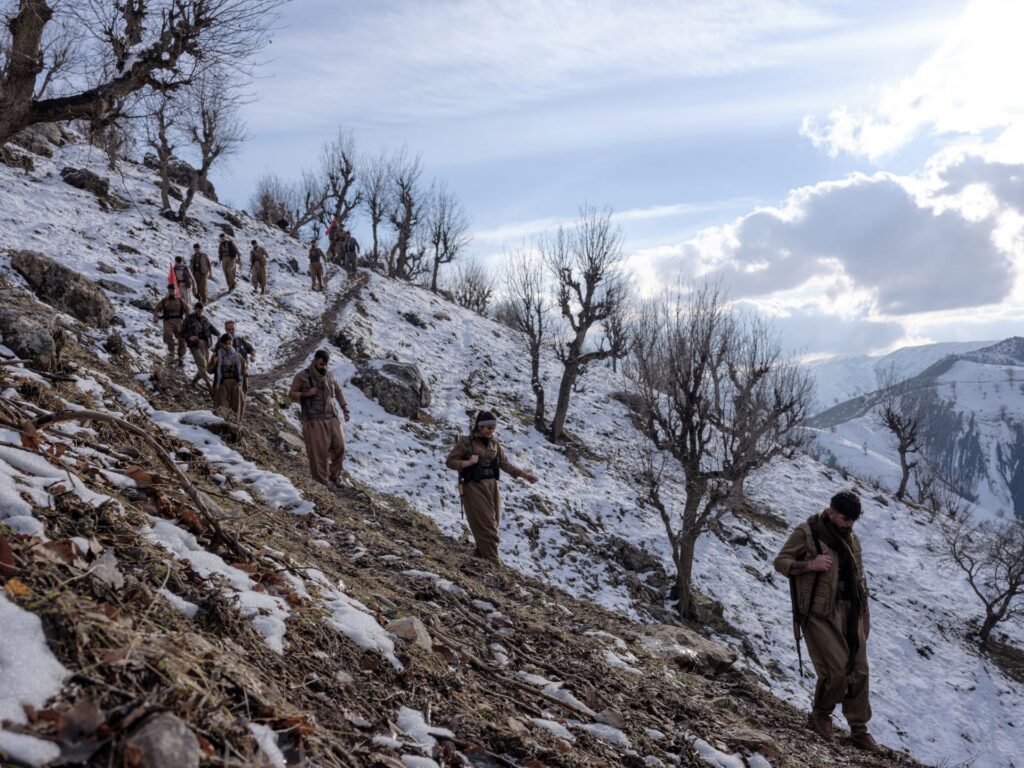
Dressed in traditional Kurdish clothing, Kalashnikovs slung over their shoulders, a group of peshmerga moves along the steep slopes of the surrounding mountains for a daily march and training session. The light atmosphere among this group of young fighters, some barely out of their teens, almost manages to conceal the obvious disappointment caused by the crushing of the Iranian protest movement.
Amira, who is 30 years old and has been a member of the PDKI for four years, admits it openly: Like her comrades, she believed the moment to return home had arrived.
“This uprising was completely different from all the others. From the very first days, we talked about it among ourselves. We imagined going back to our country. Of course, we knew the regime would not fall easily. But the combination of massive protests across the country and international pressure could have triggered a radical change.”
A few yards away, Sarina prefers to remain hopeful. The 22-year-old joined the PDKI when she turned 18 and has not seen her relatives in Iran since. Worse still, since telecommunications were cut inside the country, she has lost all contact with her family.
Yet she does not regret her decision for a single second. “Here it’s like a university for me. I learn Kurdish history, culture, even dance. Everything that was forbidden to me in Iran. I feel free.”
She admits that the images of killings coming out of Iran have brought her closer to the Iranian population as a whole — a connection she had never really felt before as a Kurd.
“During the protests after Jina’s death, Kurdish areas were repressed far more harshly than the rest of the country,” she says, using the Kurdish name of Mahsa Amini. “In recent weeks, the same methods have been used in Tehran and other major cities. So yes, I feel much closer to all components of Iranian society now than ever before.
“It’s no secret that the vast majority of Iranians want this regime to fall,” Amira continues. “But it came to power by killing — and it has stayed in power the same way. It will not fall through dialogue. They are killing peaceful demonstrators, unarmed people, women, children. Only violence will change things: the intervention of foreign countries combined with an armed uprising inside the country.”
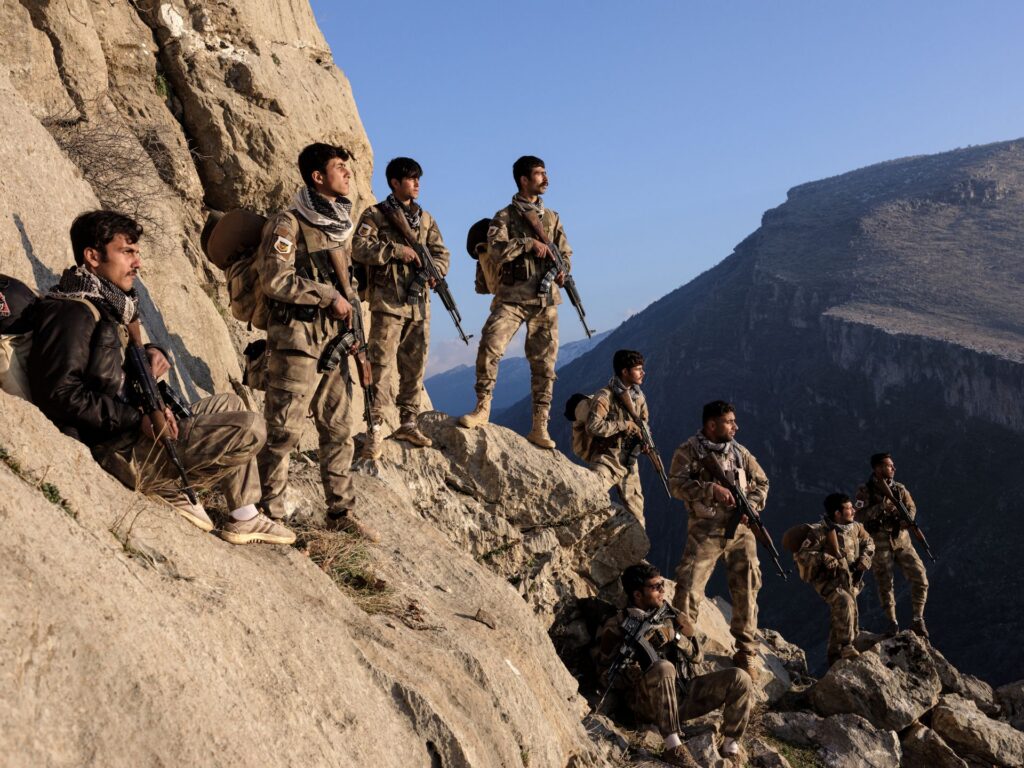
A few hours’ drive away, deep within another mountain range, the troops of the Komala Party of Iranian Kurdistan, a group inspired by communist teachings, are preparing their weapons. In their base, composed of discreet barracks built along a hillside, the Iranian uprising has sparked an unprecedented wave of hope.
Ali, 31, joined the party’s ranks after the death of Mahsa Amini, convinced that peaceful protest movements would never defeat such an ultraviolent regime. “Since 1979, Iran’s history has been marked by waves of protest that keep growing stronger. But unfortunately, our people have more courage than weapons, and that is our weakness,” he says. “One day, with patience and determination, we will win. The peoples who make up this country will prevail — and we will play our role in that victory.”
Here, the party’s red flags and its hard political line contrast with the social-democratic vision of the PDKI. Yet both groups share the same horizon: a federal Iran that respects minorities, rather than independence for their region.
“We are anti-imperialists, and therefore opposed to the U.S.-Israel axis confronting the Islamic Republic. But does the Iranian population really get to choose its allies? I don’t think so,” Ali says. “That does not change our struggle — for gender equality, for the rights of minority peoples in Iran, for the country’s sovereignty and, of course, for Kurdish rights. Our region has lived in a state of war for almost a century. The Islamic Republic invented nothing.”
Everyone here also remembers that the only Kurdish republic ever proclaimed — Mahabad — was crushed in blood by the Iranian central government only months later, in 1946.
“How do we win?” Ali asks rhetorically. “No nation has gained its freedom without blood. We have Kurdish military forces to protect the population, but that is not enough for a territory as vast as Iran. I believe the solution may come from the minorities — from our collective engagement in a shared movement.”
After several hours of marching, the party’s troops, hidden behind a snow-covered mountain, begin military training exercises. Weapons handling, combat strategies: Under the orders of their commanders, even the youngest practice meticulously. Yet everyone knows that, for now, these are essentially defensive drills, awaiting a highly uncertain turning point.
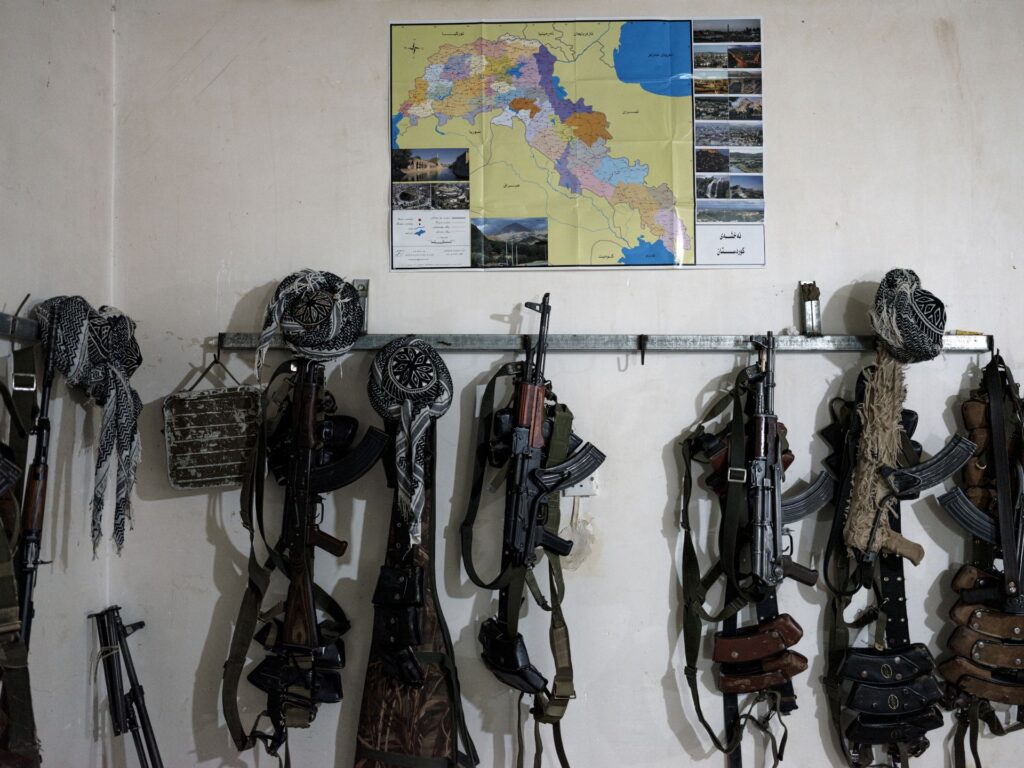
As night falls and the cold grips the bodies, the youthful face of Hawji, a 27-year-old woman, contrasts with the harshness of the surrounding landscape. In a calm voice, she explains: “Unfortunately, if the Western countries had kept their promises, we would already be back home with our families. This is not the situation we dreamed of. We are still here — and still without news from our loved ones.”
She arrived in Iraq only in the summer of 2025. “For a long time, I thought about becoming politically involved. During the protests after Jina Amini’s death, I saw someone killed right in front of me in my village. I left because I had no rights — neither as a woman, nor as a Kurd, nor even as a citizen. We cannot even choose the language we want to speak, nor the god we want, or don’t want, to pray to. The first thing I will do if the regime falls, when I return, is work in education and teach equality between men and women.”
Night descends over the Zagros Mountains. And with it comes the uncertainty of tomorrow.
Among the fighters, many speculate about a possible ground offensive. Discussions between the various Kurdish parties are intensifying.
Ayoub, a PDKI cadre, explains: “Repoliticizing society is a duty, and I believe we should expect nothing from foreign powers. Not from Donald Trump, not from anyone. Perhaps an intervention will take place, but we must not wait for it.”
For the first time in their history, the various Iranian Kurdish factions have found common ground and established a platform for cooperation. PDKI, the Kurdistan Free Life Party (PJAK), the Komala Party, the Kurdish Freedom Party (PAK) and the Organization of Iranian Kurdistan Struggle, known as Khabat, now stand united.
The project is more political than military, laying the groundwork for the protection of Iran’s Kurdish population. According to converging sources, discussions about a potential ground incursion do exist, even if such a scenario has not formally been placed on the table.
It is enough, however, to draw the attention of the United States, which has been closely monitoring developments. Kurdish groups have sensed that something is unfolding, even if they have been unsure as to exactly what is being discussed in Washington.
Those discussions have become more significant than ever. On Feb. 28, Iran’s supreme leader was killed in Israeli-American strikes. Few seem convinced it’ll signify the end of the regime. “I’m not sure his death or removal will create a major rupture,” comments a PDKI official. “The Revolutionary Guards are another part of the problem — and by no means the smallest.”
Across the border, Israeli and American strikes are now intensifying across Iran, particularly in Kurdish regions where the regime has concentrated numerous military bases. Reached with difficulty by telephone, residents describe “terrifying” scenes in western Iranian cities: “The bombing of their bases is constant, so regime forces avoid staying there and have flooded our streets instead. We are confined to our homes, we no longer go out, and almost all shops are closed,” explains Rojda, a 40-year-old resident of Saqqez.
Yet despite persistent fear, hope still circulates. “When the intelligence department in my city was hit, I felt a deep sense of joy, as if a rage accumulated over many years had finally eased. That place was a slaughterhouse where I myself had once been detained,” recounts a resident of Mahabad, also reached by phone.
Still, as Jila Mostajer, co-founder of the human rights organization Hengaw, points out, the bombings have so far produced little tangible effect while placing civilians at great risk.
“According to our count, more than 50 civilians have been killed so far in the bombings. The Kurdish provinces have been heavily militarized for years, which is why they are particularly targeted.”
The region has effectively become a front line, and not without reason: The Iranian authorities, deeply suspicious of minorities, have not forgotten that the nationwide uprising triggered by the death of Mahsa Amini in September 2022 was first ignited in Iranian Kurdistan — before spreading across the entire country.
Long accustomed to near-total invisibility — even when, in 2018 and again in 2022, Iranian missile strikes rained down on their positions and surrounding villages — the Iranian Kurdish groups in exile in Iraq now suddenly find themselves at the center of global attention.
That attention has been received reluctantly, and largely with surprise, yet it is a logical outcome of a war whose objectives remain unclear. Seeing in these thousands of Kurdish fighters a potential lever for destabilizing the Iranian regime, the American administration expressed support and signaled readiness to back them in a possible ground offensive.
Several media outlets, including some that are usually well-informed, reported the first incursions. The Kurdish groups categorically deny these claims, just as they reject reports of imminent arms deliveries from the U.S. or Israel.
“These leaks are putting pressure on the Kurds to choose a side, while at the same time signaling to Tehran that Kurdish regions represent a strategic lever,” says Kamal Chomani, a doctoral researcher at Leipzig University and founder of the online media outlet The Amargi.
It is a dangerous game. Not only could it fuel hostility among many Iranians, who might interpret Kurdish involvement as a separatist agenda, but any action backed by the U.S. also exposes the Kurds to the risk of abandonment should Washington reverse course.
“These powers tend to prioritize their own interests once the threat has passed, often leaving the Kurds behind,” Chomani continues. “It risks repeating a familiar pattern: being considered ‘strategic’ during a crisis, only to be abandoned once the great powers have achieved their goals.”
It is a danger Kurdish parties seem well aware of. As Ehwen Chiako, a member of the PJAK leadership council, explains: “We have the right to seek international support and to take advantage of the weakening of the Islamic Republic in order to achieve our objective — the establishment of a democratic and decentralized Iran. However, we must act with vigilance and lucidity. We do not want to become cannon fodder.”
Faced with these reservations, Trump stepped back on March 7, explaining that Kurdish forces would ultimately not enter the conflict, because the situation in Iran was already “complex enough.”
But reality appears more blunt: The Kurdish groups, without any guarantees and still wary after the recent abandonment of their counterparts in Syria, refused to follow the American president in what many view as a highly uncertain strategy.
Yet the point of no return may, nevertheless, already have been crossed. Seen by Tehran as traitors in the pay of the U.S. and Israel, despite the absence of any proven logistical assistance, the Kurdish groups now find themselves squarely in the eye of the storm.
“Repression could intensify dramatically, with a genuine collective punishment,” warns Chomani. “Remember that in the 1980s, Saddam Hussein accused the Kurds of supporting Iran during the Iran-Iraq war and used extreme brutality to crush Kurdish resistance — even resorting to chemical weapons. A similar pattern could occur in Iran.”
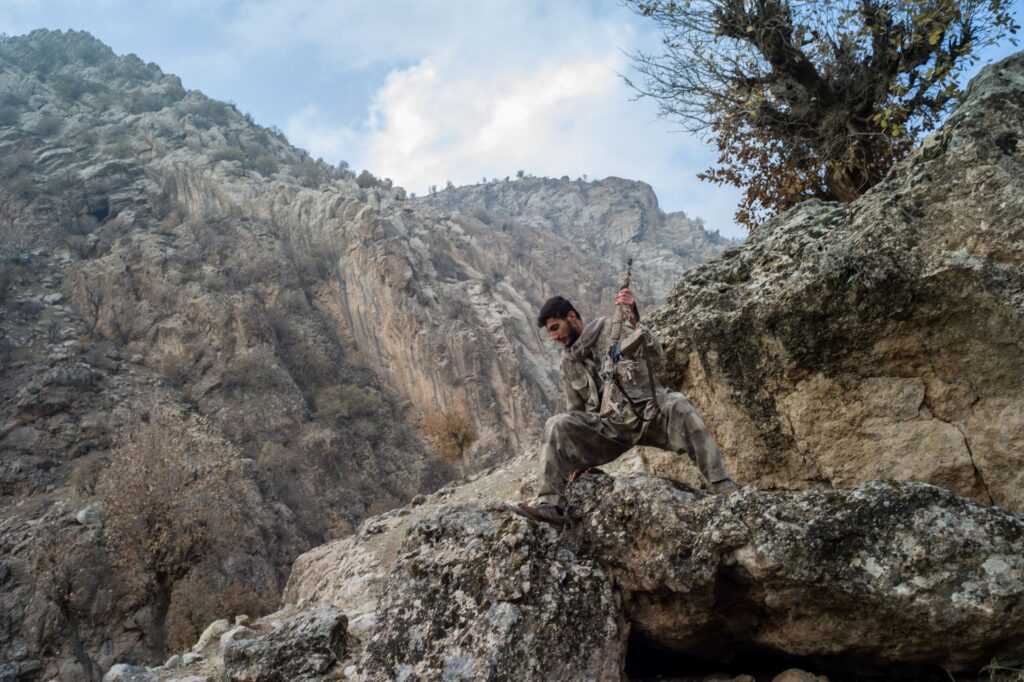
What would be the response of Kurdish armed groups? “If our people in Kurdistan are massacred, we will defend them. That will be self-defense,” warns a senior PDKI official.
The danger for the Kurds is, in fact, cross-border. The semiautonomous Kurdistan Region of Iraq itself is under constant pressure from the Iranian regime, as well as from several militias affiliated with the Popular Mobilization Forces (PMF), grouped under the umbrella of the Islamic Resistance in Iraq.
Their primary targets include Iranian Kurdish opposition groups but also, increasingly, the Kurdistan region itself, long locked in political and territorial tensions with Baghdad. On social media, individuals linked to PMF factions have even circulated graphics displaying the locations and estimated troop numbers of Kurdish groups, hinting at possible future attacks.
As a result, the leadership of the Kurdistan region now finds itself under intense pressure. On both sides of the border, tension remains extremely high.
From Iranian Kurdistan, Rojda confides: “We are afraid, very afraid. We hope the regime will fall, because if it survives we may face a new cycle of killings and executions.”
A similar anxiety prevails across the border in Iraqi Kurdistan. Manitx, a 40-year-old woman living in a village near a PDKI base, concludes quietly: “We know they can strike us at any moment. My youngest son is 7 years old. He has never seen his homeland and has lived in fear since the day he was born. This is not a life.”
Become a member today to receive access to all our paywalled essays and the best of New Lines delivered to your inbox through our newsletters.