


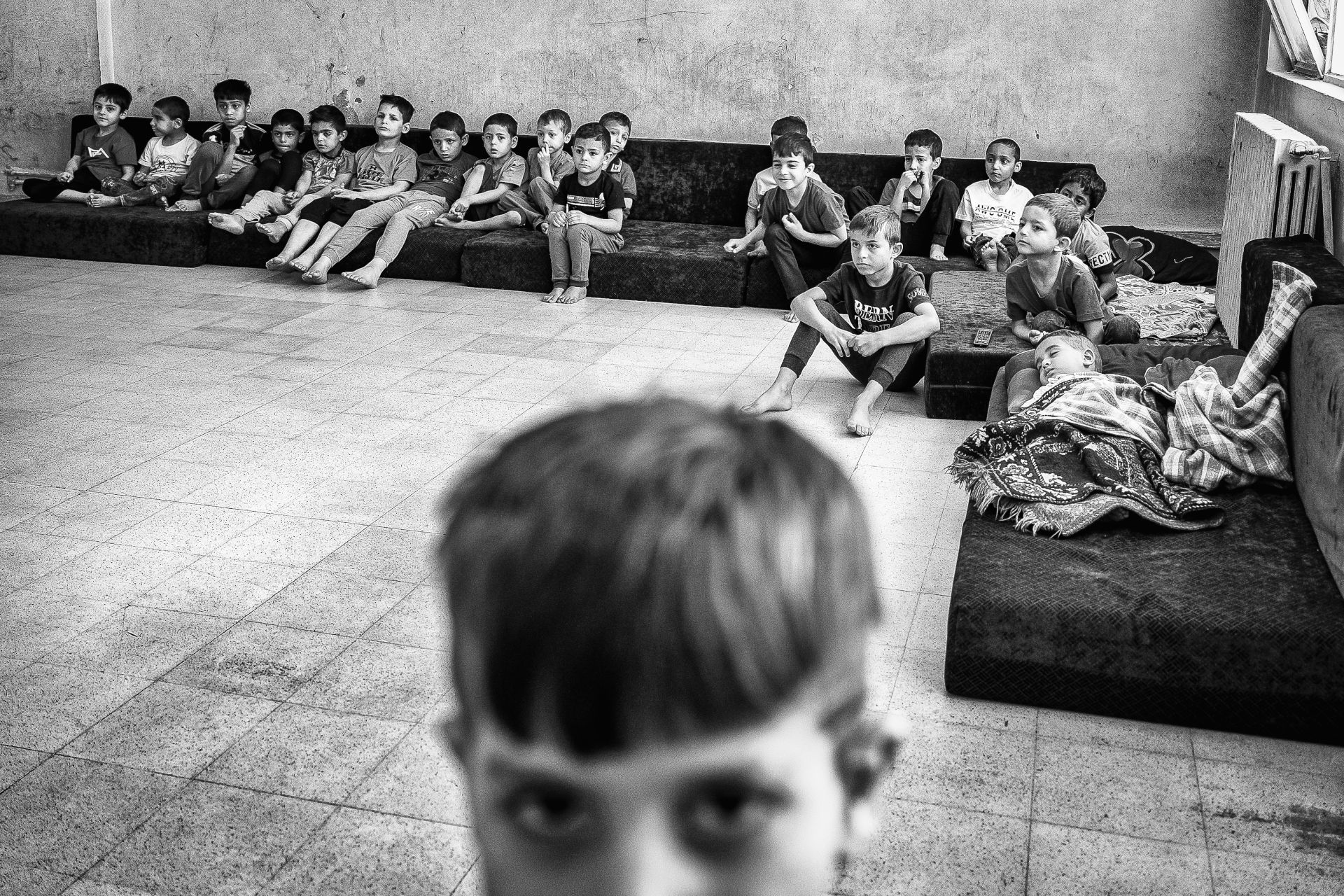
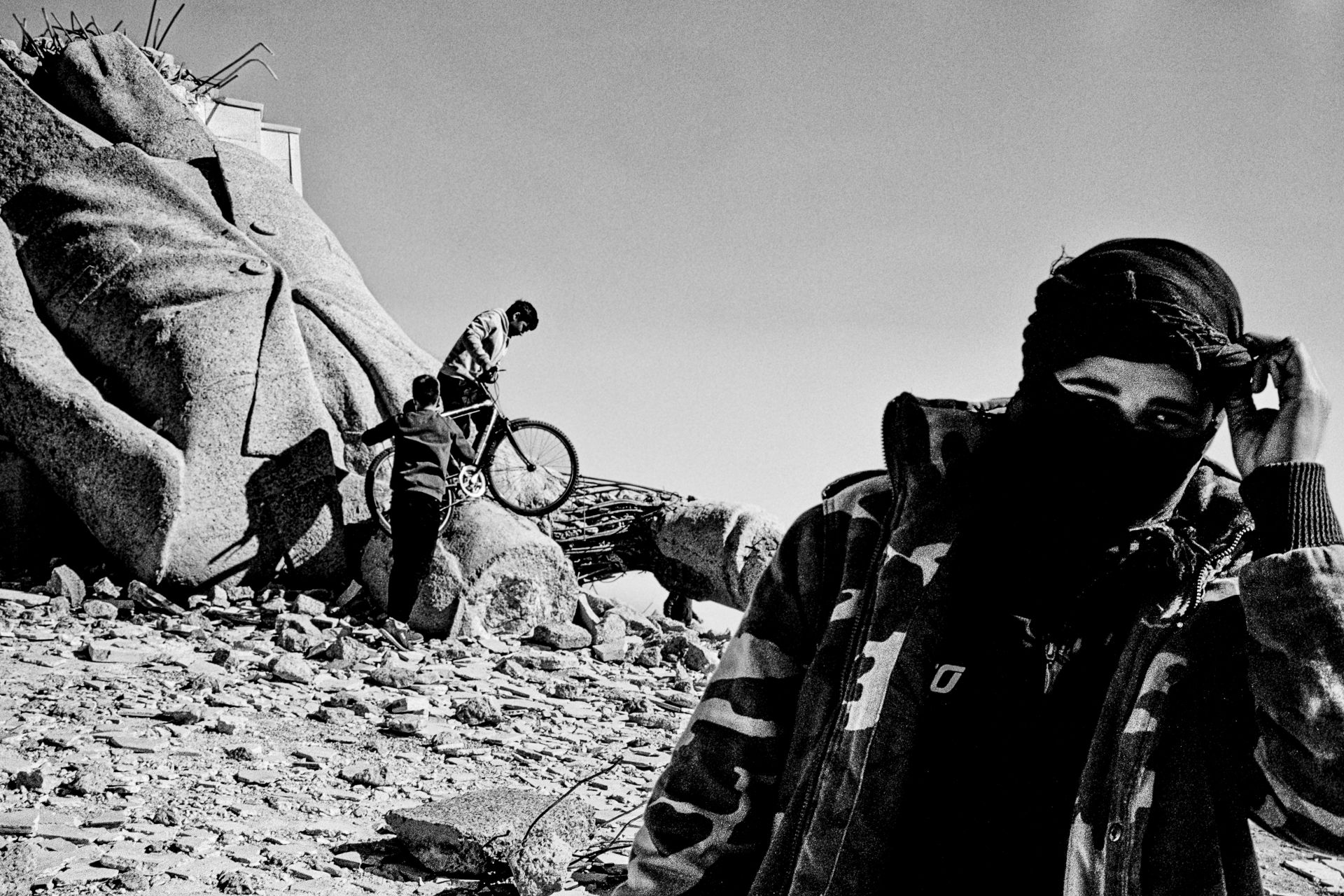
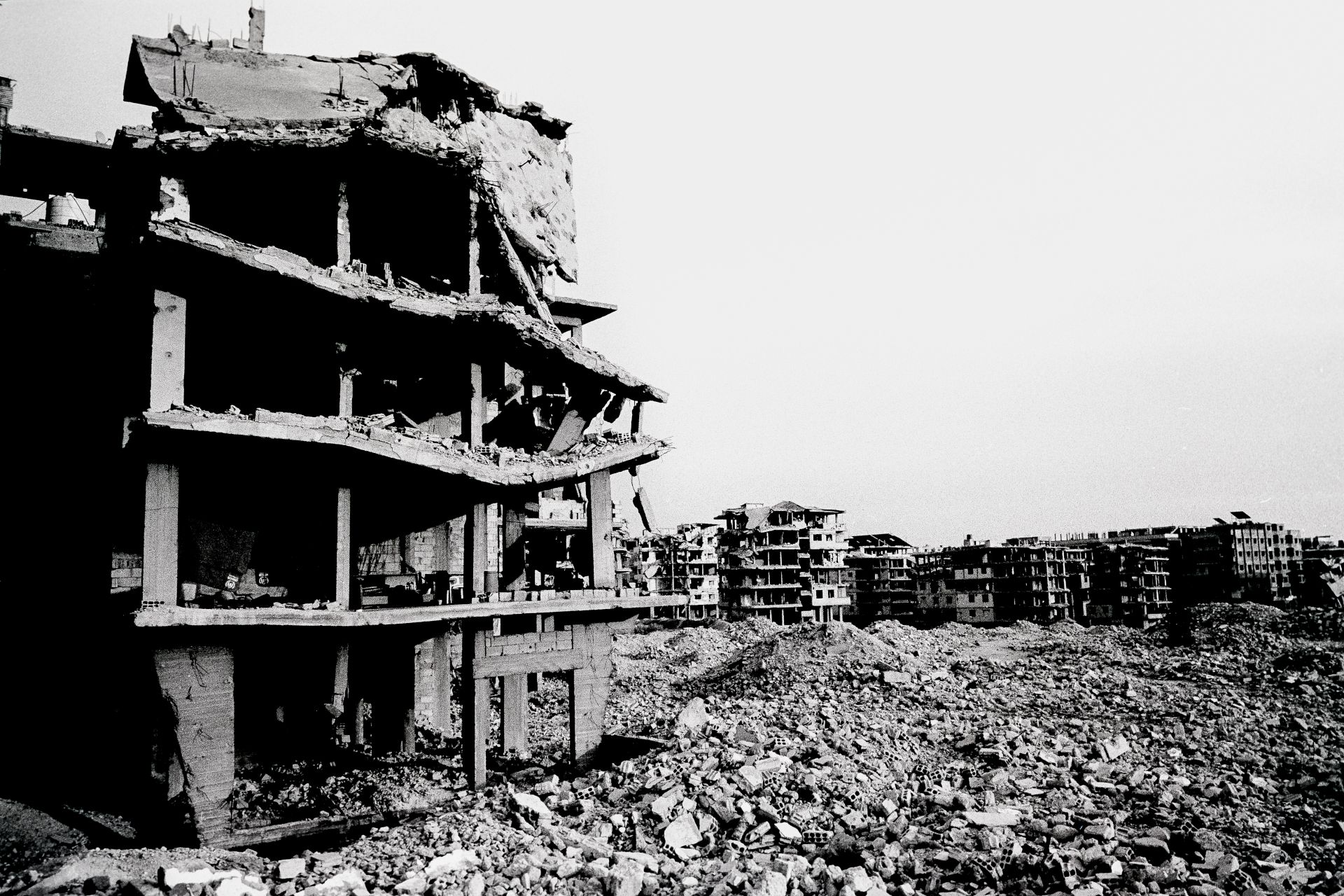
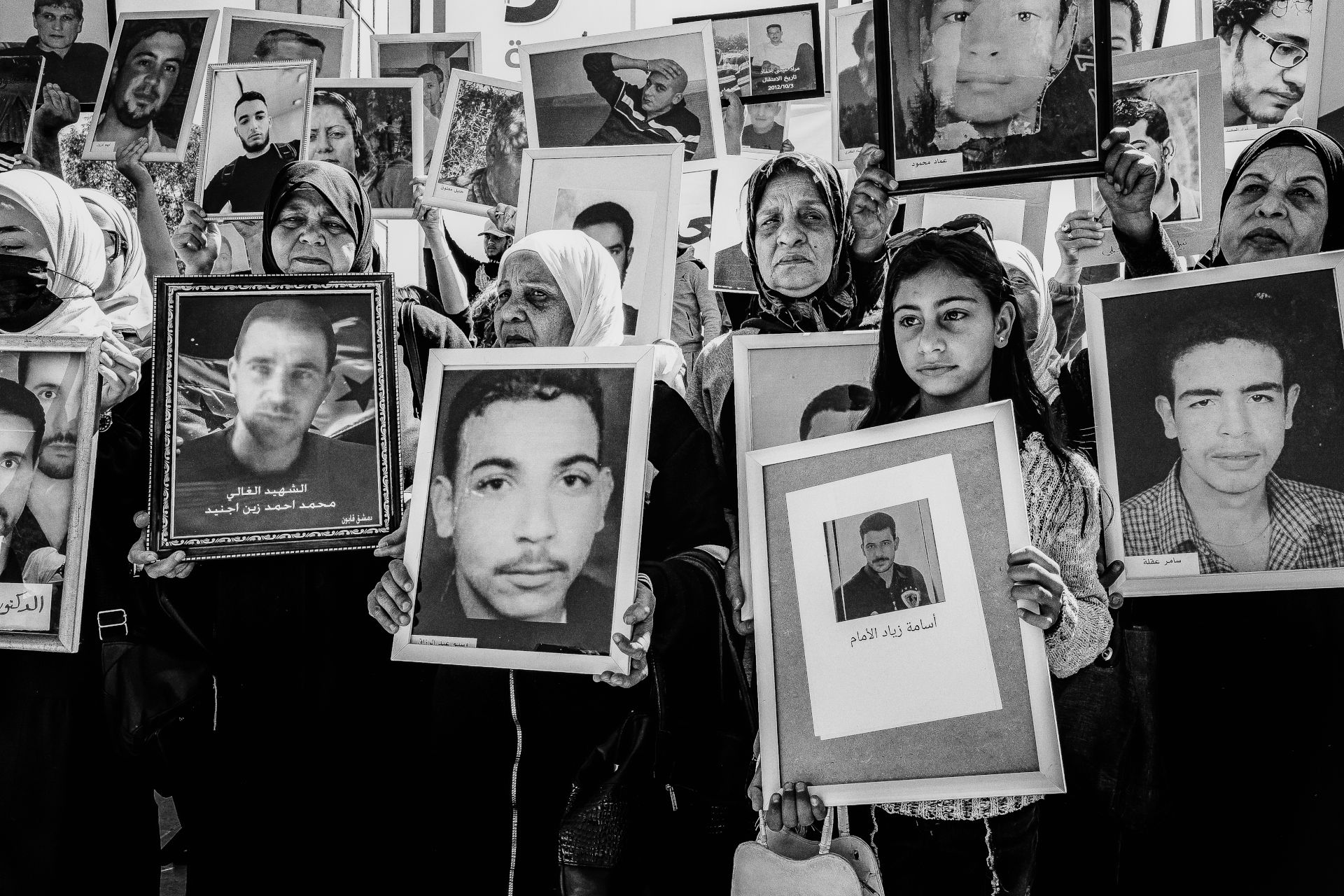

On a cold spring morning in March 2013, Majduleen Al-Qadi, the devoted secretary and friend of renowned dentist and Syrian national chess champion Rania al-Abbasi, arrived at the family’s Damascus home. She hoped to offer comfort after the sudden arrest of Rania’s husband, Abdulrahman Yassin, two days earlier. Moments later, the quiet of the apartment was shattered. Regime intelligence officers stormed the building, flooding the home with chaos. They smashed security cameras and tore through rooms, looting valuables and confiscating the family’s passports.
Clutching her 2-year-old daughter, Layan, Rania gathered her five other children, aged from 6 to 14, and led them quietly down the stairwell, each step heavy with fear and confusion. Outside, a car waited in the stillness, its engine murmuring in the morning air. They climbed in. None of them would ever return.
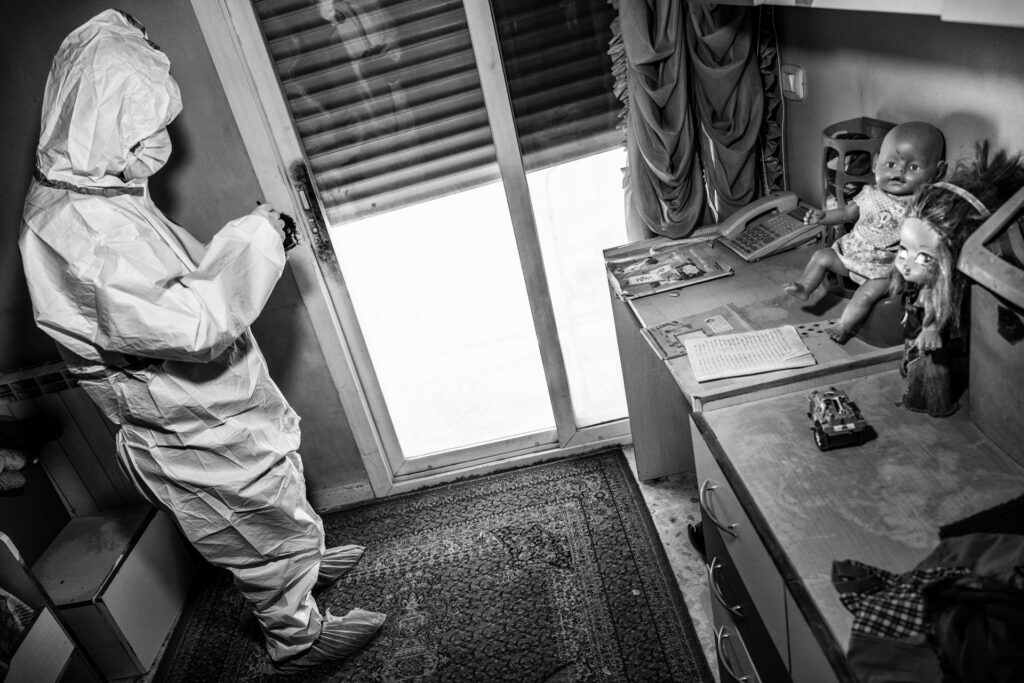
Their home, untouched for more than a decade, now stands as a silent tomb of memory: dust-covered toys, homework notebooks left open on the dining table waiting for a parent’s guiding hand, and a wall calendar forever paused on that fateful March morning. Amid the preserved stillness, a lone extinguished cigarette sits in a smokeless household — a final, mocking trace of the men who came and took everything.
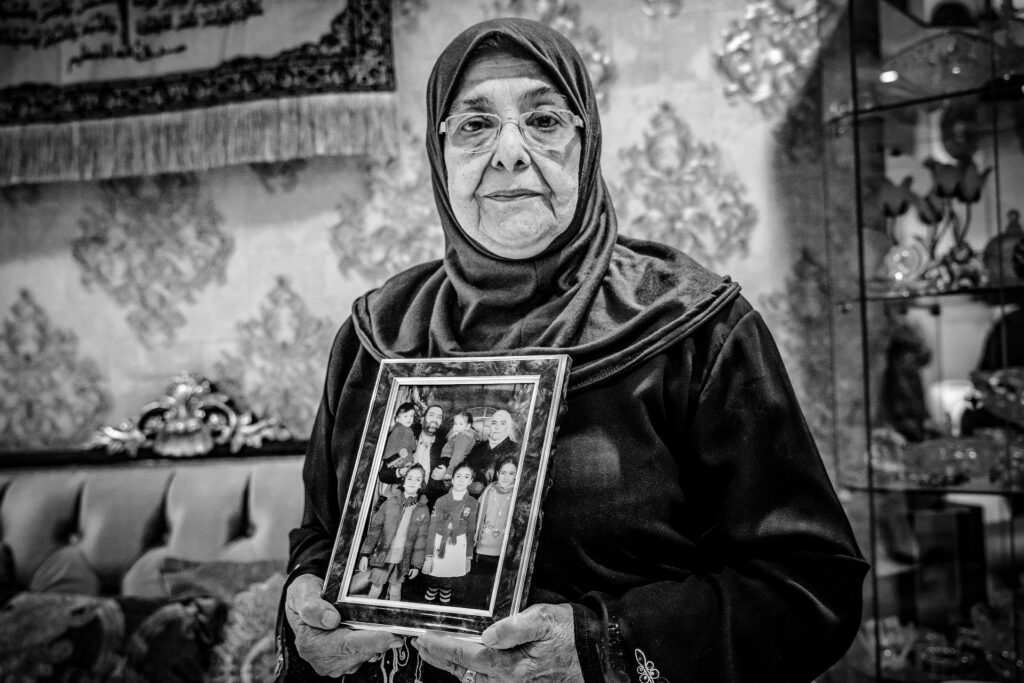
The children’s parents had no record of political activity — their only alleged offense was an act of quiet compassion. According to the children’s uncle, Hassan al-Abbasi, “Rania’s husband had offered financial assistance to a displaced family who came from Homs and settled near her clinic in the Dummar neighborhood … they wanted to help them due to their dire living conditions.” But because of this act of generosity, Abdulrahman Yassin was accused of financially aiding those opposing the regime and branded a terrorist. He would be tortured and killed approximately a month after his capture — a conclusion reached after his face appeared among the 50,000 harrowing photographs of dead Syrian civilians, smuggled out of the country in 2014 by a military police defector known as “Caesar,” who sought to expose the regime’s machinery of torture and death under Bashar al-Assad.
Rania’s secretary, Majduleen al-Qadi, suffered the same fate. Her name appears among countless others in an execution order from October 2013 — punished with death for the simple act of consoling a friend. Rania’s whereabouts, like that of tens of thousands of others detained in arbitrary arrests, remain clouded in mystery to this day. As for her six children, their disappearance continues to haunt those who search for answers, the weight of uncertainty growing heavier with each passing year.
I knew of the al-Abbasi family’s story before my arrival in Syria in February 2025. They had been widely championed by Amnesty International during the height of Assad’s arbitrary arrests in 2013, becoming figureheads in the call to end the unjust detention of innocent civilians and to demand their release. Through the campaign and the unwavering advocacy of the children’s uncle, Hassan, they rose to national prominence and earned international recognition in the fight for human rights in Syria.
The family’s tragic fate, however, is hardly an anomaly; it mirrors that of countless others. After 14 years of war that claimed more than half a million lives and displaced 13 million people, the Assad regime and its allies disappeared over 150,000 Syrians, a scale of enforced disappearance not seen since World War II. Now, even with the prisons unlocked, the fate of most remains a mystery. As the dust of a long and brutal conflict began to settle, and the regime’s atrocities against its own people were finally laid bare, a quieter but more insidious mystery emerged.
The Syrian Network for Human Rights has estimated that the Assad government and its allied forces forcibly disappeared at least 3,700 children. In a conversation in September, Fadel Abdulghany, the network’s director, told me the figure was a conservative estimate based on older data. With improved access to information and more survivor testimonies, he said, researchers now put that number closer to 5,300.
In December, as Assad fled the country and his prisoners were finally released from their hells, social media became flooded with stories of reunions. The atmosphere was electric. Liberation from over half a century of a single family’s iron-fisted rule carried with it moments of grace, as Syrians, long hollowed by grief, were finally able to hold their loved ones again after years of silence and separation. But many who waited for faces to surface were met with nothing but absence. Their pain would endure.
Just as families flocked to the detention centers, some turned, in quiet desperation, to the orphanages around Damascus. It was strange — as if these child care facilities, like the prisons, had come to embody the same machinery of disappearance. Rumors spread early during the country’s newfound freedom that children arrested alongside their parents, in hundreds of cases like that of the al-Abbasi family, were being reunited with relatives years after their disappearance through a network of orphanages across Damascus.
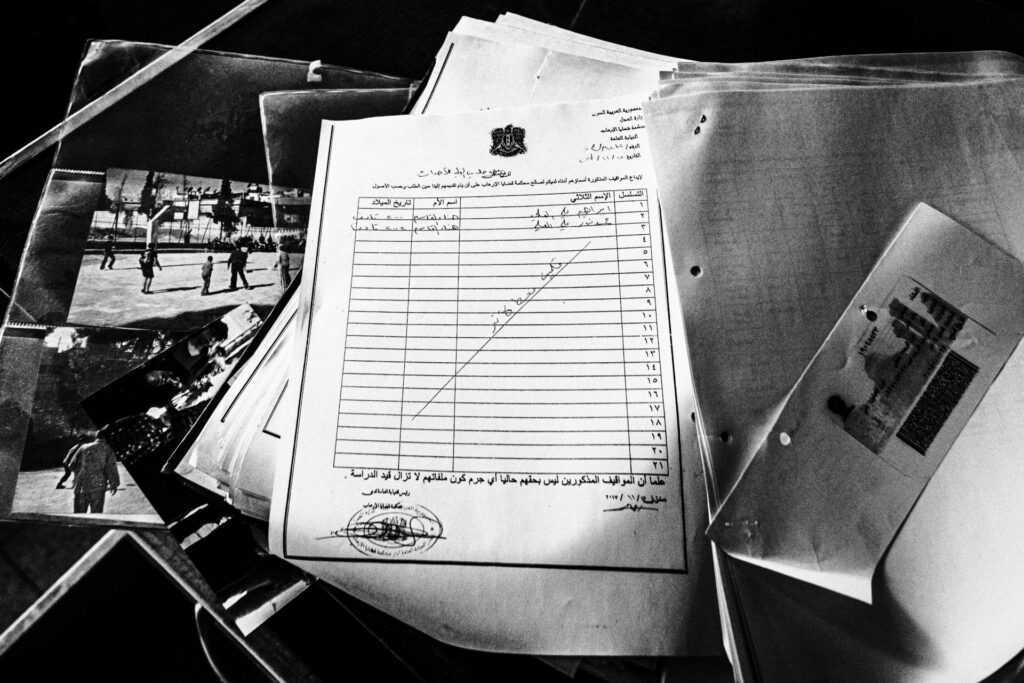
One of the Assad regime’s most disturbing tactics in crushing dissent was the abduction of entire families. Beginning in 2013 and continuing until the war’s end, Syria’s intelligence agencies, working in concert with senior officials in the Ministry of Social Affairs and Labor, funneled the children of political detainees into orphanages where they were hidden from relatives, stripped of their identities, and in many cases renamed or adopted to erase their lineage. An archive of documents shows directives that demanded the children’s identities “be kept secret for national security reasons,” that no details be disclosed and that no action concerning them be taken without explicit authorization from the intelligence services themselves.
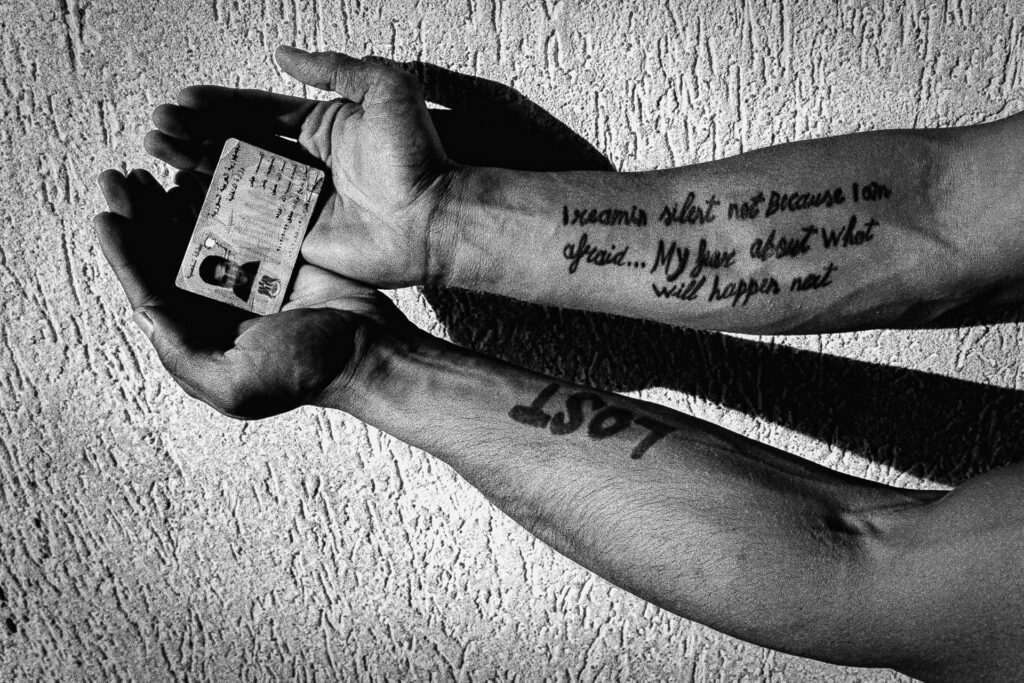
Like many authoritarian regimes, the Syrian government used a common strategy for suppressing opposition: the complete erasure of a dissident’s identity. Destroying the individual’s sense of self was Assad’s invisible weapon. An inquiry into confirmed disappeared Syrians in the national Civic Registry often reveals a doctored record: their name intact, but vital details like birth, heritage and lineage altered to a symbolic zero. While removing someone from the system entirely may be difficult, as the memory of a loved one is not easily erased, the systematic removal of critical personal data effectively voids their identity, severing their familial and social connections and rendering them virtually invisible within society and absent in history. This orchestrated, state-sponsored system of identity erasure ensnared not only Assad’s dissidents, but their children, too.
What emerged from the classified documents inside the archives of the intelligence services was not a series of isolated incidents but a system — a calculated apparatus built to disappear children with bureaucratic precision. Bearing the letterheads of senior Air Force Intelligence officers, colloquially known as the mukhabarat or secret police, the documents reveal how they directed the Ministry of Social Affairs and Labor and the Rural Damascus governor’s office to quietly transfer detainees’ children into orphanages, keeping them hidden from public view.
This branch of military intelligence, long seen as the most ruthless enforcer for Bashar al-Assad and, before him, his father Hafez, orchestrated the regime’s most confidential operations. For decades, these forces executed systematic repression through torture, extrajudicial killings and mass atrocities — the epicenter of their operations being Mezzeh Military Airport Prison. Throughout the war, the agency became synonymous with disappearances, sexual violence and crimes against humanity documented by survivors and international investigations. According to the records, the separation of children from their imprisoned parents was treated as a high-level operation within Air Force Intelligence, requiring authorization from senior commanders whose signatures appear repeatedly on the transfer documents I reviewed.
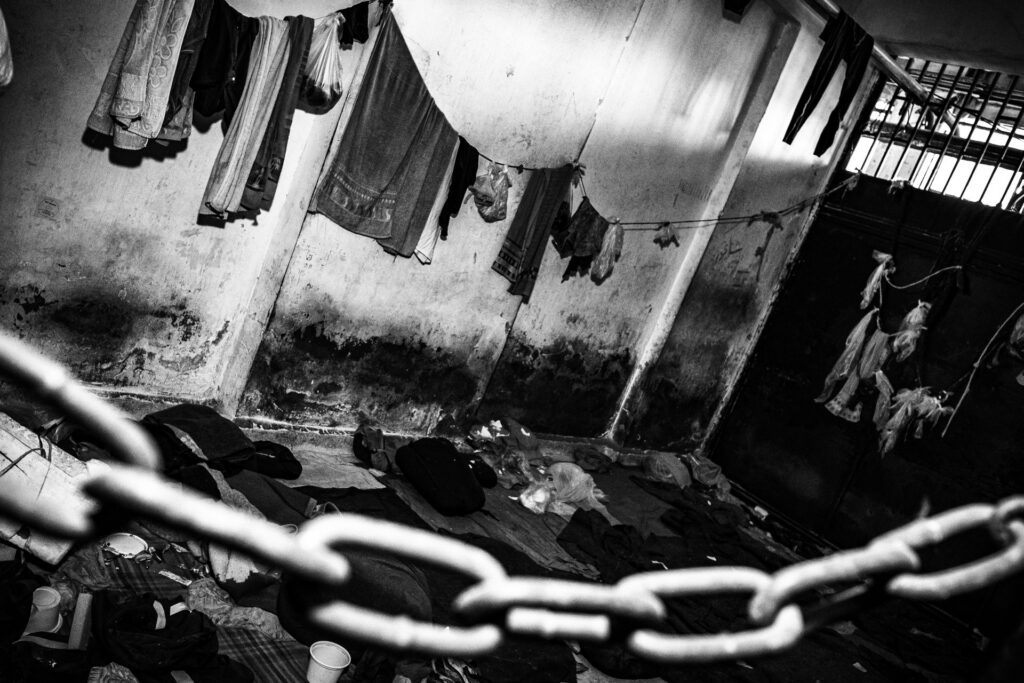
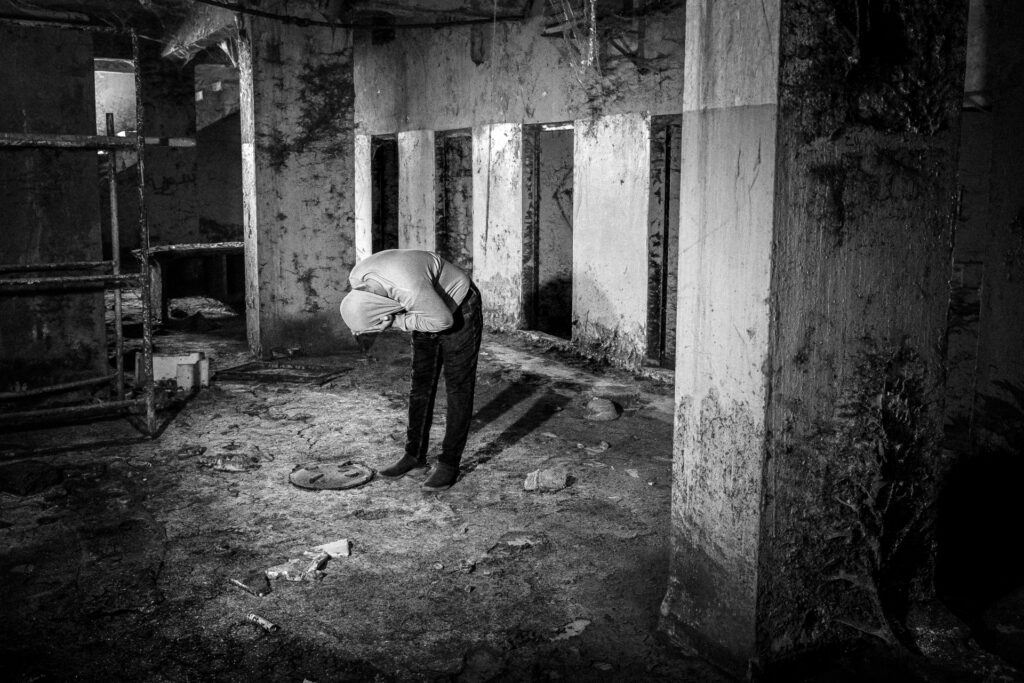
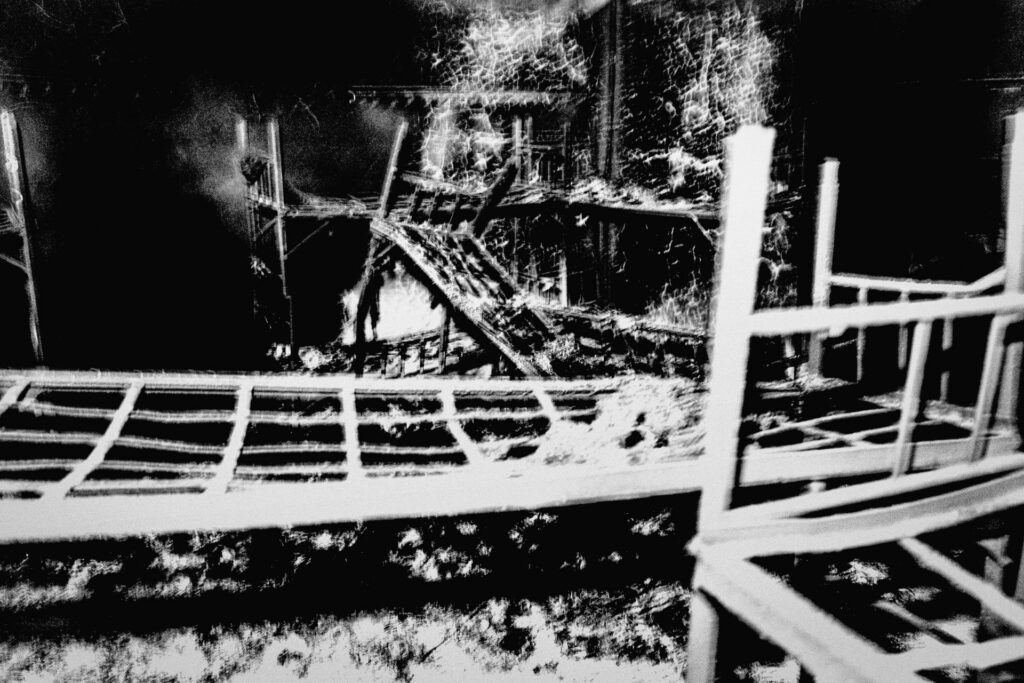
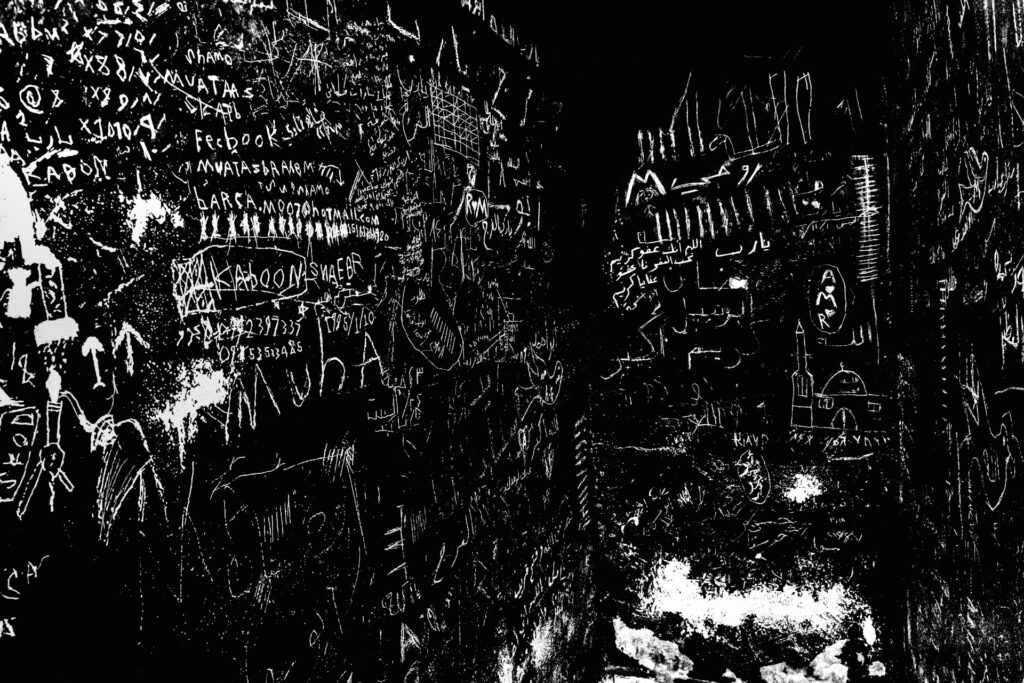
For each of the regime’s youngest victims, their story began within the walls of detention centers such as Mezzeh and other intelligence branches, where they were held alongside one or both of their parents. Here, they were first confronted with the cold, unrelenting reality of the cells. In darkness, clinging to a parent for protection, they would have seen the dim outlines of fellow detainees, each locked in their own desperate fight to survive. Then they were stripped from the loving embrace of their parents’ arms. For some, it was a separation of years, and a lucky few went just months before being reunited. Yet most, it seems, were separated from their families indefinitely. But why would the mukhabarat go to such lengths to also abduct the children of Assad’s political opponents?
An explanation of the mukhabarat’s motives can be found in an Air Force Intelligence document dated January 2015. It details how officers at the Mezzeh prison, the central headquarters of Air Force Intelligence, decided that two women — one with three children and the other with four — should be released, concluding that after months of interrogation, the mothers no longer held any value for the agency. But as this decision was pushed up a rung of the bureaucratic ladder, a commanding officer overturned it, ordering that the family be kept in custody to “benefit from them in one of the exchange operations and negotiations with the opposition militias.”
It was a pattern repeated across Syria. Mothers and their children were reduced to bargaining chips and tools of coercion, their freedom decided not by guilt or innocence, but by their utility to the regime’s political games. Mohammed Morjan, a butcher from Douma who became a prominent activist after joining the initial protests that ignited the revolution, experienced this firsthand with his own children.
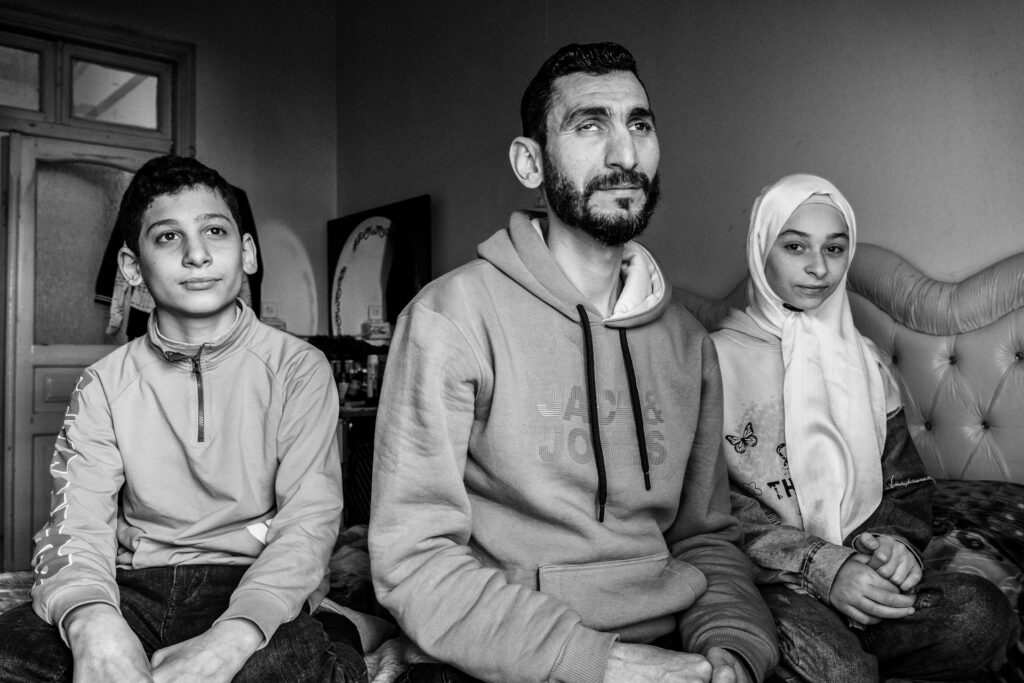
As winter gave way to spring in March 2013, opposition forces began reclaiming territory from the regime. Across the border in Jordan, Mohammed watched closely, still recovering from surgery after being seriously wounded in an airstrike. The distance weighed heavily on him. Unable to stand by while others fought for the cause he had helped kindle, he made the decision to return to Syria with his family and rejoin his fellow revolutionaries. And so, with his wife Hida, their 15-month-old daughter Aisha, and their newborn son Hassan, who would soon become one of the regime’s youngest prisoners at only 38 days old, Mohammed set off under the darkness of night on the dangerous journey home.
“I was sure we would make it. We were only 40 minutes from home.” Then a checkpoint appeared. Soldiers spotted the car, raised their weapons, and ordered the family out at gunpoint. Mohammed paused mid-sentence, lowering his head into his hands. After a long silence, he looked up, tears tracing down his face, and said softly, “This was the worst moment of my life.” I understood what he meant. The pain of the memory had nothing to do with the beating itself — not the soldiers dragging his family from the car, nor the blows from the tire iron, nor the spare wheel dropped onto his head. What tormented him was knowing this was the moment everything shattered, the first step in his family’s descent into captivity, torture and separation.
Soon after their abduction, the Morjan family arrived at Military Intelligence Branch 227. “I was separated from my family as soon as we got there. I was forced to leave my children alone with their mother. But after a week, they took them from her, too,” Mohammed recalled. With the children vanished, neither of the two parents saw them again during the entire 410 days of captivity and torture they endured. “I thought the worst had happened to them,” Mohammed said, believing they had been killed — a fear that hardly seemed irrational, given how narrowly he himself had escaped death.
Mohammed showed me a video of the day he was released. An emaciated, ghostly figure emerges from the car and is immediately swarmed by family and friends cheering. He appears frail, almost spectral, his body carrying the weight of what it has endured. Though his mouth forms a faint, uncertain smile toward the crowd, his hollow eyes hold a fixed hardness — the distant, unyielding gaze of a man who has lived for far too long above the threshold of pain a soul can endure. He had passed through a network of Military Intelligence branches, including Branch 227 and the torture facility at Al-Khatib Prison, endured beatings, electrocutions and starvation, before being transferred to the regime’s notorious Sednaya Prison, only to be freed four days before his execution date.
The couple’s freedom, secured through a prisoner exchange orchestrated by the Free Syrian Army that traded a high-ranking regime officer, brought only fleeting relief. Despite their grandparents’ desperate efforts to find Aisha and Hassan, the children remained missing. Capitalizing on the opposition’s willingness to negotiate, the regime demanded six additional military officers in exchange for the reunification of the entire family. Young Hassan was discovered to be illegally adopted 150 miles from Damascus, in Latakia, by an Alawite family, the sect most closely aligned with the regime. Mohammed told me that the children’s grandfather later said Aisha had been found residing in an orphanage. “From memory, it was called SES or something like that,” he recalled. When I asked if he meant SOS Children’s Villages, he nodded. “Mashallah! That’s the one.”
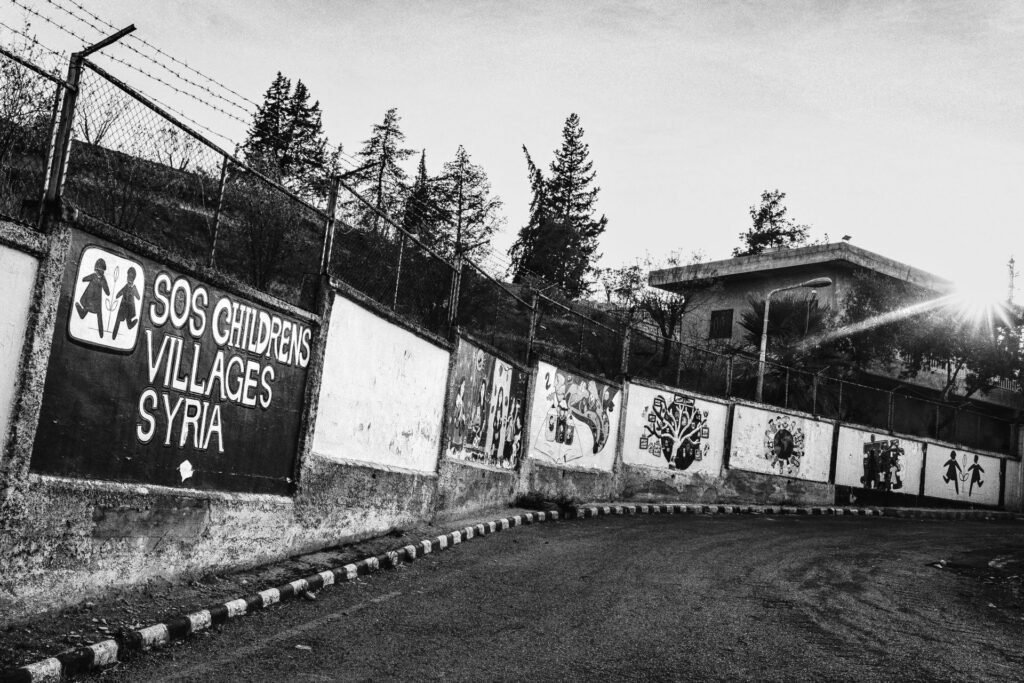
The organization was already familiar to me through an earlier conversation with a former caretaker, Lina Tahan. In 2017, she was escorted by intelligence officers to Sednaya Prison to visit a detained woman whose infant had been placed in her care for several months. I had previously heard the testimony of Maria Kishek, who spent nearly six years detained at the Mezzeh facility, where she witnessed women give birth in prison only to have their babies taken from them almost immediately. Guards later told her that when female inmates disappeared, they had been transferred to Sednaya.
The moment Lina stepped into the cell with the baby cradled in her arms, she met the gaze of an emaciated female figure. With sunken eyes and tattered clothes, her face streamed with tears at the sight of the infant she barely had the chance to know. Lina understood what the child had become — leverage. The reunion was not born of mercy. The infant had been weaponized, carried into the cell to crush resistance and force obedience from a woman already broken, emptied of everything, and likely doomed to death should the guards fail to extract whatever information they were still pursuing.
“The woman tried to breastfeed the poor child, but it never took. When she started to sob uncontrollably, the guards dragged her away. It was unbearable,” Lina said, her voice thick with emotion. “I knew then that these children were being used, not protected. I felt powerless, but I also knew I had no choice at the time. I needed to stay silent so I could care for the child. I took the baby back to the SOS compound in Saboura because whatever the system was doing, the child still needed someone to care for them.”
According to government records and interviews, SOS Villages accepted children transferred directly from secret prisons and, when families searched for them, often denied holding the children or blocked their release unless the mukhabarat authorized it. In many cases, relatives of the missing stood at the gates of SOS Villages, photographs in hand, calling out names of children who were, unbeknownst to them, just beyond the walls. Staff would falsely deny the children’s existence in the facility, sending the relatives away with a threat to cease their inquiries or face consequences.
Amid the chaos that engulfed the country during the civil war, the organization’s local branches in Syria drifted sharply from the principles of their parent body, operating with near total autonomy while serving clear political aims for the Assad regime. SOS Villages and other Damascene orphanages became tools of the mukhabarat, warehousing children taken from detained parents, only to be retrieved if it was deemed a useful course of action.
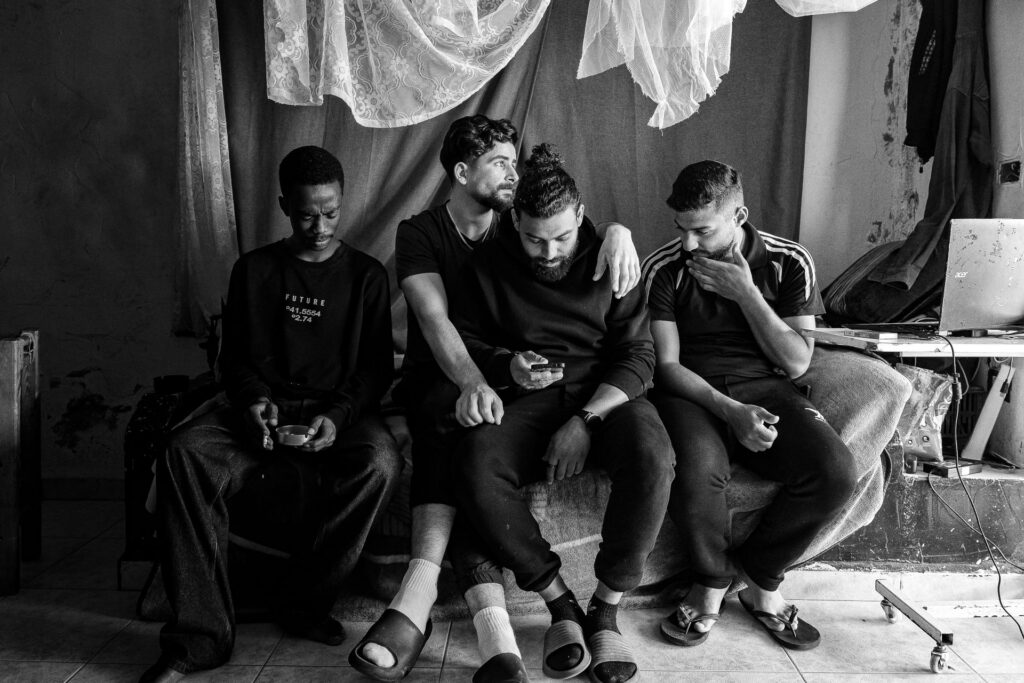
In other orphanages, the practice was more explicit. At Lahn al-Hayet, a state-run institution, testimonies indicate that children’s identities were deliberately rewritten so they could be absorbed into the regime’s future soldier pool, severed from any traceable lineage and later made eligible for military conscription. Visiting small communities of exiled older orphans in Lebanon, where they had had fled to evade their forced enlistment into Assad’s army, I heard harrowing accounts of the front lines, their escapes, and friends from their orphanages who were killed or maimed in the fighting.
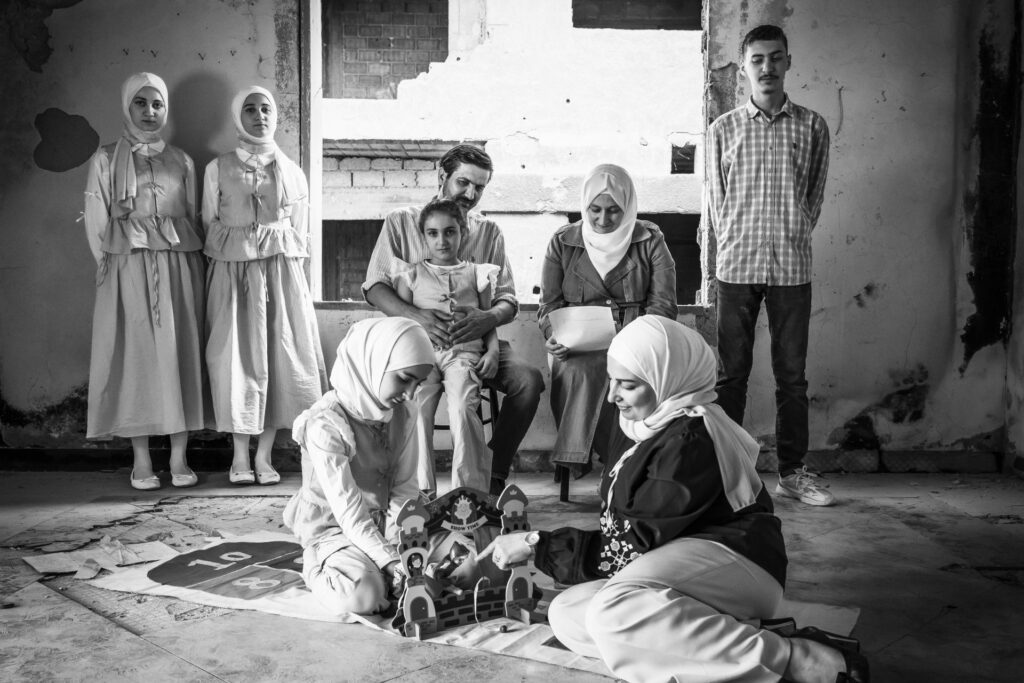
Seeking to determine whether Rania al-Abbasi’s children, Najah and Entisar, had been transferred to SOS Villages by the mukhabarat, I began interviewing former residents. I was able to trace three young women, Fatima, Sidra and Betool, all roughly the same age as Najah and Entisar, who would now be about 23 and 25. Fatima, who had been admitted as an infant by parents struggling financially, told me that beginning in early 2013, the facility saw a sudden influx of children. “They were strange, withdrawn and scared,” she recalled. “I saw some of them arrive in black police vans.”
These unfamiliar children carried an air of ambiguity, their mysterious presence becoming more pronounced when those already in the program were strictly forbidden from interacting with them: no names, no questions. They did not take part in activities and remained isolated within the facility, watched closely by staff and deliberately kept apart from the daily routines of communal life.
Before meeting the girls, all on separate occasions, I prepared an exercise. I handed Fatima my phone and asked whether she recognized any of the children in the photographs. She scrolled through an album of around 15 portraits, mostly of unrelated children, but among them five images of the al-Abbasi siblings. As she studied each face, I watched closely for a sign of genuine recognition. When she reached one photograph, she stopped. Her expression changed. She looked up at me and said quietly, “I know this girl.” It was Najah al-Abbasi.
“Are you sure?” I asked.
“I’m certain,” Fatima replied. “She was always getting into trouble with the staff for trying to make friends with the other girls.” A week later, in a separate interview, Sidra completed the same exercise, also recognizing Najah. Fatima would go on to identify another photograph: of Najah’s younger brother, Ahmed.
During one of our regular phone calls, I told Hassan al-Abbasi, the children’s uncle, that witnesses remembered Najah frequently defying staff orders by trying to befriend other residents. His voice softened. “That makes sense to me,” he said. “Najah was always like that. She was the most outgoing of Rania’s children. Full of life. She could make friends with anyone, and that’s why everyone who met her loved her. She was our little jewel.”
Earlier in 2025, under mounting pressure to account for its role in these crimes, SOS Villages conducted an internal review of its Syrian branch, which concluded in August. The report addressed the case of the al-Abbasi children directly, stating: “Based on its investigation to date, [the investigative team] cannot yet reach a conclusion whether these children may have been under the care of SOS Syria or not at some point and considers it premature to report such a conclusion at this stage.”
However, around April, an employee of the Ministry of Social Affairs and Labor working with the ministry’s committee for missing children located a document listing those placed with SOS Villages over several years. Among the names were five of the al-Abbasi children, excluding the youngest, Layan, who was just 2 years old at the time of her abduction. Soon after this information emerged, the list was disregarded as false when a new version emerged, one that excluded the al-Abbasi names and was accepted as the authentic record.
I learned this from a whistleblower who requested anonymity. They had been in contact with the employee who first located the list. After reviewing both documents, a former SOS Villages caretaker immediately recognized several children she had cared for, knowing them to be the sons and daughters of detainees. Many of those names, including the al-Abbasi children, were removed from the revised version of the list, raising serious questions about the integrity of those originally tasked with investigating the case.
It is known that the first iteration of the committee on missing children, established by the Ministry of Social Affairs and Labor in early 2025, was dissolved around April of that year. Several of its members were later arrested in connection with the case, according to Samer Qurabi, a spokesperson for the Committee for Monitoring the Fate of the Children of Detainees and the Disappeared, which was established in May.
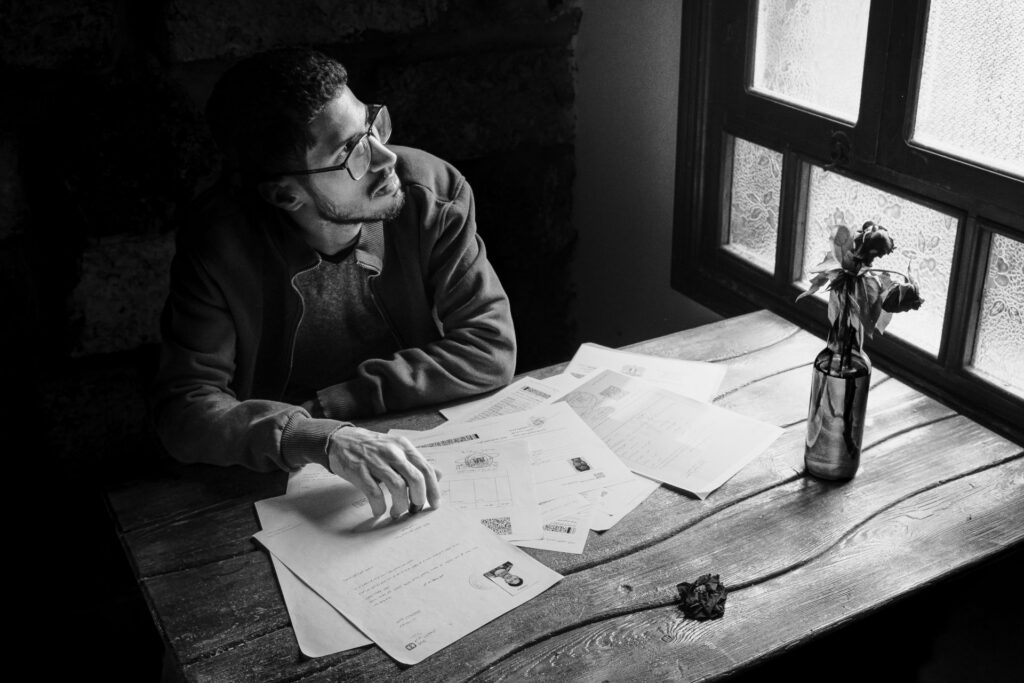
As arbitrary arrests peaked in 2014, concealing the children of detainees became more urgent for the mukhabarat and far more complicated for orphanages receiving more children of detainees, particularly as families’ determination to find them grew. With the expansion of Assad’s detention centers and the establishment of new sites to hold growing numbers of political prisoners, SOS Villages likewise expanded its capacity to conceal children.
In late 2014, the child care organization established several “temporary care centers,” which became known colloquially as the Ighatha Program complexes. The centers were publicly presented as an initiative to support children “affected by war” — a vague, catchall phrase that conveniently encompassed a wide range of vulnerable minors in vastly different circumstances. But, beneath this humanitarian veneer, the program soon assumed a more covert role — it began admitting children directly from detention centers. By concentrating the children of political prisoners in these facilities, it became significantly easier to control them and conceal their whereabouts, rendering their relatives’ quest for reunification futile and, most importantly, hiding the operation from the oversight mechanisms of the SOS Villages international headquarters.
During the formative days of the Ighatha Program, in 2016, SOS Villages appointed Samar Daboul, a longtime friend of the Assad family, to head its operations as board president. The daughter of Deeb Daboul, who had overseen the presidential office for nearly 50 years and played a key role in the Assad family’s consolidation of power, Samar came from a family deeply entrenched in the regime’s inner circle. Her brother, Salim, was a powerful businessperson with extensive state ties.
Unlike National Director Samer Khaddam, who was arrested by the government in July, Daboul remains abroad in Saudi Arabia — like many regime loyalists. According to Rania Zania, former human resources director and board member for the program, Daboul personally selected the majority of the employees from her own hometown — a deliberate move to ensure absolute control and secrecy, particularly surrounding child care violations that might threaten funding from international donors. But Daboul struggled to manage operations across multiple Ighatha facilities, particularly at one site in Saboura.
“You are the sons of terrorists!” the taunts would come from across the courtyard. “The kids from detained parents and those of regime officers were always fighting,” Iman, a former resident, at the Saboura facility, told me. “The caretakers used drugs to control them; they used them a lot. In fact, any one of them that acted out or asked about their parents or said bad things about Assad would be given them.” She described how her friend, a teenage girl named Rana, who arrived in a blacked-out police car, would scream persistently that people were coming to kill her — still gripped, it seemed, by the trauma of having been recently abducted with her parents. “They gave her so many drugs, so often, it changed her mind,” Iman said. “She became suicidal. They also gave one girl so much medication that she ended up dying,” she added. “Was her name Abir?” I asked. Iman confirmed it was.
I had already heard Abir’s story from Tahan, the former caretaker at the facility, and Zania. In 2018, after Abir was brutally raped by local police, staff did not take her to a hospital but returned her to the Saboura facility, where she was administered the same universal sedative routinely used to suppress distressed residents. Lina believed it was given to control what staff described as hysteria.
Abir did not survive. Her death was concealed by SOS Villages management, an apparent effort to avoid accountability for institutional negligence. At the same time, in 2017, SOS Syria was already under investigation by its international office in Austria over allegations of sexual abuse and misconduct. Those inquiries later concluded in a vague statement that “several employees at SOS Syria were involved in serious safeguarding violations.”
By 2015, reports had begun circulating that SOS Villages facilities in Syria were housing the sons and daughters of detainees. One German publication, Die Welt, quoted the organization’s national director at the time acknowledging the arrangement. Yet SOS International maintains that it only became aware of the issue two years later, after individual cases were flagged and staff raised concerns. No investigation or suspension followed for more than a year. During that period, internal records show that at least 50 more minors were forcibly separated from detained parents and transferred into SOS Villages care. The Ighatha Program dissolved in early 2018, coinciding with the end of such placements at SOS Villages. The mukhabarat, however, continued transferring minors to other orphanages up to the end of the war.
I met Betool, another former resident of the Saboura facility who had been there in its early days. Like the other two young women who recognized Najah and Ahmed, in the same identification exercise Betool paused on one image, saying that she had known the person in it. This time, it was the eldest al-Abbasi sibling, Dima. Betool explained, “When I first arrived, I only saw her a few times, in the dorms and in the office arguing with the staff. But then she was gone and I never saw her again.”
I decided to consult Tahan to confirm Dima’s presence at the facility. A psychiatrist from Damascus, Tahan’s first exposure to SOS was in late 2016, when she was contracted to lead activities for children in the Saboura facility. Her initial sessions were marked by outrage, as she encountered alarming signs of psychological suffering. She recalls: “Many of the children exhibited evidence of suicide attempts with self-inflicted cuts to their wrists” — acts which, Tahan believed, “were attempts to release internal pain and suppress haunting memories” associated with traumatic experiences consistent with previous abductions and arrests. “I was so angry, I decided then and there that after my contract finished I would apply to be an SOS mummy [caretaker].” Tahan spent the next nine years both in SOS Villages Saboura till its closure and later in other child care institutions documenting and understanding the violations against children of detainees.
“I never knew Dima. When Betool saw her there it was before my time,” Tahan told me. I replied, “I’ve been told by former residents that secret police often came to retrieve children from these programs, like Saboura. Could that have happened with Dima?” According to SOS, 105 children of detainees were returned to the Assad regime, and the organization admits it does not know what happened to them afterward. “It’s possible,” Tahan replied. “Either she was taken back by the security services, or she ran away. Children escaped from the facility repeatedly and were never brought back.” The staff allegedly showed remarkable indifference toward escapees, who were left to drift onto the streets of Damascus, already crowded with the war’s homeless.
After the Ighatha centers closed in early 2018, Tahan returned to her psychiatric practice. Three years later, Haitham Saltaji, president of Syria’s Child’s Rights Association, invited her to serve as acting director of Tariq al-Nahl, a locally run orphanage housing homeless and displaced children, most of them under 14. She accepted the role, hoping to continue her investigation into child care abuses and to effect greater change than she had been able to achieve previously at SOS Villages. But what she encountered there would eclipse what she had witnessed at the Saboura facility.
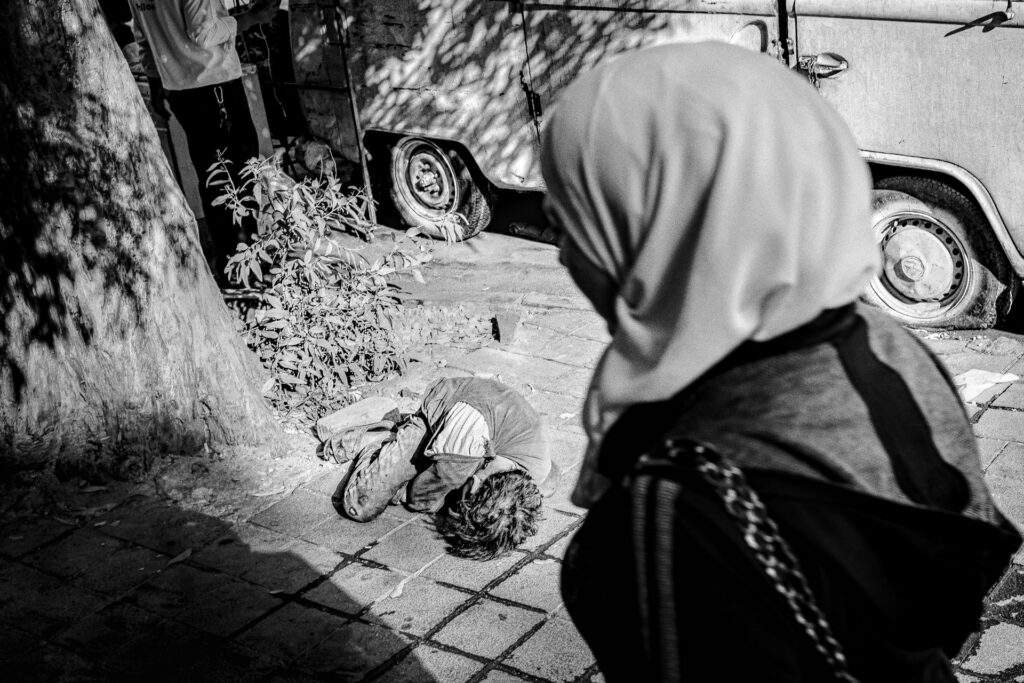
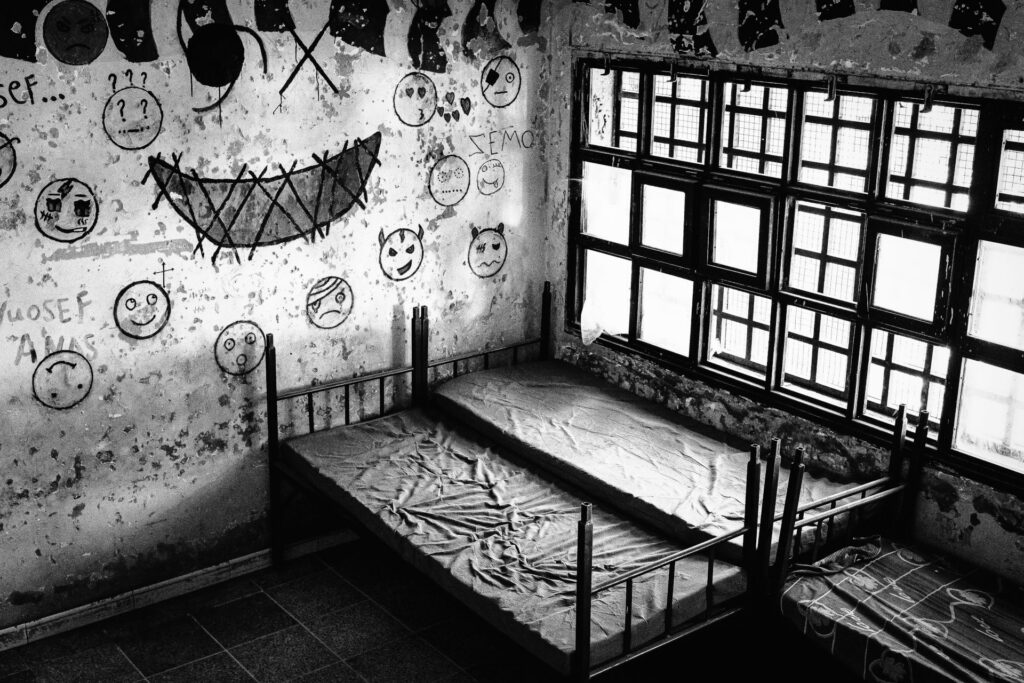
Tahan described the neglected facility with anger: “The children had no beds; they slept on the floor with thin blankets. The bathrooms were flooded, and the food rations were too small to sustain them.” During her psychiatric evaluations, many disclosed sexual abuse by both staff and other, usually older, residents. “It was an environment of constant neglect and vulnerability,” she said. “None of them were truly protected.”
At one point, Tahan paused, retrieved an object from a drawer, and held it up: an improvised knife fashioned from a large shard of broken glass, its handle wrapped in cloth bound by tape. “I confiscated this from an 11-year-old boy,” she said, jaw clenched in rage. “They were making weapons to protect themselves.” As she had seen during her time at SOS Villages Ighatha, she described an abundance of psychoactive sedatives at the facility, left unsecured and freely accessible to residents rather than being administered by staff.
What disturbed her most, however, was the absence of records. “There was no system for documenting arrivals,” Tahan said. Despite nearly six years of operations before her arrival, the archive was essentially empty. As she had seen previously at SOS Villages, staff later told her that the mukhabarat delivered children without paperwork. Unlike the international organization, however, this facility operated without external oversight or any obligation to follow formal protocols.
When the Child’s Rights Association began operating at Tariq al-Nahl in 2016, it did so under the legitimacy conferred by UNICEF funding, which covered both the boys’ facility and the adjacent Dafar Orphanage for girls. That support was withdrawn just over a year later, reportedly following allegations that senior management had embezzled funds and amid complaints of serious professional misconduct. Haitham Saltaji, who was director during that period, remained in his post and continues to lead the organization.
When Tahan asked how new arrivals were handled, she was told that regular police often delivered children, claiming they had been found on the streets with no known parents. At other times, intelligence officers arrived in black cars, making the same claim about the children they brought in. By routing all children through the same channel, the facility worked to turn the identities of children with traceable links to political prisoners into a morass of administratively legitimized unknowns.
Determined to confront the organization’s failures, Tahan began developing a system to document every child who entered the facility properly. But before it could take shape, Saltaji, the director of the Child’s Rights Association, abruptly intervened, telling her, “Stop. This isn’t your job. It’s none of your business to do this.” It was a deliberate attempt to safeguard the very absence of procedure. Tahan understood then that this was not negligence but intent: The deficiency of records was itself the method. By keeping the “security cases” undocumented, the association had created a perfect void — one where their pasts could be dissolved with ease.
Tariq al-Nahl, Tahan feared, was being used to filter the children of detainees into a broader population of homeless and parentless minors, liquefying their histories by design. “The organization’s goal here was never care or child safety,” she said. “It was displacement.” Some of those admitted to the facility, she added, had previously been residents of SOS Villages. “It worked like Sednaya prison, not by killing them, but by erasing who they were and forcing them into displacement by homelessness.” The conditions were made so unlivable and dangerous that the streets became the safer alternative. The children were not choosing to leave; they were being forced out, driven there.
“There were an alarming number of drug users,” Tahan said. “They would inhale substances from plastic bags, and with an open-door policy in place, the children were free to come and go as they pleased.” A Facebook video from 2021 offers a glimpse of this. Two young women, laughing in amusement, film a lone boy inhaling glue in a plastic bag on a street in Damascus. He is no older than 11 and obviously homeless. When asked where his parents were, he lifts his head and shouts, “My father is in prison, he’s gone!” before collapsing back over the bag, inhaling again. He then looks up with eyes rolled back in dizziness and euphoria, and screams, “I don’t care about anything!”
Everyone in the neighborhood seemed to say the same thing. Large groups of homeless children drifted across Damascus, and every morning many of them could be seen spilling out of Tariq al-Nahl and moving toward the city in a quiet exodus. Locals believed the children went into the city to beg or inhale solvents. One man shook his head and told me you usually met them “high off their face” — not always, but often.
This aligned with what Tahan later explained to me. The facility was never intended to retain the children for long. Conditions were allowed to deteriorate to the point where staying became untenable, quietly pushing them back onto the streets without the need for force. With a deliberate open-door policy, the outcome was predictable. Admitted without names or records, the children of detainees were pushed onto the streets with other homeless boys, too young to understand what had been done to them or to find their parents, if they were still alive.
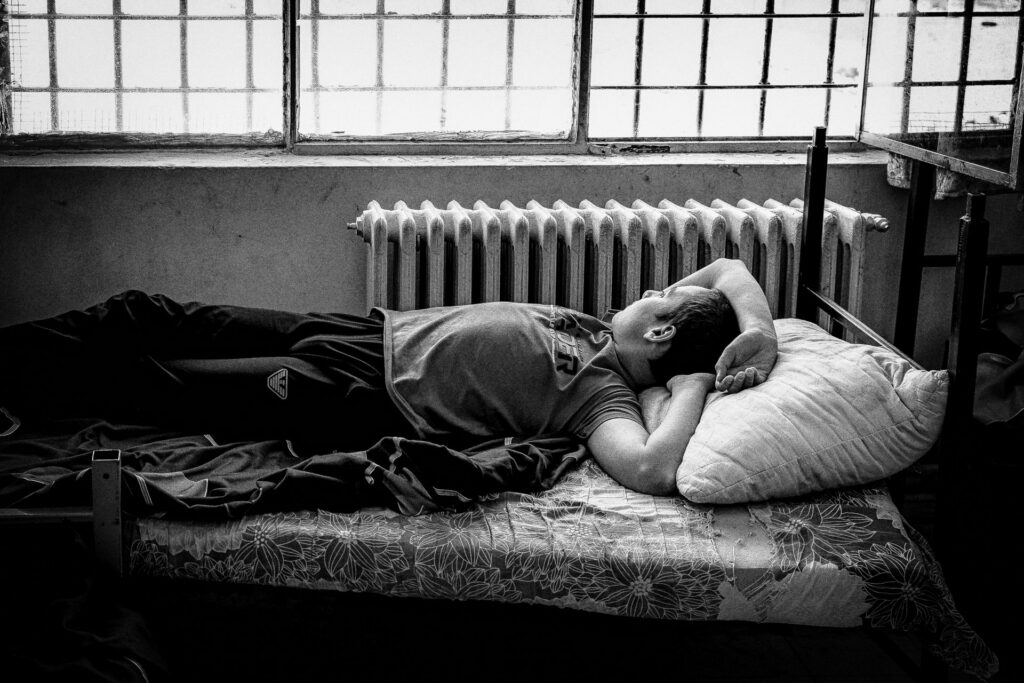
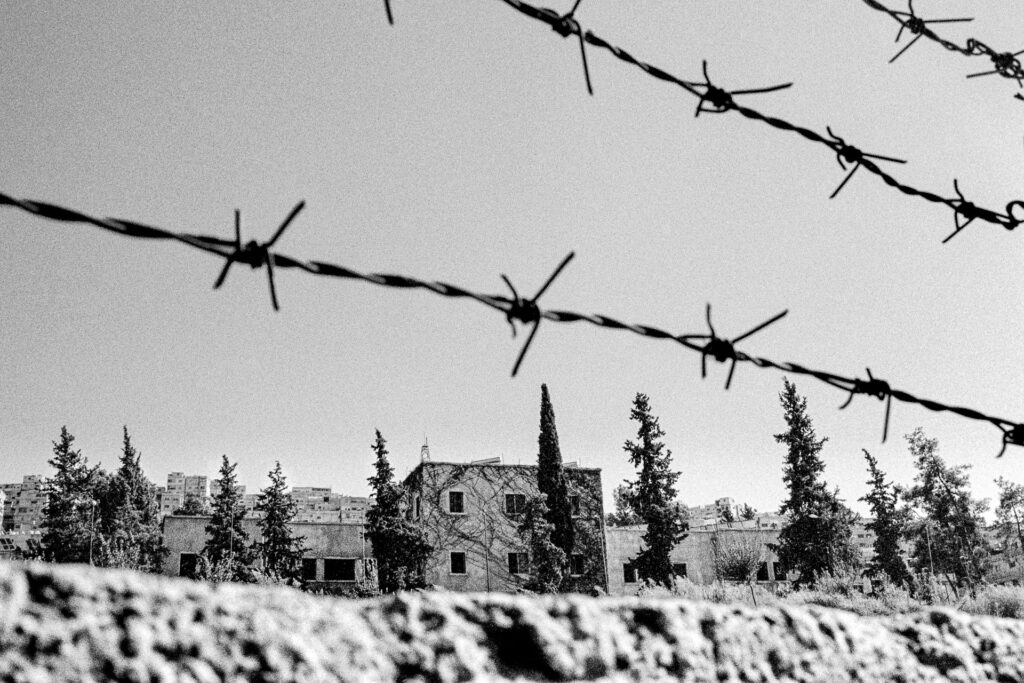
In my efforts to locate these groups of children to learn more about their personal histories, I turned to a local charity based within a mile of Tariq al-Nahl. A senior staff member, who agreed to speak only on condition of anonymity, told me that her organization had little direct involvement with the orphanage, aside from occasionally helping to secure provisions for its operations. “Our main efforts in that area are directed toward the two teenager prisons, where we raise aid from the community for bedding, clothes and food,” she said.
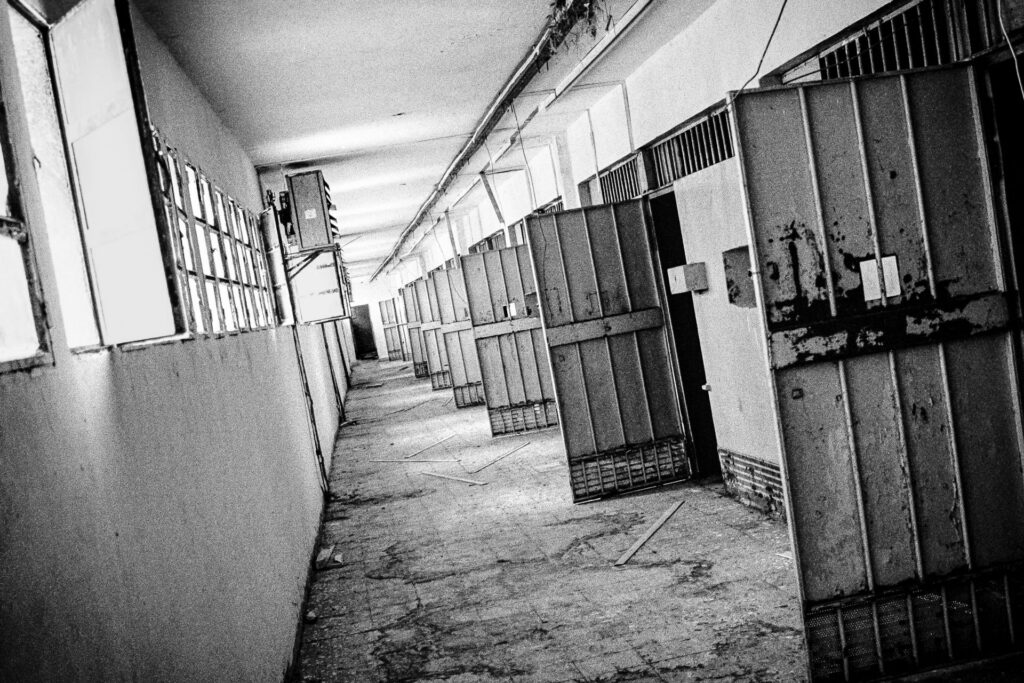
Just a hundred yards from Tariq al-Nahl stand two large complexes, sealed behind heavy steel security gates and enclosed by high walls topped with barbed wire. They are juvenile detention centers for boys: Khalid ibn al-Walid, which houses boys up to 18 and is operated by the Syrian Trust for Development, and Al-Ghazali, which holds children up to 14 and is run by Saltaji’s Child’s Rights Association.
The women from the aid organization went on: “I had been trying to gain access to those prisons since 2013 because I wanted to see the conditions of the boys. … There were bad stories going around our community about the place.” Rumors circulated that a young teenage boy had died inside the Khalid ibn al-Walid detention center at the hands of staff. When she confronted the director, she was taken aback by his hostility and blase response. “Yes, he died during an investigation,” he told her. “This is routine work for us. You keep thinking of him as a child, but that’s wrong. These aren’t children. They’re the worst people. They’re terrorists. Stop pretending they’re innocent.”
After nearly a decade of persistent requests to conduct social activities at the facility, the charity worker was finally granted access in late 2023. “As soon as I walked through the door, boys began approaching me, saying they had been held for two or three years without charge and insisting they had done nothing wrong and hadn’t seen their families. Of the 60 or more children I spoke with, around 90% said their parents were also detained.” Most of the boys told the woman that their mothers were detained and their fathers were terrorists. She later learned that they had been indoctrinated to describe their fathers this way, because referring to them as revolutionary martyrs could result in punishment from prison authorities.
A former assistant coordinator, Mohamed Rama Al-Zaid, who was contracted over a four-year period by the Ministry of Social Affairs and Labor to oversee vocational training programs at Khalid ibn al-Walid, told me “It was like an intelligence branch prison,” explaining that, although the facility held a mix of juveniles incarcerated for common civil offences such as petty theft and assault, many boys were accused of terrorism-related charges. According to Al-Zaid, the juvenile prison received children directly from the mukhabarat.
“Children coming through the civil courts arrived at a scheduled time, usually around 5 in the afternoon. But the others were transferred directly from intelligence branches, usually randomly but sometimes in the middle of the night.” When the children turned 18 and were no longer classified as juveniles, their paths diverged. “Those referred by the civil courts were transferred to regular criminal prisons like Adra Prison, and we could continue to follow their cases. But the ones delivered by the mukhabarat were different. They were eventually taken back by them, sometimes as young as 16, and we could never trace where they went. They simply just disappeared,” Al-Zaid said.
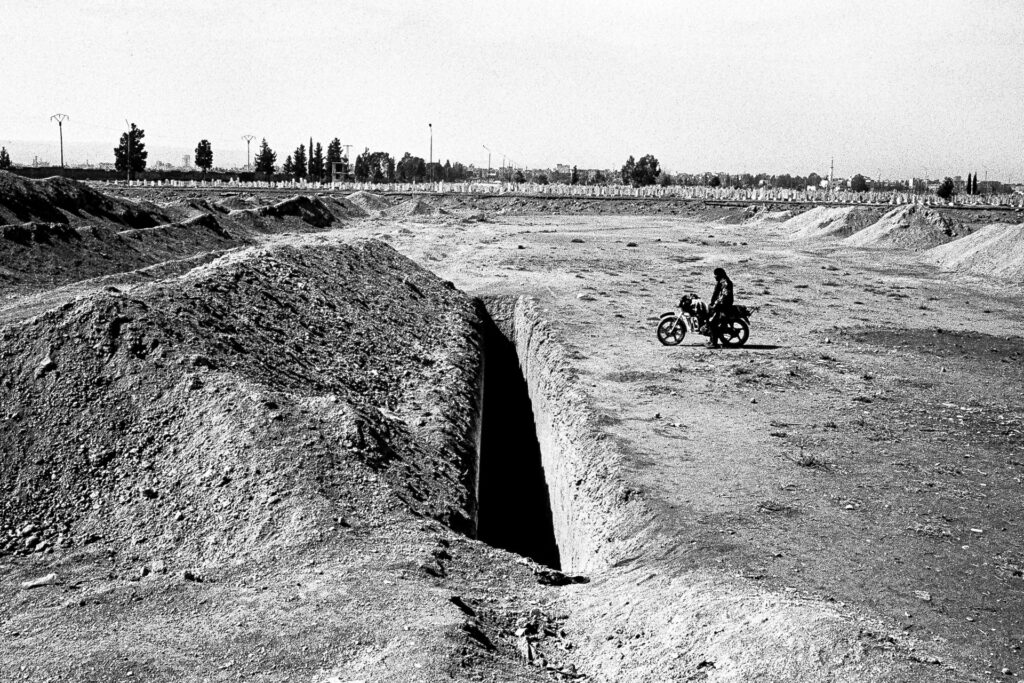
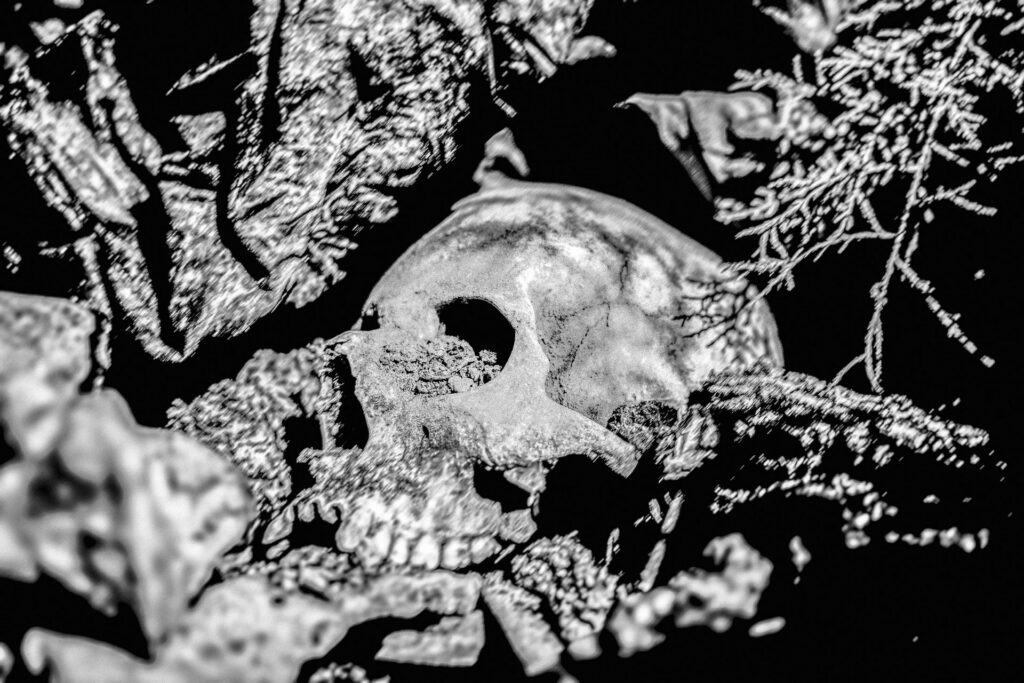
It felt clear that these institutions were operating with deliberate, malicious intent and, unlike the international organization SOS Villages, had not been subject to any scrutiny or inquiry since the fall of the former regime. Their archives, if they still existed, required immediate examination. I raised these concerns with Samer Quarabi, a spokesperson for the cases involving missing children of detainees, outlining the testimonies I had gathered and the facility’s potential significance in the broader pattern of child disappearances.
Soon after this briefing, I walked through the gates of the Khalid ibn al-Walid detention center alongside two men in suits. One was a prosecutor attached to the General Security Forces. The other represented the new transitional government’s anti-corruption committee and possessed a rare authority: the ability to enter facilities without a warrant or announcement and examine their inner workings. Whatever protections the prisons relied on did not apply that day.
Like Sednaya and the long list of prisons built to swallow political detainees, the Khalid ibn al-Walid detention center emptied out as Ahmad al-Sharaa’s rebel army, Hayat Tahrir al-Sham, rolled into the city in December 2024. At the time of my visit in late September, the facility was empty, apart from two teenage boys confined in a large outdoor cage, both appearing to have significant intellectual disabilities. They moaned loudly in distress as we asked a staff member to show us the facility’s archives, only to be told that when the occupants escaped, the records were taken and burned.
It was a blatant lie, which felt like an admission of guilt. Another employee from Al-Ghazali, the affiliated facility across the road, soon arrived and contradicted the account, confirming that an archive did exist. She unlocked the complex and ushered us inside. Files spilled from cabinets and shelves, stacked haphazardly and untouched, the paper trail they claimed had vanished still very much intact.
After combing through a handful of files and moving alone through the dilapidated complex, it became clear my presence was unsettling to the prison staff. A foreigner roaming freely through the facility was not something the institution was willing to tolerate for long. I was eventually escorted out and left idling in the car, but my colleague, who had worked tirelessly with me on the investigation from the beginning, was permitted to continue examining the files at both the Khalid ibn al-Walid and Al-Ghazali facilities.
After hours spent shut out and seething in the car, I saw the group finally emerge through the prison’s 10-foot-high steel gates, carrying bundles of documents and books. My anger at being abruptly sidelined gave way to curiosity. What emerged from the files was revealing. An intake ledger of over a hundred pages, used to record individual admissions to the institution, listed the names of boys, sometimes as many as seven on a single page, who had been referred by Syria’s Counterterrorism Court.
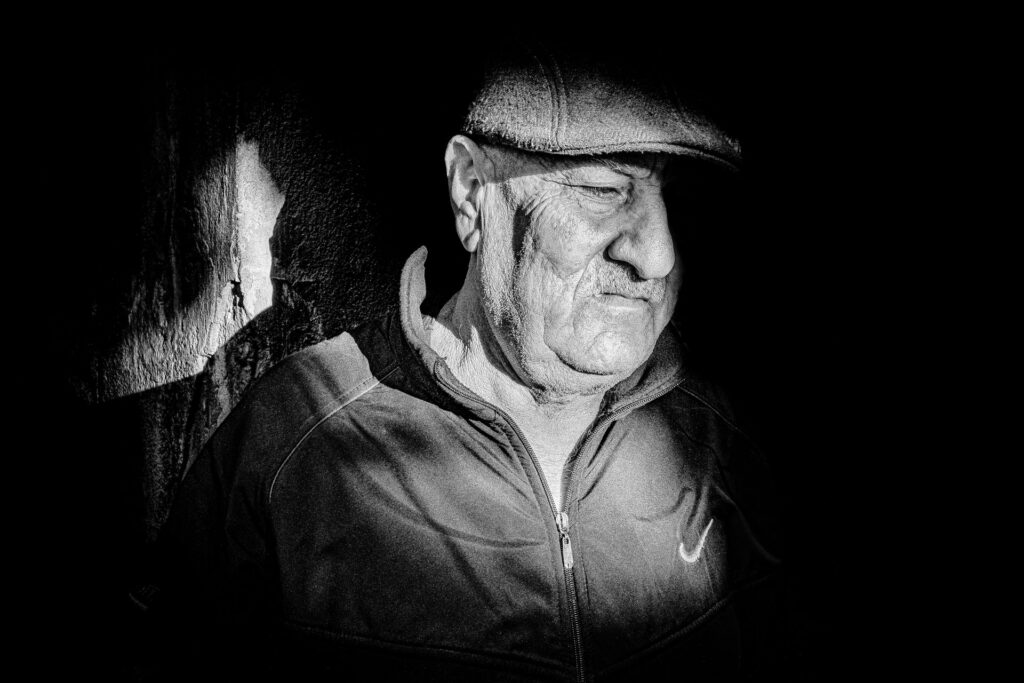
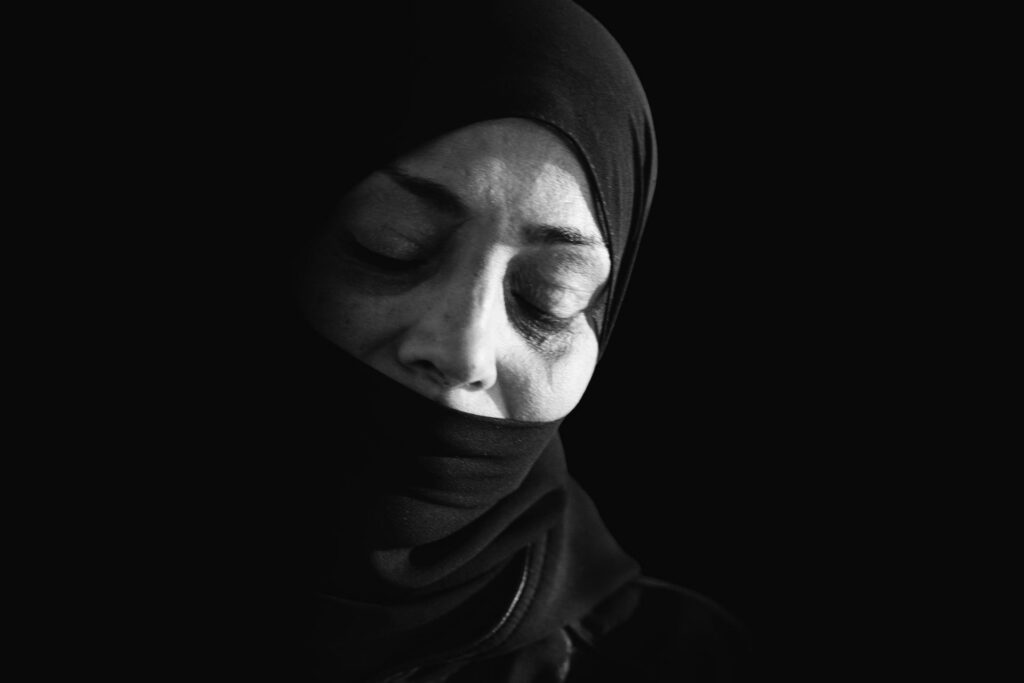
The Counterterrorism Court was established in 2012, at the height of the uprising against Assad. Officially, it was created to prosecute terrorism-related crimes, but in practice, it became one of the regime’s primary tools for criminalizing dissent. The court operated outside ordinary judicial safeguards, with defendants routinely denied due process, including access to lawyers, the right to challenge evidence and the ability to appeal verdicts. Trials were usually brief, opaque and based on confessions extracted under torture by intelligence agencies.
The court’s name appeared repeatedly in human rights reporting throughout the war, including investigations by Amnesty International and the U.N. Commission of Inquiry on Syria, both of which described it as a mechanism of repression rather than justice. Over time, the court became synonymous with the system that funneled tens of thousands to their deaths in Assad’s prison networks. The presence of the court’s name throughout the intake records at the Khalid ibn al-Walid and Al-Ghazali facilities, including cases involving children as young as 11, was alarming.
Mahmoud al-Nuaimi was just 12 when he was arrested and later referred to Al-Ghazali by the Counterterrorism Court, which accused him of financing terrorist activities and participating in terrorism involving military-grade weapons. Beyond the implausible nature of the charges for a child his age, what stood out in young al-Nuaimi’s file was the two-year gap between the time of his arrest and his incarceration at Al-Ghazali. This pattern recurred across many Counterterrorism Court referrals, with children often transferred to juvenile detention centers one or two years after their initial arrests.
For 12-year-old Mahmoud Jasser, who was charged with providing weapons training and committing terrorist acts resulting in the deaths of Syrian Army personnel, the detention at Al-Ghazali was brief. After just two months, he was returned to the custody of the mukhabarat, specifically Branch 248 of the General Intelligence Directorate, a facility known to hold families of political prisoners before separating them. Some records showed children referred by the Counterterrorism Court without charges, raising further questions about whether the court served as a legal authority or simply formalized transfers from an intelligence agency’s custody of the child.
The majority of the charges leveled against these children closely mirrored those commonly brought against adult political detainees, which raises the question: How were these accusations assigned? The repeated use of complex terrorism charges against minors, including allegations of weapons training, responsibility for deaths and financing terrorism, suggests that children may have been assigned charges derived from those leveled against their parents, who had been targeted as dissenters through the Counterterrorism Court themselves.
Files from the Khalid ibn al-Walid facility, which would receive boys from Al-Ghazali once they reached age 15 for continued incarceration, show that juveniles originally admitted via the Counterterrorism Court would be later referred back to the same authority as they approached adulthood. From that point onward, their whereabouts could no longer be traced, according to former staff member Al-Zaid, whose role had been to monitor children’s cases after they were transferred out of the facility.
With this information, a heavy question lingered. If the parents never regained their freedom and were executed, what became of their children? Once the regime had neutralized the adults, and their sons and daughters were no longer useful as leverage, what fate awaited them? It was impossible not to think of the al-Abbasi children. Did Ahmed pass through the corridors of Al-Ghazali or Khalid ibn al-Walid? Were his sisters sent to Bab Musalla, the juvenile detention facility for girls, and charged under the same fabricated accusations — financing terrorism — as their parents?
I was denied access to conduct interviews inside Bab Musalla, so I instead approached officials within the Ministry of Social Affairs and Labor responsible for assisting with the case, urging that a similar review of the archives be carried out, as had been done at the boys’ prisons. There, I spoke with Lillian Malik, an official tasked with progressing the investigation into the missing children of detainees, and raised concerns about the urgency of reviewing the files, noting that the facility’s staff remained unchanged from the Assad era and, based on multiple testimonies, appeared loyal to the former regime. Even a single warning phone call could result in the destruction of vital evidence.
“Don’t worry,” she assured me. “I was there months ago, broke open the archive room and found many important files. I took them and handed them over to the committee [responsible for the fate of children of the detained]. But I haven’t heard of anything about them yet.” I was told that evidence at Bab Musalla echoed that of the documents at the other two juvenile boys’ prisons — minors, young girls had been referred under terrorism charges wholly disproportionate to their age and circumstances.
The evidence collected at Bab Musalla was formally received by government officials in July. Considering its importance, and what Malik had described to me from the files, it was almost unfathomable that three months later, in October, investigators had still not seized the archives at the Al-Ghazali and Khalid ibn al-Walid facilities. The failure appeared to be less an oversight than an act of negligence. But this is symptomatic of the post-Assad landscape. Many within the government, including those responsible for investigating the crimes of the past and ensuring justice and accountability for victims of the regime, demonstrate a striking lack of urgency or effort in the cases they are meant to investigate.
Inside Al-Ghazali, the two inspectors maintained a blase attitude, appearing impatient from the outset. “Hurry this up,” one of them would say, explaining that he needed to leave to visit his family in Idlib for the weekend. It was only 2 in the afternoon, and the quest for justice was already taking too long. I wouldn’t be surprised if the files collected that day have not yet been analyzed and are gathering dust on another shelf somewhere — in an archive room in some government institution.
In Syria, there remains little or no transparency for those trying to understand the fate of the disappeared — only a deadened bureaucracy with a disregard for answers, treating truth as an inconvenience rather than an obligation. Despite claiming it is making efforts, the government insists it is time to look ahead, to forget what happened, and focus on building a future. But on the streets of Damascus, the verdict is already clear. Stop anyone, and you will hear it plainly: Amnesty for the architects of all that suffering has gone too far.
A government that wants legitimacy, the Syrians I spoke with told me, cannot ask families to forget Assad’s crimes while it hoards evidence of them. The new Syria’s break with Assad may begin in the former regime’s archive rooms, where the documentation to prosecute those responsible for the children’s transfers — and hold accountable the institutions that made them vanish — continues to be held. Without it, say the victims’ families, amnesty will be a poor substitute for reconciliation, and the same innocents will continue to pay the price.
Become a member today to receive access to all our paywalled essays and the best of New Lines delivered to your inbox through our newsletters.