

Hosted by Faisal Al Yafai
Featuring Simon Kuper
Produced by Finbar Anderson
Listen to and follow The Lede
Apple Podcasts | Spotify | Youtube | Podbean
We need to modify our expectations of the World Cup, Simon Kuper tells Faisal Al Yafai on this week’s episode of The Lede. The tournament, says the Financial Times columnist, author of “World Cup Fever” and co-author of “Soccernomics,” is less a vehicle for change than a means of understanding.
“This World Cup is significant in terms of how we view America — not because it changes America, but because it illuminates America,” Kuper says. “World Cups don’t change the world, but they help you understand the world a bit better.”
“World Cups don’t change the world, but they help you understand the world a bit better.”
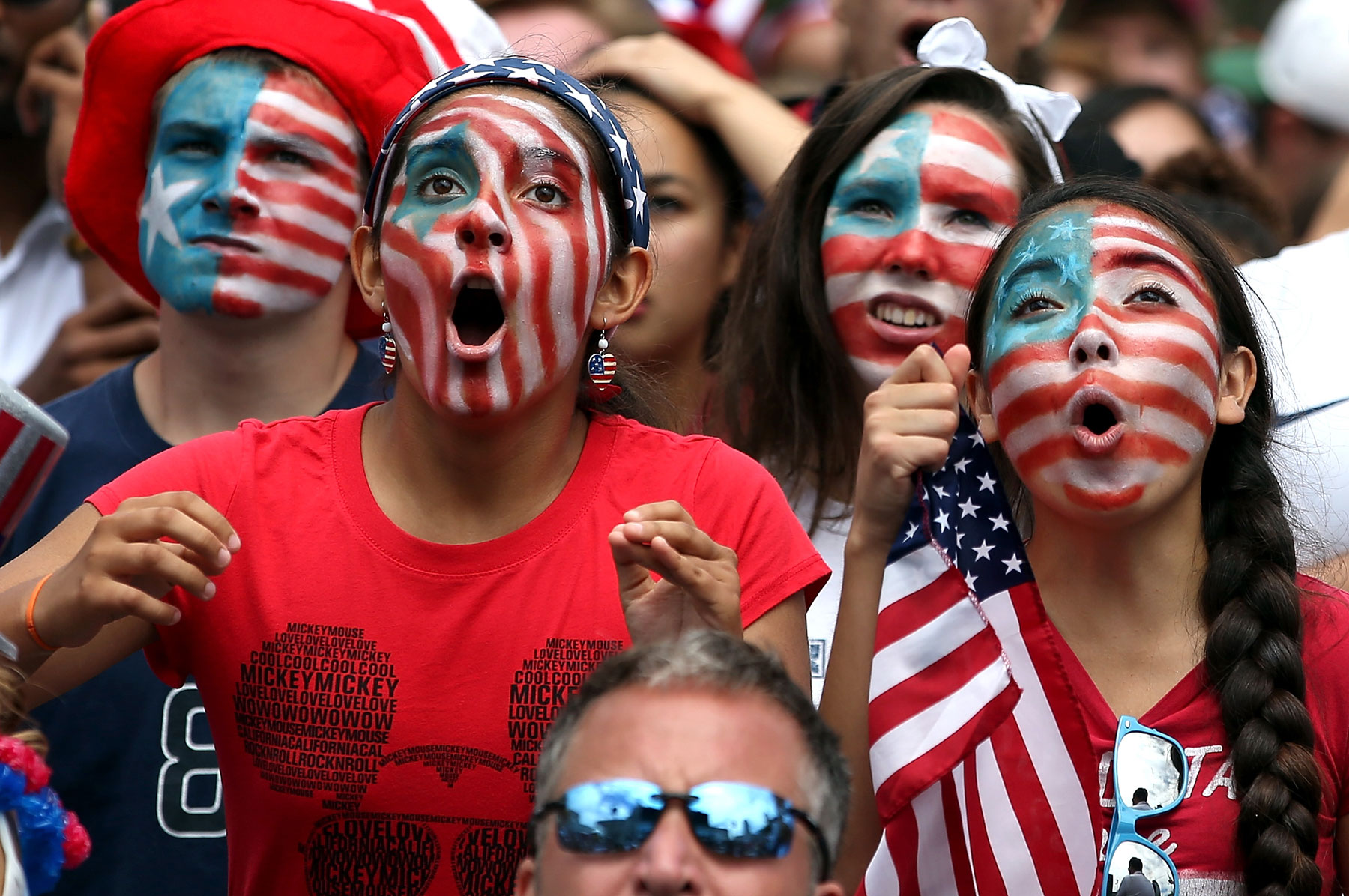
While many commentators worried the tournament might be overshadowed by the Trump administration’s agenda and the headline-dominating president himself, Kuper argues that the politics of the sport and its beauty don’t have to be mutually exclusive. Attending his 10th edition of the tournament, this one — staged across the United States, Mexico and Canada — “tells you America’s not just Trump. Loads of Americans, even some who voted for Trump, really like the world,” Kuper says. They’re delighted to meet people in Cape Verdean costume and to cheer for Brazil. There is an America that is welcoming and open and lovely, and this World Cup reminded me it’s still there.”
That doesn’t mean, Kuper emphasizes, that the tournament does not also reflect America’s societal problems. As he travels around North America, he sees it at the games. At some previous tournaments, security staff have been young volunteers, whereas Kuper has noticed that at the American stadiums, “ It’s mostly Black people, again, in a racialized society, who are checking your tickets, checking your bags.” With ticket prices running into the thousands of dollars, fans attending the games “are going to be at the wealthier end.”
Kuper also offers a counterintuitive view of how the game has developed beyond its traditional heartlands. “The Global South is doing reasonably well, but it’s often doing it with players produced in the Global North,” he argues. “Some people say African football is improving. To my mind, that’s not happening; it’s just that African football has been outsourced to people of African origin raised in Europe.”
From his home in the French capital of Paris, Kuper has also seen how the national team can become a lightning rod for debates around politics and race. “ The demand of nonwhite players in the French team, what’s demanded of them by the public is that they are brilliant on the field and exemplary off it,” Kuper says. While this has been tested by team captain Kylian Mbappé’s decision to speak out against the far right in his country, Kuper has also noticed a generational change in how the team is perceived. “My children are teenagers. I’ve watched them grow up in French football, surrounded by kids who don’t seem to use race as a criterion in their friendships and in their idolization,” he argues. “It’s the only true meritocracy in France, so football, in a way, is a model of what France should really be.”