

Hosted by Faisal Al Yafai
Featuring Loubna Mrie
Produced by Finbar Anderson
Listen to and follow The Lede
Apple Podcasts | Spotify | Youtube | Podbean
While she may be best known for her role in the early years of the uprising against the former Syrian regime, Loubna Mrie wanted her new memoir, “Defiance,” to paint a complete picture of her early life in an Alawite community, living alongside a violent father, she tells Faisal Al Yafai on The Lede.
“I truly wanted to make clear throughout the book how authoritarianism seeps into the family system and how authoritarianism doesn’t always have to wear a uniform and sit atop of a government,” Mrie says. “It sometimes can take the shape of inherited fears and societal expectations.”
“I did not understand that my father was a killer.”
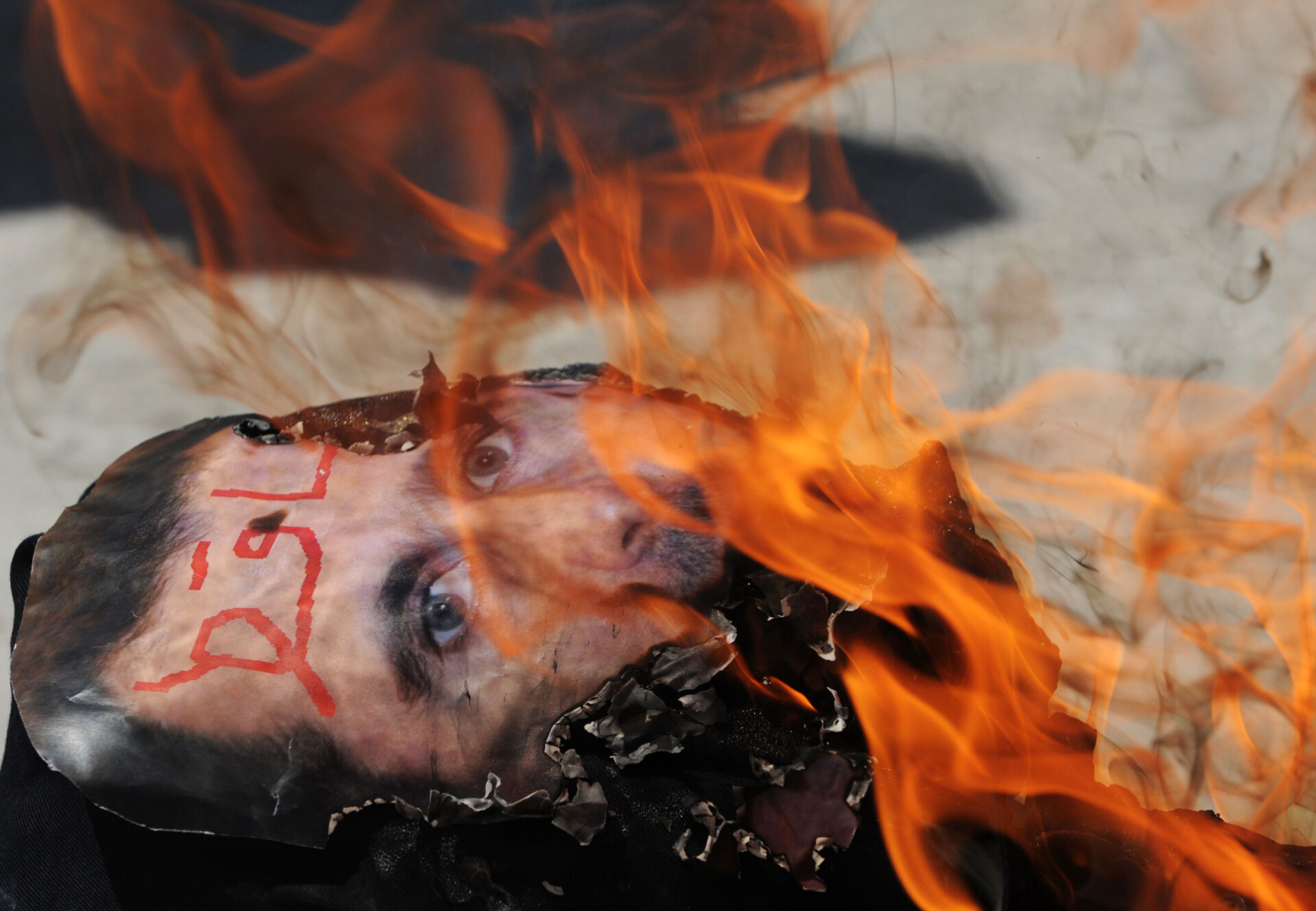
Mrie concedes that she grew up believing the propaganda around former Syrian dictator Hafez al-Assad. “I admit in the book that I truly loved him,” she says. “For me, he was not just the president. He was the person that allowed kids to go to school.”
Assad’s promotion of the Alawite sect that both he and Mrie were born into created much of the sectarian ill feeling that led to the Syrian uprising and the ongoing friction in the country, she says. “It’s impossible not to have sectarian tension when you have a government that is hiding behind a minority,” she says.
Mrie would eventually join the uprising against Hafez al-Assad’s son and successor, Bashar – a decision that her Alawite community saw as a terrible betrayal. “The majority of the community, they did not see it as an uprising for freedom and equal rights and an uprising for all Syrians. They saw it as an attempt to send the Alawites back to the marginalization that they escaped by having Assad in power.”
Her eventual exile to Turkey and the United States could be terribly lonely, Mrie tells Al Yafai. For many years, it seemed as if the revolution had been a failure. “We risked everything for the belief that if we just document, if we just tell the world what is happening, things are going to change,” she says. “Fast forward, you’re in exile, you’re watching your oppressors on TV, and the world seems to have moved on.”
Writing the book has brought painful memories to the surface, Mrie says. “I truly survived my mother’s absence by pushing her memory away and pushing everything related to her away,” she says. “Now it feels like I have to relive her absence and disappearance over and over again.”
Mrie’s mother sheltered her from the worst of her father’s terrible violence. “She always warned me what my father was capable of, but she never told me any details, and I did not understand that my father was a killer.”
She tells Al Yafai she no longer has the same feelings of guilt about her mother’s death, but she wishes she could “take a moment to tell her how much I loved her and how much she shaped my life and how much I’m grateful to her for making me the person I am today.”