


The lives of two “ketamine queens” born 55 years apart map the shifting history of drug use in the West over more than half a century. Marcia Moore (b. 1928) and Jasveen Sangha (b. 1983) sought fame and fortune through ketamine, a long-time human and veterinary anesthetic, now prescribed for managing anxiety in the United States, with dissociative properties and the capacity to create psychedelic hallucinations. Their stories are two parts of a single arc: particular in their details, yet universal in their wider message.
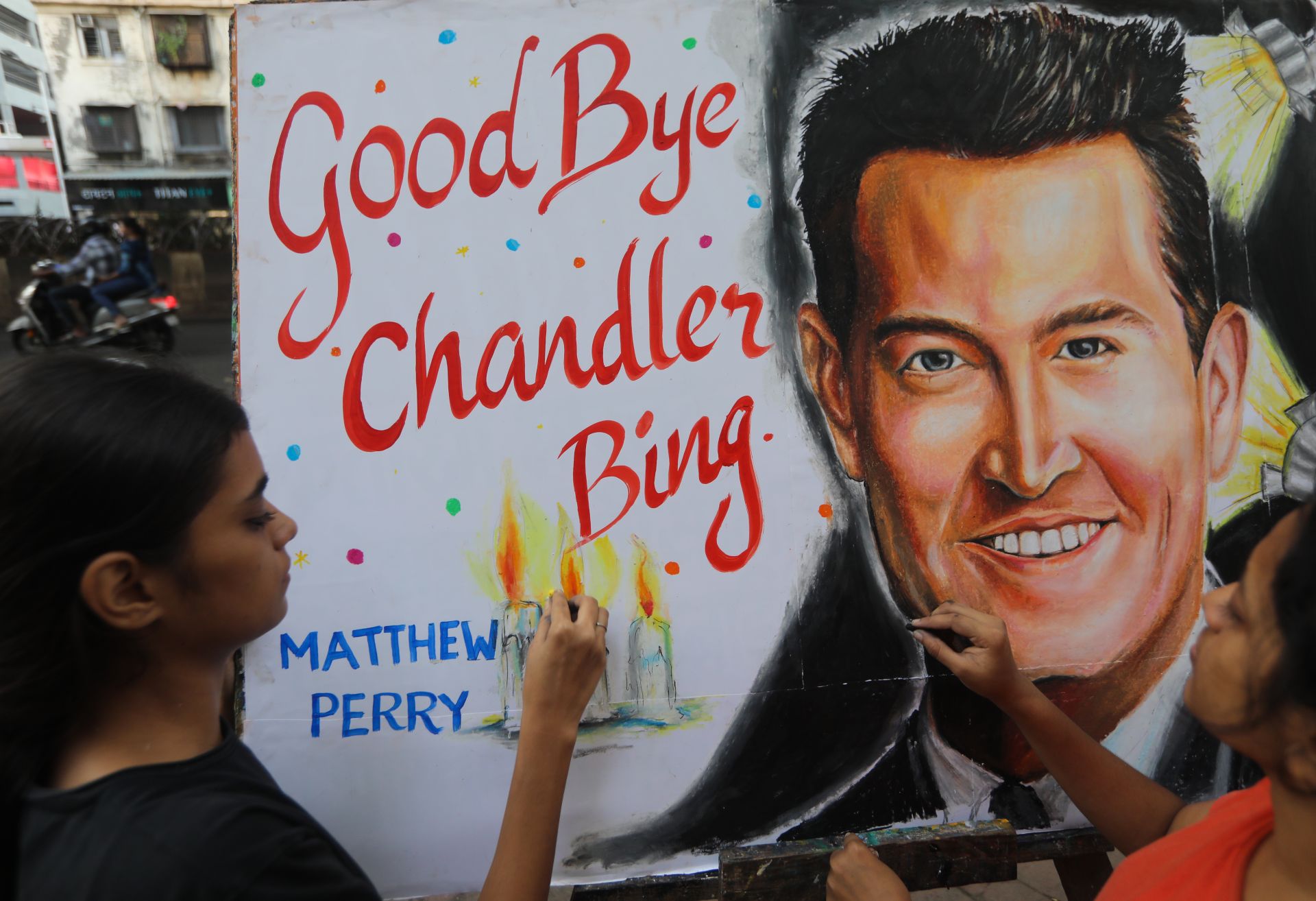
Moore’s story would end with her sudden disappearance in January 1979, and the appearance of her jawless skull two years later, in March 1981. Sangha’s freedom would end with her arrest and indictment on charges relating to the ketamine-induced death of “Friends” sitcom star Matthew Perry in his jacuzzi in October 2023. While the circumstances surrounding Moore’s death remain a mystery, there is little doubt that it was linked to ketamine use. In Sangha’s case, she has already pleaded guilty to selling Perry the lethal dose of “Special K” that killed him. Two deaths. Two “queens.” Their lives, as a user and a supplier, ruined by this unassuming killer.
Back in the 1960s and early 1970s, when Moore was establishing herself as a writer and charismatic public speaker on esoteric subjects such as yoga, astrology, lost worlds, extraterrestrials and reincarnation, ketamine was perceived as an anesthetic, sedative and pain reliever in the surgical and aftercare treatment of both people and animals. Veterinarians used it, as did the National Health Service in Britain and hospitals in the U.S. It would ultimately become infamous as a horse tranquilizer turned date rape drug, among other things. But in the beginning, its properties were perceived as medical and purely positive — unlike narcotics or hallucinogens such as LSD, which wooed the baby boomer generation, or the party pills and cocaine that swept Generation X and the millennials off their feet. Ketamine was a late starter in the drug race. It was people like Moore who, in the 1970s, saw ketamine’s psychedelic potential and helped make that aspect of the drug seem appealing.
The story of how Moore reached the point of believing so completely in ketamine is as intriguing as the circumstances of her death are confounding. The only daughter of Robert and Eleanor Moore, she was heiress to the Sheraton Hotel empire. Born into huge privilege, she enjoyed the comfort of plenty combined with the time to pursue arcane interests instilled by her background. Her father’s side of the family had long pursued the esoteric, specifically theosophy and spiritualism, and at an early age she attended seances with her grandmother. Marcia grew up believing in an unseen world, and her later studies in Eastern mysticism would add to her sense that a legion of invisible things were waiting to be explored.
Following the conventions of her time, Moore married young, in 1947, at age 19. It was a socially approved match to handsome Simons Lucas Roof, a war veteran who shared her interest in religion, philosophy and esoteric studies. According to Joseph and Marina DiSomma’s 2021 book “Dematerialized: The Mysterious Disappearance of Marcia Moore,” they “became part of the jet set featured in the society section of newspapers like the Sunday Post and the Boston Herald.” To their picture-perfect marriage they added a daughter in 1948, and two sons in 1951 and 1953. But Marcia quickly felt she was destined for more than domesticity and the cotton-wool world of coffee, cocktail parties and golf at the country club. These were mundane diversions from her real calling, that of esoteric philosopher.
Their marriage was in trouble before Marcia and Simons took their young family to live in India in 1955. According to the DiSommas, Marcia “fell in love with Indian culture and the deeply ingrained ancient meditative practices that are part of everyday life.” She had found her spiritual home. Marcia was blessed in a special ceremony by the Dalai Lama, she attended Buddhist retreats, met gurus, took yoga classes and pursued her studies in astrology, the occult and past-life regression.
While Marcia was preparing herself for her future life as a writer and speaker on the esoteric circuit in Boston and the wider U.S., Simons was treating his disappointment with alcohol after failing to become a star novelist. The marriage limped on after their return to the U.S. from India in September 1956, until 1961, when they formally separated.
From this juncture onward, Moore would bounce from one marriage (four in total) or short-term relationship to another, never finding anything that satisfied her or eased the anxiety of her parents, who were hoping for stability for their grandchildren. Nothing Moore did professionally, and none of her future partners, ever pleased them. They wanted their precocious, unbridled daughter to be a model wife and mother, and she was anything but that.
What Moore did contribute to her field, however, was substantial. She was a teacher and public speaker, a trailblazer in helping to popularize and remove the stigma around practices such as yoga, reincarnation, vegetarianism and astrology. She has even been credited with adding the phrase “age of Aquarius” to the 1960s lexicon. Moore was at the forefront of New Age mind expansion and consciousness-raising.
She published six books during her lifetime, a number of them co-authored with Mark Douglas (husband number three). The titles offer insight into her list of myriad esoteric interests: “Reincarnation, the Key to Immorality” (1968); “Diet Sex and Yoga” (1970); “Astrology in Action” (1970); “Hypersentience: Exploring Your Past Lifetime” (1976); “Journeys Into the Bright World” (1978); and “Astrology: The Divine Science” (1978). But for one title, she paid a higher price than all the rest. Arguably, her research for “Journeys into the Bright World” would help end her life.
Moore was driven. She wanted to lead a New Age mind-expanding investigation. Her ambition was to push further: to explore the self through psychedelic hallucination and to tape, transcribe and publish her experiences for her followers in “Journeys Into the Bright World.” She longed also to capture her parents’ attention, and undoubtedly their love.She had tried psychedelics before, including LSD, but was not convinced that it was the pathway to self-enlightenment. Ketamine became her drug of choice. In lower doses, it has a similar effect to alcohol, but in larger quantities it is a dissociative with hallucinatory properties, giving the user an out-of-body experience. And this is exactly what Moore wanted. Ketamine made her feel like a new person. She believed she had found the doorway to a deeper level of consciousness. She called ketamine “the Goddess.”
At the same time, in 1978, as Moore was planning to increase her profile and book sales through ketamine research, she fatefully met husband number four, Howard Alltounian, at a party thrown in her honor after one of her public presentations. It seemed a coincidence that she should meet Alltounian, deputy chief of anesthesiology at the Seattle Public Health Hospital, and a regular dispenser and user of ketamine through his practice. But if the DiSommas’ very convincing book is to be believed, the meeting was contrived by down-on-his-luck Alltounian to secure Moore’s acquaintance. He and his wife had recently split over his affair with an airline flight attendant. He was homeless with high rates of child maintenance and looking for a soft landing.
Moore outlined her hopes for ketamine, and Alltounian delivered the goods, providing a regular supply of the drug and a permit from the Food and Drug Administration (FDA) to proceed with clinical studies. Alltounian was drawn to Moore’s esoteric notoriety, but also to her income as an heiress. As Moore’s health began to decline as a result of her regular ketamine sessions, Alltounian, according to the DiSommas, looked longingly at her secondary family trust, which, if only he controlled it, would secure him a fund of $80,000.
But only six months into their increasingly rocky marriage, Alltounian obtaining control of Moore’s family trust appeared unlikely. The attraction between them that had seemed so providential and intense — and had led to their marriage within weeks — was now on the wane. They argued a lot and were spending increasing amounts of time apart.
Their marriage troubles were further exacerbated by the fact that the FDA withdrew their permit over concerns about their clinical investigations. Added to this cocktail of troubles was Moore’s addiction and Alltounian’s increasing desperation over money.
Murder is hard to prove without any forensic evidence, but things were murderous by the time Moore decided to travel from Bothell, Washington, across the country to the Rainbow Rose Festival held in Pasadena, California, between Jan. 20 and 27, 1979. She planned to present material from her 1976 book “Hypersentience” (a word she coined). Alltounian was not invited to join her. On the weekend before her proposed departure, Moore dropped her potted plants off with her landlord, then vanished. The last person to see her was Alltounian.
Alltounian claimed that on the evening of Jan. 13, he had gone to the movies to see a double feature of “Superman” and “The Pink Panther.” When he arrived back, he failed to notice whether his wife was there and woke up to the fact that she was missing in the early hours of the morning. He called close friends to help him search for Moore, but not the police. It was several days before he officially reported her gone, and he never told her parents or siblings.
The DiSommas detail the many sensational and obstructive things Alltounian did to derail the criminal investigation. He changed his story in interviews with detectives many times, but perhaps the act most debilitating to the investigation was his tactic of dragging a criminal case into esoteric zones. He, along with others, theorized at points in the investigation that she committed suicide, was kidnapped by a coven of witches or the mafia, beheaded in a satanic ritual, abducted by aliens or simply dematerialized into thin air. Moore’s own pursuits offered Alltounian a raft of psychic subterfuge.
Alltounian’s bizarre theories crashed into reality when, two years later, Moore’s skull materialized on a rural property near Highway 527, approximately 2 miles away from her home in Bothell. On March 20, 1981, the Walden brothers, George and Carroll, were clearing a stand of thick bush not far from a burned-out barn on their property. According to the DiSommas’ account, one of the men “pulled away a patch of sod adjacent to a cluster of tall cedars, only to recoil as he uncovered an almost bleached-white skull cap lying face up on a bed of dry leaves, exposing the top half of a human skull.”
Suddenly, explanations for Moore’s disappearance had to become more concrete. But so much was still unexplained. If she had walked to the spot where her skull was found on the evening of her disappearance, how had she done it? Interviews with friends would reveal that the 50-year-old had serious hip pain and could only move with a shuffling gait. No witnesses saw her walking along the route to the Waldens’ property. The area at the time was being battered by a severe cold weather system; she had taken no heavy coats or sweaters from her wardrobe to wear; temperatures were well below freezing; roads and footpaths were covered in black ice; and the bush where her skull was discovered was impenetrable.
Nothing made sense of the case other than foul play, and the prime suspect at the time was Alltounian, who had managed to evade every move to arrest him.
Ironically, the discovery of Moore’s skull, instead of firing up a cold case, actually put it to bed. This was a crossroads, a point where the dearth of indictable evidence had to be faced. The DiSommas record that “the forensic evidence gleaned from the pathological examination of the skull was paltry — no bullet holes, no cracks or indentations consistent with blunt force trauma. No clothing identifiable.” The likelihood of proving foul play from the remains was nonexistent. And on top of this, Alltounian refused to speak to either the police or the news media. In the end, Alltounian walked free, reestablishing himself as an anesthetist and dying of heart failure at 69, in 2006. Meanwhile, the official cause of Moore’s death would be “unknown.”
The enormous publicity surrounding her disappearance, followed 26 months later by the discovery of her skull, briefly dampened people’s enthusiasm for ketamine as a recreational drug. But by the 2010s and 2020s, ketamine was again well-established on the global drug scene, both as a recreational drug and, more recently, as a tried and true pharmaceutical drug, reappropriated from its decades-long use in anesthesia for the treatment of anxiety and depression. In the U.S., people seeking relief from these disorders can already obtain a ketamine prescription from a medical professional, and, depending on the state of their residence, can even legally receive their prescribed ketamine in oral tablet form by mail and self-administer the treatment with minimal supervision at home.
A different set of its properties is now ensnaring a new generation of young people. A 2025 BBC News article examining the explosion of ketamine use in the U.K. quotes Paul Spanjar (head of Bournemouth’s addiction rehabilitation center) saying, “Last year we actually treated more ketamine users than every other drug put together.” He describes its growth in popularity as an “epidemic.” “I’ve never seen a drug become so popular so quickly.”
But where Moore and many of her generation were searching for a “mind-expanding” psychedelic, Gen Z is exploring a different set of properties of what is now called “Special K,” “Vitamin K,” or “Kit Kat.” Gen Zers who bypass procuring a prescription for ketamine can buy it easily on the black market and use it recreationally, perhaps as a way to self-medicate. Spanjar observes: “We have a generation of young people who are so affected by anxiety, depression, loss of hope, fear of the future, and are carrying around this huge burden.”
The dissociative effect, as well as ketamine’s plentiful supply and relatively cheap cost, at a quarter of the price of cocaine, has seen the misuse of the drug on the streets soar exponentially, especially in the under-25 group, Spanjar explains. Sadly, excessive abuse of this prescription drug has resulted in disastrous side effects. The most serious is permanent bladder damage and kidney failure, which often require surgical repair or removal.
Sangha’s “drug-selling emporium,” based in North Hollywood, Los Angeles, rode this new wave of illicit ketamine use, selling the drug not on the city streets but to wealthy users who might already take it on prescription but wanted to illegally boost their dose. This was an opportunity for the enterprising Sangha: a niche market of wealthy self-medicators. For Sangha, it was moneymaking in that gray area between legitimate use of the drug for prescribed purposes and addiction. It was a similar gray zone to Moore’s use of ketamine as a legitimate FDA-approved drug trial, which led to her escalating personal use and dependency.
Sangha can trace her roots back to the Punjab region of India, but it was in the East End of London that her grandparents made a fortune in the fashion industry. The entrepreneurial family would relocate to California, where she grew up and ultimately graduated from university with a master’s degree in business studies. From 2019 onward, her business operations became largely illicit. It may have been the belt-tightening times of the pandemic that drove her underground, but regardless, the deadly spread of COVID-19 grew the market of bored celebrities cut off from their glamorous globe-trotting lifestyles and looking for a “trip” they could take at home.
Her ambition to make money and become “ketamine queen” to the stars drove her to take more risks. Sangha’s social media profile portrayed her as an extravagant jet-setter. The makeup, the clothes, the celebrity company she kept at the Oscars and Golden Globes, and her travel to exotic places, all had to be paid for.
Court proceedings reported by BBC News reveal that Erik Fleming, Perry’s supplier, messaged Perry’s assistant, saying “[Jasveen’s] ketamine was ‘amazing’ and that she deals only ‘with high-end and celebs.’” This seemed like good news, “as Perry, 54, sought more ketamine than his doctor would give him.” As a result, “Perry bought large amounts of ketamine from Sangha, including 25 vials for $6,000 in cash four days before his death.”
Perry, who lost consciousness due to a ketamine overdose and drowned in his hot tub, had also been taking ketamine on a regular basis under the supervision of a medical provider who prescribed the drug for the treatment of depression. Perry’s preexisting history of drug abuse made him an ideal target for dealers such as Sangha.
Moore is dead. Perry is dead. And Sangha, who was known among her Los Angeles social group for throwing parties fueled by ketamine and other drugs that lasted for days, is currently awaiting sentencing in California.
Become a member today to receive access to all our paywalled essays and the best of New Lines delivered to your inbox through our newsletters.