


Editor’s note: Asef Bayat is a prominent sociologist known for his concept of “post-Islamism” and his voluminous studies, over several decades, of revolutions, social movements and the politics of everyday life in the Middle East. Two of his earliest books — “Workers and Revolution in Iran” and “Street Politics: Poor People’s Movements in Iran” — focused on the country of his birth.
He wrote the following text as an open letter to Saeed Madani, an influential Iranian sociologist and journalist currently imprisoned in Iran for his activist scholarship. In 2013, Madani was convicted on national security charges for involvement with opposition groups. He has spent the intervening years in internal exile and in and out of prison, where he remains today.
Since 2023, Bayat and Madani have exchanged extended open letters, in which they have discussed key issues related to the possibility of a democratic transition in Iran. This is Bayat’s third letter to Madani. Written just before the U.S. and Israel launched their current war on Iran, it offers rich insights into the December-January uprising, sociopolitical dynamics in Iran over the last half-century and the nature of social change.
This English translation from Persian is exclusive to New Lines, for which Bayat has written previously, including a much-discussed December 2023 open letter to the late German philosopher Jürgen Habermas over the latter’s stance on the Gaza war.
Dear Dr. Madani,
Greetings once again. I hope that in these unsettling times, following the tragedy that has befallen our people, you are in good physical and mental health. Although your unjust incarceration continues, it is heartening to know that even the forbidding prison bars have not kept you from your intellectual work and from maintaining an active presence in public life. Though we are both physically removed from our society — you in prison and I in the diaspora — I am certain that our hearts and minds remain fixed on the same concern: the recent political upheaval that may have set our country on a very different course, for good.
I’ve been meaning to write to you for some time, but the December uprising and its aftermath consumed nearly all my attention. From the very beginning, the question that occupied my mind was simple yet difficult: What is the meaning and nature of this remarkable event? Yet how could I hope to form a clear picture when I was not there — when the internet and other channels of communication were shut down, and reliable information was so scarce? In those first days, many newspapers, media outlets and universities reached out, asking for commentary, interviews and lectures. I declined them all, simply because I did not feel I had a sufficiently grounded understanding of what was unfolding. Only after some communication was gradually restored was I able to reconnect with contacts inside Iran, gather information and begin to develop a clearer sense of the situation. In the meantime, some Iranians raised questions — both privately and semipublicly — about the events, questions I felt I could not ignore. For that reason, I have decided to share my current understanding in the form of an open letter, which I also see as part of our ongoing correspondence. I hope, in doing so, to hear your thoughts on these monumental and yet deeply unsettling developments.
I must admit that much still remains unclear, and that we will need more reliable information before we can arrive at any sound analysis — quite apart from the fact that the situation itself remains fluid and subject to change. What I present here, therefore, is preliminary, more like a set of tentative propositions. My general understanding so far is that what occurred in December was neither a “national revolution,” nor a “coup,” nor “terrorism,” as it has often been described. Rather, it was a signpost along a revolutionary course — a path that is far from smooth and is marked by many potholes and obstacles. Those who think in terms of reaching the destination have little choice but to repair the road as they proceed.
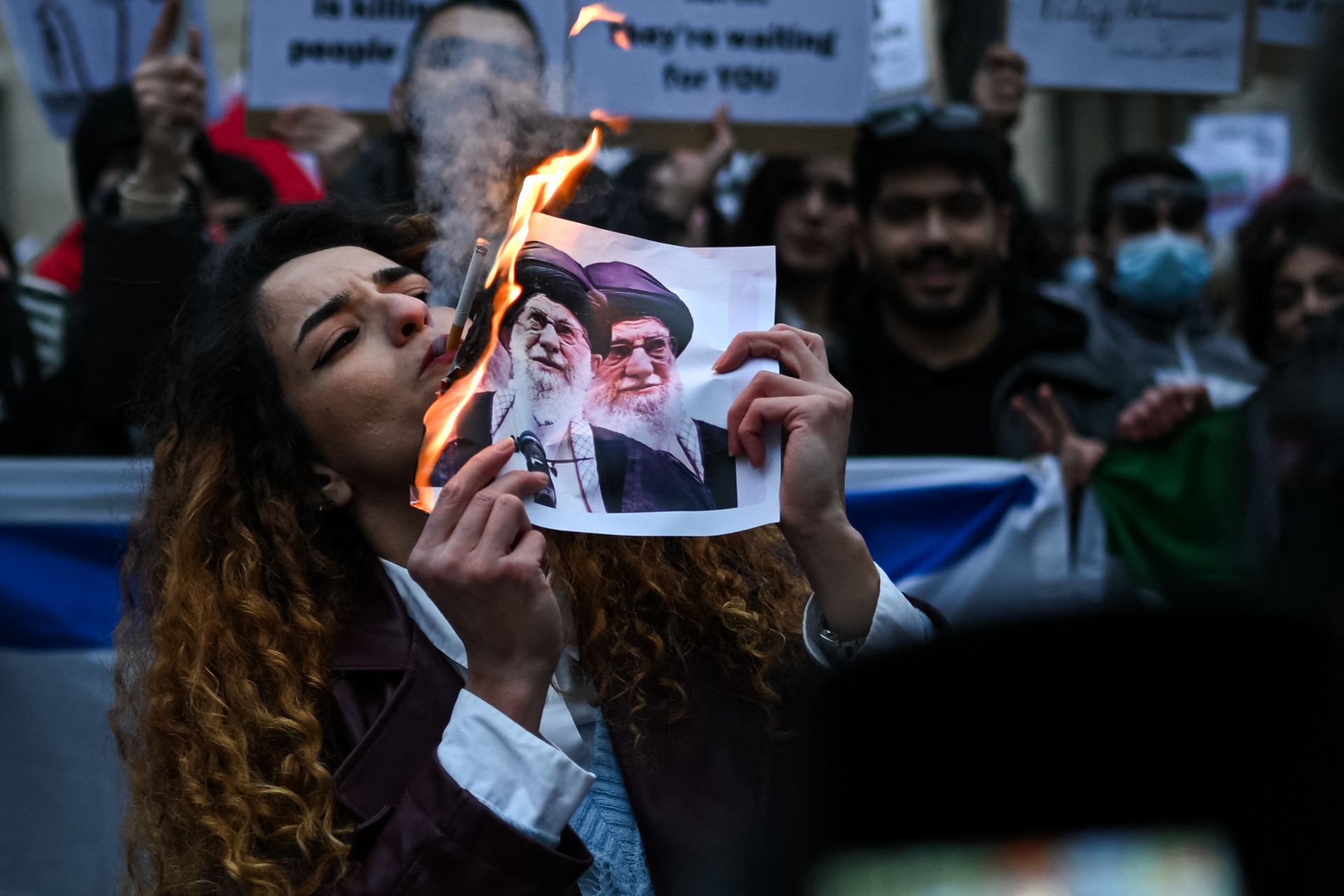
As you know, on Dec. 7 of last year, groups of Tehran’s merchants took to the streets to protest the sharp decline in the value of the Iranian currency and the country’s deepening economic crisis. It was not long before other residents of Tehran joined them. Within days, the protests spread rapidly across the country, reaching more than 400 cities and some 900 locations in all 31 provinces. Over the course of more than two weeks, the Islamic Republic found itself facing the largest popular uprising in its history. When Reza Pahlavi, the son of Iran’s deposed Shah, called for demonstrations on Dec. 18 and 19, larger crowds filled the streets. The monarchist current hailed it as a “national revolution,” while the regime denounced it as a “coup” and an act of “terrorism.” The government shut down the internet and other channels of communication and unleashed a most heinous massacre of its people. Over the course of two nights, police, Pasdaran [Islamic Revolutionary Guard Corps] and Basij forces killed thousands of protesting citizens. The events left behind a profound national trauma — one whose consequences will likely be felt for years to come.
In our correspondence, we had discussed the cycle of protests that began in 2017 and expected that it would continue. You had already described Iran as a “networked” and “movement society,” one in which protests would likely occur at shorter intervals and in greater numbers. The multiple political, economic, social and environmental crises are so deeply embedded in the structure of the Islamic Republic that the regime appears unable to resolve them. Even an end to the U.S.-imposed sanctions — while it might ease some pressures — would not address these underlying crises, and protests would likely persist. Others had also anticipated an impending resurgence of unrest following the crackdown on the Woman, Life, Freedom movement. What was not foreseen, however, was the character and the particular features of the December uprising that distinguish it from previous episodes.
First, the protests were sparked by street demonstrations led by a segment of the Tehran bazaar — an event unprecedented in the history of the Islamic Republic. In the early years of the revolution of 1979, some wealthy bazaar merchants supported President Bani-Sadr in his rivalry with the hard-line Islamic Republican Party. Yet the bazaar as an institution largely remained aligned with the Islamist establishment. Today, however, the situation has changed, and the traditional notion of the “alliance between the bazaar and the clergy” has lost much of its analytical purchase. The proliferation of large shopping centers and malls, the influx of cheap Chinese goods, and economic mismanagement have undermined the bazaar’s economic influence. Although the bazaar’s political geography remains largely intact, and many merchants continue to maintain a traditional religious lifestyle, the institution itself has become more modern, more vulnerable and more discontented.
On Dec. 7, 2025, when bazaar traders opened their shops, they faced such a sharp plunge in the value of the currency that many could no longer set fixed prices for their goods. Trade effectively stalled: Sellers hesitated to sell, and buyers refused to buy. The resulting uncertainty and disorder in the marketplace threatened the livelihoods tied to more than 4 million stores — one of the country’s largest household sectors, second only to wage and salary earners. Yet the burden does not fall on traders alone. Consumers also face the daily shock of rapidly rising prices. “I had to get two injections 10 days apart,” one Iranian wrote on social media at the time. “Ten days ago, I bought the first one with my social security insurance for 2,700 [toman]; today it was 5,500. I almost cried at the cashier.”
Second, the protests drew participants from across social classes — from disaffected elites whose lifestyles and economic interests conflict with the Islamic Republic’s ideology and policies, to subaltern groups whose opportunities for a dignified life have steadily narrowed. In the decades after the 1979 revolution, many among the poor created opportunities through what I have called “quiet encroachment”: setting up street stalls, driving motorbike taxis or building shelters on unused land — informal, often extralegal forms of self-help. Broadly, so long as such practices are tolerated, the poor quietly expand their informal livelihoods. But when these spaces close, they are pushed toward street politics. Over the past decade, Iranian governments have increasingly monitored and restricted these informal initiatives. Years ago, in an interview with the newspaper Sharq, I warned that such confrontations would drive the marginalized from quiet encroachment into open confrontation. This outcome was not difficult to foresee — especially since today’s marginal poor differ from those of 1979. Many are literate, connected to the wider world and keenly aware of their deprivation. Among 11,000 detainees in the recent protests, 88% had a high school diploma or less and 7% had some university education, pointing to the significant presence of young members of the working class in the uprising.
A will found in the pocket of Khadijeh Alipour, the daughter of a laborer killed during protests on Dec. 18 in Fardous, Karaj, stands as a powerful testament to the role of the disenfranchised in Iran’s recent uprisings:
I am a working-class Iranian. If I am in the streets today, it is because of you [the government], who laugh at my pain. Today, we Iranians have taken to the streets, risking our lives to reclaim what is rightfully ours. We are not terrorists, rioters or puppets of foreign powers. I am, with pride, a protesting and honorable child of a worker. We have come to take our country back from the corrupt mullahs. We will remain in the streets. With one voice, we declare: We are Iranian. Our roots are in this soil. We will stay, we will fight, we will die — we will take back Iran. Death to the dictator.
Although digital communication tools have enabled some marginalized groups — such as poor women — to create jobs and generate income, political control has also destabilized the digital economy. More broadly, digitization tends to expand state oversight of informal life and work. By making these activities more “transparent,” it renders them easier to monitor and regulate. In principle, the regime may not oppose informal livelihoods; it can even sustain them to its own advantage — so long as they remain under its control.
In these dire conditions, the “middle-class poor” grow increasingly outraged. This emergent class — central to the Arab Spring — often hold college degrees, youthful aspirations and middle-class dreams, yet live with poverty and deprivation. They straddle the world of poverty — shantytowns, precarious work and debt — and the realm of universities, consumption and the internet. They constantly move through city centers but live on the margins. They want Nike shoes but settle for fake brands. They dream of studying or traveling abroad but are trapped by a dearth of money and impossible visa regimes. What is supposed to be a temporary state of instability often becomes permanent.
Economists cited by the newspaper Tejarat-e Emrooz reported in 2022 that about 60% of the country’s poor are young, educated and healthy. The daily Sharq likewise notes that this population harbors dreams of travel, dining out and homeownership, while living with precarious work, limited funds and constant anxiety about the future. This group — feeling neither fully young nor fully adult — has become a key actor in recent uprisings.
Third, although no precise figures exist, the protesting crowds appear to have been larger than in previous mobilizations. Reformist activist Shakouri Rad, citing intelligence and security agencies, estimated that there were around 1.5 million participants. Yet many eyewitnesses believe the crowds exceeded those of the Woman, Life, Freedom uprising, which drew roughly 2 million protesters. Accounts from eyewitnesses, along with reports from inside Iran, suggest that the protests were largely spontaneous, loosely coordinated through online networks and rooted in local organization. Families, neighbors and friends would first gather in alleyways, then move into nearby streets, where they joined similar groups from other blocks before marching toward main streets or public squares. When confronted by police, they would quickly disperse — only to regroup and resume the demonstrations.
Undoubtedly, most protesters were young — about 70% between the ages of 18 and 30, according to Ezzatollah Zarghami, former director of state radio and television. Their strong presence is not surprising. The “youth affordances” — physical agility and energy, higher levels of education and future orientation, and what is called “structural irresponsibility,” or relative freedom from heavy obligations — place young people in a more advantageous position in street politics. Yet, as I have suggested elsewhere, youth alone cannot produce a political breakthrough, despite young people’s dramatic performance in the streets. Breakthroughs occur when the social mainstream — women and men, children and elders, traditionalists and moderns, people of various classes and social groups — joins the arena of contention. During the December uprising, elements of this broader social mainstream were present. Trump’s expressions of support may have encouraged some middle-aged and elderly participants, who believed that such backing might restrain the security forces.
Fourth, the slogans, anger and radicalism visible in the uprising left no doubt that the overthrow of the Islamic Republic has become a central demand for protesters. The regime claims that hundreds of mosques, banks and other sites were attacked by “terrorists,” “Mossad agents” and organized hostile groups, though the accuracy of these claims remains unclear. In past uprisings, the government has routinely blamed foreign agents. While some outside-inspired actors may have been involved in violent incidents, protests across more than 400 cities and 900 locations far exceed their capacity to organize. Many Iranians suspect that certain acts — such as the burning of mosques — may even have been carried out by security forces to provoke religious backlash against protesters, echoing allegations raised about the Green Movement in 2009. At the same time, some enraged protesters — who see mosques less as places of worship than as bases for Basij militia coordination — may also have carried out attacks. The most radical actions appear largely in marginalized neighborhoods. One witness noted that although demonstrations occurred in about 100 locations in Tehran, areas such as the lower-class Naziyabad saw particularly radical acts. The sense of abandonment, humiliation and discrimination reflected in Khadijeh Alipour’s will likely resonates with many of the dispossessed, for whom the crowd offers not only protest but also a chance for revenge.
We have already discussed the question of violence in liberation struggles and share an understanding of its complexities. I fully appreciate your commitment to nonviolence and broadly sympathize with it. At the same time, I understand the rage and resentment of Iranians who have endured decades under a despotic system. Yet I still question how much violent radicalism strategically advances the cause of liberation from a regime that does not hesitate to commit mass killings of its own citizens.
A key principle seems relevant here: When two unequal forces confront each other, the weaker side should not mirror the tactics of the stronger one, because it will almost certainly lose. Instead, it must rely on novel and unconventional approaches. This principle applies as much to popular struggles against repressive regimes as it does to a soccer match. It is precisely here that leadership becomes critical. Leaders are expected to offer judgment and guide the movement toward a course of action that minimizes costs while maximizing the chances of success.
Finally, a notable feature of the recent uprising is the visible presence of the monarchist movement led by Reza Pahlavi, along with a growing belief that external war or “surgical operations” might open a path to liberation. A reformist activist admitted that the public response to Pahlavi’s call “shocked everyone,” and the large crowds on Dec. 18-19 were likely influenced in part by that appeal. Yet the true scale of monarchist support remains unclear, because reliable polling is unavailable. A Swedish media research group that reviewed 4,500 protest videos over 20 days found that only 17% of the slogans were explicitly pro-monarchy (such as “Long live the shah”), while most called broadly for regime change (including “Death to the dictator.”)
While such slogans are not exclusive to nonmonarchist groups, eyewitnesses reported that on Dec. 18-19, monarchist activists tried to concentrate chants on pro-Pahlavi slogans and amplify them in media coverage. Small teams of five to 15 people operated together: One person coordinated pro-monarchy chants while two others filmed and documented them. Although the broader crowd largely chanted “Death to Khamenei” and “Death to the dictator,” these teams continued promoting their own slogans. Another witness described similar scenes in Mashhad during the attack on the imprisoned human rights activist Narges Mohammadi, who was awarded the Nobel Peace Prize in 2023. Instructions from the monarchist “Javidan Guard Group” confirm an effort to suppress alternative slogans.
Nevertheless, the strong monarchist presence in the recent uprising was unprecedented. Why this ascendance? In recent years, the movement — supported by significant financial and logistical resources, including two television networks — has offered a nostalgic image of the prerevolutionary era, presenting Reza Pahlavi as a familiar figure with a ready-made alternative for a society desperately looking for one. During this period, the government of Israel and some politicians in the United States also provided media visibility that further amplified his profile. At times, even operatives within the Islamic Republic implicitly encouraged the monarchist current, seeing it as a way to deepen divisions within the opposition.
All of this unfolded while leftist, republican and secular democratic forces largely failed to take the Pahlavi current seriously or to support figures inside Iran — such as former prime minister Mir-Hossein Mousavi — who were attempting to articulate an indigenous alternative. Fragmented and divided, these groups were unable to form a credible and coherent coalition. I have discussed aspects of this broader political malaise in my Persian essay “Opposition vs. Movement: Pathology of a Political Malaise.” As a result, the political space was increasingly left to a segment of the opposition that now looks to U.S. and Israeli military intervention as the path to Iran’s liberation.
How, then, should this uprising be understood? Is it a “national revolution,” or a coup backed by foreign powers? If neither, what is it? I view the December uprising not as a revolution but as a signpost along a revolutionary road — but a sign indicating that the road is marked by obstacles and rough terrain that must still be overcome. In an article in the Journal of Democracy titled “Is Iran on the Verge of Another Revolution?” I argued that the Woman, Life, Freedom movement, despite failing to produce decisive change at the top, nonetheless set Iranian society on such a “revolutionary course.”
A revolutionary course emerges when a large segment of society begins to think, imagine, speak and act in terms of a different future. Public judgment becomes shaped by the expectation that “the regime will go.” Everyday failures — bad traffic, for example — are interpreted as signs of the regime’s incompetence, while ordinary acts of protest, even over issues like drought, take on a revolutionary meaning. The status quo is seen as temporary and change as only a matter of time. For this reason, periods of calm and contention may alternate along a revolutionary course until they possibly culminate in a “revolutionary situation.” Historical trajectories such as those in Poland between 1982 and 1988, and in Sudan between April and August of 2019, illustrate this pattern. Yet reaching such a moment is never inevitable; it depends on many contingent political and social factors.
My argument is that the December uprising is indebted to the Woman, Life, Freedom movement and, at the same time, a regression from it — a degeneration of some of its revolutionary qualities. Although the December protests explicitly called for the regime’s fall, several key elements of a revolutionary movement were absent. Woman, Life, Freedom possessed a revolutionary character in several respects. First, it brought together diverse social groups — women and men, veiled and unveiled, young and old, lower and middle classes, along with varied political and artistic currents — around a discourse of freedom, pluralism, care and the reclaiming of life, to demand a new political order. Second, civil society institutions were actively involved: women’s groups, teachers, students, doctors, artists, athletes and, at times, workers and shopkeepers. Third, the movement generated a remarkable body of literature, art, poetry and music, sparking unprecedented public debate about society, power, the role of women and pluralism. In the process, shifts occurred in certain social norms, values and citizens’ outlooks. These features made Woman, Life, Freedom one of the most innovative revolutionary movements of recent times.
Yet despite these achievements, the Woman, Life, Freedom movement — like many revolutionary movements of the past decade — was unable to develop the political and logistical capacities needed to overcome the Islamic Republic. No coherent organization emerged, nor a form of leadership or a clear, tangible vision of a future political order. To be sure, the movement transformed certain behaviors, values and social norms. It rendered society ungovernable and placed the country on a revolutionary course. But it did not produce a change in the political regime. If anything, the authorities soon began to act as though nothing had happened.
It now appears that the December uprising has addressed one key shortcoming of earlier protest waves: the emergence of a recognizable leadership and a political vision in the person of Reza Pahlavi, who has mobilized a significant number of Iranians both inside and outside the country. From the standpoint of revolutionary strategy — and for the monarchist current — this is clearly an advantage.
Yet this same advantage has also produced a strategic disadvantage. The monarchist movement’s exclusionary character, and its exclusive reliance on Pahlavi and foreign military intervention, have limited its capacity to unite Iran’s diverse social forces. Despite repeated references to a “national revolution,” the opposition has in fact grown more fragmented. Republican and democratic groups, civil society activists and many scientific, artistic and cultural figures envision a different future for Iran and therefore remain distant from the language and methods of the monarchists. This divide is also visible across ethnic and regional lines. With the notable participation of the Lurs, many other groups — such as Kurds, Balochis and Turks — largely kept their distance from the uprising, mostly because of its association with the monarchist current. Unlike the Woman, Life, Freedom movement, the December protests tended to draw primarily from the central, Persian-speaking and predominantly Shiite population, while many peripheral ethnic communities and much of the Sunni population remained on the margins.
In this sense, significant aspects of the uprising’s language — especially when compared with that of the Woman, Life, Freedom movement — suggest a troubling regression. At times, one hears echoes of masculine, authoritarian and anti-intellectual rhetoric, alongside sentiments openly dismissive of democratic principles. Particularly striking is the contempt some express for democracy, even while living under a despotic system. On social media, for example, one encounters claims such as: “People did not sacrifice their lives for democracy, but for Iran and the monarchy. … The ideas of a ‘new constitution’ and the ‘ballot box’ betray millions of Iranians.” These views likely represent only a minority. What is troubling, however, is the absence of sustained efforts to challenge or repudiate such anti-freedom sentiments. In this climate, a form of anti-politics — a rejection of open dialogue and democratic contestation among rivals — appears to be gaining ground within parts of the opposition.
One of the basic principles of revolutionary movements is the unity of dissenters. From a revolutionary strategy perspective, revolutionaries are compelled to converge if they are to make a breakthrough; there is no escape from unity, however temporary. At exceptional historical junctures, sweeping uprisings such as the Arab Spring or the Women, Life, Freedom uprising reveal a striking sense of unity and equality. Individuals and groups with diverse interests, identities and ideas become intertwined, imagining themselves as part of a vast collective subject — “the people” — struggling for the greater common good. This is the affective magic of revolutionary moments. Yet another factor also helps produce such convergence: generality and ambiguity. Broad and open-ended slogans and demands allow diverse actors to project their own aspirations onto a shared language. In this way, individuals and groups join together by imagining their particular claims within common, if ambiguous, goals. Of course, this kind of “imagined solidarity” is inherently fragile. Once the central adversary — the dictator or ruling regime — disappears, underlying differences over the meaning of those slogans and demands inevitably resurface.
An “imagined solidarity” emerged during the Iranian Revolution of 1979 and helped secure its victory. Today, however, such unity is far harder to sustain. Many groups want clarity about the meaning of slogans and demands before, rather than after, the fall of the dictator. Yet once discussion turns to specifics, disagreements inevitably arise. In these conditions, progress requires a deliberate effort to build a broad coalition — a united front grounded in a few shared principles. Without such a coalition, unity is fragile and victory unlikely, even if one faction appears dominant.
The current uprising has failed to produce such a coalition. The monarchist current, lacking any organized political structure inside Iran, seems to believe it can topple the regime largely on its own, relying on foreign powers and its followers. This appears unlikely. Perhaps the leadership is aware of the opposition’s fragmentation but is unconcerned, because it is thinking not in terms of revolution but of regime change, a scenario like the Iraq War — military strikes by the United States and Israel would bring down the regime, after which Pahlavi could lead a transitional government. In truth, many Iranians, including those inside the country, have come to hope for such an outcome. In conversations with individuals in Iran, I have repeatedly heard the phrase “people have their eyes on the sky,” meaning they are waiting for American and Israeli warplanes to finish the job.
How did we move from the aspirations of the Woman, Life, Freedom movement to the sentiment that “anyone is better than these”? Much has been written about the trajectories of social movements. Under different conditions, movements may become institutionalized within the ruling system, radicalize, withdraw from the streets out of exhaustion or change course under repression. Even repression does not produce a single outcome: It may push a movement off the stage or, conversely, deepen its resolve. Less discussed, however, are the conditions under which a revolutionary movement undergoes a degeneration of language and aspirations. This can occur when repeated attempts to change the status quo fail in the face of pervasive state violence. Over time, people may abandon the patience needed to imagine careful, low-risk paths toward a free future and instead gravitate toward immediate, seemingly simple — yet potentially perilous — solutions.
For decades, Iranians have confronted a despotic religious-ideological regime that itself emerged from a revolution. Over time, the regime has built parallel institutions and cultivated its own “people” by dispensing economic and political rents, ensuring loyal defenders in moments of crisis. Its leaders justify extreme violence under the doctrine that “preserving the system is the highest obligation.” Even the public’s efforts to defend the country during the 12-day war in June brought few concessions; the authorities quickly behaved as if nothing had happened. Under such conditions, it is not difficult to understand why many desperate citizens might begin to accept almost any means — even the prospect of foreign war — to end the regime.
Recently, a resident of Tehran wrote to me expressing concern about the growing sentiment that “anyone would be better than these.” She asked: “A society deprived of education for four decades, stripped of its civil institutions, drained of its material and human capital by ideology and corruption and raised in fear and humiliation — can it still make sensible decisions about its future? Can we even expect that from people who have been so deeply damaged?”
State violence and deepening despair can push a movement away from the complex, winding path of revolution toward the simpler goal of mere overthrow. As Hannah Arendt observed, when violence comes to dominate political life, the capacity to establish freedom begins to erode. In such moments, the values of freedom, democracy and justice recede, while all energy is directed toward ending an intolerable status quo.
Yet overthrow alone is not revolution. Under despotic rule, revolution means collectively envisioning and striving to build a free and democratic polity and society. It requires that people themselves participate in imagining and shaping an alternative future. If they are absent from that process, others will determine the country’s direction at the moment of collapse — possibly ushering in a new form of despotism.
The political psychology of desperation — and the temptation of authoritarian solutions — finds fertile ground in a global moment when skepticism toward democracy appears increasingly normalized. When figures such as Curtis Yarvin promote the “neoreactionary” idea that the United States should be governed more like a corporation than a democracy — and even find sympathetic listeners in Washington — it signals a troubling shift in the global climate of ideas. This marks a departure from an earlier era. In his analysis of the fall of Mohammad Reza Shah and the collapse of Arab dictators during the Arab Spring, Daniel Ritter argues that such regimes were trapped in an “iron cage of liberalism.” Even if they did not believe in democracy or human rights, they had to utter the language of those norms within the global order. The Shah and his government, for instance, regularly faced pointed questions from journalists, liberals and figures such as Jimmy Carter on issues of democracy and human rights.
Today, by contrast, the monarchist current not only disregards these values but often attempts to suppress calls for a republic, democracy and human rights. It is striking that such far-right tendencies have emerged not within an established democracy — where one might attribute them to disillusionment with democratic institutions — but within a theocratic authoritarian system like the Islamic Republic. The roots of this troubling condition may lie less in the “escape from freedom” described by Erich Fromm — because there has been little freedom to escape from — than in the haunting insight of the great poet Ahmad Shamlou:
We endured our crushing punishment for so long
that our sacred words,
in the end,
slipped from our minds.
I recognize that many of our compatriots, despite “crushing punishments,” have not abandoned the values of freedom, democracy and equality. Some have even gravitated toward the far-right camp while still caring deeply about these ideals, largely because they see no credible alternative. Faced with the regime’s unrestrained violence, they ask: What path remains other than dismantling the system, even with violent foreign intervention?
Various scenarios for Iran’s future have been proposed, but I focus here only on broad strategic options, assuming that the reform project has currently largely lost its credibility. Three perspectives tend to dominate the debate about “what is to be done.” The first is dismantling the regime through foreign military intervention — specifically an attack by the United States and Israel, followed by a transitional leadership under Reza Pahlavi. This scenario, promoted mainly by the monarchist current, resembles what occurred in Iraq after the overthrow of Saddam Hussein during the Iraq War. Such a path could carry grave and irreversible consequences for Iran’s infrastructure, resources, territorial integrity and long-term social and political stability. Let us also remember that the United States and Israel would intervene primarily in pursuit of their own strategic interests, not out of concern for the well-being of the Iranian people. I will not speculate here about the political order that might emerge if such a scenario were realized.
The second perspective begins from the premise that Iran’s theocratic system differs fundamentally from more conventional authoritarian regimes, such as those of Mohammad Reza Shah in Iran or Zine El Abidine Ben Ali in Tunisia. Because of this difference, the path of change may also follow a different trajectory. According to this view, the eventual transformation of the Islamic Republic may resemble the evolution of communist regimes. Systems such as the Soviet Union did not collapse immediately; rather, prolonged economic inefficiency, governance crises and structural corruption gradually eroded them. Before any internal collapse, many of these regimes moderated their revolutionary ideology and governing practices, even while retaining authoritarian features. Within this framework, popular resistance, civil society activism and periodic mass uprisings can accelerate this otherwise slow process of erosion and transformation.
Finally, there is the prospect of a democratic transition mediated through a “negotiated revolution,” a trajectory I have already outlined in our previous correspondence. This path seems to offer a relatively low-cost route with a democratic horizon, and it involves several interrelated elements. First and foremost, it requires the continuation of popular struggles and forms of resistance within civil society. Strengthening non-movements [the shared practices of ordinary people that can create change without a clear ideology or leadership], while also nurturing more organized associations and social movements, can help keep society active, resilient and politically engaged. Alongside these efforts, sustained intellectual and discursive work is needed to clarify and promote the very idea of a political “transition.”
At the center of this vision lies the proposal for a referendum and the convening of a constituent assembly that would determine the country’s future political order. This path has been advanced by the “advocates of transition” in Iran, led by the former prime minister Mir Hossein Mousavi, a current in which you yourself also take part. At the same time, it is essential to connect the many pro-democracy groups and organizations — both inside and outside Iran — into a broader coalition, a democratic front capable of acting together. Finally, the strategy would aim to apply sustained political pressure on a crisis-ridden and increasingly exhausted regime, obliging it to negotiate the project of transition. What I have outlined here, of course, are only the broad contours of such a strategy. Much would still need to be worked out — refining the approach, identifying the obstacles it may encounter and thinking through practical ways to overcome them.
But let me clarify one point that is often raised. It is sometimes asked why one should expect a regime to agree to negotiations whose outcome might ultimately bring about its own undoing. This is a fair question. No regime willingly relinquishes power unless it is compelled to do so. The rulers of apartheid South Africa, the communist leadership in Poland and the Pinochet regime in Chile likewise had no desire to give up their authority; yet they were eventually pushed into circumstances in which negotiation became unavoidable.
In this sense, a negotiated revolution is about preparing for such a moment. It means working patiently to create the conditions in which negotiation becomes the only viable path forward. The process begins with intellectual and discursive efforts that bring the idea of transition into the public sphere, and it may ultimately culminate in the emergence of mass uprisings at a moment when the regime itself is caught in a deep crisis and finds its options increasingly limited.
I apologize if this note has become rather long.
With my best wishes for your freedom and for the well-being of the people of our homeland.
Asef Bayat
Feb. 27, 2025
Become a member today to receive access to all our paywalled essays and the best of New Lines delivered to your inbox through our newsletters.