

Yemen’s ‘Dismantled’ Separatists Are Still Causing Chaos
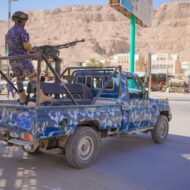
For Yemen’s Southern Transitional Council (STC), a single social media post can still set events in motion. On paper, the pro-independence group was dismantled in January after losing control of much of southern Yemen, territory it had dominated for years, following an offensive by Saudi-backed government forces. With the United Arab Emirates, the STC’s main external supporter, stepping back from the scene, Saudi Arabia appeared to emerge as the sole foreign actor shaping developments in government-held areas.
Yet the STC’s networks remain active. From undisclosed locations, its social media accounts have repeatedly urged supporters to take to the streets in protest against the Saudi-backed Yemeni government. Two recent rallies in Aden and Shabwa turned deadly, leaving at least seven protesters killed and many others wounded, amid government accusations that demonstrators attempted to storm state institutions and attacked security forces.
The Yemeni government and Saudi Arabia now find themselves in an awkward position, confronting an opposition movement that appears to lack a clear leadership structure. STC chief Aidarous al-Zubaidi has largely disappeared from public view, while other senior figures have either aligned themselves with the government, remained in Riyadh under unclear circumstances (with some reports suggesting their movements and statements are restricted) or kept a low profile inside Yemen.
For the Yemeni government, the STC’s renewed street mobilization is seen as more than a domestic challenge. Officials interpret the protests as a signal that the UAE is unlikely to retreat quietly, and that tensions between Abu Dhabi and Riyadh could intensify, with southern Yemen once again becoming an arena for their rivalry. “I think the Saudi-UAE rift will escalate, and the protests are an indication of that,” a senior Yemeni government official told me.
Many Yemenis also believe that the armed networks once built and funded by the UAE have neither disappeared nor fundamentally changed. Tens of thousands of fighters who formed the backbone of the STC’s forces remain in place, with some still embedded within military and security institutions while others have adopted a lower profile. Across cities such as Aden and al-Mukalla, as well as other former STC strongholds, symbols of the movement, including portraits of al-Zubaidi and the group’s flag, continue to be visible in public spaces.
The Iran-backed Houthis, who control Yemen’s central and northern highlands — including the capital, Sanaa — appeared poised to exploit the turmoil in the south to stage a comeback in areas they were expelled from a decade ago. On Wednesday, the Houthis launched an offensive against government forces in a pocket of land in the western province of Hodeidah, marking their second attack in as many days.