

Syrian Government Shakeup Expected To Diffuse Presidential Power and Integrate Minorities
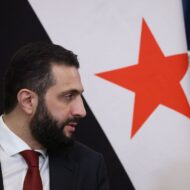
In Syria, a significant government reshuffle is anticipated in the coming weeks, primarily aimed at integrating minority groups and distributing the myriad roles currently held by President Ahmad al-Sharaa.
The reshuffle is poised to be narrow in scope, affecting only a handful of key portfolios, before al-Sharaa appoints the remainder of parliament members and pushes for constitutional changes.
A significant goal of the reorganization will be to delegate some of the responsibilities overseen by al-Sharaa, including his dual mandate running the Cabinet as de facto prime minister while also acting as president. That has been a source of criticism from Syria’s minorities and international observers who say the centralization of power hinders the country’s transition toward a more pluralistic rule. Al-Sharaa previously scrapped the premiership to head the government himself. The post will now be reinstated, with front-runners including the incumbent foreign minister, Asaad al-Shaibani, who has proven himself over the past year through his work bringing Syria in from the diplomatic cold, and Riad Hijab, an Assad-era prime minister and a unifying figure who defected from the former regime in mid-2012.
According to official and well-placed sources in Damascus, Minister of Interior Anas Khattab, one of the officials closest to al-Sharaa, will be replaced by his deputy, Maj. Gen. Abdul Qader Al-Tahhan. Al-Tahhan was promoted by the president from head of General Security, becoming deputy minister of interior on Feb. 1. Khattab will move to helm the National Security Council, a vital body currently chaired by al-Sharaa himself.
Another close aide to al-Sharaa will be replaced. Defense Minister Murhaf Abu Qasra will likely be replaced by Ali Naasan, the current military chief of staff. It’s not clear what position Abu Qasra will assume, but he’s likely to hold a central role under al-Sharaa.
Notably, official messaging about the anticipated changes was telegraphed by a senior official at the Ministry of Foreign Affairs. In an article published by the state-run Al-Thawra newspaper, the ministry’s director of Arab affairs, Mohammad Taha al-Ahmad, wrote that “a balanced republican system hinges on a clear division of powers between the president and a head of government overseeing day-to-day executive management.” Such a move, he added, would “limit the concentration of power, enhance institutional oversight and reduce the risks of internal implosion, provided [the reforms are] enshrined in a clear constitutional framework.”
Other significant changes will involve the appointment of a Kurdish figure as deputy foreign minister, and potentially to a senior position in the parliament. A front-runner for the foreign affairs post is Ilham Ahmed, who accompanied al-Shaibani as part of the Syrian delegation to the Munich Security Conference two weeks ago. Following the conference, which included Kurdish meetings with American and European officials, the Kurds have reportedly upped their demand to head the Foreign Ministry and at least two other ministries. Kurds will likely be granted seven unspecified positions, falling short of their demand of eight Cabinet and departmental roles, in addition to the current post of governor of Hasakah.
Constitutional changes will also enshrine al-Sharaa’s Jan. 16 executive order recognizing Kurdish rights in the national charter. Cabinet changes will additionally involve Alawite figures. The agriculture portfolio is being floated as a potential appointment for an Alawite, which would replace the community’s current hold on the transportation ministry, led by Yaarub Bader. Other ministries will also see the reintegration of Alawites, including Assad-era judges and lawyers at the Ministry of Justice who left or were quietly released from their duties in the weeks after Assad’s fall in December 2024.
Parallel to these reforms, the intractable conflict between Damascus and the Israeli-backed Druze of Sweida shows signs of a breakthrough. A prisoner exchange between the Druze and Arab tribes was successfully mediated by the United States, and Kurdish leaders who had previously aimed to exploit the situation to gain leverage over Damascus are now expected to play a role in integrating the Druze back into Damascus.
Overall, the expected changes appear to be a positive step toward wider representation and oversight, though they are unlikely to satisfy critics from all sides in Syria. They come amid mounting popular frustration within the government’s base over poor service delivery and narrow representation of Syria’s diverse communities throughout all of its regions. Looking ahead, it remains to be seen how true power-sharing might unfold, and how al-Sharaa’s base might view the new posts given to the Kurds, who are currently seen as failing to comply with their end of a deal, announced earlier in the month, that required their withdrawal from the cities of Hasakah and Qamishli to allow government forces to resume control.