

In 1839, after the demise of Maharaja Ranjit Singh, the founder and ruler of the Sikh Empire, his successors were unable to sustain his opulent kingdom and left it to his youngest son, the 5-year-old Duleep Singh, in 1843. At its peak, the empire extended from the regions of Gilgit and Tibet in the north to Multan in the south, and included cities such as Lahore, Peshawar and Amritsar, now divided between the modern-day nations of India and Pakistan.
After years of Anglo-Sikh wars, when the East India Company annexed the empire in 1849 it separated Duleep Singh from his mother, Maharani Jind Kaur, and took him to England. It confiscated the Lahore treasury as partial payment of debts owed by the government and to cover the expenses of the war. Lahore, at the time, was the capital of the Sikh Empire.
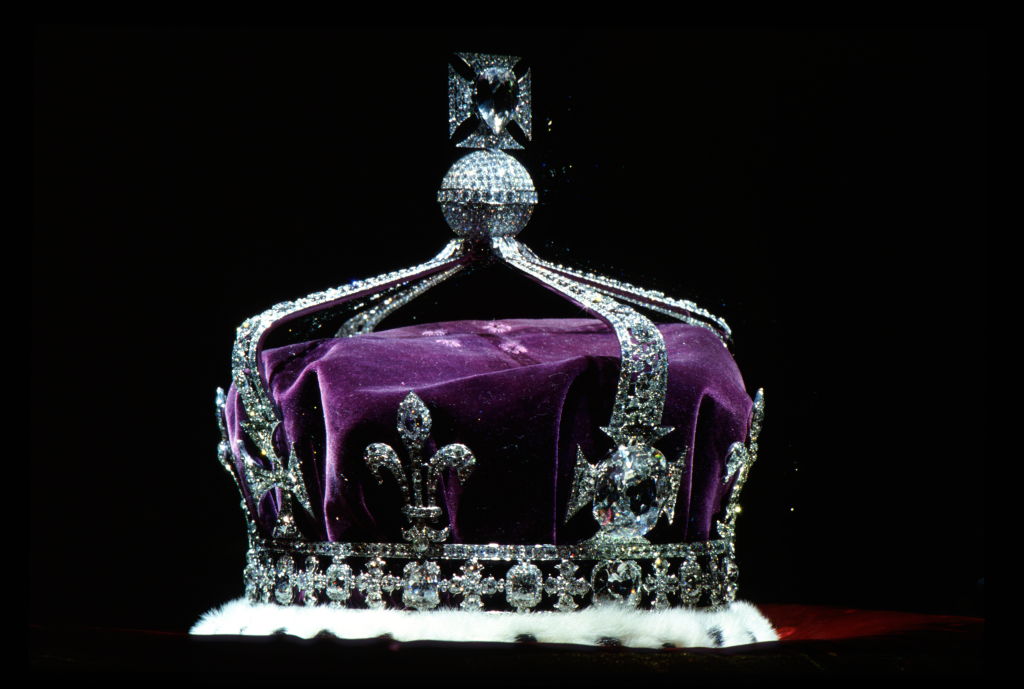
Among the seized treasures was the Koh-i-Noor diamond, which the governor-general of India, James Broun-Ramsay (better known as Lord Dalhousie), later presented to Queen Victoria in the hopes that it would be added to the United Kingdom’s crown jewels. Set in Queen Elizabeth the Queen Mother’s crown in 1937, it is now on public display in the Jewel House of the Tower of London.
The diamond has since been a symbol of the exploitation and extraction that underpinned imperial rule in South Asia, and continues to resurface in public discourse, especially during moments involving the British royal family.
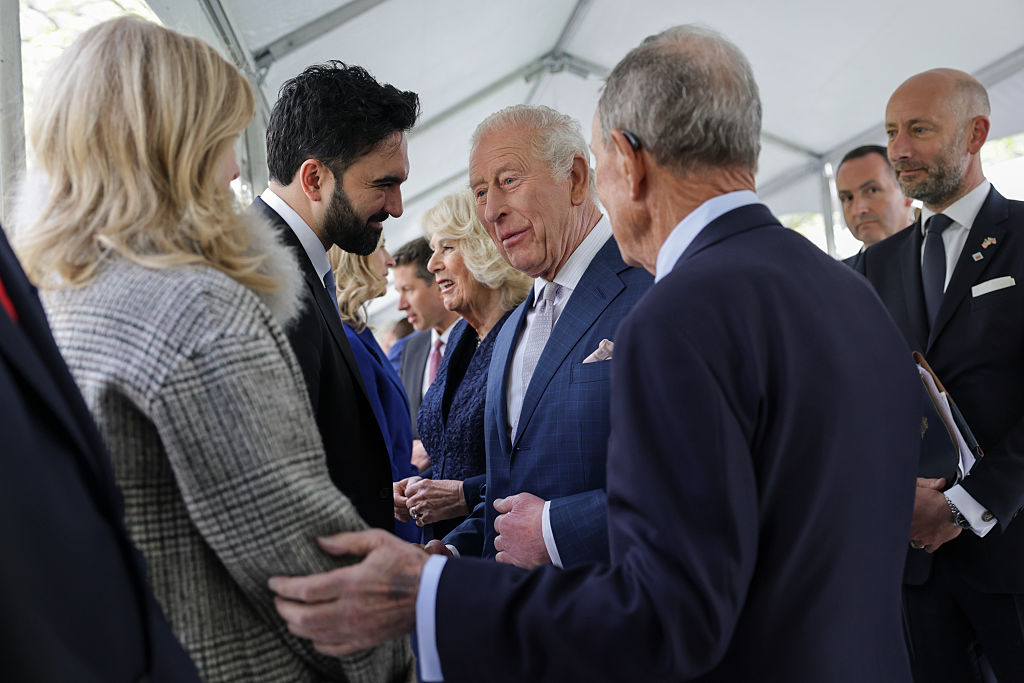
It drew renewed attention after the death of Queen Elizabeth II in 2022, as well as when Rishi Sunak, the first U.K. prime minister of Indian origin, assumed office that year. It was also discussed during King Charles III’s coronation and has once again entered the spotlight during his visit to New York City this week, as part of a four-day trip to the United States.
When New York City Mayor Zohran Mamdani — the son of the prominent postcolonial scholar Mahmood Mamdani — was asked what he would say to the king, the city’s first South Asian mayor said that, if given a chance, he would ask him to return the Koh-i-Noor.
But he stopped short of mentioning the recipient, opening a can of worms given the diamond’s history and the many hands it has passed through.
The clip has since gone viral and reopened the long-standing debate. On social media, Pakistani politicians argued that, since it was taken from Lahore, the Koh-i-Noor belongs to Pakistan. In India, others contend that because it was taken during the period of undivided India, it should be returned there. Others said it belonged to an undivided region of Punjab that predated modern borders.
While there is broad agreement that the diamond should be returned, the question of to whom remains deeply contested and unresolved.
Some scholars traced the stone’s origin to the Kollur Mine in southern India and believed that it perhaps moved north during the conquests of the Delhi Sultanate ruler Alauddin Khalji or reached the Mughal emperor Babur’s era through a ruler in central India.
Historians later found references to the diamond in the early 17th century, during Mughal Emperor Shah Jahan’s rule. It was believed that his Peacock Throne was adorned with precious gems, including the Koh-i-Noor. The throne was taken by Persian ruler Nader Shah during his invasion of Delhi in 1739, and it is believed he named it Koh-i-Noor, or the “Mountain of Light.”
Following Nader Shah’s return, as tensions within his court culminated in his assassination in 1747, the diamond found its way to his Afghan military commander Ahmad Khan Abdali, who took it to Kandahar, in present-day Afghanistan, where he established his rule, founding what would become the Durrani Empire.
It remained with the Durrani rulers until Shah Shuja Durrani was deposed and forced into exile. In 1813, during Shuja’s capture in Kashmir, Ranjit Singh offered asylum in exchange for the Koh-i-Noor, which became a part of the Lahore treasury.
Given this history, the Koh-i-Noor’s place of return remains contested among several nations. India has periodically sought its repatriation, based on the diamond’s origin. Iran cites the diamond’s name as evidence of its Persian heritage, while Afghanistan highlights the violence and coercion that accompanied the diamond’s transfer. Pakistan, for its part, advances a territorial claim rooted in the diamond’s final pre-British location in Lahore.
Even within India, the groups calling for the diamond’s return are not unified. The Shri Jagannath Temple in Puri has claimed that Ranjit Singh donated it to the temple. Beant Singh Sandhawalia, who was based in Amsterdam and was the last recognized heir of Duleep Singh, had also claimed ownership. The Shiromani Gurdwara Parbandhak Committee, which manages Sikh temples in India, has said the diamond belongs to the Sikh community.
As Mamdani raised the issue of the Koh-i-Noor, introducing its colonial history to new audiences, the diamond has once again revealed its enduring afterlife in contemporary politics.