

Hezbollah’s Latest Attack on Israel May Have Sealed the Party’s Demise in Lebanon
We finally have it, the answer to a question many pundits and analysts (myself included) have been raising for decades: Is Hezbollah Iran’s proxy or junior ally?
A proxy is an extension of its patron, their interests one and the same. An ally is a partner, one whose interests intersect with its counterpart. It turns out Hezbollah is a proxy, and the events of the past 24 hours prove it. They also may have sealed the end of the party’s reign within Lebanon.
Late last night, Hezbollah fighters launched a volley of rockets at Israel from south Lebanon to avenge the killing of Iran’s Supreme Leader Ayatollah Ali Khamenei, in what could be the single stupidest thing the Party of God has done since its inception — a decision that might ensure its demise.
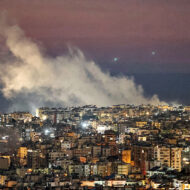
Israel retaliated with a series of strikes targeting Beirut’s suburbs. The attacks were sudden and unannounced. They hit civilian buildings, killed around 30 people and terrorized an entire city whose inhabitants were jolted awake in the middle of the night, wondering what fresh death was raining down on them.
Earlier that day, Hezbollah had hosted a commemoration for Khamenei, its slain spiritual leader. Hundreds of men and women mourned the death of their supreme religious authority. They waved banners and held pictures for the world to see, and we all thought that would be the end of it. Hezbollah also put out a statement promising to confront the United States and Israel, but no one really took them seriously. They hadn’t joined the fight so far, and their enfeebled status following near-daily strikes by Israel led most to believe they would not. Until they did.
Now, the bombs over Beirut are back. Tens of thousands of my people are on the move, fleeing death and carnage after living through daily bombardments in their backyards. Beirut’s inhabitants have reassumed their feline posture: ears perked, scanning for sounds, legs tense, ready to pounce to safety — or the illusion of it.
And for what? Is this some suicide note by a group that has always told us that its goal was martyrdom? Did we just not listen? What was the plan here? I’ve been struggling to find an explanation for what would drive Hezbollah to such madness. The group’s fighting capabilities are destroyed, its leadership crushed and its supplies scarce. Analysts estimate only a fifth of its arsenal remains.
Was this a rogue wing of the party? There were whispers of discontent with Secretary-General Naim Qassem’s leadership. Could this be the work of a few fanatics keen on dying in glorious battle and taking the rest of us with them? A false flag Israeli operation? I think not. Why would Israel divert assets to a front it had largely contained at a time when it was waging a multipronged assault on its most powerful enemy?
On Monday, the Lebanese government banned Hezbollah’s military activities. Even Hezbollah’s closest Shiite ally, the Amal Movement, did not contest the decision. The group has turned itself into a pariah, hated for dragging the country into another war when we have yet to get over the last one.
Hezbollah’s action seems to point to the group’s acceptance of the existential threat it faces with the demise of the theocracy in Iran. It is asserting its Iranianness, its marriage to the theocracy, at the expense of its Lebanese roots.
At almost all the group’s rallies, happy and sad, its yellow banners often dominated the processions. Iran’s flag was always there, sprinkled about along with religious symbols and iconography. Lebanon’s flag — the green cedar tree framed by red stripes enveloping a white background — was a rare sight.
Turns out, Hezbollah has always shown us its true colors. We just didn’t believe it.