

From the Gulf to East Africa, the Iran War’s Effects on Shipping Go Beyond Oil Prices
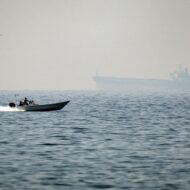
The Iran war’s threat to Gulf petroleum exports, which account for roughly a fifth of the world’s supply — and a much higher proportion of Asia’s — is well known, but the region also faces the prospect of dwindling imports. A day before Iran’s Islamic Revolutionary Guard Corps announced it would “set ablaze” any vessels that attempt to pass through the Hormuz Strait, the world’s largest transporter, Mediterranean Shipping Company, had already “suspended all bookings for worldwide cargo to the Middle East region until further notice.” More such cancellations are expected, according to leading industry journal Lloyd’s List.
The cancellations are poised to have knock-on effects beyond the Gulf. Mohamed Kheir Omer, an expert on the Horn of Africa, told New Lines that, despite existing threats in the Red Sea, the disruptions could push Gulf maritime traffic westward, exposing “East African ports such as Berbera and Port Sudan” to attacks. Insurers have already balked at issuing policies for Gulf-bound cargo, a severe enough limitation that it prompted the American president to intervene on Tuesday night, announcing U.S.-subsidized coverage. Could Red Sea voyages be next?
Whether the president’s move will incentivize companies to resume shipments remains to be seen, but Gulf countries may soon find it difficult to wait. Their options, however, are limited. Alternatives to Dubai’s Jebel Ali Port, such as the Gulf of Oman’s Fujairah, which sits just below Hormuz, lack the capacity to process sufficient quantities of cargo. And offloading shipments further south in Oman would mean land transport to points north, a scenario that will remain impractical without the much-delayed Gulf Cooperation Council Railway in place. In any case, even if a massive overland effort could be organized, it would be subject to the same aerial threats from Iranian missiles and drones as the rest of the region.
For now, Gulf countries seem to be weathering early signs of distress, but the longer this war drags on, the clearer Iran’s ability to withstand shipping disruptions will become. The Islamic republic has access to land routes that the Gulf countries do not, and it has the natural resources to produce more of its own food. If anything, decades of sanctions may have boosted Iran’s turn toward self-reliance.
Meanwhile, the strain on global shipping seems likely to continue. Before fighting intensified around Iran, Yemen’s Houthis had warned that U.S. attacks would trigger their intervention. “That intervention has not happened yet, but that may change in the coming hours or days,” said Federico Manfred Firmian, author of “War in Syria and the Middle East.”
If it does, the impact would not only be felt at sea, according to Ikemesit Effiong, senior partner at SBM Intelligence, a leading Nigerian geopolitical risk consulting firm. The Red Sea is “the soft underbelly of this conflict,” he said, adding that the ports that line Africa’s eastern coast — Berbera and Port Sudan, but also Djibouti — sit uncomfortably close to the fault lines. “These ports are caught in a classic strategic paradox, and their value makes them targets,” he said.
In other words, although the current shipping disruptions are mostly affecting the Gulf, with Asia close behind, Africa also stands to lose much from this war. East African trade, and the Red Sea ports that make it possible, could face higher costs. Worse, a prolonged crisis could hit East African economies already struggling with debt and currency pressures, with landlocked countries feeling the squeeze first.
As Effiong warns, the risk is that these states along the Red Sea “become the chessboard rather than the players.”