

Hosted by Kwangu Liwewe Agyei
Featuring Anuj Wadhwa and Mihir Sharma
Produced by Finbar Anderson
Listen to and follow The Lede
Apple Podcasts | Spotify | Youtube | Podbean
The impact of the Iran war is not only being felt in Iran and its immediate neighbors. As far away as India, the conflict is having a huge impact on people’s daily lives, New Delhi restaurateur Anuj Wadhwa tells Kwangu Liwewe Agyei on this month’s episode of Global Insights on The Lede.
Wadhwa runs a third-generation restaurant in central New Delhi, founded by his grandfather after the partition of India and Pakistan in 1947. Since the ongoing war in Iran began, tourist numbers “have dwindled,” he says. “We find less and less tourists coming now.”
“Every time throughout history that there has been a crisis in global oil and gas prices, that crisis has hit us in South Asia many times harder than anywhere else in the world.”

So far, Wadhwa has managed to avoid raising prices or cutting his menu, but he warns that cannot last. “There is only so much we can absorb,” he says. “If the war continues, if there is a shortage of supply of gas as well, then obviously we will have to cut down on our timings. We will have to shrink the menu.”
The uncertainty extends to his staff, and the broader fear of a repeat of the pandemic shutdown. “We feel helpless, like we felt when we were affected with corona,” Wadhwa says. “We didn’t have a say in it. We didn’t have a choice.”
For Wadhwa, the stakes go well beyond his own business. “It is a war between two countries or three countries, but I think the entire world suffers,” he says. India is a growing economy, he adds, and “since we are on the right path of development, it might get hampered by global events.”
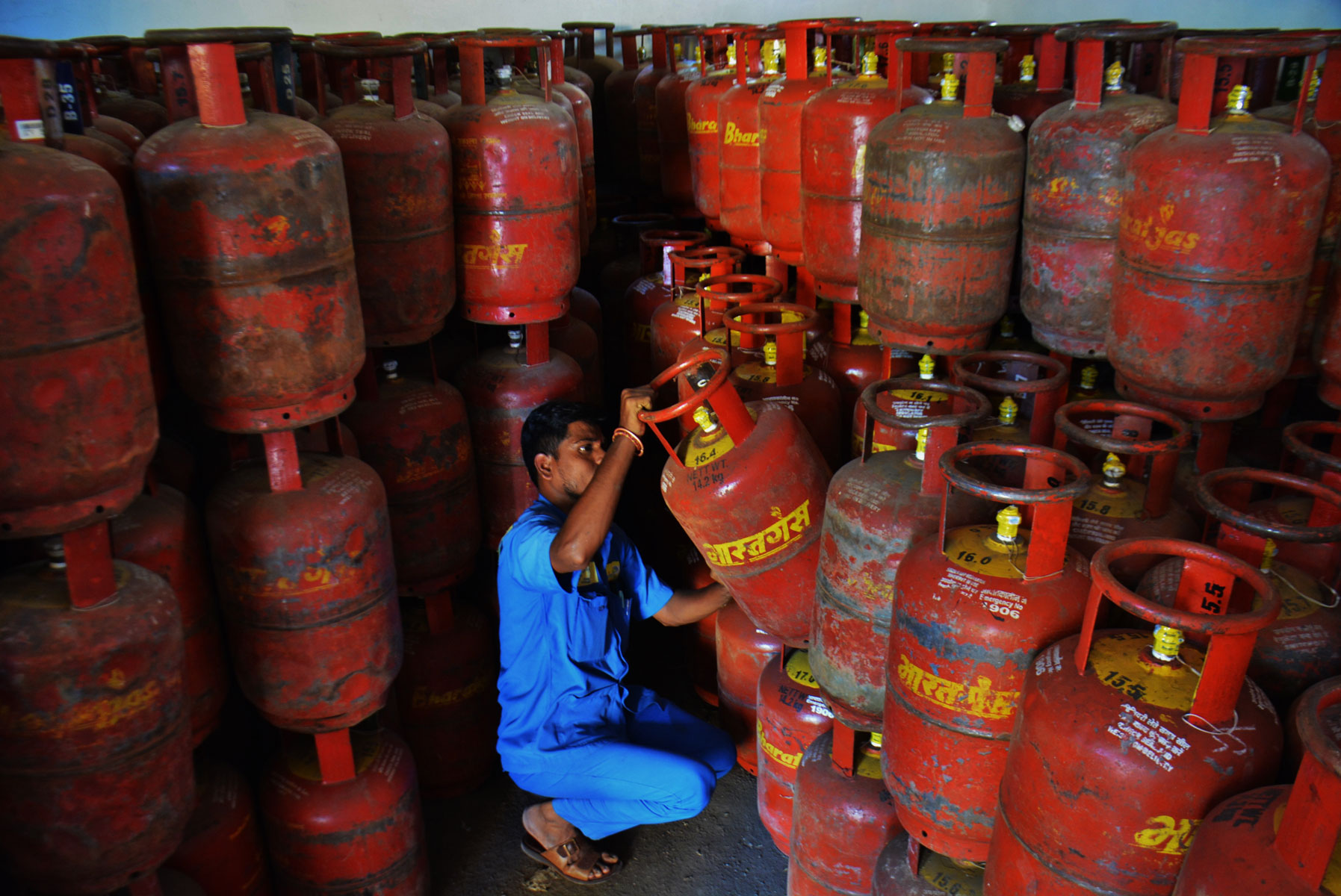
For economist and Bloomberg commentator Mihir Sharma, the crisis has highlighted vulnerabilities across the region. “All of South Asia and India in particular are very, very dependent upon the Persian Gulf for the gas that they use for cooking,” he says. “Unless the liquid petroleum gas starts flowing through the Strait of Hormuz pretty quickly, there will be dire impacts on every single household in South Asia.”
Sharma warns that South Asia is uniquely exposed to energy price shocks. “Every time throughout history that there has been a crisis in global oil and gas prices, that crisis has hit us in South Asia many times harder than anywhere else in the world,” he says. “It has multiplied into a crisis in finance, in food, in government budgeting. And eventually, in many cases, it has caused public unrest, governments to fall, countries to go bankrupt.”
The impact of fuel prices is felt through the entire economy, Sharma explains, from transport costs to fertilizer production and food supply. “If the price of oil stays above $100, $110 a barrel for a couple of months, then India and South Asia will be in severe trouble economically and in humanitarian terms,” he says.
India’s geopolitical response has been characteristically cautious, Sharma says. “India is a little accustomed to avoiding taking a stand on things like this.” But Prime Minister Narendra Modi is politically vulnerable on the issue, he argues, because “his great appeal to the Indian public has always been that this is a man who has raised India’s profile in the world. Holes can be poked in that narrative effectively by the opposition.”