


For decades, observers have been waiting for Iran’s next revolution. They expect another climactic moment like 1979, when accumulated grievances erupted into systemic collapse. Each new wave of protest, each escalation of repression, each symbolic shock is treated as a possible prelude to revolution. But the Islamic republic has survived all such events. Why has the breaking point not arrived?
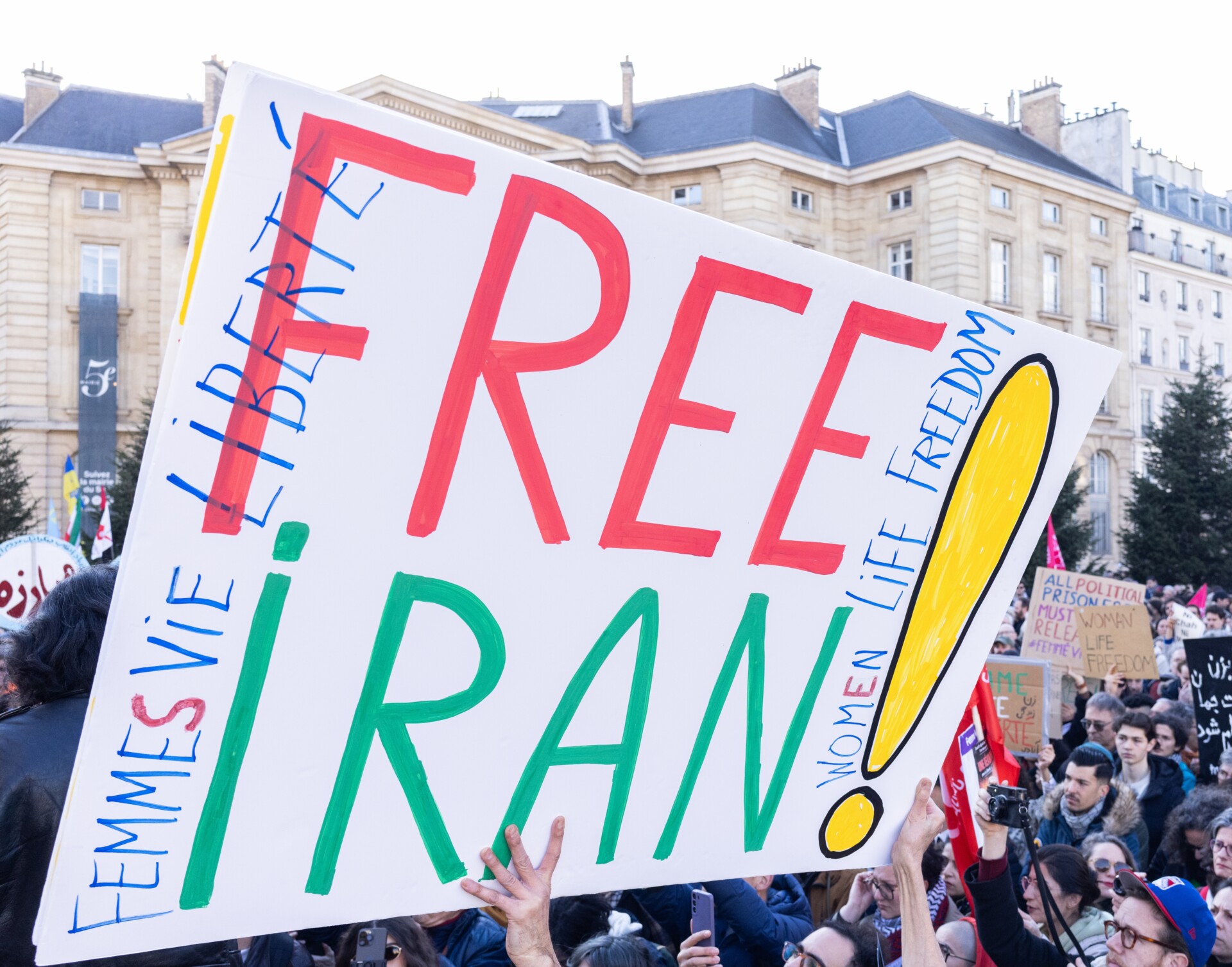
In Iran today, acts of quiet defiance have become part of everyday life. In the country’s major cities, one sees unveiled women in public places. Protest songs circulate widely. The dramatic events of late December and January, with renewed confrontations and a violent response from the state, have intensified the sense of crisis. Yet even in this moment of heightened tension, there is no sustained mass uprising, no consolidated revolutionary leadership, no clear break with the political order that has governed the country for nearly half a century.
The truth may be simpler and more unsettling. Iran is not approaching a revolutionary moment at all. It is entering a prolonged phase of political decline in which power persists even as legitimacy drains away, in which politics unfolds not through dramatic rupture but through erosion — slowly at first and then, as in recent years, at an ever-growing pace.
The persistence of the 1979 analogy obscures more than it reveals. Revolutions are rare historical events, even in deeply delegitimized systems. They require not only popular anger, but also elite defection, organizational capacity, and a shared belief that collapse is both imminent and desirable. A large portion of Iranian society today exhibits intense moral estrangement from the ruling ideology, but little collective expectation that a new order is about to be born, or agreement on what that order would look like.
Over the past decade, Iranian society has undergone a profound symbolic transformation. The Islamic republic no longer commands the country’s moral language as it once did, justifying sacrifice, obedience and repression. Concepts such as dignity, bodily autonomy and truth-telling have displaced the regime’s revolutionary vocabulary in the everyday ethical life of the country. This shift has not produced a new political system, but it has hollowed out the moral foundations of the existing one.
What has emerged instead is a strained political condition: a state that retains coercive strength but lacks symbolic authority, and a society that has withdrawn belief without converging around a revolutionary alternative. This condition does not generate collapse; it produces aging.
What the Islamic republic is experiencing might best be described as a form of authoritarian aging: a condition in which a regime survives the loss of legitimacy not by renewing itself, but by narrowing its ambitions and governing through routine, containment and force.
Power becomes managerial rather than mobilizational. Elites recycle themselves. Ideology stiffens into ritual. In ordinary times, repression is procedural: surveillance, arrests, calibrated intimidation. But when challenged at scale, aging systems often overcorrect. Violence becomes an attempt to compensate for the absence of authority rather than marking its confident assertion.
The crackdown of January 2026 illustrates this dynamic. The sheer scale of lethal force and punitive sentencing contradicts the idea of an ideological reinvigoration; it demonstrates that the regime is unwilling to risk even temporary uncertainty. Such escalation may restore a veneer of order, but it also signals brittleness. A system secure in its legitimacy does not need to reassert control by massacring its citizens.
This pattern helps to explain the disconnect between Iran’s visible cultural defiance and its political stasis. Iranian women’s widespread refusal to wear the compulsory headscarf represents a profound symbolic challenge to the regime’s moral order. Yet it has not translated into sustained mass mobilization. For many Iranians, especially the young, the goal is no longer to seize the state but to minimize its claims over their lives. Emigration, withdrawal and quiet noncompliance have become political acts.
Seen in this light, the absence of revolution is not a sign of regime vitality. It is a symptom of exhaustion on both sides of the social divide. The Islamic republic has lost the capacity to persuade, while much of society has lost faith in revolution as a viable path forward.
The regime’s response to the most recent wave of nationwide protests underscores this logic. Security forces resorted to overwhelming and often lethal force, killing hundreds and detaining thousands in what amounted to a punitive display. Yet the scale of repression did not translate into renewed authority or moral deterrence. Instead, it reinforced a pattern characteristic of aging authoritarian systems: violence seeking to compensate for a lack of belief. The repression succeeded in ending the protests, but it did not restore legitimacy.
Aging authoritarian systems do not become inert; they become brittle.
Because legitimacy can no longer be drawn from shared belief, it must be replaced with order, surveillance and administrative control. In Iran, this shift is visible across multiple domains of governance. Elections still occur, but without mobilization or suspense. Official rituals continue, but with thinning participation and formulaic messaging. State media invokes familiar slogans of sacrifice and resistance yet increasingly relies on repetition rather than resonance. Even the security establishment has quietly adjusted its language, emphasizing “stability,” “order” and “national dignity” over revolutionary transcendence. These are not signs of confidence. They are indicators of a system that has abandoned transformation in favor of preservation.
The erosion of legitimacy, however, has not been purely symbolic. It has also been administrative and material. Corruption scandals have become routine rather than shocking. Economic mismanagement, from currency instability to poorly implemented subsidy reforms, has produced cycles of inflation and contraction that feel structural rather than episodic. Sanctions have unquestionably constrained the economy, but their effects have been amplified by opaque decision-making and institutional fragmentation.
Environmental crises have compounded the perception that the state is incompetent. Water shortages, deteriorating infrastructure and worsening air pollution have generated localized unrest and deepened a broader sense that the government is reactive rather than strategic. The cumulative effect is not dramatic collapse, but chronic underperformance.
In recent years, a generational shift within the state apparatus has accelerated this pattern. A growing number of mid- and senior-level officials have emerged from ideologically oriented institutions such as Imam Sadeq University, where political loyalty and doctrinal commitment are often prioritized alongside, and sometimes over, technocratic specialization. This has not eliminated expertise within the system. Iran retains capable administrators and professionals. But it has altered incentives.
Professional caution can be interpreted as ideological hesitation. Policy debate narrows. Strategic planning becomes reactive. Where earlier generations of revolutionary elites combined ideological conviction with managerial experience shaped by war and state-building, segments of the newer cohort exhibit a more assertive confidence with less institutional depth. In a context already strained by sanctions and demographic change, such tendencies magnify structural fragility rather than mitigating it.
The result is a state that still functions, but less effectively than it proclaims, and a society increasingly aware of the discrepancy.
The regime’s relationship with the younger generation illustrates the social dimension of this decline. Iranians under 50 have no lived memory of the revolution or the Iran-Iraq War, the formative events that once sustained the regime’s moral authority. Their political consciousness has been shaped instead by protests, funerals, executions and the omnipresence of state violence captured on smartphone cameras. This has produced not revolutionary zeal, but moral alienation.
Alienation is politically consequential in ways that are often misunderstood. A society that no longer believes in its rulers does not necessarily rise up. More often, it disengages. It adapts. It waits. Over time, this erodes the state’s capacity to mobilize support in moments of crisis, even as it continues to exercise control.
But alienation is not only social. It is also vertical.
At the apex of the system, the revolutionary core, anchored in the security establishment and the office of the supreme leader, has become increasingly insulated from public sentiment. Electoral participation has declined sharply in recent years, reaching historic lows in both parliamentary and presidential contests, yet this has not produced institutional recalibration. Instead, the Guardian Council has continued to disqualify broad swaths of candidates, including figures from within the system’s own reformist and pragmatic currents, narrowing political competition in the name of ideological coherence.
As channels for societal feedback are constricted, a subtle but corrosive dynamic emerges. Rulers grow suspicious of the population’s loyalty. Citizens assume that their voices no longer matter. Mutual cynicism replaces even performative reciprocity.
In such an environment, governance becomes defensive. Policy is designed not to inspire confidence but to prevent volatility. The political system ceases to imagine itself as representative and instead understands itself as a custodial guardian of a revolutionary inheritance rather than a mediator of contemporary social demands.
This custodial mentality stabilizes the present while deepening long-term estrangement.
The temptation to read Iran through the lens of its own revolution is understandable. But the structural conditions that made 1979 possible no longer exist.
Iran during the last years of the Pahlavi dynasty was a rapidly modernizing society experiencing social dislocation, elite fragmentation and the sudden delegitimization of a monarchy that had tied its fate to a narrow vision of national identity. Crucially, opposition forces believed that power was within reach and that a coherent alternative order could replace the old one.
Today’s Iran is different. Its ruling system is more institutionalized, its security apparatus more entrenched and its opposition more diffuse. Most importantly, the moral rupture between state and society has not produced a shared vision of political replacement.
Comparative history suggests a different pattern. In many late-stage authoritarian systems, collapse did not occur at the height of repression, but when elite confidence faltered and segments of the establishment recalculated their interests. The Soviet Union unraveled not during its most coercive phases, but after internal reform exposed the depth of stagnation. In several Arab republics, such as Egypt and Tunisia, decades of popular frustration did not in themselves produce regime collapse. What ultimately proved destabilizing were fractures within the ruling coalition; moments when parts of the military, political elite or security establishment reassessed their interests and no longer acted in concert. In Eastern Europe — in East Germany and Poland, to name just two cases — protest did not overthrow a functioning ideological order; it revealed how hollow that order had already become. In these cases, mass mobilization drove in the final nail rather than striking the first blow.
The lesson is not that Iran is immune to change. It is that change, when it comes, is more likely to be indirect, cumulative and shaped by internal recalculation rather than sudden rupture.
Misunderstanding Iran’s trajectory has consequences beyond academic analysis. Western policy debates often treat continuity as evidence of regime strength and unrest as evidence of imminent collapse. Both assumptions are flawed.
A regime that governs without belief is not necessarily stable. It is constrained. Its foreign policy becomes more rigid, not more flexible, because compromise risks exposing ideological vulnerability. Agreements with external powers are framed domestically as tactical necessities rather than national achievements, limiting their political sustainability.
At the same time, pressure alone is unlikely to produce the kind of collapse many expect. A recurring assumption in policy circles is that an external shock — intensified sanctions, diplomatic isolation or even military confrontation — could tip the balance and trigger systemic unraveling. History suggests caution on this point.
External pressure can weaken regimes, but it does not automatically generate cohesive alternatives. In aging authoritarian systems, blows from outside often consolidate the security apparatus, sharpen nationalist rhetoric and justify further centralization. Hardship can intensify anger, but it can also reinforce risk aversion in a population already wary of chaos.
Iran’s political order was forged in war and has endured sanctions for decades. It has developed institutional reflexes suited to survival under pressure. This does not render it invulnerable. But it does mean that expecting a decisive external blow to produce swift internal collapse may overestimate both the fragility of the regime and the readiness of an alternative political center to assume power.
This helps to explain why Iran can appear simultaneously defiant abroad and brittle at home. The regime projects strength externally to compensate for internal erosion. It clings to symbols of sovereignty because it has lost control over symbols of meaning.
None of this suggests that Iran’s current order is permanent. Slow decline is not equilibrium. It is a condition marked by recurring unrest, intensifying repression and widening generational distance. Over time, these pressures accumulate. They reshape institutions. They alter elite calculations. They create openings that are rarely visible in advance.
But expecting a single revolutionary moment misses the nature of the transformation already underway.
Iran’s most significant political shift has already occurred — not in the streets, but in the moral imagination of its society. A large portion of Iran’s population no longer recognizes the Islamic republic’s sacred vocabulary. They have stopped accepting its claims to righteousness and no longer agree with the regime on the purpose of public life.
History suggests that such periods can last longer than outside observers anticipate and end more abruptly than insiders expect. Decline is rarely linear. It proceeds through pauses, partial recoveries and sudden jolts.
The question, then, is not when the next revolution will come. It is how long a system can endure after its citizens have mentally moved beyond it, and what form change will take when cumulative erosion finally alters the calculations at the top.
Iran is not on the brink of revolution. It is aging. And aging, in politics, can be both drawn out and, ultimately, transformative.
Become a member today to receive access to all our paywalled essays and the best of New Lines delivered to your inbox through our newsletters.