

More than 18 months after the fall of Bashar al-Assad, Syria has not yet created the right conditions for holding free and democratic national elections. This is no surprise. Major obstacles to such a vote remain: Millions of displaced Syrians have not yet been resettled, the government’s capacity to authenticate identities and provide official documentation to its citizens is still limited, and the country’s legal and security situation remains fragile.
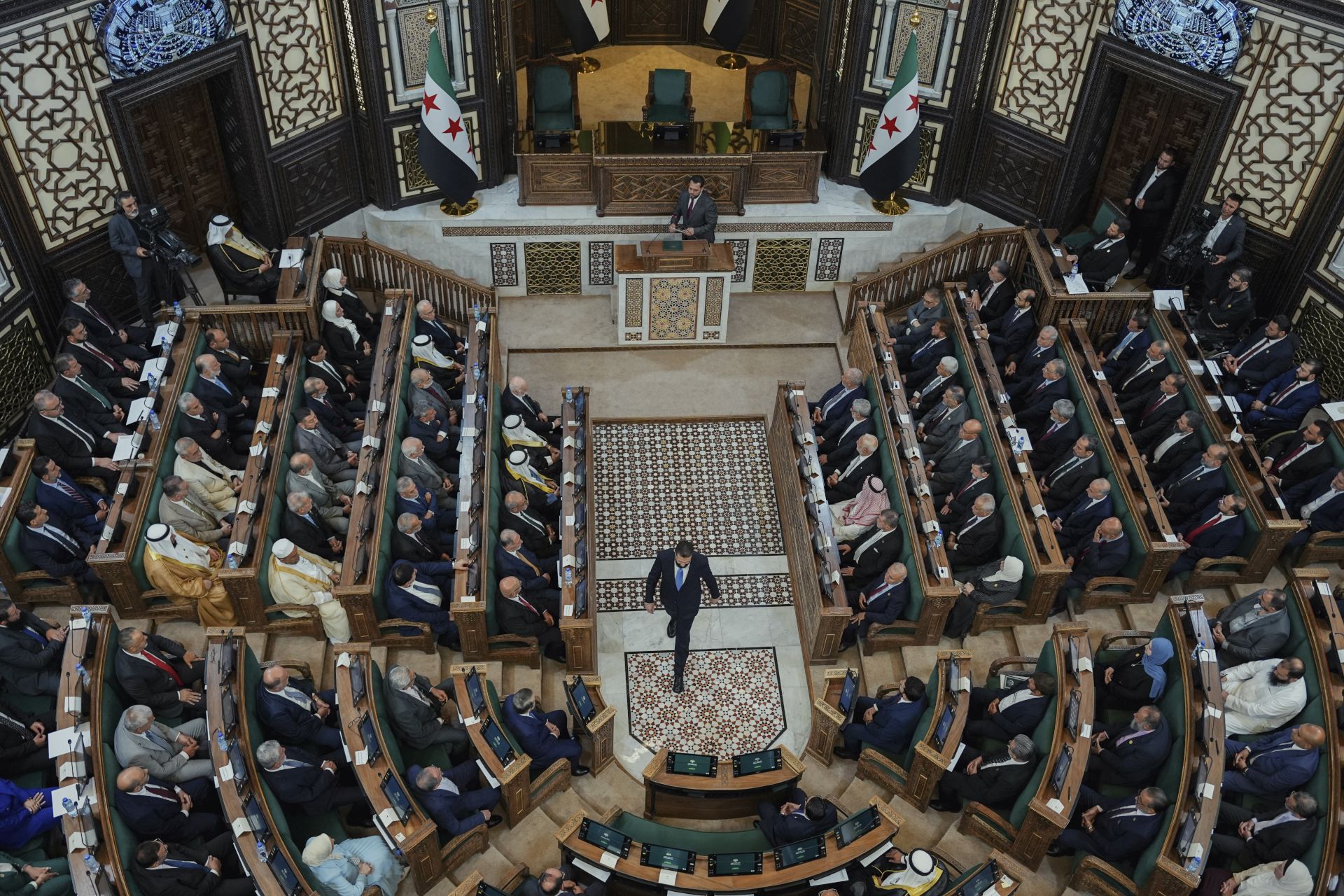
Now that the new Syrian parliament has held its inaugural meeting, and expects to begin work in earnest in the coming weeks, the country has the opportunity for the first time in decades to involve Syrians in a decision-making process and enlist them in shaping their immediate future. It can do so by encouraging and empowering local democratic institutions, including municipal governments across the country’s provinces, to hold elections and move toward local governance, a much-needed step away from the centralized institutional structure maintained during Assad’s rule.
Other countries in the region that have dealt with the aftermath of conflict, namely Iraq and Tunisia, offer some best practices and lessons in this regard.
In May 2018, Tunisia held its first local elections for 350 municipalities under its 2014 constitution — the first truly free and fair local vote in the history of the country. Since the country’s 2011 revolution, municipal authorities had been appointed by the central government, continuing a pattern set by Zine El Abidine Ben Ali’s authoritarian rule. And although the 1959 constitution had technically provided for elected local councils, there was no real decentralization of power. But the 2018 elections changed that, ushering in what observers described as a new era of local democracy.
Despite a low turnout of 35.6%, the results were positive, with strong representation from youth and women, the emergence of local leaders from among independent and nonpartisan candidates, and the engagement of civil society organizations to monitor the electoral process. Seven years into Tunisia’s democratic transition, the elections gave citizens an opportunity to engage with the political process and the political class, despite the economic and political pressures the country was facing.
On Dec. 18, 2023, Iraq held provincial council elections across all its provinces, excluding the three that make up the semiautonomous Kurdistan Regional Government. The vote had implications for both local and national politics. Provincial governments used their political power to appoint governors and allocate budgets within their control, directly shaping the lives of citizens. Nationally, these elections changed the balance of power between established parties and emerging new forces, an important move toward more representation ahead of the parliamentary elections. For instance, Kirkuk, which is an ethnically diverse province, participated in local elections for the first time since 2005, despite being a constitutionally disputed area between the Kurdistan region and the federal government in Baghdad.
In the country’s 2021 election, voter turnout declined to around 43%, from 76% in 2005, due to mass perceptions of electoral corruption and distrust in political institutions. Yet despite this, Iraq’s provincial elections underscore the importance of keeping citizens engaged with local democratic structures, if only to challenge elites and give the people a sense of ownership over their country.
The lesson from Iraq and Tunisia is that waiting for perfect political, security and economic conditions before beginning democratic practice is unwise and unrealistic, especially after decades of living under a repressive regime.
Local elections, even if they are imperfect and initially have a low turnout, will still form a foundation for long-term democratic developments, much more so than centralized governance by appointment — or indefinite delays waiting for “the right conditions” — possibly could.
In the business of nation-building, no step is too small if it moves in the direction of democratic representation.