



The stone-studded nose pin twinkled as Kiliyamba ambled through the dimly lit two-bedroom house in Ennore, a coastal town near Chennai, the capital of the south Indian state of Tamil Nadu. Wisps of gray hair framed the 70-year-old’s face as she navigated around her three grandchildren sprawled before the television. A deep furrow marring her forehead was the only sign that stress had crept into her once tranquil life: Another oil spill had struck the coastal town, just 10 miles from Chennai.
Until two years ago, the family lived comfortably on the 30,000 rupees ($360) that her son Elumalai earned each month from fishing, leaving the family with at least 4 pounds of fish from each day’s catch for themselves. But in December 2023, when crude oil from the Chennai Petroleum Corporation Limited (CPCL), one of the largest refining corporations in South India, leaked into the Kosasthalaiyar River, it didn’t take long for the oil to sweep into the Buckingham Canal and Ennore Creek, both major fishing areas in the region. The contamination was made worse by Cyclone Michaung, which made landfall across southern India around that time.
As a third-generation fisher, Kiliyamba had spent much of her life navigating the choppy waters of the Bay of Bengal and catching “kalameen,” or Indian salmon, first alongside her father and then her late husband. For decades, her daily rhythm was steady: gathering bait, whistling to alert her peers about sightings of fish and catching them in the Kosasthalaiyar River, which empties into the bay. But now, her family of six has to make do with the 2 pounds or so of Indian salmon that Elumalai buys from the market each day. “The sea is our ancestral deity; it has always given us enough fish,” she said wistfully.
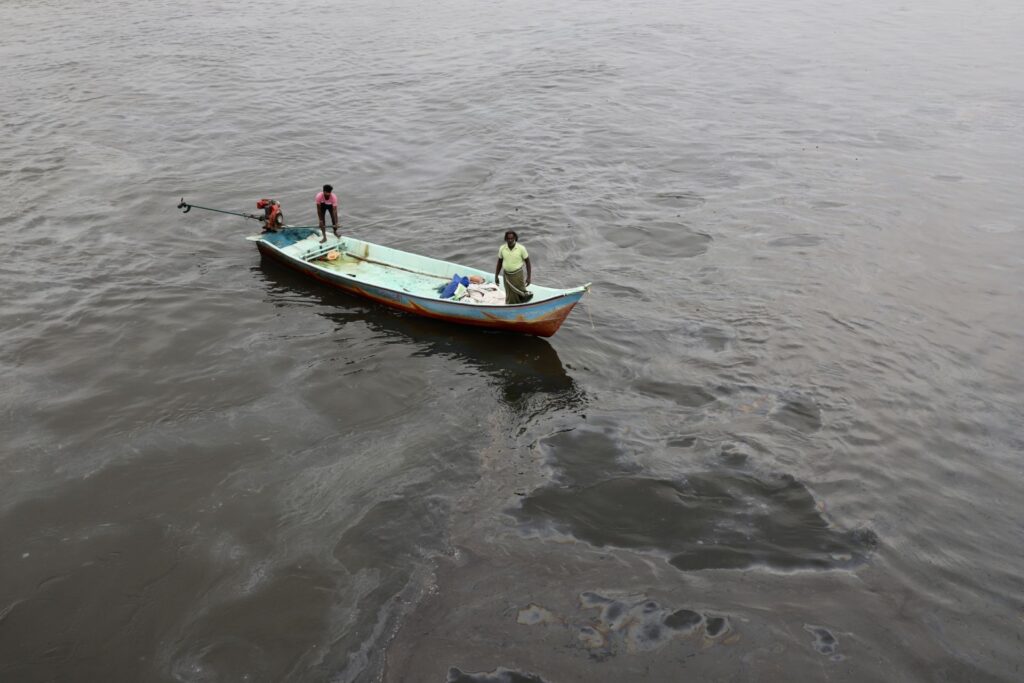
The spill jolted fishing families like Kiliyamba’s, which saw their modest incomes cut by more than half. And this was not an isolated incident. A flurry of activity along India’s 6,900-mile coastline — stretching from Gujarat in the west to West Bengal and the Andaman and Nicobar Islands in the east — has left it highly vulnerable to oil spills from shipping accidents, offshore drilling, port operations and illegal discharges.
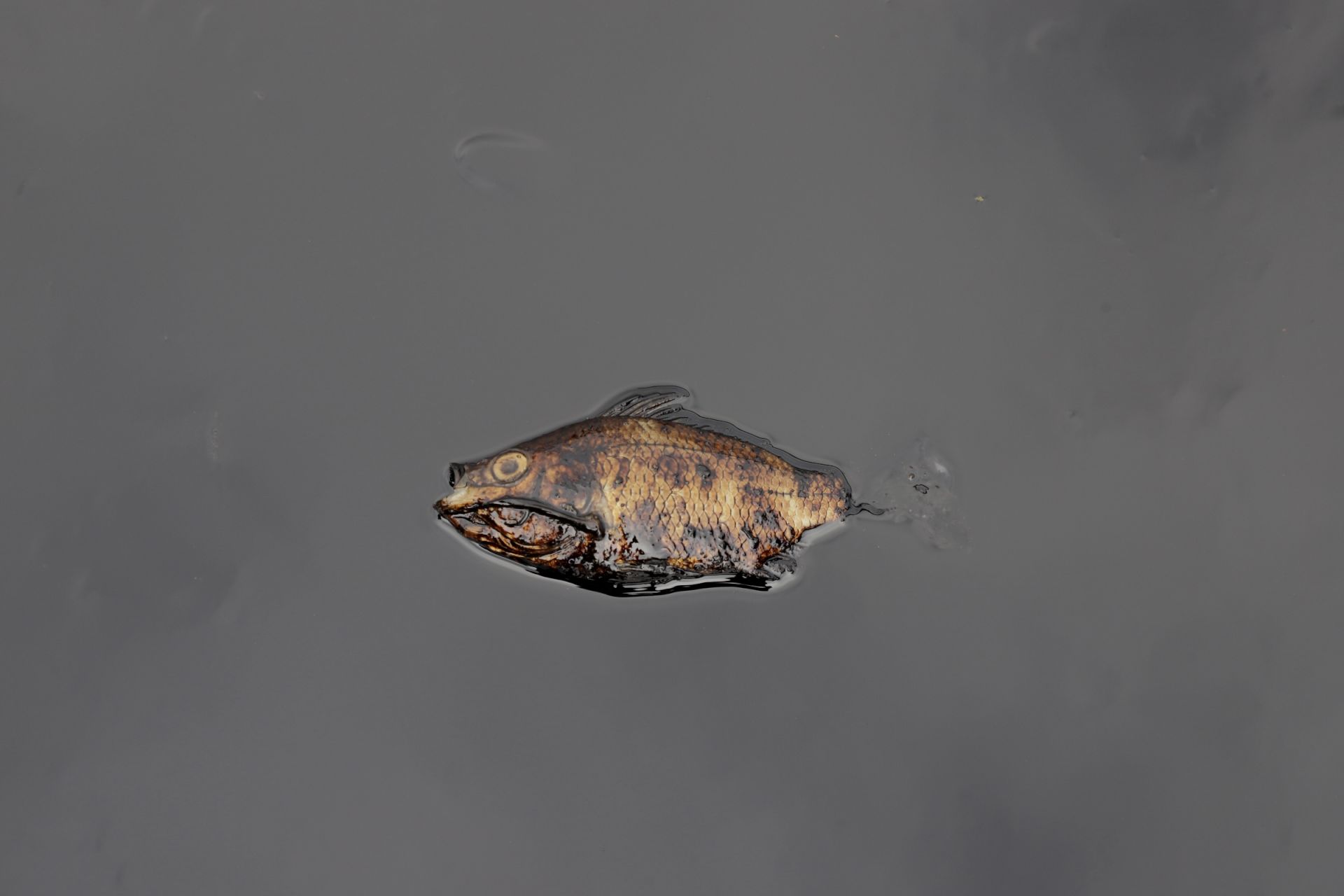
Among the affected areas, Ennore has witnessed particularly severe incidents over the past decade, including three major oil spills and several smaller, often undocumented ones that are only remembered by the fishers because traces of oil turned up in their catches. The spills left thick oil seeping onto shores, coating boat bottoms and slicking the sea surface. Yet the invisible wounds of these recurring, progressively damaging disasters run far deeper, steadily eroding the viability of the region’s ancestral profession. Fish populations have dwindled, and compensation for losses from the polluting companies has often been inadequate, which has left fishing communities struggling to survive.
Apart from a one-time compensation that activists claim is “shut up” money, the offending parties often walk off without a slap on their wrist. These one-off payments fall short of replacing fishers’ monthly incomes or addressing the social or ecological costs of these human-made disasters. The repeated spills have cast a generational burden on the traditional fishers, who have lived along the coast for decades and have only ever known fishing as their source of livelihood.
In January 2017, when a collision between two ships off Kamarajar Port released nearly 220 tons of bunker fuel into the Bay of Bengal, Kanakaraj, 48, learned about it after returning home from his morning catch. Normally, he was not worried. As third-generation fishers, his family had grown accustomed to seeing these spills. But this time was different. The contamination stretched 25 miles, forcing Kanakaraj off the water for nearly a month. “I don’t remember how much we were compensated for, but I remember struggling the days after,” he told New Lines.
When the 2023 oil spill occurred, it was just over 200 yards away from his home and kept him out of the sea for nearly three months. His wife pledged her gold jewelry to keep the household afloat. “For six months after the spill, I didn’t eat properly,” she said, trying to feed their family of four. The community complained to the authorities for months afterward, as their meager catch was unsellable, deemed oil-stained, with buyers refusing to touch it.
Elumalai, Kiliyamba’s son, felt conflicted in the aftermath of the spill. He had no desire to work as a laborer, one of the few alternative jobs available in his community, yet his catch was not enough to cover household expenses. “I hate to work under someone, be their slave. I am a slave to no one else but the sea.”
Kanakaraj received 7,000 rupees from the fisheries department of the Tamil Nadu government as compensation for the spill. His monthly expenses amounted to 20,000 rupees. A year later, the bottoms of his boats still bear oil marks, and his nets need constant mending.
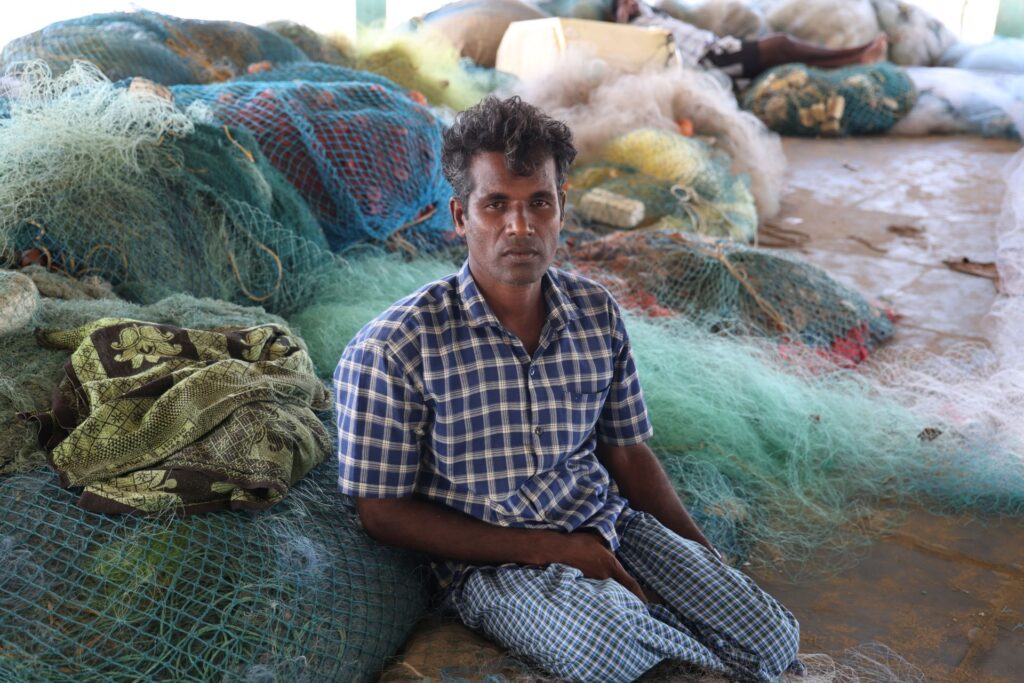
In 2023, R.L. Srinivasan, a fisher activist, who has been on the front lines in the fight against environmental injustice in Ennore, petitioned against the Tamil Nadu Coastal Zone Management Authority demanding a total cleanup of the region and fair compensation for the fishers. He claimed that an inadequate compensation of 10,000 rupees (even as low as 6,000 rupees for some) was handed out to a handful of fisher households to curtail their pursuit of additional damages.
According to Srinivasan, the payout was determined without proper assessment or scientific evaluation and falls short of covering lost income. He warned that this set a “dangerous precedent,” as future spills might also be treated with insufficient compensation rather than proper restitution. Srinivasan told New Lines that even months after the spill, several boats were still undergoing repairs, highlighting the ongoing impact on the fishing community.
This was Srinivasan’s second petition to the National Green Tribunal, India’s environmental court, regarding oil spills. He has been fighting against such incidents since the 1980s, targeting CPCL. In 2003, following an oil spill less severe than the recent ones, he filed multiple complaints with the district collector and successfully persuaded authorities to inspect CPCL’s premises. “But since CPCL is under the federal government, they function with impunity,” Srinivasan said.
With no real progress on the issue, fishers are dejected. “Oil leaks happen often. We feel like we are cursed,” Kanakaraj said. Udaya Kumar, joint chief environmental engineer at the Tamil Nadu Pollution Control Board, told New Lines the department was carrying out regular inspections of companies and holding brainstorming sessions ahead of the monsoon to “ensure such oil leaks do not occur in the future.”
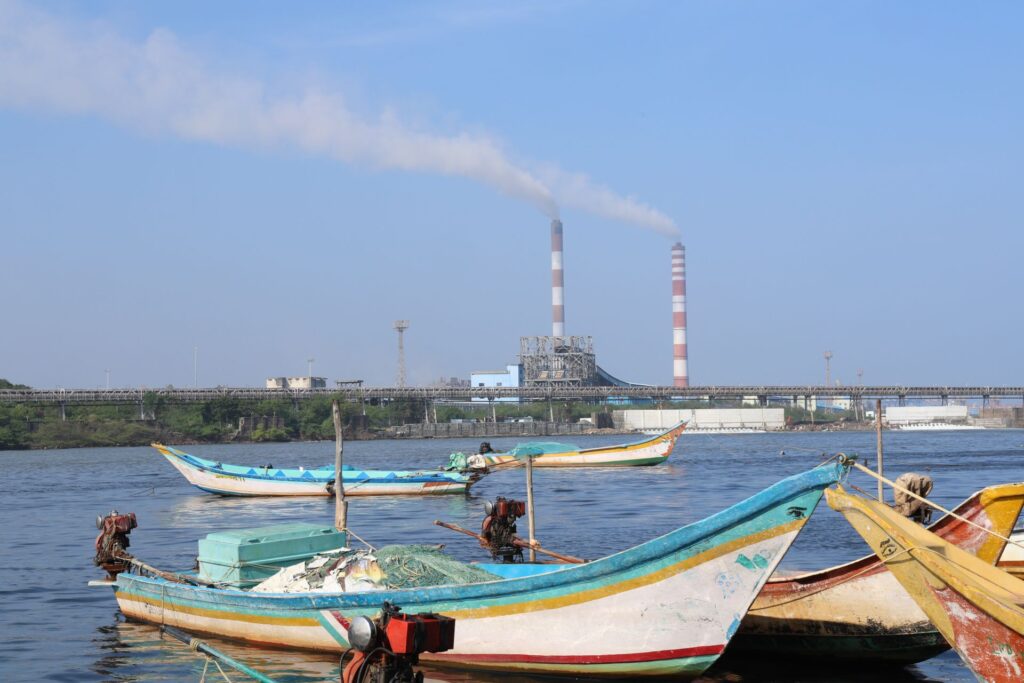
The government has consistently downplayed the true impact of these spills on fishing communities and coastal ecosystems. In December 2024, Suresh Gopi, a junior minister in India’s Ministry of Petroleum and Natural Gas, cited a report by the Energy and Resources Institute, a Delhi-based policy research organization, to claim that the oil spill caused no “long-term” environmental harm. Several scientists and environmental experts who have studied the impact of oil spills in the region disagree with Gopi’s assessment, citing the disasters’ effects on local communities, marine life, fisheries and coastal ecosystems.
After the 2017 disaster, a report by a team of doctors, with Dr. Rakhal Gaitonde from the Indian Institute of Technology Madras (IIT-M) as an adviser, examined the acute effects of the spill and noted that locals reported eye irritation, throat irritation, chest tightness and coughs following exposure to the oil. Indumathi Nambi, a professor at IIT-M, also investigated the 2011 oil spill in Tondiarpet, about 7 miles from Ennore. She discovered that chemical leaks posed a serious threat to coastal aquifers — the underground freshwater reserves along the Kosasthalaiyar River, Ennore Creek and the Bay of Bengal. By testing water samples from bore wells — deep, narrow holes to access groundwater — the team detected hydrocarbon contamination at levels dangerous enough to make bathing in the water potentially carcinogenic.
Prince Prakash Jebakumar (Prince is his first name), who works with the coastal environmental engineering division at the National Institute of Ocean Technology, a government research center on ocean science and engineering, has been working on the Ennore coast for the last 15 years. His research found that oil slicks remained in Ennore’s waters for as long as six months after the 2023 spill, reducing the bacteria that naturally clean sewage and release toxic and persistent chemicals into the water. “These compounds taint the animal body — they cause tissue damage and respiratory damage to animals,” Jebakumar told New Lines.
The spills have also taken a heavy toll on marine life: Turtles have died, crabs’ gills have been damaged and the tiny aquatic plants called phytoplankton that sustain marine life have been poisoned. Soon after the 2023 spill, heartbreaking images of oil-slicked pelicans circulated on Facebook and Instagram, alongside reports that migratory birds had been forced to abandon their roosting sites in Ennore. The Pulicat wetlands, a brackish lagoon fed by the Ennore Creek, has served as an important nesting ground for resident birds such as spot-billed pelicans, egrets, common myna, gray herons and little cormorants. But the number of migratory birds, which typically arrive in large numbers between November and March, dropped sharply after the December spill.
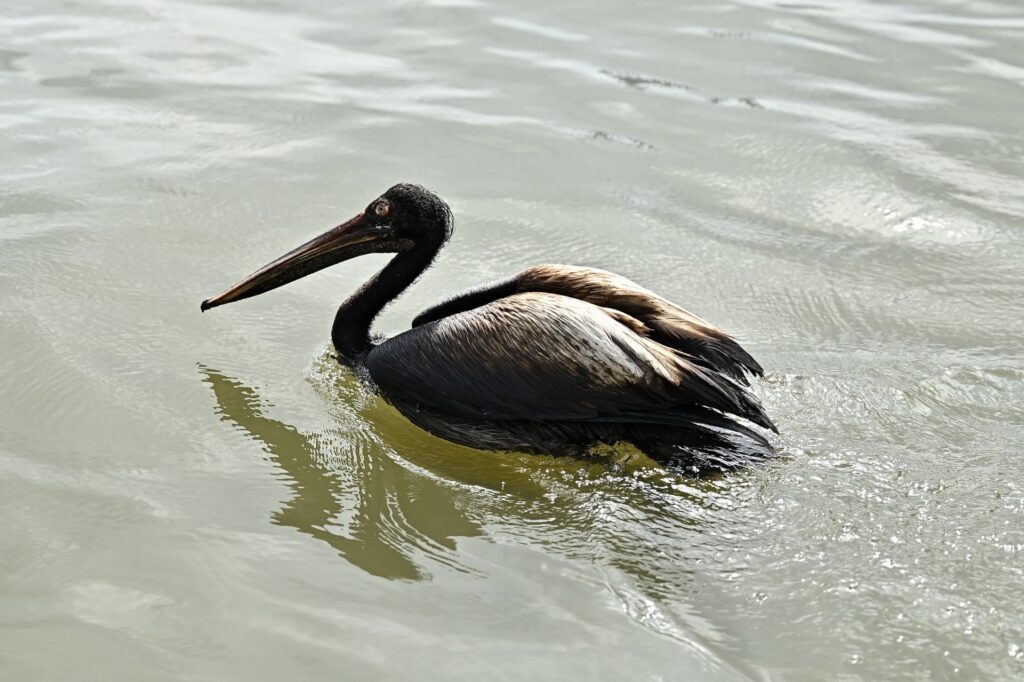
Jebakumar had also observed significant harm to the Ennore mangroves. Since mangroves breathe through their roots, when their pores were clogged by oil it caused them to dry up and deteriorate. As the mangroves died, migratory birds lost their habitats, which also disrupted their breeding cycles. In the weeks that followed, wildlife rescue teams recovered carcasses of cormorants and pelicans from the creek, while black-winged stilts and painted storks were found trapped in oil sludge.
Nambi noted that the 2023 spill was one of the worst cases of contamination, leading to a significant decline in fish populations. “The ocean is capable of assimilating oil spills. River systems, not so much,” she told New Lines. The Tamil Nadu government has also reported a 2% decline in fish catch for 2024 compared to the previous year. Kiliyamba recalled the impact on local fisheries. “Fish like kalameen [salmon], mathiva [sardines], kadamba [calamari] and thookanachi [mackerel] have become rare now,” she said, remembering more bountiful times when her husband could once spot salmon from their front porch while mending his nets.
Rising sea surface temperatures are also pushing fish once considered economically harvestable away from their traditional habitats and into cooler waters. This redistribution is being felt acutely by artisanal fishers, who rely on traditional methods and cannot venture far offshore. Researchers have also found that warming oceans, with declining levels of dissolved oxygen, are weakening fish immune systems, leaving them more susceptible to disease and shortening the shelf life of their catch.
As these incidents gradually alter the makeup of the ocean, another shift is unfolding onshore. Members of the fishing community are increasingly considering leaving the profession that has sustained their households for generations. Catches are dwindling. Both Kiliyamba’s father and her husband supported their family solely through fishing, but her son Elumalai has been struggling to do the same. These days, she urges her grandchildren to study hard and secure jobs that will take them away from Ennore.
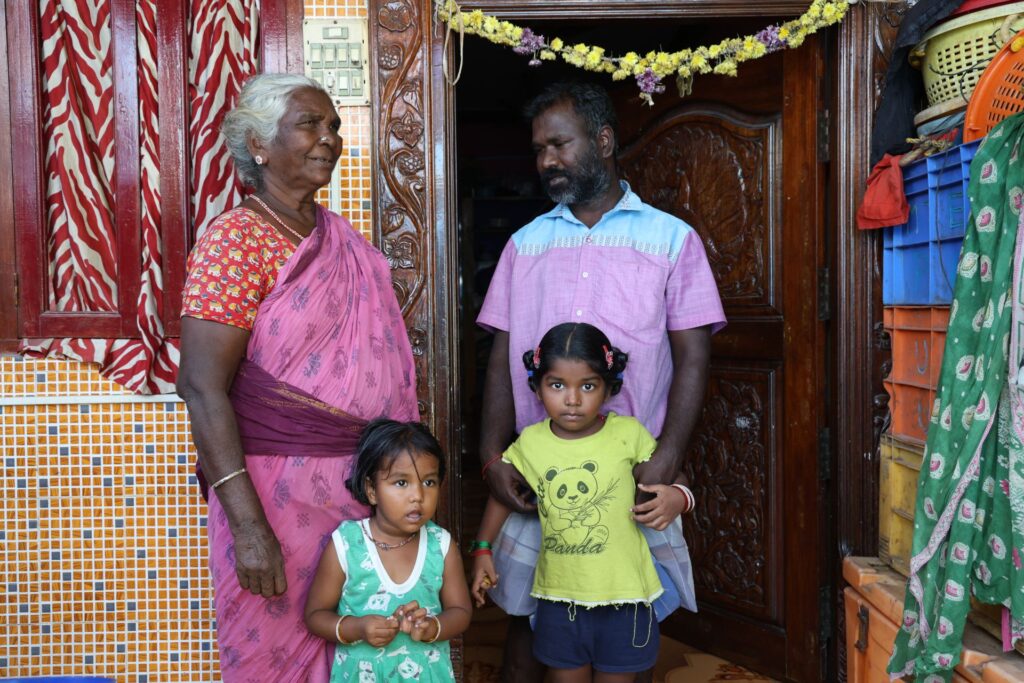
Shweta Narayan, campaign lead for the Global Climate and Health Alliance, an international coalition of health organizations working on climate issues, has observed this gradual but steady shift away from fishing as the ancestral profession. In many families, unable to relocate entirely, children are being sent away to stay with relatives in cleaner environments.
“We wanted our children to do both — go to the sea for a few hours in a day and also do a job. But not after these spills,” Kanakaraj said. None of his three sons goes fishing anymore, and two have already emigrated to cities in search of better work. Like the mackerel and sardines in the river, the children of fishers, once destined to follow their forefathers to sea, are becoming scarce.
This story was produced in partnership with the Pulitzer Center.
Become a member today to receive access to all our paywalled essays and the best of New Lines delivered to your inbox through our newsletters.