


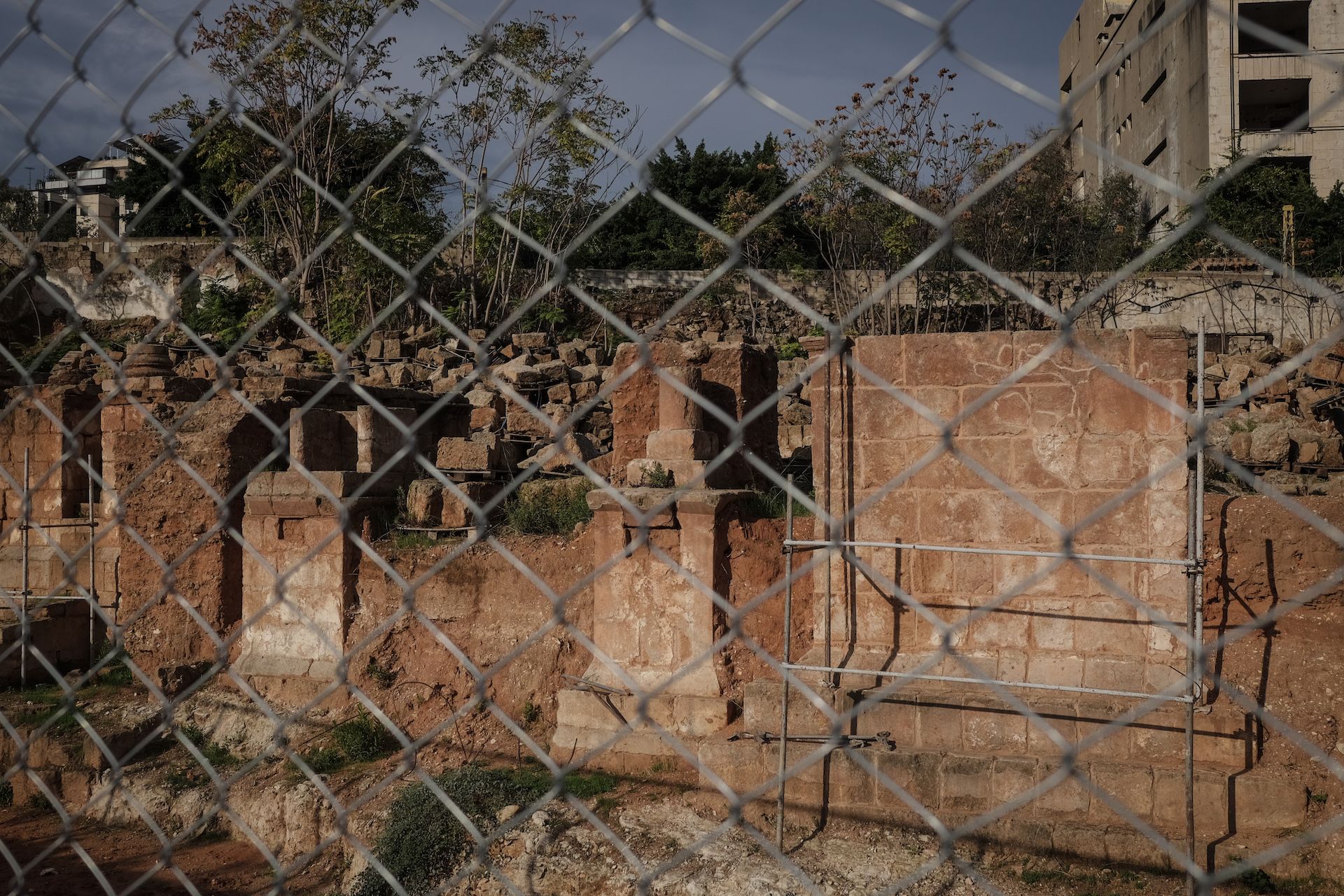
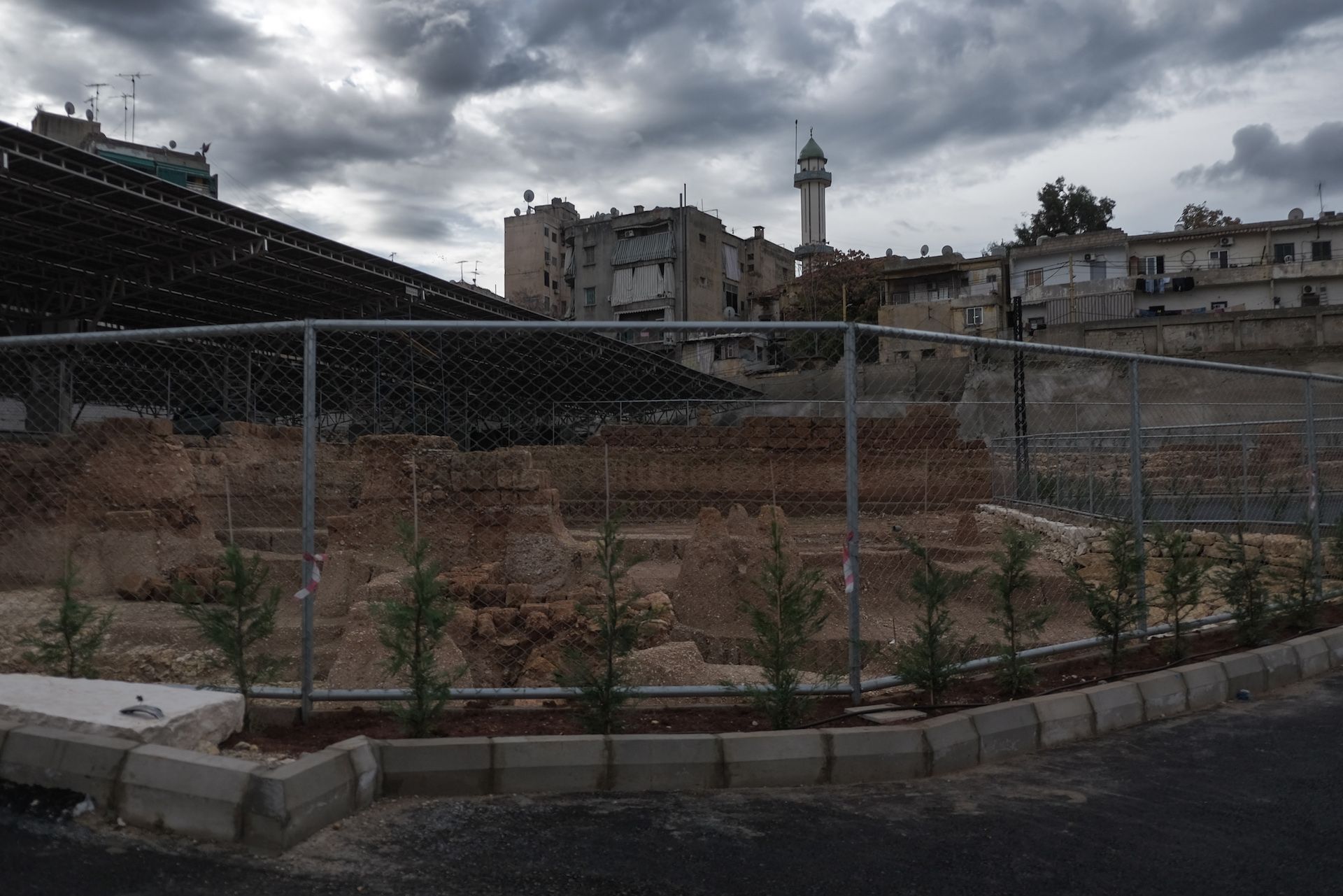
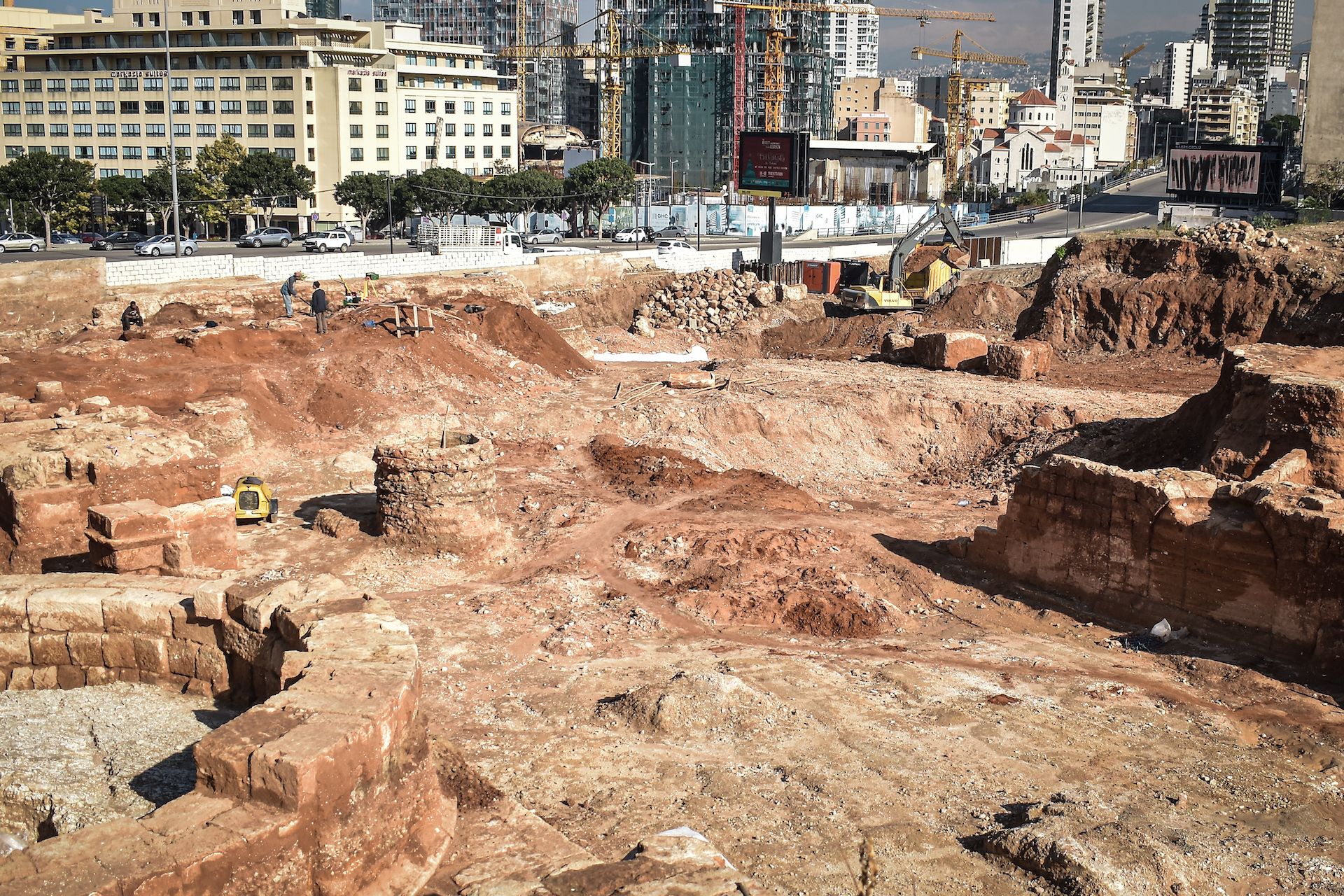


Two thousand years ago, a fortified wall of stone surrounded the Roman “colonia,” or settlement, of Berytus: modern-day Beirut. Like many other Roman cities, it hosted baths and a hippodrome, and its walls were flanked with a procession of stone mausoleums for the local dead: the women, men and children who once populated the city. Perhaps some of them had been graduates of the city’s famed law school, which attracted Roman citizens from across the sprawling empire before its destruction in the earthquake of 551.
Incredibly, some of that wall has survived all the intervening upheavals, human and natural, of the past two millennia. But these remnants, so evocative of the Roman character of this metropolis and the ancient tombstones that surrounded it, are under threat, experts warn — not from earthquakes or war, but the construction of a parking lot.
The lot, finally paved over with tarmac last month after years of controversy, has reignited public outcry among Lebanese archaeologists and urbanists who say their country’s ancient past is being erased by improperly regulated private construction projects. This may be a familiar story from fast-developing cities all over the world, as the centuries pass and the new inevitably gets built over top of the old — think Istanbul with its modern layers built over Ottoman stone buildings, which themselves were built over Byzantine and Roman antiquities.
But archaeologists and urban activists in traffic-clogged Beirut say they are particularly upset over the latest project, one that is literally laying fresh black asphalt over the top of their ancient heritage.
Imagine a Bronze Age family in their small stone home. When they die away, gradually, their house remains — for a time. The years pass, and so do the generations, and slowly it turns to dust. So do the trash, food scraps and aging old junk surrounding it. Dirt fills in the gaps, swept in by wind, human activity and the passage of time. Eventually, in some cases, a huge earthquake knocks it all over for good, shaping a smooth earthen mound of the debris.
“How many countless times have earthquakes toppled everything in Beirut?” one white-haired baker asked me in Khandaq al-Ghamiq, the district bordering the new parking lot. His childhood home, which looked from his cellphone photos to be a French mandate-era house, was also lost to time, he said — or rather demolished 20 years ago. In its place, he said, is a parking garage.
Around these ancient earthen mounds, new homes and settlements have emerged from the rubble, again and again, over many hundreds of years.
That is how the ancient “tell,” or “hill,” of Beirut formed over the millennia, now situated in the center of the city. According to archaeologists, we still don’t know most of the treasures and little bits of ancient daily life still lying in wait beneath it.
In 2014, the construction company Alia & Co. acquired a handful of plots in Beirut’s central Bachoura district, including the land where the parking lot now sits. There, and in neighboring Khandaq al-Ghamiq, on the outer limits of downtown Beirut, stand alleyways of grand, crumbling arch-windowed homes in the classic Beiruti style, and stereotypes linger of the area as a hard-line stronghold of the Amal Movement, linked to the country’s Shiite community.
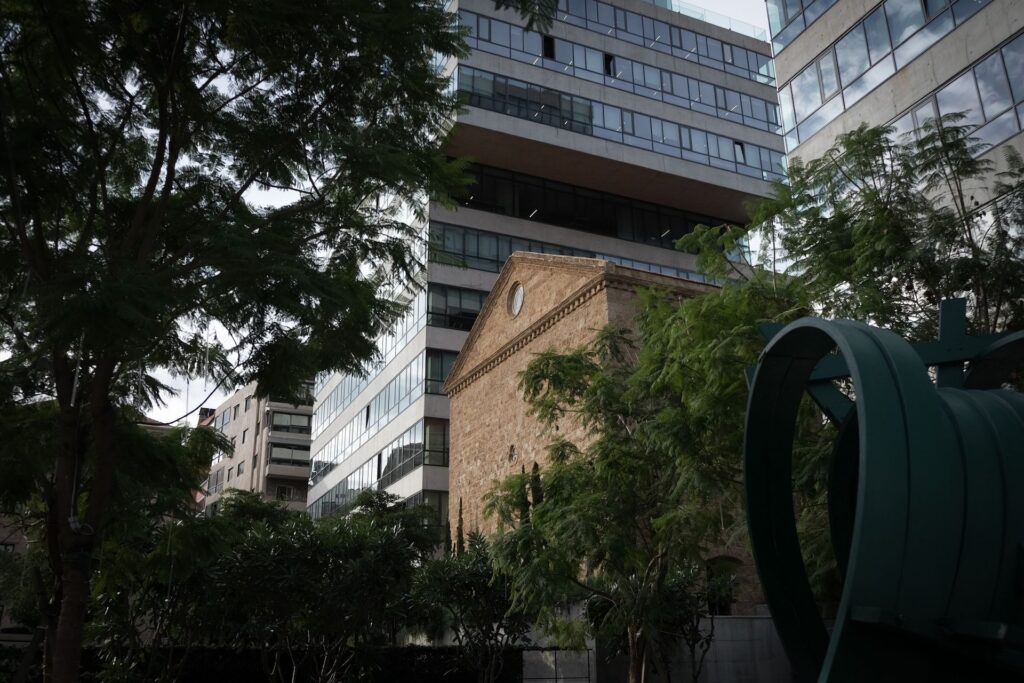
Alia & Co.’s general manager, Mouhamad Rabah, is also CEO of the Beirut Digital District (BDD), a complex of office buildings that, according to its website, serves as a “digital cluster” of tech and startup businesses, mostly employing young Lebanese. BDD has been buying up old, mostly abandoned properties in Bachoura and neighboring Khandaq al-Ghamiq for years, pitching shiny modern offices and residential towers in place of the time-worn old houses. When I visited recently, the place was teeming with 20-something Gen Zers.
Beneath it all, there were already six levels of underground car parking and several above-ground lots. Alia & Co. is now renting out the Bachoura 740 lot to BDD as well, Rabah told me.
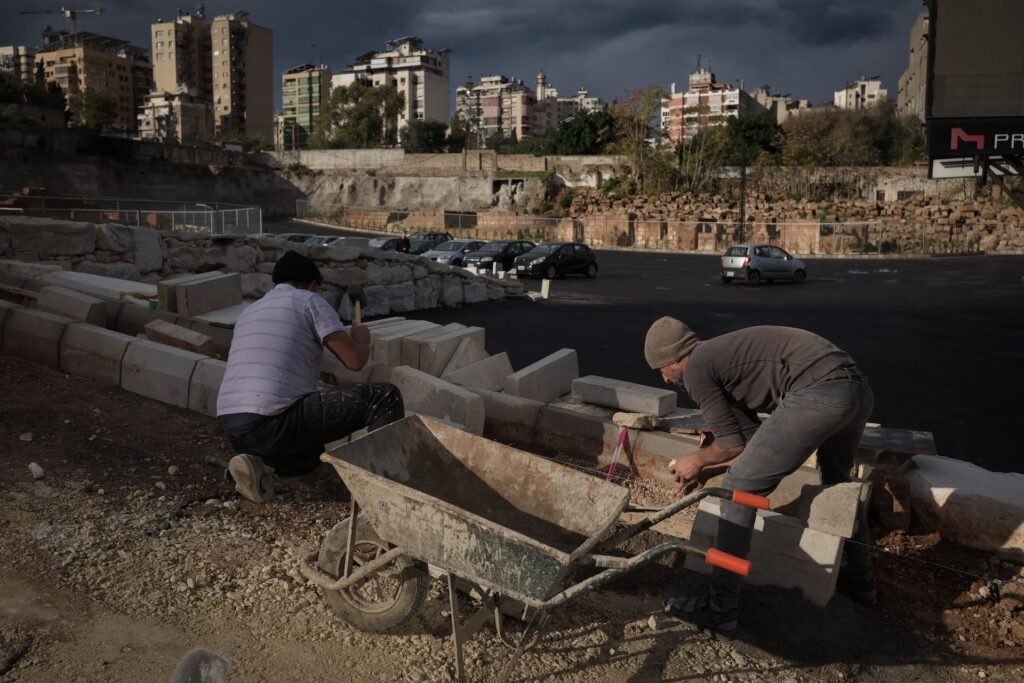
As part of the new parking lot’s construction, archaeologists from the Culture Ministry’s Directorate General of Antiquities (DGA) dismantled a portion of the ancient Roman city wall, piling the stones onto numbered pallets in a fenced-in area in the western part of the plot, behind a few mausoleums. The Culture Ministry had approved the controversial dismantling back in 2018, later temporarily halting it after public outcry from heritage activists. Yet it was allowed to continue shortly afterward, on the condition that it be reassembled at some point in the future — despite the fact that the location of the city’s walls is integral to their meaning; seeing them reconstructed elsewhere, some activists say, is to miss the physical link to the Roman past they hitherto represented.
When I visited the Bachoura parking lot site back in November, I saw these dismantled tan stones of the former Roman wall in wood-pallet piles behind me. These remnants of 2,000-year-old structures that have seen so much Beiruti history were out in the open, lying haphazard and unprotected, the pallets closest to the wall sitting in a disorganized mishmash. In another fenced-off area of the plot were other stone structures, though the DGA’s official report on what exactly they are has yet to be published more than a decade on. Why?
Laure Salloum, an archaeologist at the DGA, is in charge of excavations in Beirut and Baalbek. I met her in her office in central Beirut, just a short walk away from the National Museum, in the weeks following the public outcry over the Bachoura parking lot. A winter downpour flooded the streets outside.
Even in calmer times, her job is hard. Lebanon is packed with ancient things, and the DGA is part of a government in the midst of a financial crisis. Why are people so angry about the Bachoura parking lot? “They don’t understand. Our problem is mainly that we don’t have an information platform in order to say [the details of what we’re up to]. But you see, we are working hard.” She pointed to a stack of six thick binders on the table in front of her desk. They were the field notes and various reports on archaeological finds at the Bachoura parking lot site, from the graves to another section — which remains intact — that could have once served as a sort of ancient funeral home, where late Roman-era workers prepared bodies for burial. “These binders are just for 2023, 2024. This is everything, in detail.” She flipped through the thousands of pages. I tried, but couldn’t manage, to catch some of the details in the pages. “The report, the context number, the survey, everything! Every layer, each one.”
Rabah did tell me he paid $2 million for the excavation, a number that was only a little exaggerated — the final bill coming in around $1.65 million, he later conceded. At such a price, I could believe that there was this level of paperwork, but the key question remained: Why couldn’t I — or indeed an archaeologist — see the findings?
Salloum was firm that this was standard practice, adding that in some cases unpublished material goes back further than the past few decades of development in Beirut. Bachoura is just one construction site of many where the DGA is intervening to document the antiquities that are unearthed as new developments break ground, she said. “There are so many others. Why all the attention only on this one?”
She told me that specialists, including an expert in ancient skeletal remains, are toiling in some unseen basement beneath the DGA, in an enclosed area, studying some of the objects found at Bachoura 740. I wasn’t allowed to see them — nobody is, Salloum said, as it’s a sealed-off room. As for any of the facts they’ve already found, “We can’t release them until all of the details are studied.”
I asked why not; archaeology and other academic disciplines don’t normally wait for every detail to begin publishing on a discovery. It could be a long time before the wonders of this part of ancient Berytus’ city wall are made public.
“Look, for example, this is the report.” She showed me a stack of papers about the Bachoura ruins. I asked if I could see inside or snap a photo in order to share details.
“No, of course not.” She invited me to sit down with her again. “We are waiting to prepare it for publication. It is not secret, but we are still working on some [details],” such as the exact historical period of certain Late Roman artefacts, for example. “It’s for scientific publication,” not for the general public, yet.
The few details I was able to catch were tantalizing. “We have one expert who is doing some research on the hypogeum,” the ancient “funeral home” part of the Bachoura site. “Others are working on the bones —”
“There were bones found at the site?” I interrupted.
“Yes, yes, some bones. You will not be interested, for example, if I say: ‘This guy, we found him, aged 19, buried in this grave.”
I was, on the contrary, desperate to know more about this hypothetical Beiruti teenager. Just steps from the Bachoura site, young adults not too much older than that come to work every day at BDD, gathering for coffee and e-cigarettes on the streets outside during their breaks. Would the stories of these old bones, which are still undergoing study at DGA to confirm their ages, not humanize the weathered and dismantled stones?
“Yes, of course, but the text [of such a report] will be written in a scientific way.”
Meanwhile, activists are skeptical that the finished lot was fully studied, down to the bedrock layer, before the heavy machinery and asphalt came in.
“Underneath the asphalt now you still have the archaeology layers,” further threatened by the material, said Nelly Abboud, an archaeologist and museum educator who has been taking part in a public campaign against the parking lot. Not only is the asphalt itself potentially damaging to any undiscovered antiquities still waiting underground, “but allowing vehicles to roam all day on top is highly damaging to the layers underneath.”
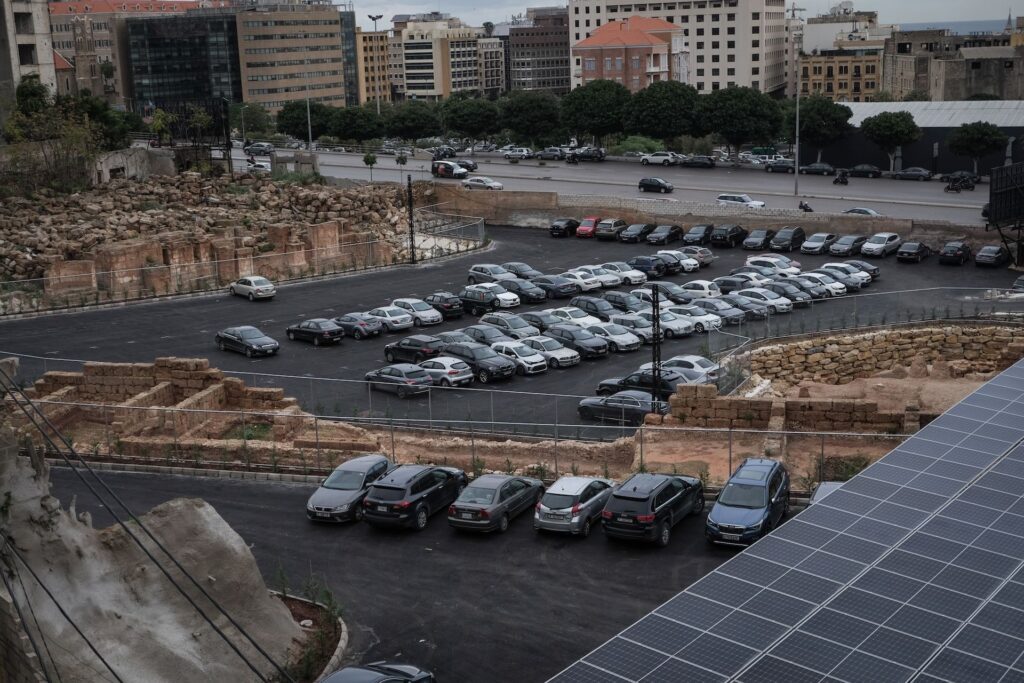
When I visited the site, the asphalt was still a fresh black. A pair of workers hammered concrete sidewalk barriers into one corner, beneath a flashing billboard advertising a delivery company. Sedans and SUVs filed in, gradually filling the parking spots marked with as yet unpainted lines in neat rows. Out of them walked young Beirutis in business dress, heading for BDD’s offices.
Lebanon has a slew of laws meant to protect its antiquities. That includes a 1933 one, issued during the French mandate, that requires property developers to alert the DGA of any suspected ancient artefacts they come across while digging into their parcels of land.
It’s not clear how well the law is followed in all cases, because the onus is on the property developer to report any ancient discoveries — which, from their perspective, can mean years of construction delays and hundreds of thousands of dollars in excavation costs. It means specialists from the DGA must come in to sift through the unearthed treasures.
“Alia & Co. dismantled the Roman fortification wall, so instead of [authorities] punishing them for that, they promised they would put it back [together],” Abboud, the archaeologist and activist, said.
According to DGA’s Salloum, the wall will be reconstructed in the same location, and “with the same character.” (This begs the question of why it needed to be demolished in the first place if it was going to be replaced on top of the asphalt, and doesn’t answer the question about what information has been lost as a result of this needless destruction.) There is no part of the law, she added, that dictates how quickly such works must take place.
“When are they going to do that? In 10 years?” Abboud asked. She’s doubtful the stacks of dismantled stones won’t simply languish without ever being reassembled.
Reconstruction is at the behest of the property owner, Salloum told me. “Everything is related to the economy of the country.”
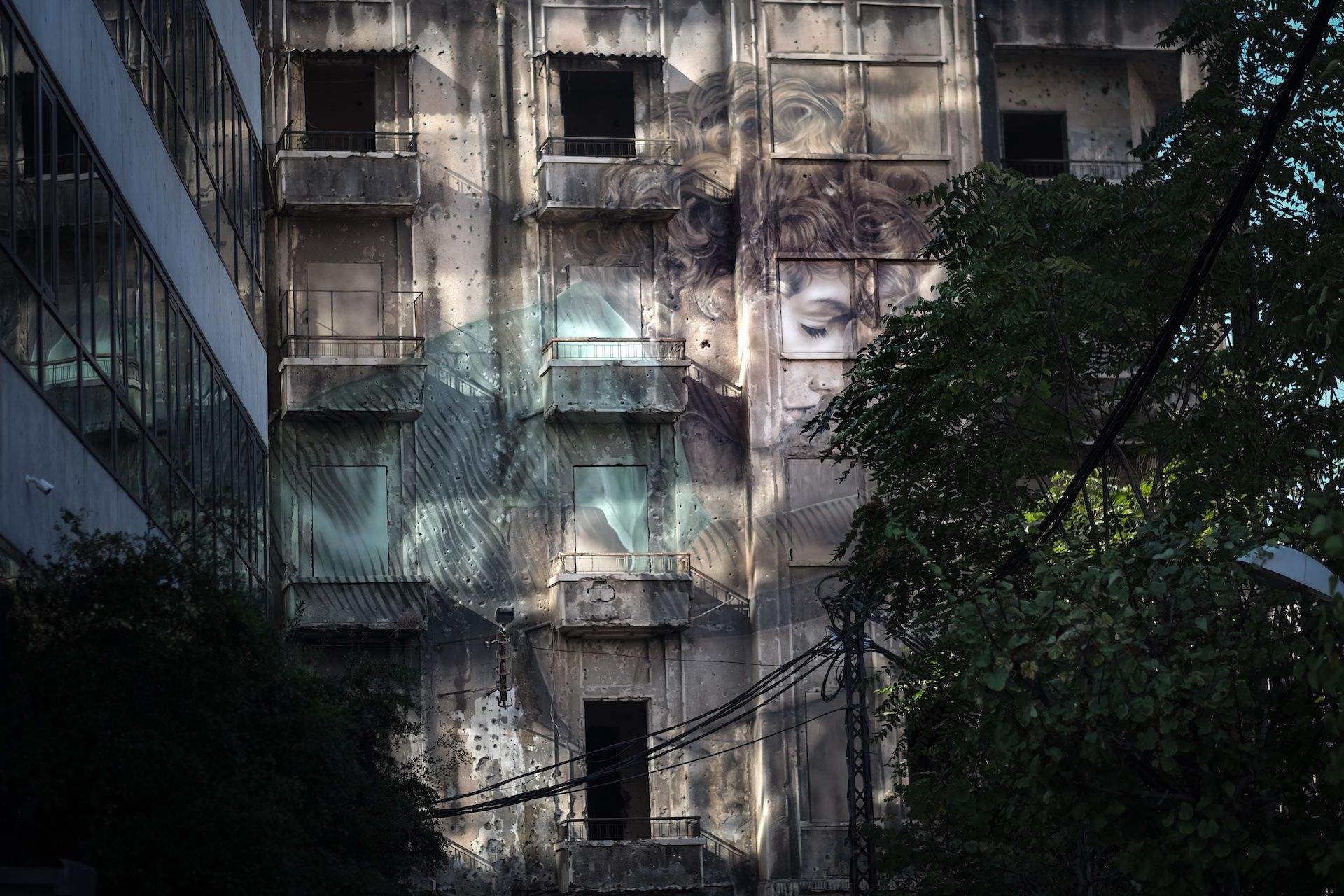
It’s not the first time modern construction projects have destroyed pieces of Beirut’s ancient history. Much of downtown Beirut, once the beating heart of Roman Berytus, became a deadly front line when Lebanon’s civil war broke out 50 years ago in 1975. Long-simmering sectarian and class tensions exploded into an all-out war lasting for the next 15 years. Downtown became a killing field of rubble and overgrown weeds.
When the dust settled, the private company Solidere stepped in, buying up land in the city’s devastated former popular market district to build what would become an open-air shopping mall. They unearthed thousands of years of ancient ruins in the process, from the layers of the Canaanite, Hellenistic and Roman civilizations that told the long story of Beirut. But this heritage wasn’t always preserved, either in situ or in museums. Instead, Solidere became a byword for gung-ho jackhammering through history to slap modern towers over the top of Beirut’s old districts, with an enormous loss of knowledge and insight into the city’s past.
Later on, in 2011, construction workers found suspected Phoenician shipbuilding infrastructure as they broke ground near Beirut’s yacht marina to build the luxury Venus Towers complex. But then-Culture Minister Gaby Layoun allowed the construction to continue despite public outcry, destroying the historic site.
And earlier this year, a bulldozer at a private construction site in coastal northern Lebanon damaged a layer of 5,000-year-old Bronze Age antiquities before the DGA, activists and local authorities stepped in to halt it. An archaeologist at the American University of Beirut, who had been leading excavations there for years, told local media the losses were “inestimable.”
Some degradation is, to a degree, inevitable. In all cities in the world, the old is destroyed to make way for new infrastructure and replacement buildings, a process that has gone on throughout history.
Beirut, too, is still a living, breathing city, with its traffic jams, construction projects, shopping centers, occasional wars and simply the garbage of daily life. It’s not a cordoned-off archaeological park in the manner of Jordan’s Petra or, for that matter, the grand fenced-off ruins within the ancient “City of the Sun,” Baalbek, in eastern Lebanon. Some destruction is inevitable in any thriving city — but there surely have to be limits. Roman remains are simply not replaceable.
“It’s a capital city,” Salloum said, exasperated.
Like the white-haired baker in Khandaq al-Ghamiq, the everyday Lebanese people I’ve met over the years clearly care deeply about the old things that lie buried beneath them.
I found one tiny village called Burj al-Yahoudieh (“the Tower of the Jewish Woman”) while visiting an area near Tripoli in Lebanon’s north. The village was named, I’d learn from a local official, after an ancient stone tower that once topped a hill there. The unusual name stuck, probably passed down through the ages until an Ottoman-era census formalized it in a ledger somewhere.
By the time I visited, the tower was no more than a pile of waterlogged old stones in the backyard of a local family’s apartment block.
Nevertheless, they pointed it out to me, with great pride, past some damp clotheslines, moss, garbage and plastic children’s toys. “There it is!”
Samira Ezzo, a tour guide who has been leading a public campaign to protect the Bachoura site, told me she still makes sure to show the remaining pieces of ancient history to her tour groups. “It’s my duty to shed light on the ancient artifacts in downtown Beirut, to connect with the tangible heritage.”
I met Ezzo back in November outside the Bachoura parking lot, where she showed me one spot, behind a dirt mound, where we could peer inside without the hired guards seeing us. She’s been leading a public campaign to protect the Bachoura site, whose dismantled stones we saw through the wall, fearing “another Solidere.”
Alia & Co.’s Rabah told me he has promised to “integrate” the Bachoura Roman ruins into the parking lot site, in order to preserve them for the public. It’s not clear how open it might be to the surrounding neighbourhood’s residents, however, as it is a lot meant for BDD employees, surrounded by a cinder block wall and manned by security officers.
There has been a long economic crisis rattling Lebanon since 2019, and there is a threat of more war in the months to come as Israel continues to break a fragile ceasefire. Some of the bombs of last year’s war hit just steps from the Bachoura site itself, in a district known (of all things) for its antique stores, leveling apartment blocks filled with the bits and pieces of present-day Beirutis’ lives.
It can all feel a bit more immediate than the questions over ancient grave sites, long-dead Roman cityfolk, walls and kilns from more than a thousand years ago.
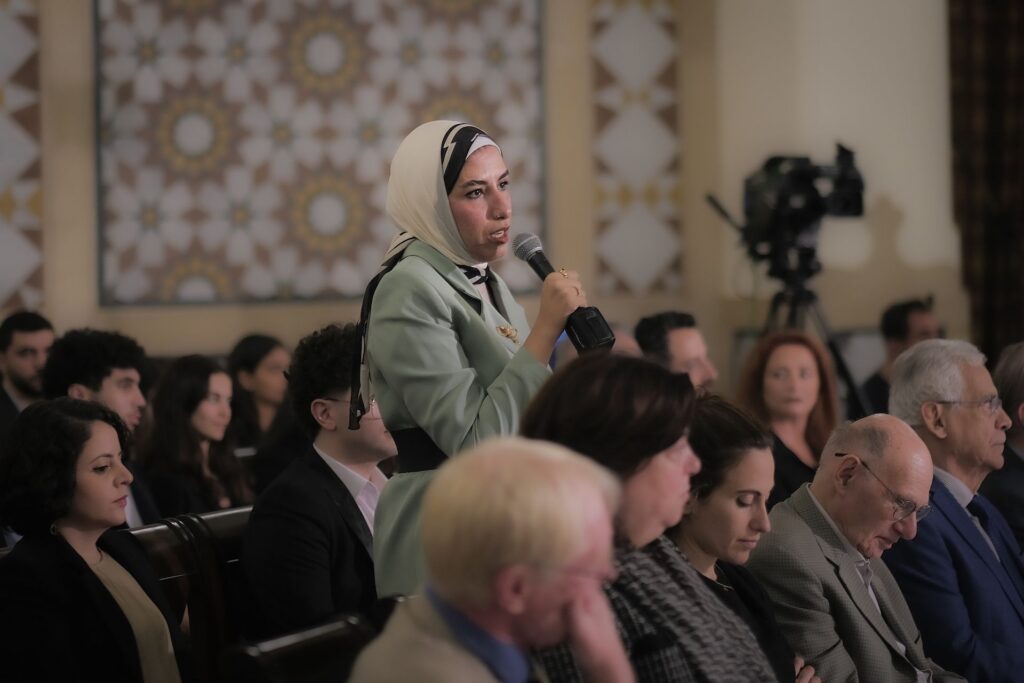
All the while, people with an interest in the artifacts, like tour guide Ezzo or archaeology master’s student Fadia Abu Saleh, whom I met at a town hall event on saving the Bachoura site, are left to guess what is still out there — and to protect what is found.
“It’s a part of me, I need to protect it,” Fadia told me.
Still, Fadia is hoping to simply pack up once she’s done with her studies and leave Lebanon, where she feels the lack of publicly available information on antiquities makes her research insurmountably difficult.
They are all, they told me, upset about the dismantling of Bachoura 740, and about the facts of its antiquities that they may never know.
In the end, “arguing over whether there is archaeology underneath [the parking lot] or not is a dead end,” according to Abboud, the archaeologist and activist. “Because there are no [DGA] reports and even if they end up publishing anything … they can simply not mention what was there.”
When I left the BDD campus and found a local family who let me look out over the parking lot from their balcony, I saw a field of fresh asphalt where weeks before there had only been dirt, and decades before that an Ottoman-era hospital, and before that rows of Roman dead.
Now it is full of the day’s parked cars.
Become a member today to receive access to all our paywalled essays and the best of New Lines delivered to your inbox through our newsletters.