

Hosted by Faisal Al Yafai
Featuring Sam Dalrymple
Produced by Finbar Anderson
Listen to and follow The Lede
Apple Podcasts | Spotify | Youtube | Podbean
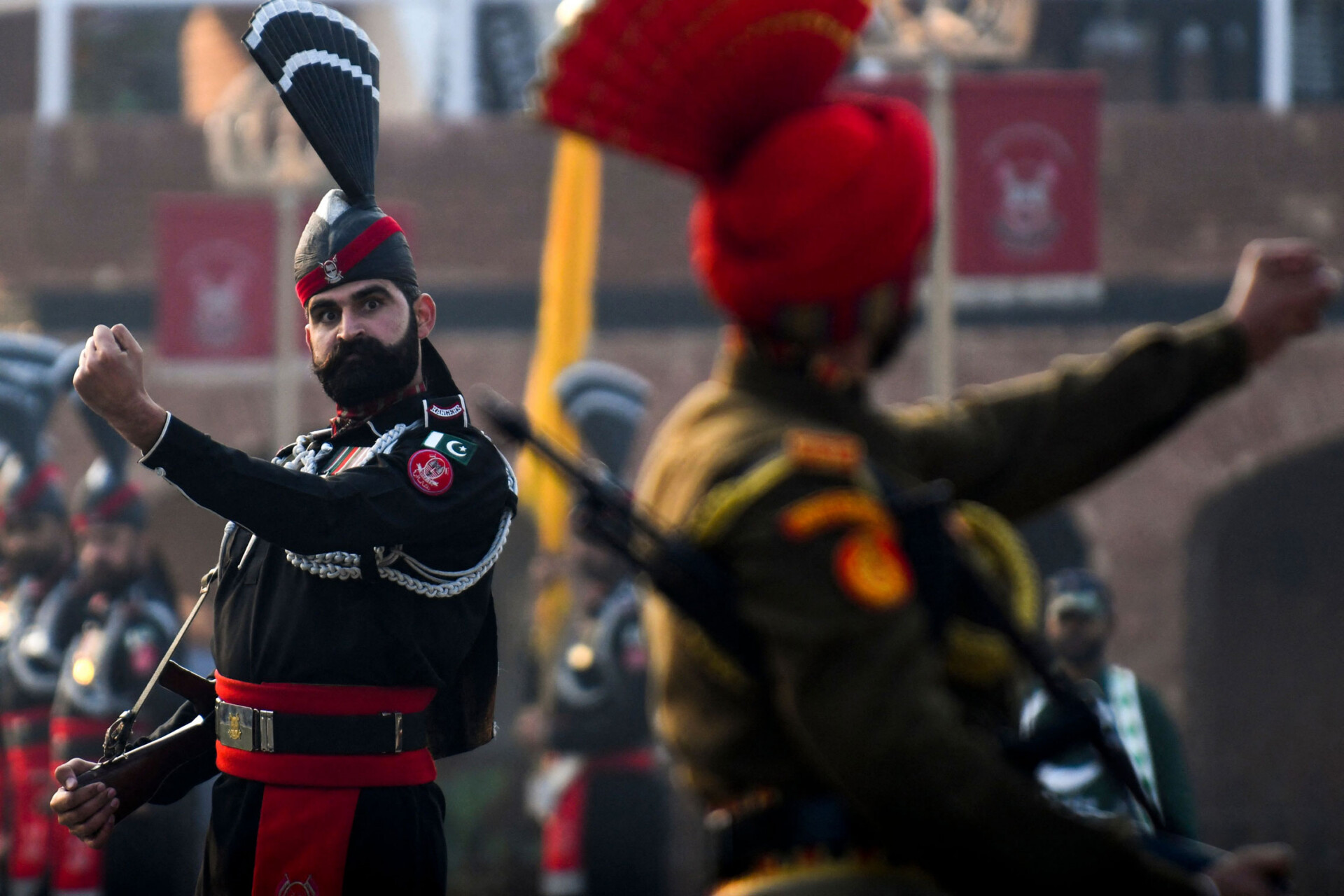
The partition of India and Pakistan in 1947 is perhaps the best-known partition of the Indian Empire, otherwise known as the British Raj, historian Sam Dalrymple tells Faisal Al Yafai on The Lede. “The Great Partition of 1947 is without a doubt the central pivot around which the book is focused. It is one of the central moments, not just in South Asian history, but in world history,” Dalrymple says. “It continues to change how a quarter of the world’s population perceives their past, their present and their future.”
Nevertheless, Dalrymple — author of “Shattered Lands: Five Partitions and the Making of Modern Asia” — argues that the Great Partition is only one part of a much more significant narrative than we often consider; a narrative that continues to affect millions of people today. “The story that the book really focuses on is how this megacolony is transformed through five partitions into 12 nation-states. It’s a much larger story than I think we realize.”
“There are grannies alive today who remember a childhood before these borders had been conceived of.”
Many of the territories involved might be wholly unexpected to many casual observers, Dalrymple suggests. “If you open the list of the Indian princely states governed by the viceroy of India, it actually opens alphabetically with Abu Dhabi,” he says. “The city of Aden in what’s now southern Yemen was the westernmost city of India.”
Dalrymple argues that seemingly deeply ingrained hatreds between peoples and ethnic groups often follow the creation of borders, rather than leading to them. “[U.S.] President Trump said India and Pakistan have been fighting over Kashmir for thousands of years. In actual fact, they were one country within living memory,” he says. “There are grannies alive today who remember a childhood before these borders had been conceived of.”
Our modern conceptions of nationalism, Dalrymple says, have been warped by empire and the border-creation process. “So often we imagine nationalism as the antidote to imperialism rather than a product of imperialism,” he says. “The various nationalisms of the subcontinent pit communities that before imperialism never conceived of themselves as eternal enemies in the way they do today.”
This has very real implications for the lived relationships of millions of people living in what was once a single nation. “One of the great tragedies is that it’s easier for Indians and Pakistanis to meet in Britain, their former colonizer, than it is to meet in the subcontinent,” Dalrymple says.
We are currently living through a period of heightened political attention on borders worldwide, Dalrymple notes. “There is this reassertion of borders, often by people who have little knowledge of where these borders came from, and the arbitrariness of their creation, and yet these borders are some of the most difficult things to grapple with.”
Ultimately, Dalrymple hopes his book will reach an audience far beyond South Asia. “I wanted something that could make people be able to understand what’s going on irrespective of which country they come from,” he says. “I think in general we all have much more in common than we realize, and none of this is inevitable.”